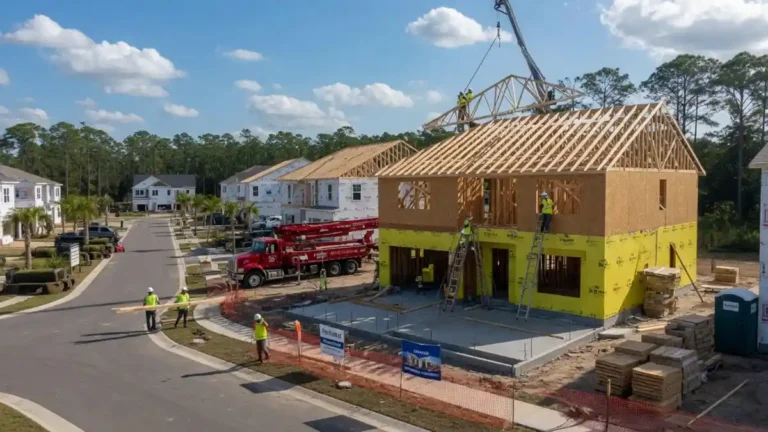
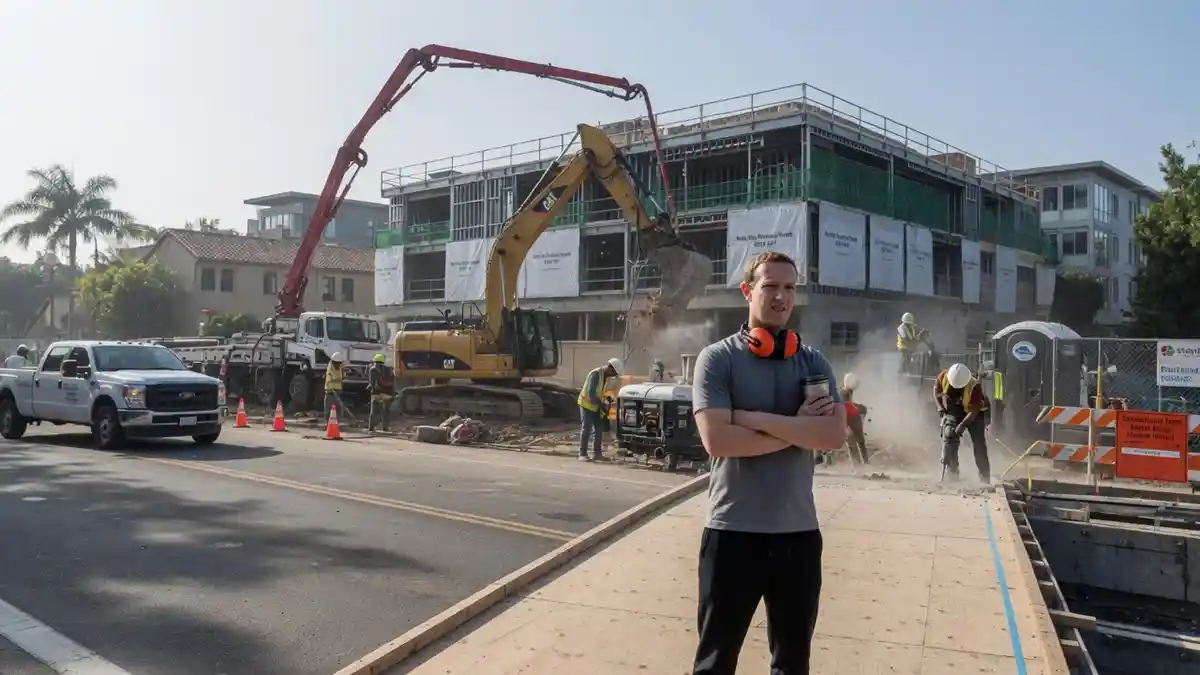
A billionaire’s home build has turned a quiet street into a case study on jobsite disruption.
The zuckerberg palo alto construction noise problem shows what happens when large residential projects run for years without a noise-reduction plan.
For contractors, the lesson is practical, not political.
Precast Contractor Tips For construction
Key Takeaways
- Precast concrete and prefabrication move much of the loudest work off-site, which can reduce the number of high-decibel hours a neighborhood absorbs.
- Palo Alto caps construction noise at 110 dBA measured 25 feet from equipment, with violations under PAMC 9.10.060 carrying a $1,000 fine or up to six months in jail.
- The zuckerberg palo alto construction noise dispute is a reminder that community relations and code compliance now shape residential build schedules.
What actually happened in Crescent Park?
Since 2011, Mark Zuckerberg has acquired more than 11 properties in Palo Alto’s Crescent Park enclave for a reported $110 million-plus, according to LuxuryLaunches.
The result is a private compound with more than 7,000 square feet of underground space, a hydrofloor pool, and a pickleball court.
That scope means years of drilling, excavation, and truck traffic. Neighbors reported flattened tires, blocked driveways, and streets used as loading docks.
At one point, staff handed out noise-canceling headphones as a mitigation gesture.
The Palo Alto Daily Post also reported friction over how the city managed street access during private events.
Our analysis suggests the headphones missed the point. You cannot muffle a multi-year build with a consumer product.
The noise has to be addressed at the source, on the jobsite, through the way work is planned and sequenced.
Home Depot Acquisition Expansion Reshapes Framing Supply
Why does the noise ordinance matter to your build?
Every jurisdiction sets limits, and Palo Alto’s are strict. The City of Palo Alto noise ordinance defines both hours and decibel ceilings.
Here is how those limits compare with a typical prefabrication-led approach.
| Compliance factor | Palo Alto code (site-built) | Precast/prefabrication approach |
|---|---|---|
| Max equipment noise | 110 dBA at 25 ft | Loudest cutting/pouring moved to a controlled plant |
| Permitted hours | Mon–Fri 8AM–6PM; Sat 9AM–6PM | Fewer active on-site days overall |
| Sundays/holidays | Construction prohibited | No change, but fewer total build days needed |
| Penalty for violation | $1,000 fine or 6 months jail (PAMC 9.10.060) | Reduced exposure to repeat on-site violations |
| Amplified sound | Not permitted during work | Not applicable at the residential site |
The takeaway is straightforward.
The fewer loud hours you generate on-site, the smaller your compliance risk. That is the operational case for construction technology, not a marketing claim.
Zuckerberg Palo Alto Construction Noise
— US News (@Us_news_ways) August 7, 2026
The zuckerberg palo alto construction noise problem shows what happens when large residential projects run for years without a noise-reduction plan.@nbcbayarea @abc7newsbayarea @finkd https://t.co/s0Q7X2v3Ot
How does precast reduce construction noise?
Precast concrete is manufactured in a plant, then delivered and set in place. The loudest parts of the job, including form cutting, mixing, and finishing, happen off-site.
Our team observed that this can shift high-decibel work away from residential streets and into a facility built to contain it.
It also shortens the on-site schedule, which reduces the total window neighbors are exposed to noise.
There are tradeoffs. Precast may require larger delivery vehicles and crane time, which creates short bursts of noise on set days.
Crane operation and truck backup alarms can still approach or exceed thresholds, so planning still matters. We are not claiming precast eliminates noise.
It relocates and compresses it, which is often the more manageable outcome for a dense neighborhood.
TerraPower NRC Construction Permit It Signals
What steps reduce noise on a residential precast project?
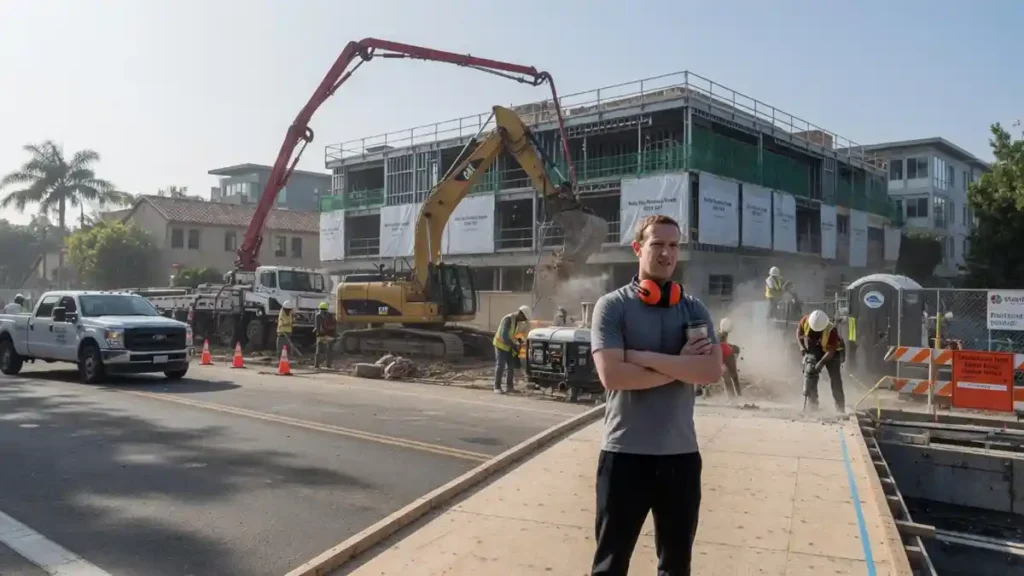
Use this sequence when a project sits close to occupied homes.
- Confirm local limits first. Pull the decibel ceiling and permitted hours before you schedule anything. In Palo Alto that means the 110 dBA cap and the Mon–Fri 8AM–6PM window.
- Move loud work off-site. Specify plant-produced components where the structural design allows it, so cutting and pouring happen away from the street.
- Batch your set days. Cluster crane and delivery activity into as few days as possible to limit the number of high-noise mornings.
- Protect your crew. OSHA requires hearing protection at higher exposure levels, and the OSHA hearing protection standard sets the compliance baseline for your workers.
- Plan for temperature. If you pour any cast-in-place elements, follow ACI hot weather concreting guidance so rushed curing does not force noisy rework later.
- Communicate the schedule. Give neighbors written notice of set days, so they can plan around the loud hours.
None of these steps is complicated. Together they help reduce both complaints and citation risk.
What does this mean for Midwest contractors?
If you have been following construction technology trends across the Midwest, the zuckerberg palo alto construction noise story will not surprise you.
Residential clients increasingly expect a quieter, faster build. Cities are writing tighter ordinances, and enforcement is real.
The zuckerberg palo alto construction noise case shows what a poorly managed schedule costs in goodwill, even when the budget is unlimited.
Construction industry insiders are noting that prefabrication is moving from commercial work into high-end residential for exactly this reason.
Our contractors note that precast will not fit every design, and honest scoping matters. Some sites still need cast-in-place work, and some finishes cannot be prefabricated.
The right answer depends on your structure, your lot, and your local code.
Construction Accidents Attorney Your Framing Crew
Where should you start?
Bring the noise ordinance into your first planning meeting, not your last. Map which components can be plant-produced and which must be built on-site.
Then decide whether the zuckerberg palo alto construction noise pattern of long, disruptive builds is a risk your project can afford.
Tell us where your residential project stands and what your local noise limits require. We can help you sequence the work so the loudest hours happen in the plant, not on the street.