A federal regulator just cleared the way for a new kind of power plant, and the ripple effects reach every builder working near heavy infrastructure.
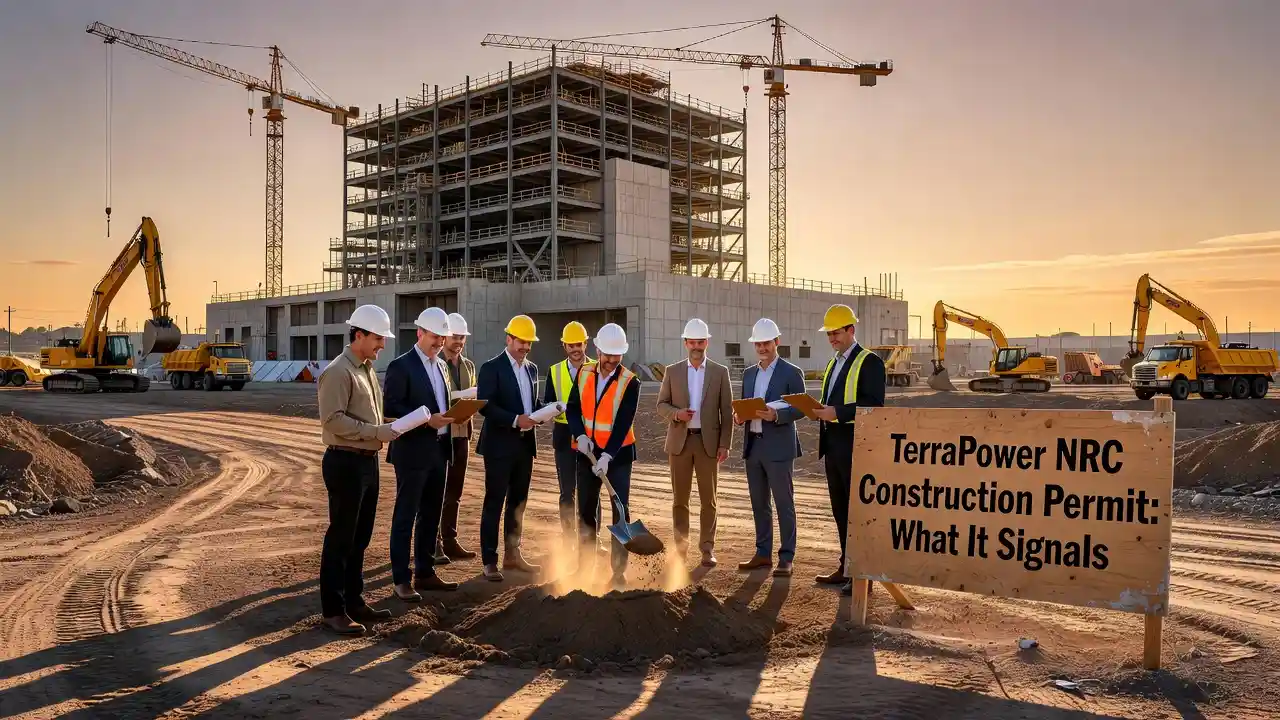
On March 4, 2026, the U.S. Nuclear Regulatory Commission voted to grant the terrapower nrc construction permit for Kemmerer Unit 1 in Wyoming.
This is the first construction permit the NRC has ever issued for a commercial-scale advanced reactor, and it changes how we think about large-scale build timelines.
If you manage concrete, formwork, or site logistics, the details matter.
New Construction Homes Las Vegas Demand Smarter Grading
Key Takeaways
- The terrapower nrc construction permit is the first-ever NRC approval for a commercial advanced reactor, cutting review time from 27 months to 18.
- The Kemmerer plant is a 345 MW sodium-cooled fast reactor with molten salt energy storage that can push output to 500 MW during peak demand.
- The project runs through the DOE Advanced Reactor Demonstration Program (ARDP), with completion expected in 2030.
Why does this permit matter now?
Advanced reactor projects have been stuck in regulatory review for years. That backlog delayed billions in construction spending and left contractors guessing at schedules.
The terrapower nrc construction permit breaks that pattern. According to TerraPower, the company submitted its application in March 2024, and the NRC docketed it in May 2024.
The original review schedule ran 27 months. The final decision came in 18 months.
That compression tells us something practical: when documentation is complete and the review process is streamlined, large infrastructure timelines can move faster than the industry expects.
The U.S. Department of Energy confirmed this marks the first construction permit for a commercial non-light-water reactor.
What is TerraPower actually building?
The Natrium design pairs a reactor with energy storage, which is unusual. The plant uses a 345 MW sodium-cooled fast reactor.
It also includes a molten salt-based energy storage system that can raise output to 500 MW when the grid needs it.
That combination keeps base output steady while allowing quick ramp-ups during peak demand. For our purposes, the reactor design is only half the story.
The other half is the civil and structural work required to support it.
Trump Magic Paint It Means for Masonry
How does this affect Midwest contractors?
If you’ve been following construction technology trends across the Midwest, this won’t come as a surprise.
Advanced reactor projects lean heavily on precast and cast-in-place concrete for containment, shielding, and foundation systems.
Our analysis suggests the terrapower nrc construction permit could set a template that other developers follow.
More permits mean more demand for specialized concrete work, and that demand tends to spread outward from the primary site.
Here is what our contractors note about projects of this scale:
- High-spec concrete requirements. Nuclear-adjacent structures often call for tighter tolerances than standard commercial pours.
- Longer lead times on materials. Specialty mixes and reinforcement can require early procurement.
- Heavier documentation. Quality control records follow standards like ACI 349 for nuclear safety-related concrete structures.
- Skilled labor competition. Large projects pull crews from regional pools, which can tighten local availability.
What does the timeline look like?
The terrapower nrc construction permit sits inside a longer sequence. Understanding that sequence helps you plan bids and staffing.
| Milestone | Date | What It Means |
|---|---|---|
| Application submitted | March 2024 | Formal permit request filed with NRC |
| Application docketed | May 2024 | NRC accepts application for review |
| Original review schedule | 27 months | Standard projected timeline |
| Actual review completed | 18 months | Faster review, streamlined process |
| Permit issued | March 4, 2026 | First-ever advanced reactor permit |
| Expected completion | 2030 | Target for operational plant |
The gap between projected and actual review time is the number worth watching.
It suggests future permits may move on similar accelerated tracks.
Building a Swiss Watch Out of Concrete
How should you prepare a bid for large-scale infrastructure?
We don’t recommend chasing a single project without a plan. Instead, treat the terrapower nrc construction permit as a signal to sharpen your readiness.
Here is a step-by-step approach our team uses when scoping work near major infrastructure builds:
- Confirm the scope early. Identify which structural elements need precast versus cast-in-place, and clarify the governing standards.
- Verify certifications. Check whether the project requires compliance with ACI 349 or related nuclear-grade documentation.
- Lock in material sourcing. Reserve specialty mixes and reinforcement before demand spikes.
- Model your curing timeline. Build realistic 28-day cure windows into your schedule, and note where accelerated curing may apply.
- Plan crew allocation. Reserve skilled labor early, since regional demand may tighten during large builds.
- Document everything. Set up your quality-control records to match the reporting standards the project requires.
Each step reduces the risk of a bid that looks strong on paper but stalls in execution.
Amazon Louisa County Construction Dispute
TerraPower NRC Construction Permit It Signals
— US News (@Us_news_ways) August 6, 2026
On March 4, 2026, the U.S. Nuclear Regulatory Commission voted to grant the terrapower nrc construction permit for Kemmerer Unit 1 in Wyoming.@ENERGY @NRCgov @TerraPower https://t.co/i2k206no5o
What are the tradeoffs worth naming?
We want to be honest about the limits here. The terrapower nrc construction permit does not guarantee a wave of new work for every contractor.
The Kemmerer project sits in Wyoming, and its DOE ARDP partnership structure is specific to this build.
The realistic benefit is directional. One approved permit lowers the perceived risk of the next one, which can encourage more developers to file.
That may expand the market for specialized concrete and structural work over the coming years. It is not an instant shift, and completion is still targeted for 2030.
Where does this leave your next project?
The terrapower nrc construction permit shows that advanced infrastructure can clear regulatory hurdles faster than expected when the process is well managed. For builders, the lesson is preparation over prediction.
If your work touches heavy infrastructure, tell us where your project stands and what the structural requirements need to accomplish.
We can help you scope the concrete, formwork, and scheduling before demand tightens.