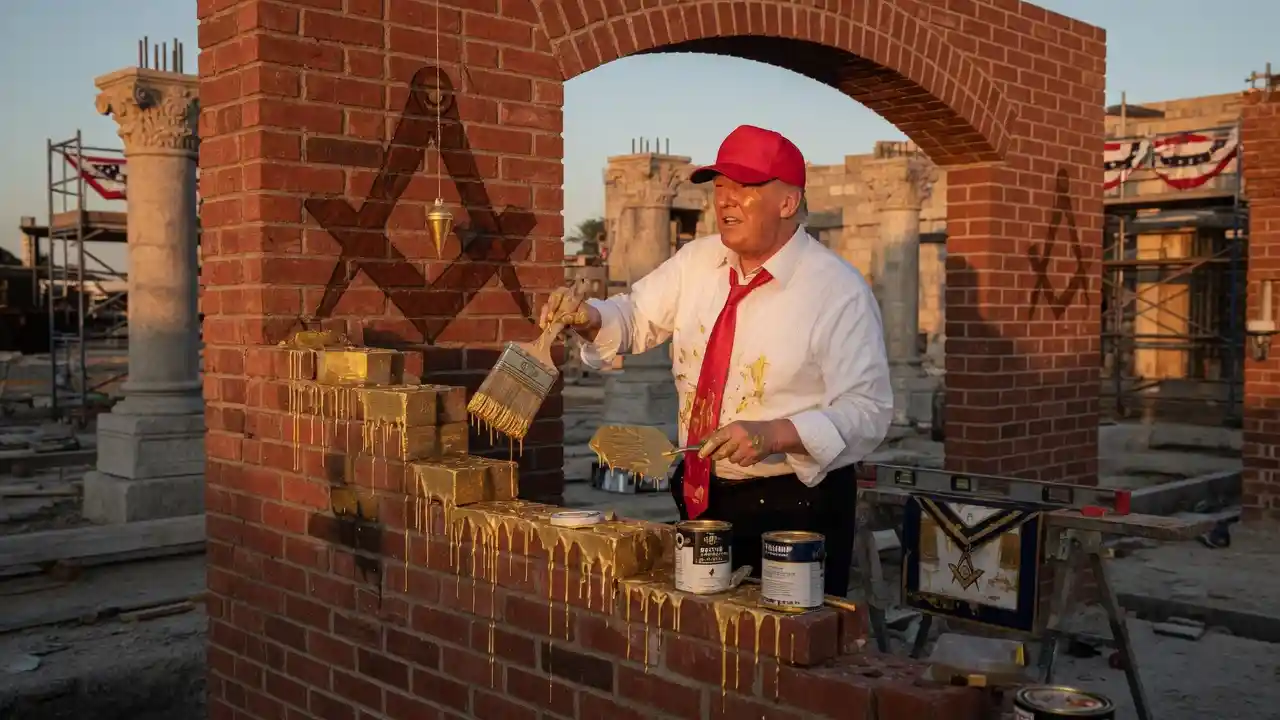
Every contractor who works with stone and masonry should be paying attention to what’s unfolding at the Eisenhower Executive Office Building in Washington, D.C.
The trump magic paint controversy centered on a proposal to coat a 138-year-old granite facade with mineral silicate paint has become a case study in what happens when coating selection ignores substrate chemistry.
Our team sees direct lessons here for precast concrete professionals and anyone specifying exterior masonry finishes across the Midwest.
New Construction Homes Las Vegas Demand Smarter Grading
Key Takeaways:
- Mineral silicate paints bond chemically with substrates containing calcium carbonate limestone, sandstone, concrete, and marble qualify, but granite does not.
- Coating an incompatible substrate can trap moisture, accelerating spalling, cracking, and long-term structural deterioration.
- Precast concrete is one of the ideal substrates for mineral silicate coatings when properly specified and applied.
Why Does the Trump Magic Paint Debate Matter to Contractors?
A plan by President Donald Trump to paint the granite facade of the Eisenhower Executive Office Building next to the White House with a white mineral silicate-based masonry paint which he has called a “magic paint” won’t work as described, according to 25 restoration specialists.
The reason is rooted in basic materials science, and it’s a lesson we reinforce with every client conversation.
Specialists say mineral silicate paints are inappropriate for granite because granite doesn’t contain calcium carbonate.
These paints are designed to chemically bond with stone that contains calcium carbonate, such as limestone, sandstone, or marble.
The bonding process is called silicification the potassium silicate binder in the paint penetrates into masonry pores and reacts with the substrate’s mineral components (like calcium carbonate) to create covalent chemical bonds, forming a microporous crystalline matrix that effectively “turns to stone” as it cures.
Without that calcium carbonate present, the bond simply doesn’t form correctly.
The trump magic paint episode illustrates a fundamental principle our contractors follow: the coating must match the substrate.
How Leavenworth Federal Penitentiary Shapes Midwest Construction
Trump Magic Paint It Means for Masonry
— US News (@Us_news_ways) August 3, 2026
The trump magic paint controversy centered on a proposal to coat a 138-year-old granite facade with mineral silicate paint has become a case…@4ConstructnPros @mason_assoc @MasonryMagazine https://t.co/yGVETxNkHv
How Does Substrate Compatibility Actually Work?
Here’s the comparison table we use when advising on exterior coating systems:
| Substrate | Contains Calcium Carbonate? | Mineral Silicate Bond? | Recommended Coating Approach |
|---|---|---|---|
| Precast Concrete | Yes | Strong chemical bond | Direct application; no primer needed on clean surfaces |
| Limestone | Yes | Strong chemical bond | Ideal substrate; centuries of proven European use |
| Sandstone | Often | Good bond (varies by composition) | Test panels recommended |
| Granite | No | Poor / no chemical bond | Requires primer or acrylic agent — undermines silicate benefits |
| Brick | Variable | Good bond on most types | Excellent results on standard clay brick |
| Marble | Yes | Strong chemical bond | Common in monument restoration |
This table captures exactly why the trump magic paint proposal raised alarms among professionals.
The National Trust for Historic Preservation warned that painting the historic building would likely cause structural damage, as coating the surface with an impermeable layer of paint would trap moisture within the masonry, accelerating physical deterioration, cracking, scaling, and spalling.
Our analysis suggests that any contractor working on exterior masonry whether a historic facade or a new precast panel installation — must evaluate substrate chemistry before specifying a coating.
What Does This Mean for Precast Concrete Projects?
Here’s where the trump magic paint story becomes genuinely useful for our readers.
Precast concrete is actually one of the best substrates for mineral silicate coatings.
Mineral silicate paints are, according to KEIM, the longest-lasting finishes for concrete and masonry of all types, with colors that simply do not fade.
Because precast concrete contains abundant calcium carbonate in its cite cite cementite cementitious matrix, the potassium silicate binder can fully react and petrify.
Construction industry insiders are noting the irony: the very coating that fails on granite excels on concrete and precast panels.
For Midwest contractors pouring or installing architectural precast, this means mineral silicate coatings offer:
- Vapor permeability that lets moisture escape rather than become trapped
- UV and weather resistance without the film-forming drawbacks of acrylic paints
- Color permanence — pigments are mineral-based and resist fading
- Zero VOCs in most formulations, supporting LEED and green building compliance
Similar coatings have been used in Europe for over 160 years and are now produced for the first time in North America.
How Pembroke Pines FL Projects Build the Future
How Should Contractors Specify Coatings Correctly?
Our team recommends this process for any exterior coating decision on precast or masonry substrates:
- Identify the substrate composition. Confirm whether calcium carbonate is present. For precast concrete, this is almost always the case.
- Conduct test panels. Even government review commissions have requested information about adhesion, water infiltration, long-term maintenance, and ease of removal before approving coating applications. Apply coatings on small, inconspicuous areas first.
- Evaluate vapor permeability. A quality potassium silicate coating should achieve roughly 92% vapor permeability when applied directly to masonry.
- Confirm the manufacturer’s substrate recommendations. Not all mineral silicate products perform identically. Some modern sol-silicate formulations offer broader compatibility.
- Document everything. Keep records of substrate tests, product data sheets, and test panel photographs — especially on landmark or historically sensitive projects.
If you’ve been following architectural precast trends across the Midwest, this won’t come as a surprise: documentation and substrate testing are becoming non-negotiable in competitive bids.
Grey County Builder Lischkoff Fine: A Warning for Buyers
Why the Trump Magic Paint Controversy Carries Lasting Lessons
The EEOB, built between 1871 and 1888, features an ornate granite and slate exterior that makes it one of the country’s best examples of French Second Empire architecture designated a National Historic Landmark in 1969 and listed on the National Register of Historic Places.
The building’s granite walls are four feet thick, with 16-foot ceilings and nearly two miles of tiled corridors.
The trump magic paint proposal, regardless of its political dimensions, has forced a national conversation about coating chemistry that our industry rarely gets at this scale.
Removing paint from a masonry surface is difficult, costly, and inevitably degrades the surface and the historic EEOB has been preserved, un-painted, since its completion in 1888.