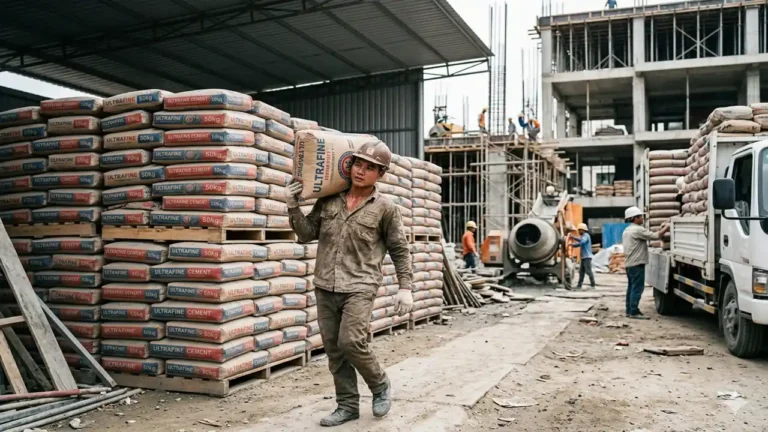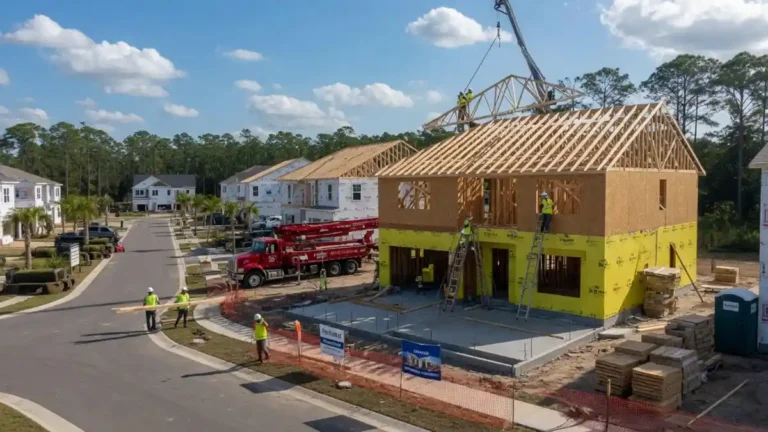

Construction debris removal is the process of sorting, hauling, and disposing of the waste a project generates from concrete offcuts and rebar to cardboard and demolition rubble. Handle it well, and your site stays safe and on schedule. Handle it poorly, and you lose hours to cleanup and risk fines.
At Midwest Precast Contractor, we clear debris on precast and structural jobs across Des Moines, Milwaukee, Ankeny, and West Des Moines every week. This guide shows you how to do it right.
Key takeaways
- Construction sites generate roughly 6 pounds of waste per square foot — plan for it before you break ground.
- Sorting at the source cuts hauling costs and boosts recycling rates.
- Hiring a professional removal service saves time and keeps you compliant with disposal law.
Why the Traditional Cleanup Approach Fails
The old approach treats debris removal as an afterthought. Crews toss everything into one bin, haul it at the end, and hope it fits.
That method costs you. Mixed loads get charged at higher landfill rates, and a cluttered site slows every trade working around it. Our crews observed a single overloaded roll-off on an Ankeny job block a delivery lane for two days — enough to push a pour behind schedule.
Safety is the bigger risk. OSHA reports that slips, trips, and falls tied to poor housekeeping remain among the most common preventable job-site injuries. Loose debris is not just messy. It is a liability.
The fix starts with a plan you make before the first load of material arrives.
What Bethesda Metro Center Bethesda MD Teaches Builders
How Construction Debris Removal Actually Works
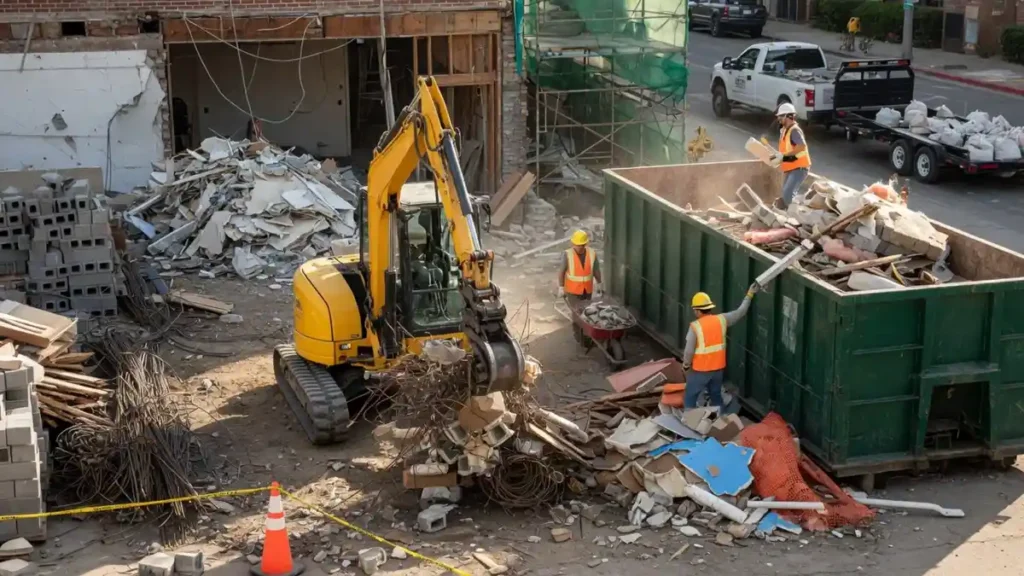
Construction debris removal works best as a system, not a final chore. You separate materials as they are created, store them in labeled containers, and route each stream to the right destination.
Sorting at the Source
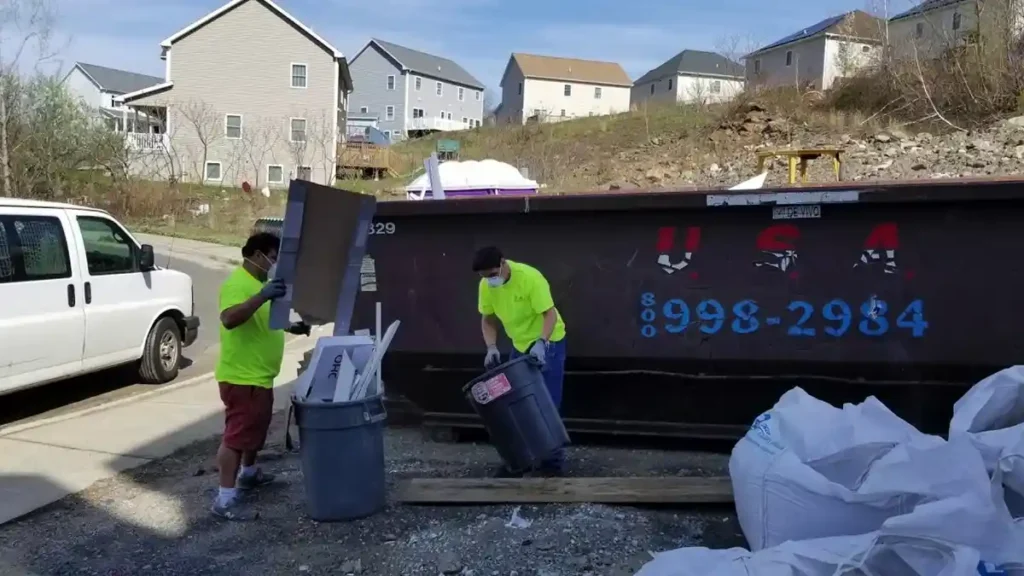
Sorting at the source means separating waste the moment it is generated. You set up labeled bins for concrete, wood, metal, and mixed trash instead of one catch-all container.
This matters because most job-site waste is recyclable. Concrete, wood, dirt, and asphalt typically make up the bulk of what you throw out — and all four are easily reused. Sorting them upfront turns a disposal cost into a recovery opportunity.
Hauling and Disposal
Hauling is the transport of sorted debris to landfills, recycling centers, or reuse facilities. This is where heavy materials like concrete, steel, and drywall become a problem for untrained crews.
As Junk King’s field guidance notes, heavy construction materials are dangerous and time-consuming to haul without the right equipment, which is why most contractors hand this stage to a professional service. Construction debris accounts for about one-third of all waste in the United States, so the destination you choose has real environmental weight.
Anaheim Regional Transportation Intermodal Center Builders About Durability
Traditional vs. Modern Debris Removal
| Factor | Traditional Method | Modern Method |
|---|---|---|
| Sorting | One mixed bin | Labeled bins by material |
| Timing | Cleanup at project end | Ongoing, source-based |
| Cost | Higher landfill fees | Lower via recycling |
| Safety | Cluttered, hazard-prone | Clear, organized lanes |
| Recycling rate | Low | High |
Debris Removal Methods Compared
| Type | Mechanism | Best Use Case |
|---|---|---|
| Roll-off dumpster | Large container hauled when full | High-volume new builds |
| Dumpster bag | Portable bag for lighter loads | Small remodels |
| Full-service haul | Crew sorts and removes for you | Busy commercial sites |
| On-site crushing | Concrete crushed for reuse | Precast and demolition jobs |
2026 Cost Snapshot
Expect $400 to $900 per roll-off container in 2026, depending on size and material weight. Full-service removal runs higher because labor is included.
A typical debris budget breaks down like this:
- Hauling and disposal fees: ~60%
- Labor and sorting: ~30%
- Permits and documentation: ~10%
What the McCormick Place West Building Teaches Builders
Construction Debris Removal for Midwest Job Sites
— US News (@Us_news_ways) September 16, 2026
Construction debris removal is the process of sorting, hauling, and disposing of the waste a project generates from concrete…@UCS_GCDMX @constructline @CNplus https://t.co/uVNjsmpzPG
Step-by-Step Debris Removal Process
- Estimate volume early. Use the ~6 lbs/sq ft benchmark to size your containers before work starts.
- Set up labeled bins for concrete, wood, metal, and general trash.
- Sort as you go so recyclables never end up in the landfill stream.
- Pack strategically — run long boards the length of the container and place hollow items open-side up.
- Schedule hauls at intervals, not just at the end, to keep lanes clear.
- Document disposal to confirm compliance and recycling rates.
Pros and Cons
Pros
- Cleaner, safer job sites
- Lower disposal costs through recycling
- Faster project timelines
- Regulatory compliance
Cons
- Requires upfront planning
- Needs container space on tight lots
- Extra coordination between trades
Case Study: A West Des Moines Commercial Pour
On a 20,000-square-foot commercial build in West Des Moines, the team projected roughly 60 tons of debris using the standard benchmark. By sorting concrete for on-site crushing and separating metal, they diverted 48% of waste from the landfill.
The result: hauling costs dropped by an estimated $3,200, and the site passed its safety inspection with zero housekeeping violations.
How Midwest Precast Contractor Applies This
Our work makes debris removal simpler by design. Precast Concrete components arrive finished, cutting the on-site waste that cast-in-place pours create. Structural Framing and Formwork Systems reduce offcuts because our forms are engineered for reuse, not single-use disposal.
Fewer wasted materials mean fewer bins to haul. See how our full lineup keeps sites cleaner on our services page.
What the McCormick Place West Building Teaches Builders
Common Mistakes to Avoid
- Undersizing containers and paying for emergency swaps mid-project.
- Mixing recyclables with general trash, which raises landfill fees.
- Waiting until the end to clean up, creating safety hazards along the way.
- Skipping documentation, which leaves you exposed at inspection.
FAQ
How much does construction debris removal cost?
Most roll-off containers run $400 to $900 in 2026. Full-service debris hauling costs more because labor and sorting are included.
Can construction debris be recycled?
Yes. Concrete, wood, metal, and asphalt are all recyclable, and diverting them lowers your disposal fees.
How much waste does a construction site produce?
Sites average about 6 pounds of debris per square foot. That waste makes up roughly one-third of all US landfill volume.
Do I need a professional debris removal service?
For heavy materials like concrete and steel, yes. Professional removal is safer, faster, and keeps you legally compliant.
Ready to Clear Your Site?
Smart construction debris removal protects your schedule, your budget, and your crew. From Precast Concrete to Structural Framing and Formwork Systems, Midwest Precast Contractor builds cleaner job sites across Des Moines, Milwaukee, Ankeny, and West Des Moines.