Are you planning to build your dream home, expand a commercial space, or map out an infrastructure asset? If so, tracking the cement price is likely at the top of your to-do list. In construction, budgeting accurately isn’t just a best practice; it’s the difference between a successful project completion and unexpected financial strain.
Because cement typically accounts for 12% to 15% of the total material cost in residential building projects, even minor market shifts can create a ripple effect through your entire financial plan.
In this comprehensive guide, we will break down the current state of cement price dynamics across global markets, explore what drives these fluctuations, examine regional variations, and share actionable procurement strategies to protect your bottom line.
Asphalt and Concrete Maintenance for Residential Communities
What is the Current Average Cement Price Globally?
Featured Snippet Optimization
What is the average cement price in 2026?
Globally, bulk cement price levels vary significantly by region due to energy and operational expenses. In the United States, the market average rests at approximately $96 per metric ton (MT). In Europe, heavy regulatory compliance pushes prices higher, with Germany averaging $250/MT.
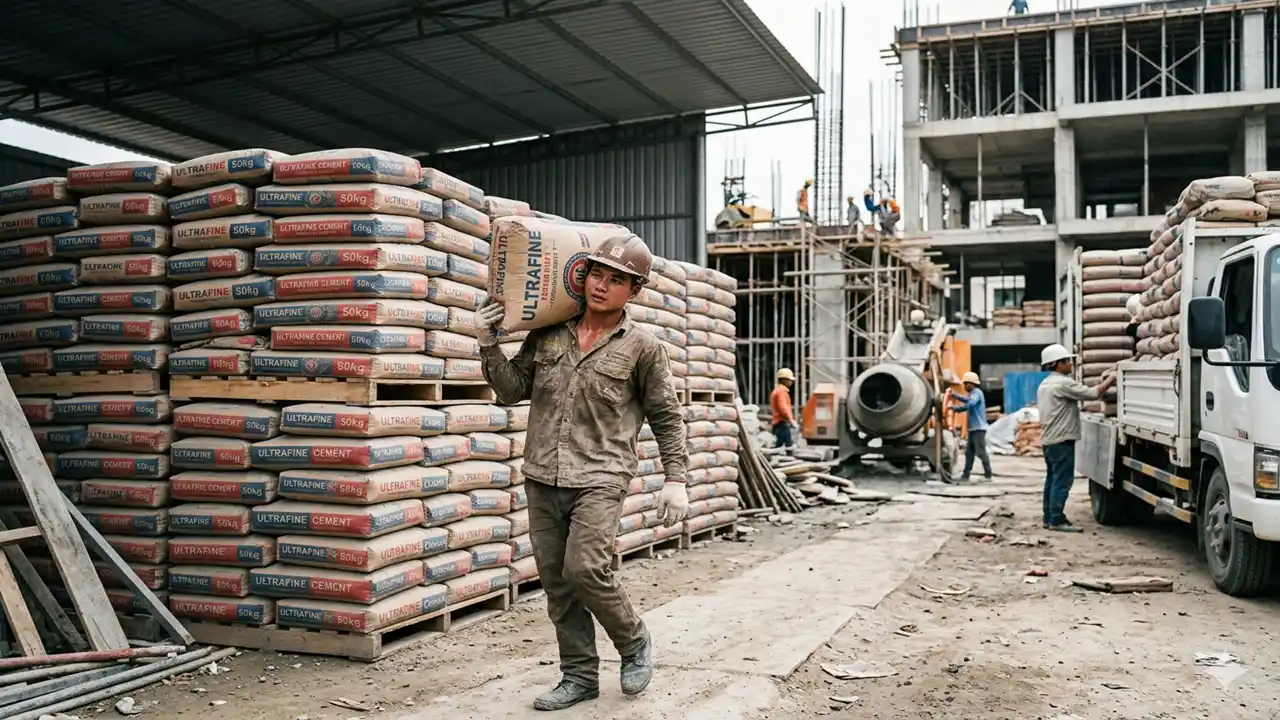
Conversely, manufacturing hubs in Asia show lower baselines, with China sitting around $54/MT and retail bags in India ranging between ₹350 to ₹470 per 50kg bag depending on the specific grade and brand.
Key Drivers Behind Today’s Cement Price Changes
Understanding why the cement price moves up or down helps contractors and homeowners anticipate market shifts. The manufacturing of binder materials is incredibly resource dependent, making it highly sensitive to external economic pressures.
Volatile Energy and Fuel Costs
Cement production requires extreme heat, traditionally achieved in kilns via pulverized coal or petroleum coke (petcoke). Recent data indicated that shifting crude oil valuations directly pressure petcoke and packaging costs.
When energy prices climb, manufacturers immediately pass these manufacturing expenses down to consumers, directly increasing the local cement price.
Freight and Logistics Overhead
Because cement is heavy and bulky, transport logistics make up a massive slice of its final retail cost. Long-haul shipping relies heavily on diesel fuel. According to macro industrial tracking data, internal freight and logistics can add a substantial premium per retail bag, making localized distribution networks a vital factor in final pricing.
Asphalt and Concrete Maintenance for Residential Communities
How Grades and Varieties Impact the Cement Price
Not all building materials are created equal. The specific variety you select for your structural applications plays a fundamental role in determining your final cement price invoice.
Ordinary Portland Cement (OPC)
OPC remains a structural staple, particularly categorized into Grade 43 and Grade 53. Because OPC 53 cures rapidly and achieves exceptional load-bearing strength quickly, it commands a higher cement price premium. It is the go-to choice for high-rise slabs, columns, and industrial foundations.
Portland Pozzolana Cement (PPC)
PPC incorporates pozzolanic materials like fly ash, making it highly resistant to chemical environments and thermal cracking. Over the past year, PPC has captured nearly 65% to 70% of the residential market. It is highly workable, has a lower heat of hydration, and offers a more affordable cement price point than premium OPC options.
Regional Dynamics Shaping the Building Material Market
The location of your job site dictates your local market reality. Infrastructure initiatives and government expenditure create unique regional supply and demand curves.
SPML Infra Water Project Indore: Transforming Urban Water Distribution
The Western Hemisphere and Supply Resilience
In North America, public spending initiatives continue to sustain stable demand. According to the U.S. Bipartisan Infrastructure Law framework, billions allocated toward public transit, highways, and bridges keep raw material consumption steady.
However, optimized logistics systems have helped stabilize the localized bulk cement price, preventing extreme spikes despite high consumption.
Sustainability Directives in European Markets
Across Europe, strict environmental frameworks heavily influence consumer costs. Under the umbrella of the European Green Deal, manufacturers face strict carbon emission boundaries. Upgrading plants to integrate alternative fuels and low-clinker mixtures increases initial capital expenditure, reflecting in an elevated regional baseline cement price.
Actionable Tips to Optimize Your Structural Material Budget
You don’t have to be at the absolute mercy of market fluctuations. Implementing a few tactical procurement methods can yield noticeable savings on your structural expenses.
- Time Your Purchases Strategically: The construction sector slows down considerably during heavy monsoon or winter seasons. Buying during these low-demand cycles allows you to lock in a more competitive retail cement price.
- Negotiate Bulk Contracts: Retail individual bag rates are always higher than commercial scale delivery quotes. If your structural layout allows for safe, dry on-site storage, ordering in bulk quantities opens the door for discount negotiations.
- Evaluate Blended Alternatives: Unless your structural engineer explicitly specifies OPC 53 for a particular component, utilizing PPC or blended composites can shave off a noticeable percentage of your aggregate material expenses.
The Future with Acue Marmonite Inc.
Common Questions Regarding Local Supply and Material Costs
Why do material costs vary between nearby distribution dealers?
A local cement price isn’t fixed uniformly because retail suppliers face unique regional realities. Individual dealer proximity to major railheads or manufacturing plants changes the localized transport costs significantly.
Furthermore, high-volume dealers often receive bulk factory rebates that they can choose to pass along to their retail customers.
Ryobi Pressure Washer Recall: Affected Models, Safety Risks, and Next Steps
Does eco-friendly or low-carbon cement cost more?
Initially, yes. Green formulations involving advanced carbon-capture processing carry slightly higher development premiums. However, because they improve long-term building insulation and boast lower degradation rates over time, their lifecycle cost often balances out the upfront investment.
Final: Take Control of Your Structural Material Expenses
Navigating market variations requires balancing current market data with smart onsite planning. While macro forces like fuel costs and international infrastructure spending will always exert pressure on the baseline cement price, your approach to material selection, timing, and supplier negotiation remains entirely within your control.