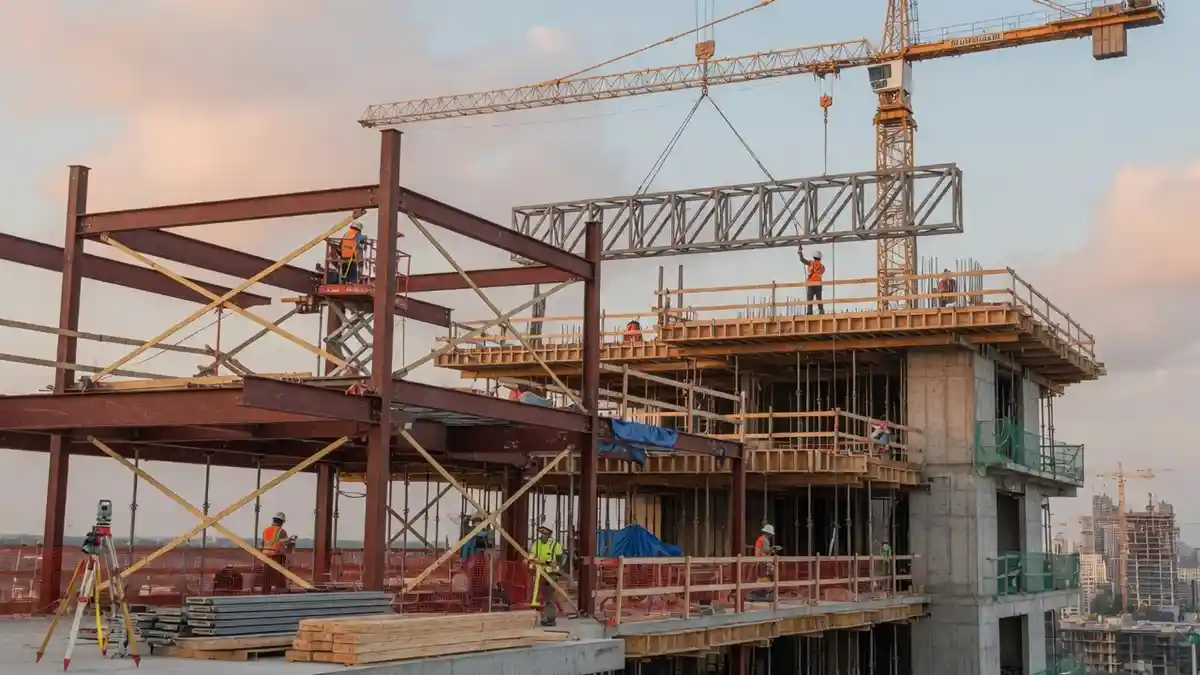
When a major carriageway shuts down for reconstruction, the framing decisions made on day one shape every deadline that follows.
That reality came into focus when Minister Dave Umahi announced the closure of an Eko Bridge carriageway for reconstruction.
Buildwell construction methods, built around precast structural framing, are how modern teams keep projects like this moving.
Home Depot Acquisition Expansion Reshapes Framing Supply
Key Takeaways
- Precast structural framing can shorten site timelines by moving fabrication into controlled plants, which reduces weather delays and rework.
- The Eko Bridge case shows why load-path integrity matters: damaged pier and pile-cap elements demand framing systems built to verified standards.
- Buildwell construction practices align with PCI and ACI benchmarks, helping contractors deliver predictable strength and schedules.
Why does structural framing matter more right now?
Infrastructure is aging faster than repair budgets can keep pace. The Eko Bridge situation is a clear example.
According to the Federal Ministry of Works, a vessel strike damaged the underwater pier and pile cap, compromising a section of the load path.
When a core structural member fails, the framing system carries the consequence. Our contractors note that this is the moment where framing choices stop being theoretical.
You either have a system engineered to redistribute loads, or you don’t.
Buildwell construction treats framing as the spine of the entire project, not an afterthought bolted on once foundations are poured.
TerraPower NRC Construction Permit It Signals
What makes precast framing different from cast-in-place?
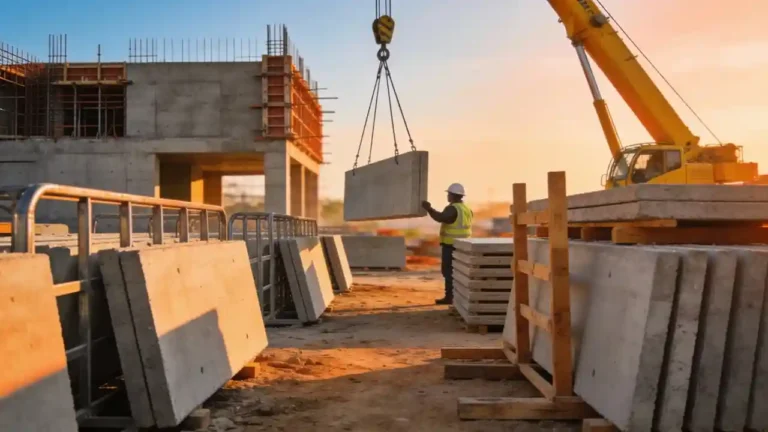
The difference comes down to where and how the concrete is formed. Precast structural framing is fabricated off-site in a controlled plant, then delivered and erected.
Cast-in-place framing is poured and cured on the job site. Both have a place.
But our analysis suggests precast offers real advantages when timelines are tight and quality control is non-negotiable.
Here is how the two approaches compare on the factors that affect your schedule and budget.
| Factor | Precast Structural Framing | Cast-in-Place Framing |
|---|---|---|
| Fabrication location | Controlled plant | On-site |
| Typical concrete grade | Grade 40–60 MPa (high early strength) | Grade 25–40 MPa |
| Weather sensitivity | Low during curing | High during curing |
| Speed of erection | Fast (delivered ready) | Slower (cure on site) |
| Quality consistency | High, plant-controlled | Variable, site-dependent |
| Best-fit projects | Bridges, decks, tight schedules | Complex custom geometry |
The pattern is consistent.
Precast helps reduce the variables that stall a project once crews are on site.
Reporting from ENR has tracked this shift toward off-site fabrication across large infrastructure programs for years.
How does buildwell construction install structural framing?
A dependable framing sequence follows a defined order. Skipping or reordering steps is where problems begin.
Here is the process our teams follow on buildwell construction projects.
- Review the load path and site conditions.
Confirm what the framing must carry, including dead loads, live loads, and any dynamic forces like traffic or water impact. - Specify concrete grades and reinforcement.
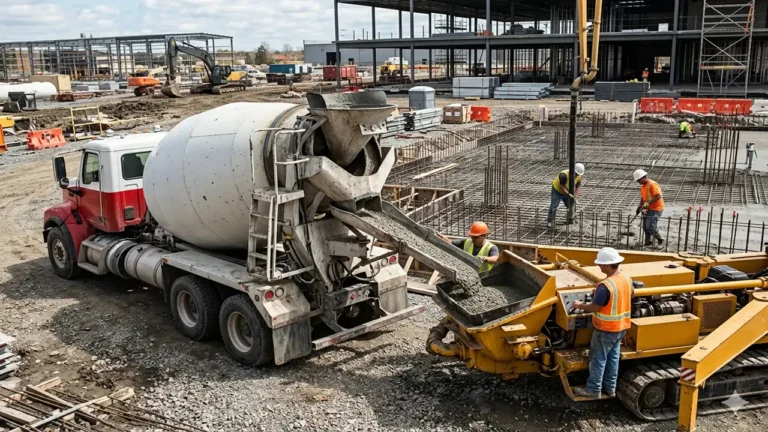
Match the mix design to the demand, following ACI 318 for reinforced concrete and PCI guidance for precast members. - Fabricate or verify precast elements.
For precast, confirm each element cured to its target strength before it leaves the plant. - Prepare the foundation and connection points.
Set bearing pads, anchor bolts, and embed plates to tolerance before delivery arrives. - Erect and set members with the right equipment.
Use a rated mobile crane or crawler crane sized to the heaviest lift, and confirm rigging plans in advance. - Complete connections and grouting.
Tie members into the load path with welded, bolted, or grouted connections per the engineered detail. - Inspect and document.
Verify alignment, connection integrity, and curing before releasing the section to the next trade.
Every step feeds the next. Get the sequence right, and the rest of the build follows.
Construction Accidents Attorney Your Framing Crew
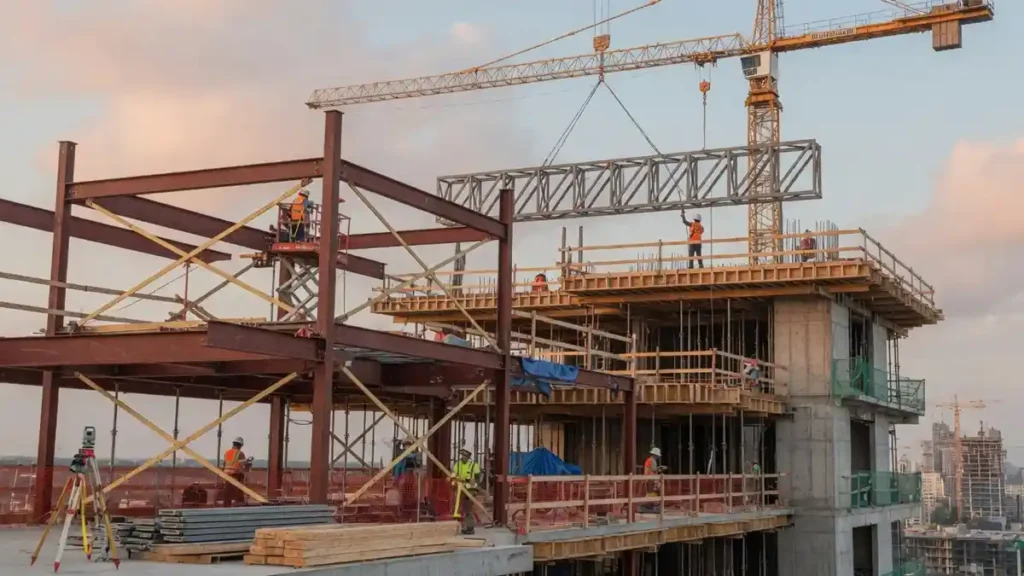
What standards should guide your framing decisions?
Standards exist because framing failures are expensive and dangerous.
The Precast/Prestressed Concrete Institute (PCI) sets the benchmarks for precast member design, fabrication, and erection.
The American Concrete Institute (ACI) publishes ACI 318, the structural concrete code most engineers reference.
Buildwell construction holds to both. We do this because a bridge deck or a building frame is only as reliable as the weakest connection in its load path.
If you’ve been following structural framing trends across the Midwest, this won’t come as a surprise.
The projects that stay on schedule are the ones that treat standards as the floor, not the ceiling.
Buildwell Construction Drives Smarter Structural Framing
— US News (@Us_news_ways) August 12, 2026
Buildwell construction methods, built around precast structural framing, are how modern teams keep projects like this moving.@ENRnews @constructdive @buildwell675231 https://t.co/lcaBf5MNLY
What can Midwest contractors learn from the Eko Bridge case?
The lesson is about redundancy and recovery. When the Eko Bridge pile cap was damaged, the framing system determined how much of the structure could stay in service.
Our analysis suggests that framing designed with clear load redistribution gives you options when something goes wrong.
Framing built to the minimum gives you none. Buildwell construction plans for the failure you hope never happens.
- Design connections that can be inspected and, if needed, replaced.
- Specify concrete grades with margin, not just the code minimum.
- Document the load path so future crews understand the original intent.
These practices may require more planning up front. They tend to cost far less than an emergency closure.
Zuckerberg Palo Alto Construction Noise
Bringing it together
Structural framing decides whether a project moves forward or stalls when conditions change.
The Eko Bridge reconstruction shows what happens when a load path is compromised and why framing built to verified standards matters.
Buildwell construction combines precast efficiency, PCI and ACI compliance, and a disciplined installation sequence to give you predictable strength and schedules. Your next step is straightforward.
Review your current framing specifications against your project’s real load demands, then decide where precast can reduce risk.