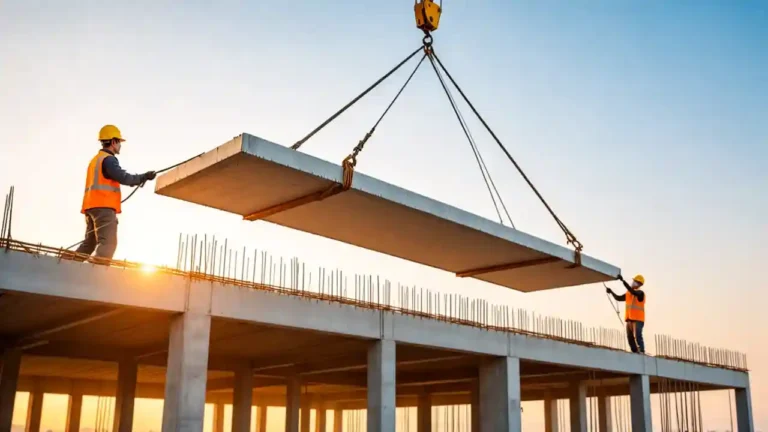
Wood deck construction is no longer limited to traditional lumber and post-hole diggers.
Across the Midwest, contractors and property owners are discovering that precast concrete structural framing is fundamentally changing how decks are planned, built, and expected to perform over decades.
If you’ve been following precast concrete trends across the Midwest, this won’t come as a surprise but the pace of adoption in 2024 and 2025 is accelerating faster than most predicted.
How to Excavate a Construction Site
Key Takeaways
- Precast concrete substructures reduce wood deck construction timelines by up to 40% compared to poured-in-place foundations
- Structural framing using precast components delivers superior load-bearing consistency, eliminating the frost-heave failures common in traditional post systems
- Long-term cost efficiency improves significantly when precast foundations replace wood ground-contact members that require replacement every 10–15 years
Why Are Contractors Rethinking Wood Deck Construction From the Ground Up?
Wood deck construction has always carried an inherent tension between aesthetics and structural longevity.
Lumber is beautiful, workable, and familiar — but wood that contacts soil or sits close to grade degrades predictably and expensively.
Our analysis suggests that the majority of deck failures we encounter in the Midwest originate not in the decking boards themselves, but in the substructure and foundation system below them.
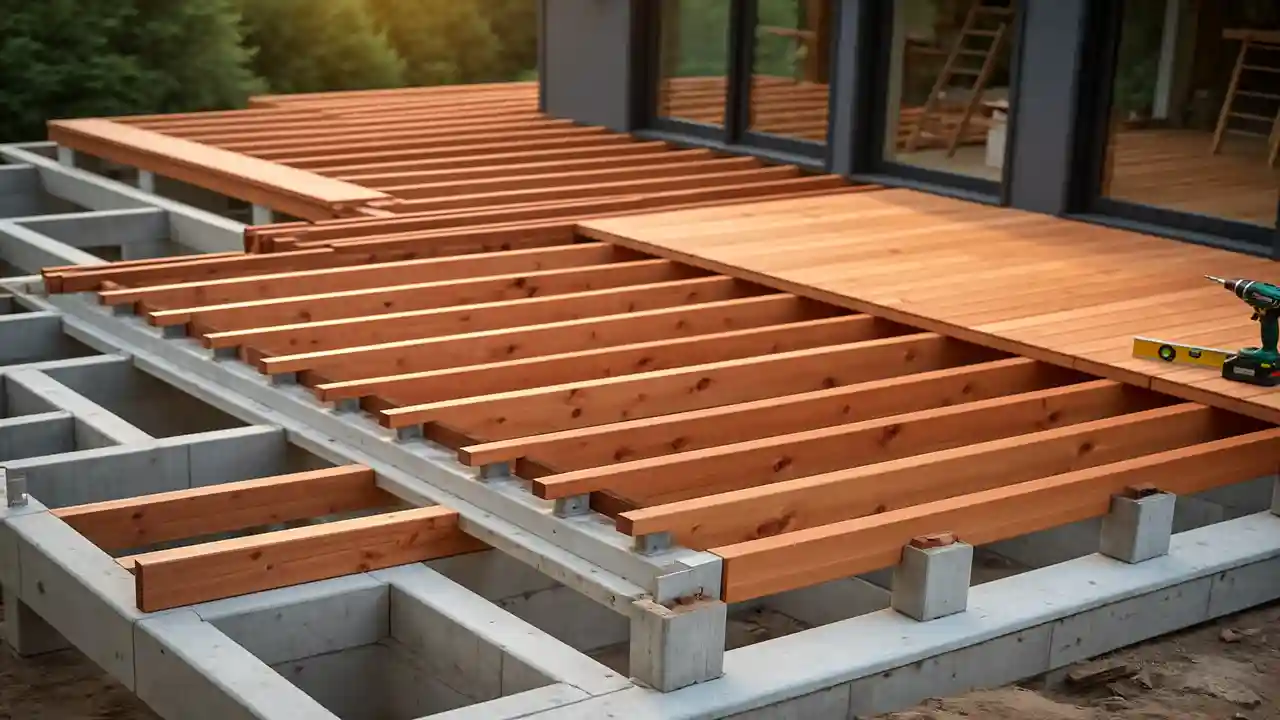
Construction industry insiders are noting a measurable shift toward hybrid deck systems, where precast concrete piers, grade beams, and beam pockets provide the structural skeleton, while wood or composite decking materials provide the finished walking surface above.
According to the American Concrete Institute, precast structural members consistently outperform site-poured alternatives in dimensional accuracy and compressive strength two factors that matter enormously when you’re anchoring beam loads from a large residential or commercial deck.
Construction Toys That Shaped Real Precast Concrete
How Does Precast Structural Framing Integrate With Traditional Wood Deck Construction?
The integration point is simpler than most builders expect.
Precast concrete piers are set to grade, frost depth is managed by the precast element rather than a wood post, and the wood framing system begins above the concrete connection point.
This means the wood is never in contact with soil moisture, which is the primary driver of rot, insect infiltration, and structural failure in conventional wood deck construction.
Our team has observed that builders who make this transition report fewer callbacks, fewer warranty claims, and faster inspections — because precast elements arrive with certified compressive strength documentation that satisfies most municipal building departments on first submission.
The American Wood Council’s Deck Construction Guide specifically acknowledges the role of isolated footings and pier systems, creating a code-compliant pathway for exactly this kind of hybrid approach.
Jacksonville Florida Healthcare Finance Construction Companies
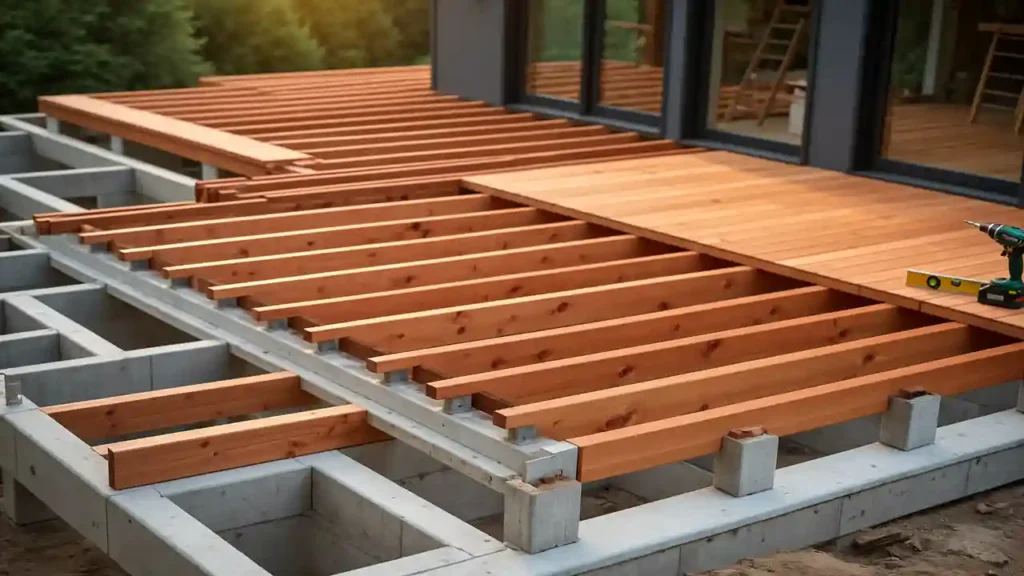
Step-by-Step: Installing Precast Pier Foundations for Wood Deck Construction
Follow this field-tested installation sequence used by our crews across Illinois, Indiana, and Missouri:
Step 1 — Site Layout and Load Calculation
Mark all pier locations per the approved structural drawing.
Verify that spacing does not exceed the beam span limits for your selected lumber grade, referencing AWC span tables.
Step 2 — Excavation to Frost Depth
In the Midwest, excavate to a minimum of 42 inches below finished grade in most zones.
Confirm local frost depth with your county building department or the NOAA Climate Data Portal.
Step 3 — Precast Pier Placement
Lower the precast concrete pier into the excavated hole using mechanical equipment for piers exceeding 200 lbs.
Verify plumb and top elevation before backfilling precision here eliminates shimming problems later.
Step 4 — Anchor Bolt or Post Base Setting
Set the embedded anchor bolt or ZMAX post base hardware to the pier top while the non-shrink grout is workable.
Allow a minimum 24-hour cure before applying any load.
Step 5 — Wood Framing Begins Above Grade
Install pressure-treated ledger board connection to the structure per IRC Section R507.
Wood deck construction framing beams, joists, and blocking proceeds entirely above the precast foundation system.
Step 6 — Inspection and Decking Installation
Schedule your footing inspection before backfilling where required by local jurisdiction.
Composite or hardwood decking is then fastened per manufacturer specifications.
Construction Machine Dealer Decisions That Transform Precast Projects
Wood Deck Construction Transformed by Precast Framing
— US News (@Us_news_ways) July 1, 2026
Wood deck construction is no longer limited to traditional lumber and post-hole diggers.@ThisOldHouse @Deckorators @Trex_Company https://t.co/nmkj3bBGUx
Precast vs. Traditional Wood Post Foundations: A Direct Comparison
| Factor | Precast Concrete Pier | Wood Post (In-Ground) |
|---|---|---|
| Expected Lifespan | 50–75+ years | 10–20 years |
| Frost Heave Risk | Low (mass and depth) | High |
| Installation Time | 2–4 hours per pier | 4–8 hours per post |
| Code Documentation | Certified at plant | Site-dependent |
| Moisture Degradation | None | Significant over time |
| Cost (Per Unit Installed) | $180–$320 | $90–$180 (initial only) |
The lifecycle cost comparison consistently favors precast when replacement and labor are factored in.
What Does This Mean for Midwest Contractors Bidding Deck Projects in 2025?
Our contractors note that clients are increasingly asking about longevity guarantees upfront.
Wood deck construction that incorporates precast structural framing gives contractors a defensible answer and a competitive differentiator — when discussing long-term performance.
According to data published by the National Association of Home Builders, deck components are among the most frequently replaced exterior elements in residential construction.
Removing the foundation from that replacement cycle is one of the most impactful structural decisions a contractor can make.
Wood deck construction isn’t going away but the way we support it from below is changing permanently, and precast concrete is leading that change across every Midwest market we serve.