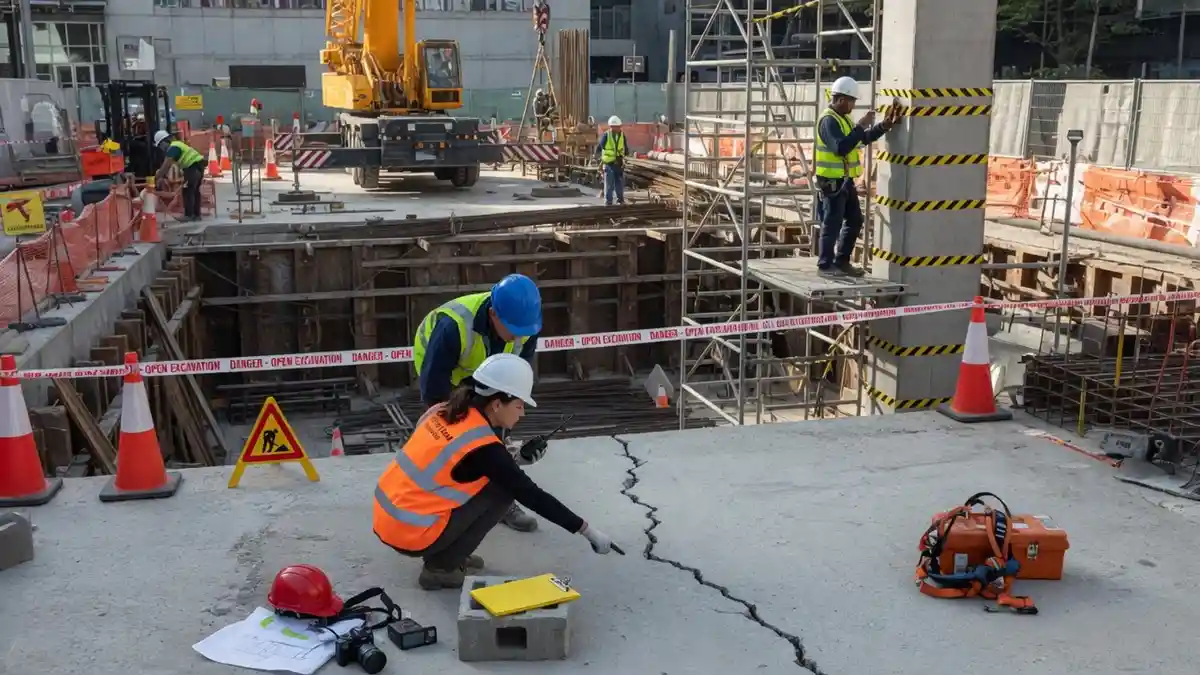
A single unplanned hazard on a Midwest jobsite can stall a pour, injure a crew member, and push your schedule past its milestone.
That risk is why knowing how to conduct a construction site risk assessment matters before the first panel arrives, not after an incident report is filed.
Our team treats the assessment as a working tool, not a filing exercise.
Builders Merchants Federation Shapes Precast Concrete
Key Takeaways
- A construction site risk assessment identifies hazards, rates them by likelihood and severity, and matches each to a control before work starts.
- The HIERARCHY OF CONTROLS ranks fixes from elimination down to PPE, and it should guide every decision you make.
- Documentation and a set review cadence keep the assessment useful as site conditions change.
Why Does This Matter Right Now?
Construction technology has changed how we spot and track risk on active sites.
Digital hazard logs, drone site scans, and shared incident dashboards now give crews faster visibility into conditions that used to go unnoticed until someone got hurt.
Our contractors note that pairing these tools with a disciplined process is where the real value shows up. Software alone does not reduce injuries.
A clear method for how to conduct a construction site risk assessment does, and technology helps you run that method faster and with better records.
How to Conduct a Construction Site Risk Assessment
— US News (@Us_news_ways) August 13, 2026
That risk is why knowing how to conduct a construction site risk assessment matters before the first panel arrives, not after an inciden…@CSISafety @safetyculture @patrick_oshag https://t.co/iBnyBxoxNm
What Is a Construction Site Risk Assessment?
At its core, it is a structured review of what could cause harm on your site and what you plan to do about it.
Guidance summarized in the widely referenced Risk Assessment for Construction Site document frames this as a repeatable cycle: identify, evaluate, control, record, and review.
That cycle holds whether you run a small precast install or a multi-crew commercial build. The goal is not to remove all risk.
The goal is to reduce risk to a level you can manage and defend.
Downtown LA Federal Building Barricades
How Do You Actually Run the Process?
Here is the workflow our team uses when we plan how to conduct a construction site risk assessment for a new project.
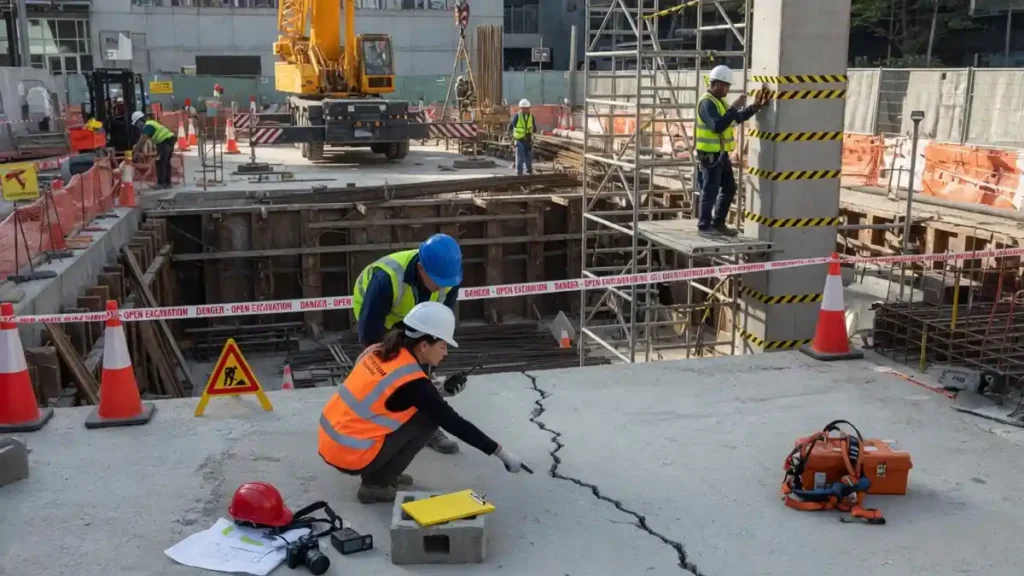
- Walk the site and identify hazards.
Start with a physical walkthrough before mobilization.
Look for fall exposures, crane and lift zones, overhead loads, buried utilities, dust, noise, and material storage risks.
The OSHA hazard identification guidance recommends combining inspections, worker input, and incident history so you catch hazards common knowledge might miss. - Rate each hazard by likelihood and severity.
For every hazard, ask two questions.
How likely is it to happen, and how badly could it hurt someone or damage the build?
This gives you a risk level you can compare across the whole site. - Select controls using the HIERARCHY OF CONTROLS.
Work top-down: eliminate the hazard first, then substitute, then apply engineering controls, then administrative controls, and only then rely on PPE.
Health hazards like silica dust may require specialized input, and resources from NIOSH at the CDC can help you set exposure controls correctly. - Document everything.
Record each hazard, its rating, the chosen control, and who owns it.
A written assessment is your evidence that the work was planned, not improvised. - Set a review cadence.
Site conditions change as trades rotate and phases advance.
The HSE construction guidance advises revisiting your assessment whenever the work, the site, or the crew changes materially.
New Home Construction Jacksonville Demand Now
How Do You Rate Risk Consistently?
A simple matrix keeps ratings honest across supervisors.
We use likelihood against severity to assign a level and a required response.
| Risk Level | Likelihood | Severity | Required Action |
|---|---|---|---|
| Low | Unlikely | Minor injury | Monitor; standard controls apply |
| Medium | Possible | Injury needing first aid | Add engineering or admin controls before work |
| High | Likely | Serious or lost-time injury | Stop-work until controls verified |
| Critical | Almost certain | Fatality or major failure | No work until hazard eliminated or substituted |
The matrix does not make the decision for you.
It gives your team a shared language so a “high” on one crew means the same thing on another.
What Does This Mean for Midwest Contractors?
If you have been following construction technology trends across the Midwest, this won’t come as a surprise.
Owners and general contractors increasingly ask to see your risk documentation before award.
A weak or missing assessment can cost you the bid, not just the safety margin.
Our analysis suggests the contractors who treat how to conduct a construction site risk assessment as part of preconstruction tend to see fewer schedule surprises.
Fewer stop-work events can help protect your pour windows and your labor budget.
That is a business outcome, not only a safety one.
How Will This Impact Your Next Build?
Precast work carries specific risks worth flagging early.
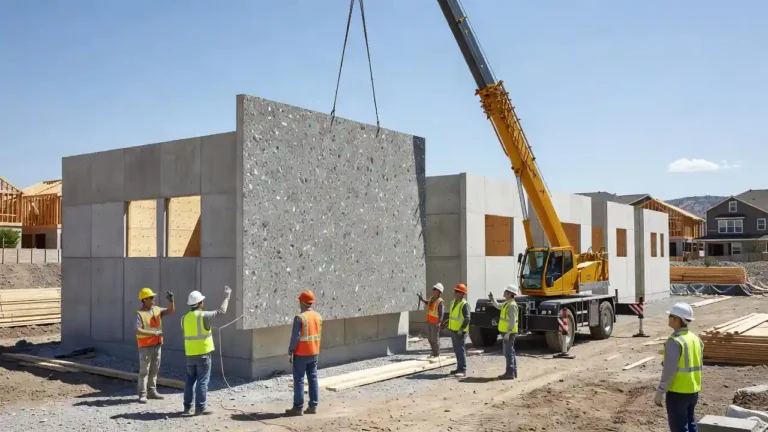
Panel lifting, rigging, temporary bracing, and connection sequencing all belong in your assessment from day one.
We found that mapping these against the matrix before delivery reduces the scramble when trailers arrive on site.
A good assessment also builds trust with your crew.
When workers see hazards named and controls assigned, they are more likely to report new risks instead of working around them.
Construction Company Proposal and Estimate Closing Rate Problems
Where Should You Start?
Begin with the hazards you already know from past jobs.
Then run a full walkthrough, apply the matrix, and match each risk to a control using the HIERARCHY OF CONTROLS.
Understanding how to conduct a construction site risk assessment is a repeatable skill, and it gets sharper with every project you document.
If you want a second set of eyes on your precast risk plan, tell us where your project stands and what the site needs to accomplish.