
If you’ve noticed your driveway looking more like an off-roading course or your front walkway becoming a trip hazard, you’re likely staring down a common homeowner headache: sunken concrete. The immediate fear is usually the price tag of a full replacement. However, most homeowners find that concrete leveling cost is significantly lower than pouring a new slab, often saving between 50% to 70% in total expenses.
What is the Average Concrete Leveling Cost?
On average, most residential concrete leveling projects range from $600 to $2,500. While that is a broad window, the specific price depends heavily on the method used to lift the slab back to its original height.
According to data trends in residential maintenance, the shift toward minimally invasive repairs has made leveling a preferred alternative to demolition. There are two primary “players” in the industry:
Concrete Sand: The Essential Guide to Quality and Construction Use
1. Mudjacking (Traditional Method)
Mudjacking is the “old school” approach. It involves drilling 1-2 inch holes into the concrete and pumping a “slurry” (a mix of water, soil, sand, and cement) underneath.
- Average Cost: $3 to $8 per square foot.
- Pros: Lower material cost and eco-friendly components.
- Cons: The slurry is heavy, which can sometimes cause the soil underneath to sink further over time.
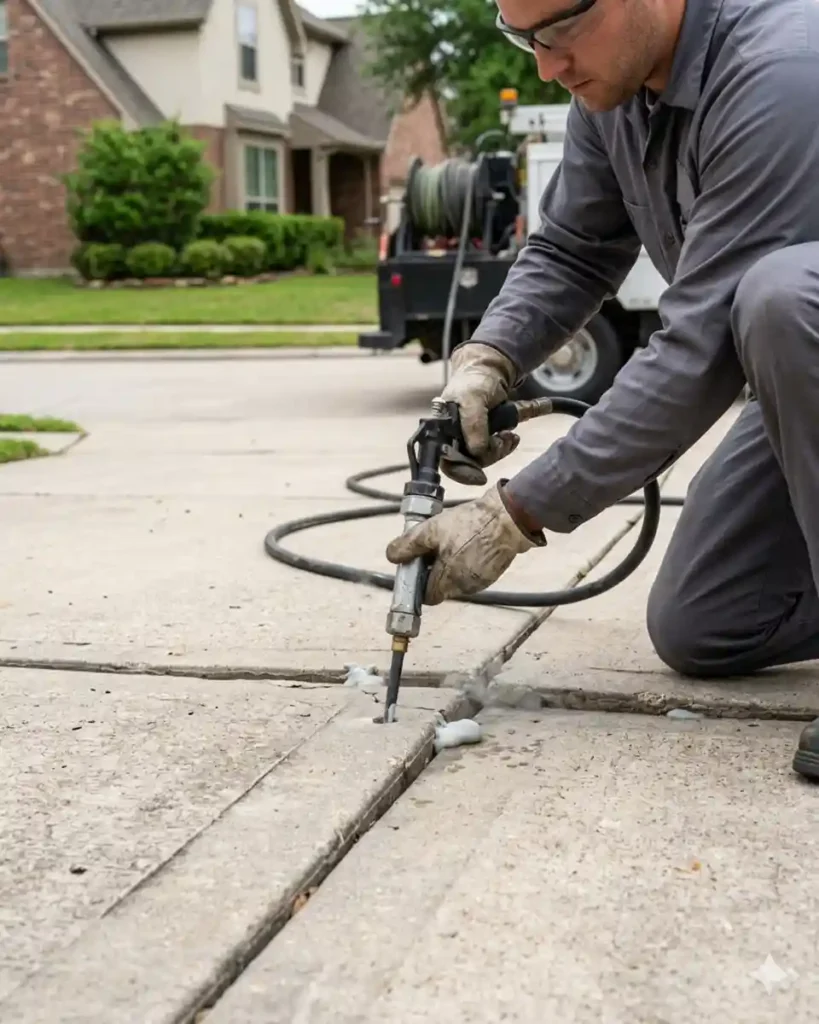
2. Polyurethane Foam Injection (Modern Method)
Often called “poly-leveling,” this method uses a high-density expanding foam.
- Average Cost: $10 to $25 per square foot.
- Pros: The foam is lightweight, waterproof, and cures in minutes. It requires much smaller “penny-sized” holes.
- Cons: Higher initial concrete leveling cost due to the specialized chemical materials.
Top Factors That Influence Your Concrete Leveling Cost
No two driveways are the same, and contractors look at several variables before handing you a bid. Understanding these can help you negotiate or prepare your budget.
Cost of Construction Per Sq Ft: A Guide to Budgeting and Safety
The Total Area and Degree of “Settle”
It’s not just about the surface area; it’s about the volume of the void underneath. A slab that has dropped 4 inches requires significantly more material than one that has dropped only 1 inch. Most contractors have a “minimum project fee” (often $500–$700) to cover the cost of bringing the equipment to your home.
Soil Condition and Stability
The reason your concrete sank in the first place matters. If you have “expansive clay” soil or poor drainage, the contractor may need to perform additional soil stabilization. According to the U.S. Geological Survey (USGS), soil composition varies wildly by region, and areas with high clay content often see more dramatic “heaving” and sinking, which can complicate the repair process.
Accessibility
Can the technician get their equipment to the repair site? A front driveway is easy to access. A sunken pool deck behind a narrow gate or a basement floor requires more labor and specialized hoses, which can increase the concrete leveling cost.
Is Concrete Leveling Worth It? (Cost vs. Replacement)
One of the most common questions homeowners ask is: “Why not just pour new concrete?”
The math usually favors leveling. Tearing out an old slab involves demolition labor, haul-away fees, and the cost of new materials. A full replacement can easily cost $15 to $20 per square foot. Furthermore, new concrete requires a “cure time” of several days to a week before you can drive on it.
In contrast, concrete leveling is usually completed in a few hours. According to guidelines from the U.S. Department of Housing and Urban Development (HUD) regarding home rehabilitation, choosing repair over replacement is often more sustainable and cost-effective for maintaining property values.
Construction Sign: The Ultimate Guide to Site Safety and Compliance
Common Areas Requiring Leveling
Depending on where the damage is, your concrete leveling cost might fluctuate:
- Sidewalks: Usually the most affordable because they are standard widths.
- Driveways: Costs are higher due to the thickness of the concrete needed to support vehicle weight.
- Steps: These are tricky and labor-intensive, often priced by the “step” rather than the square foot.
- Garage Floors: Often requires foam injection to ensure a moisture barrier is maintained.

Frequently Asked Questions
Does insurance cover concrete leveling cost?
Typically, standard homeowners insurance does not cover “settling” or “earth movement.” However, if the sinking was caused by a sudden pipe burst (sudden accidental water damage), you might have a claim. Check your policy for specific endorsements.
How long does a leveled slab last?
If the underlying drainage issue is fixed, mudjacking can last 5-10 years, while polyurethane foam can last a lifetime. The Federal Emergency Management Agency (FEMA) often highlights the importance of proper grading and drainage to prevent soil erosion, which is the #1 enemy of leveled concrete.
Can I DIY concrete leveling?
While “DIY foam kits” exist, they are generally not recommended for structural slabs. Large-scale leveling requires hydraulic pressure and precise monitoring to ensure the slab doesn’t crack during the lift.
Buc-ee’s Monroe County Construction Approval: Everything You Need to Know
Take Action Before the Crack Spreads
Ignoring a sunken slab won’t make the problem go away—it only makes the eventual concrete leveling cost higher as the void grows. By choosing to level your concrete now, you preserve your home’s curb appeal, eliminate safety hazards, and save thousands compared to a full replacement.