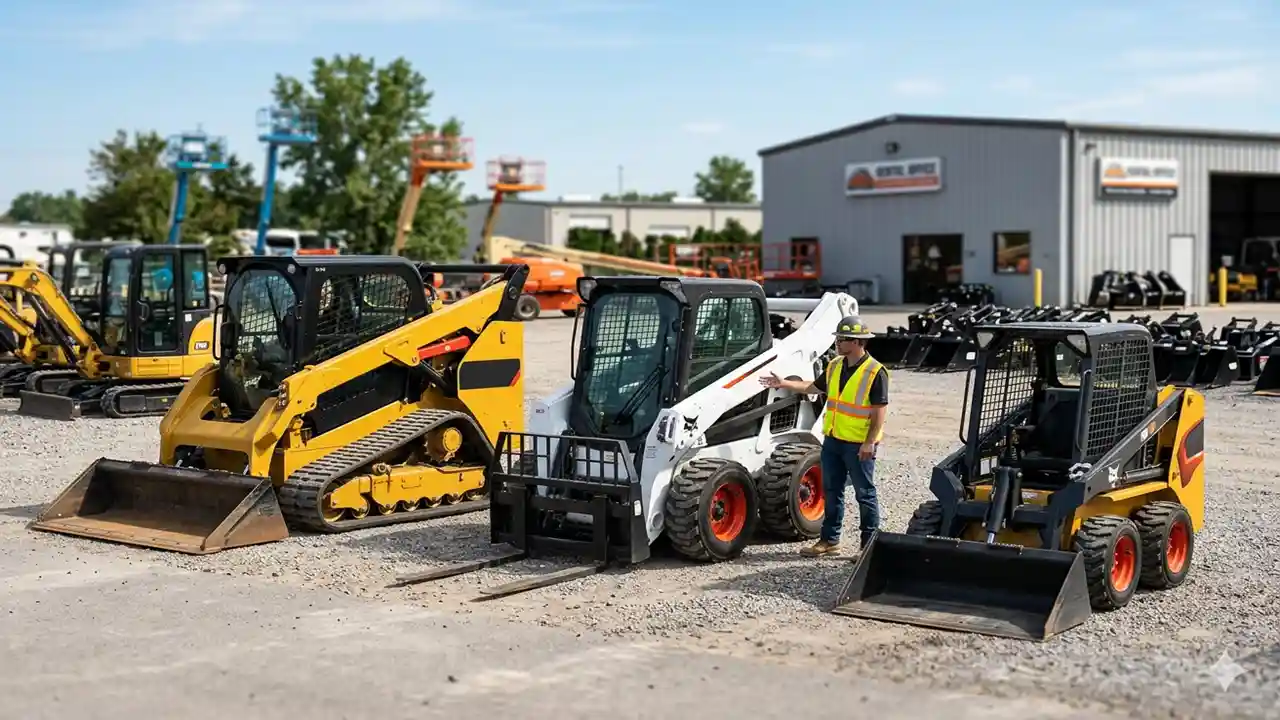
Whether you are a professional contractor or a weekend warrior tackling a major landscaping project, efficiency is the name of the game. When manual labor isn’t enough, but a full-sized excavator is overkill, the solution usually lies in a skid steer rental. These “Swiss Army Knives” of the construction world are compact, powerful, and incredibly versatile.
Why a Skid Steer Rental is the Smartest Choice for Your Jobsite
For many businesses, equipment ownership is a massive financial burden. Between the initial purchase price, routine maintenance, and the logistics of storage, the costs add up quickly. Opting for a skid steer rental allows you to access late-model, high-performance machinery without the long-term debt.
Beyond the financial perks, rentals give you the flexibility to match the machine to the specific task. You might need a small, nimble S70 for a backyard renovation one week and a heavy-duty large-frame loader for a commercial site the next.
Building Connected: The Future of Smart and Integrated Construction
Understanding Different Types of Skid Steers
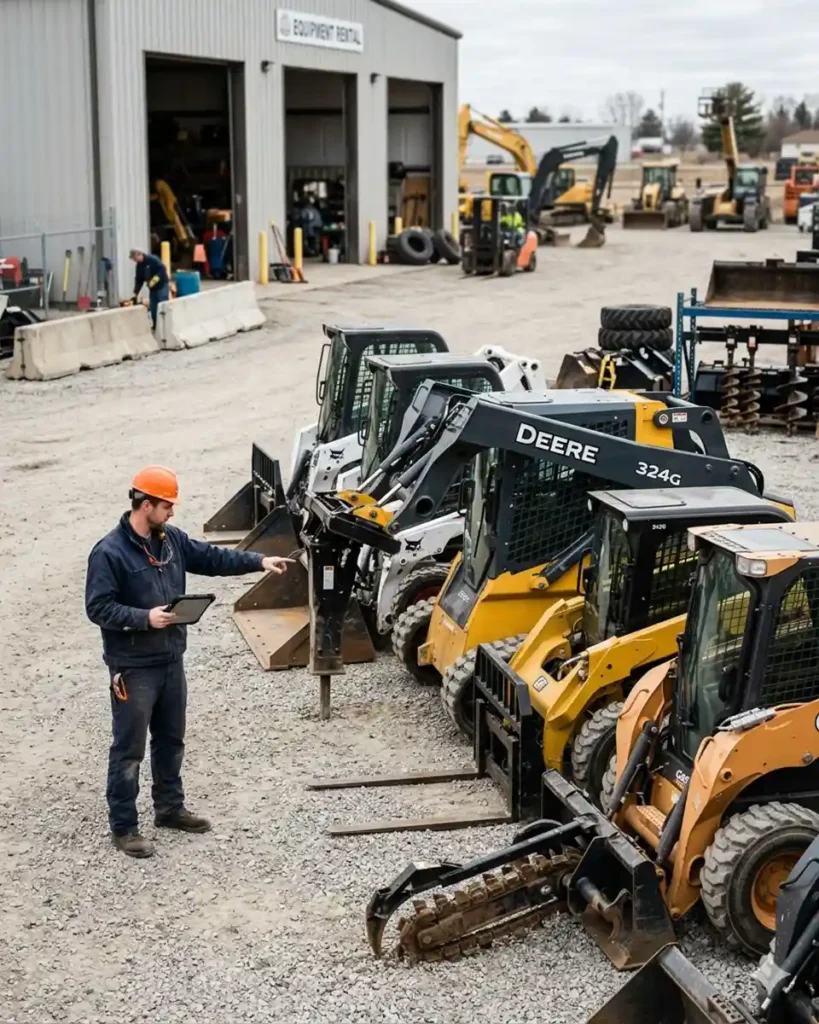
Before you sign a rental agreement, you need to know which machine fits your terrain and lifting needs.
1. Wheels vs. Tracks
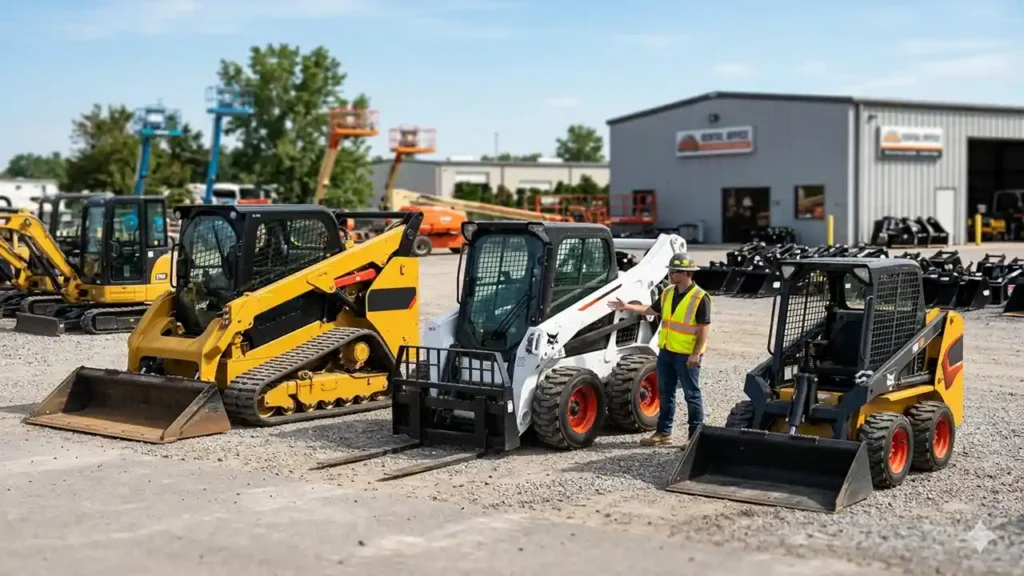
- Skid Steer Loaders (Wheeled): These are best for paved surfaces, concrete, or hard-packed dirt. They are faster and more maneuverable than tracked versions.
- Compact Track Loaders (CTL): Often grouped under the skid steer rental umbrella, these use rubber tracks. They are essential for muddy, sandy, or sensitive turf where you need lower ground pressure to avoid sinking or damaging the grass.
2. Radial Lift vs. Vertical Lift
- Radial Lift: The bucket moves in an arc. This is ideal for tasks performed at mid-range heights, such as grading, digging, or pushing dirt.
- Vertical Lift: The bucket rises straight up. This is the superior choice for loading high-sided trucks or stacking pallets in tight spaces.
Concrete Leveling Cost: Your 2026 Guide to Saving Your Slab
What Does a Skid Steer Rental Cost?
One of the first questions most project managers ask is: “How much should I budget?” While prices vary based on your geographic location and the size of the machine, here is a general breakdown of what to expect:
| Rental Duration | Estimated Cost Range |
| Daily | $250 – $500 |
| Weekly | $800 – $1,500 |
| Monthly | $2,200 – $4,000 |
Note: These prices typically do not include delivery fees, fuel surcharges, or specialized attachments.
According to data on equipment life cycles from the Association of Equipment Management Professionals (AEMP), renting is often more cost-effective for machines used less than 60% of the year, as it eliminates the “hidden” costs of depreciation and specialized repairs.
Top Attachments to Maximize Your Rental
The true power of a skid steer rental isn’t the machine itself, but the attachments you can hook up to its hydraulic system. Most rentals come standard with a bucket, but you can swap it out for:
- Augers: For drilling post holes or planting trees.
- Grapple Buckets: Perfect for clearing brush, logs, or demolition debris.
- Pallet Forks: Turns your loader into a rough-terrain forklift.
- Trenchers: For laying utility lines or irrigation pipes.
- Hydraulic Breakers: Used to demolish concrete sidewalks or driveways.
Key Safety and Operational Tips
Operating a skid steer is intuitive but requires respect for the machine’s power. Before starting your skid steer rental, ensure you follow these safety protocols:
- Read the Manual: Every brand (Bobcat, Caterpillar, John Deere) has slightly different control schemes (ISO vs. H-pattern).
- Check the Surroundings: Skid steers have notorious blind spots to the rear. Always ensure the “backup alarm” is functional.
- Keep the Load Low: When traveling with a full bucket, keep it as close to the ground as possible to maintain a low center of gravity and prevent tipping.
- Use the Safety Bar: Never operate the hydraulics without the seat bar engaged.
The Occupational Safety and Health Administration (OSHA) provides extensive safety worksheets for skid-steer operators to prevent common accidents like rollovers or unintended discharge of the lift arms.
Concrete Sand: The Essential Guide to Quality and Construction Use
How to Choose the Right Rental Partner
Not all rental yards are created equal. When searching for a skid steer rental, look for a provider that offers:
- On-site Delivery: Unless you have a heavy-duty truck and a high-capacity trailer, you’ll want the rental company to drop off and pick up the machine.
- Maintenance Support: If a hydraulic hose bursts at 10:00 AM, you need a provider that can send a mechanic or swap the machine immediately.
- Modern Fleet: Newer machines are more fuel-efficient and feature pressurized cabs with AC/Heat, which keeps operators productive in harsh weather.
Research from the American Rental Association (ARA) suggests that the rental industry is increasingly moving toward “smart” machines equipped with telematics, allowing users to track fuel consumption and efficiency in real-time.
Common Mistakes to Avoid When Renting
- Underestimating the Size: Renting a machine that is too small for the job will result in “tipping” or strained hydraulics. Always check the Rated Operating Capacity (ROC).
- Ignoring Ground Conditions: Using wheels on wet clay will leave you stuck. If it rained recently, opt for a tracked skid steer rental.
- Forgetting to Check Fuel: Most rental yards require you to return the machine with a full tank of diesel. If you don’t, you may be charged a premium “refueling fee” that is significantly higher than local pump prices.
Concrete Recycling Near Me: The Ultimate Guide to Sustainable Construction
Final: Ready to Move Some Earth?
A skid steer rental is more than just a piece of equipment; it is a force multiplier for your productivity. By selecting the right lift path, choosing the correct attachments, and partnering with a reliable rental yard, you can tackle complex earthmoving tasks with confidence.