Whether you are walking down a city sidewalk, living in a high-rise apartment, or driving across a bridge, you are surrounded by one of the most important inventions in human history. But have you ever stopped to wonder what exactly makes it so strong? If you are looking for the technical answer, the major component in building material cement is limestone, which provides the essential calcium carbonate needed for the chemical reaction.
In this guide, we will break down the “recipe” for cement, explain why certain minerals are non-negotiable, and look at how these raw materials transform into the foundation of our modern world.
Understanding the Basics: What Exactly Is Cement?
Before diving into the chemistry, it is important to clear up a common mix-up. People often use the words “cement” and “concrete” interchangeably, but they aren’t the same thing. Think of cement as the “flour” and concrete as the “cake.”
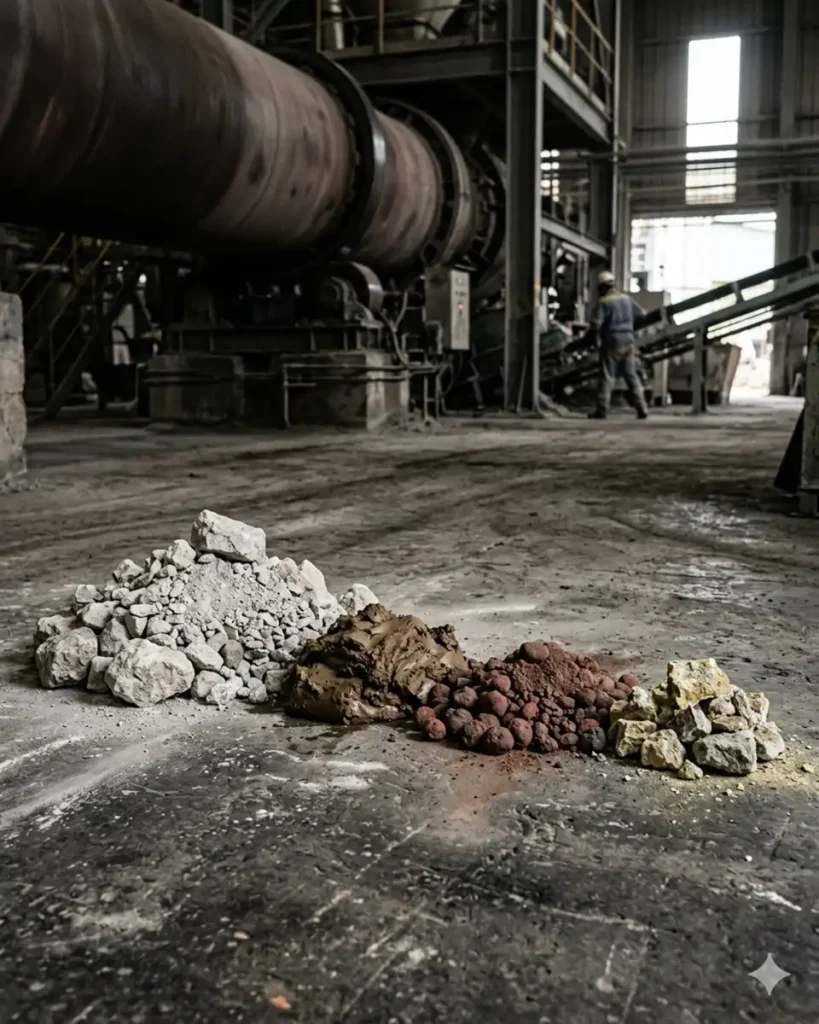
Cement is the binding agent—the glue—that holds everything else together. Because the major component in building material cement is sourced from natural earth minerals, it possesses unique hydraulic properties, meaning it hardens when mixed with water.
The Foundation: Why the Major Component in Building Material Cement Is Limestone
If you look at the raw ingredients of Portland cement (the most common type used today), about 60% to 70% of the mixture is calcareous material. This is a fancy way of saying it comes from lime.
How Long Does Cement Take to Dry? A Complete Guide for Success
The Role of Calcium Carbonate
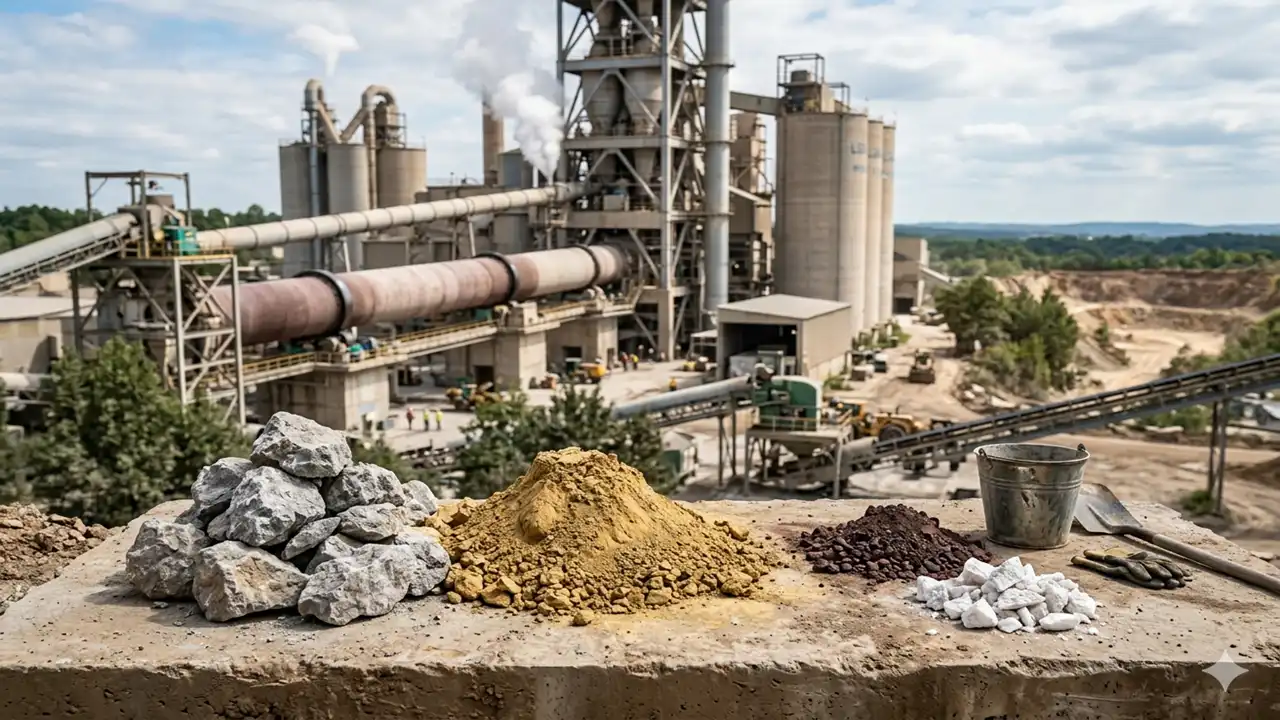
The major component in building material cement is calcium carbonate ($CaCO_3$), typically found in abundance in limestone. When heated in a massive kiln at temperatures reaching 1,450°C, the limestone undergoes a chemical change called calcination. This process releases carbon dioxide and leaves behind calcium oxide (quicklime), which is the “muscle” behind cement’s strength.
Sourcing the Materials
Manufacturers don’t just use any rock. They look for high-quality deposits of:
- Limestone: The primary source of calcium.
- Chalk: A softer form of limestone used in specific regions.
- Shells: In coastal areas, ground sea shells can provide the necessary calcium.
Secondary Ingredients: The Supporting Cast
While the major component in building material cement is limestone, it cannot do the job alone. To create a stable, durable binder, several other minerals must be added to the mix:
Can U Paint Cement? The Ultimate Guide to Reviving Your Concrete Surfaces
1. Silicon Dioxide (Silica)
Usually sourced from clay, sand, or shale, silica reacts with the calcium to form calcium silicates. These are the compounds responsible for the actual “strength” of the concrete once it sets.
2. Aluminum Oxide (Alumina)
Alumina acts as a flux. It lowers the temperature required to burn the raw materials in the kiln, making the manufacturing process more energy-efficient.
3. Iron Oxide
This gives cement its characteristic grey color. Beyond aesthetics, iron helps the chemical fusion process during heating.
How It’s Made: From Rock to Powder
Knowing that the major component in building material cement is limestone helps us understand the manufacturing stages:
- Crushing and Milling: Huge rocks are broken down into pieces the size of marbles.
- Blending: The limestone is mixed with specific amounts of clay or shale.
- The Kiln: The mixture enters a rotating kiln. As it heats up, it transforms into small, hard pellets called “clinker.”
- Final Grinding: The clinker is cooled and ground into the fine grey powder we recognize as cement. At this stage, a small amount of gypsum is added to regulate how fast the cement sets.
White Cement: The Ultimate Guide to Uses, Benefits, and Application Tips
Why the Major Component in Building Material Cement Is Critical for Durability
If the proportions of these materials are off, the results can be disastrous. If there is too much lime, the cement can expand and crack. If there is too little, it won’t be strong enough to support the weight of a building.
The reason the major component in building material cement is so carefully monitored is to ensure the formation of Alite and Belite—the two main crystals that grow when water hits cement, interlocking to create a stone-like mass.
The Environmental Shift: Green Cement
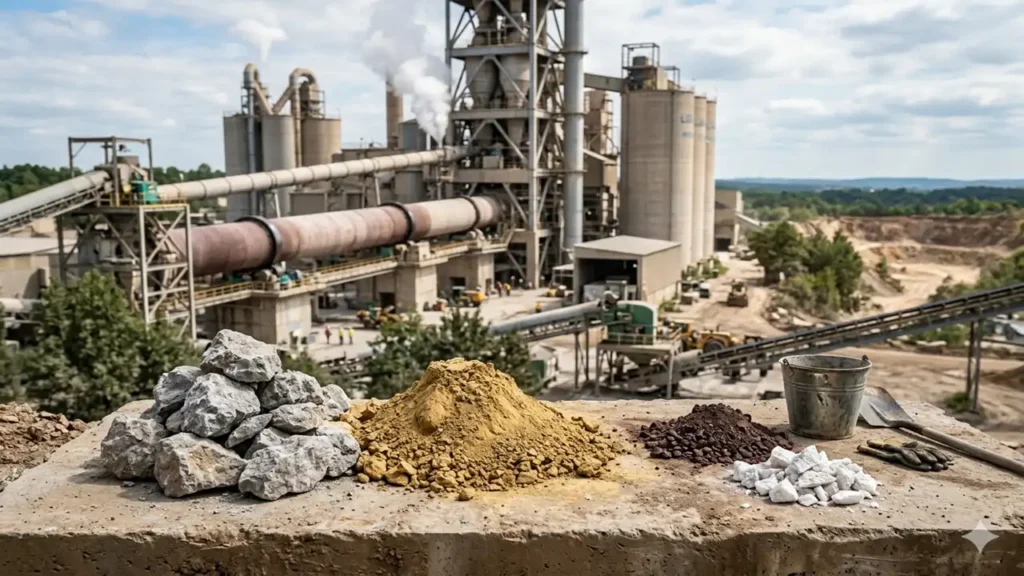
As we look toward the future, the construction industry is changing. Because the process of extracting the major component in building material cement is carbon-intensive, engineers are developing “Blended Cements.” These use fly ash or volcanic slag to reduce the amount of limestone needed, creating a more sustainable footprint without sacrificing structural integrity.
How Precast Concrete Transforms Cement Retaining Wall Blocks into Modern Structures
FAQ
What is the primary raw material in cement?
The major component in building material cement is limestone. It typically makes up about two-thirds of the raw material mix before the heating process begins.
Does cement contain lead or toxic chemicals?
Generally, no. Standard Portland cement is made from natural minerals like limestone, clay, and gypsum. However, it is highly alkaline, which is why you should always wear gloves when handling wet cement to avoid skin irritation.
Why is gypsum added to cement?
Without gypsum, cement would “flash set” (harden almost instantly) when it touches water. Gypsum slows down the reaction, giving builders time to pour and smooth the concrete.
Is the major component in building material cement is always the same?
While limestone is the standard, “Specialty Cements” might use different ratios or additives to resist sulfate attacks in seawater or to harden faster for emergency repairs.
The Bedrock of Construction
Understanding that the major component in building material cement is limestone helps us appreciate the complexity of the buildings around us. It is a perfect marriage of geology and chemistry that allows us to build structures that last for centuries.