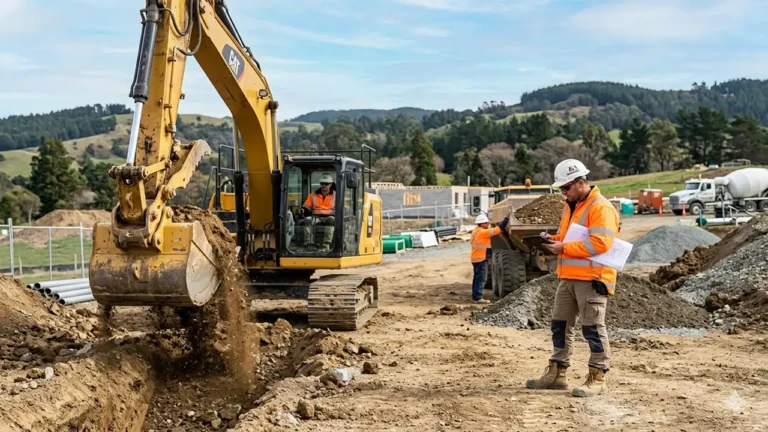

For years, “safety first” was a slogan on a poster in the breakroom; in 2026, it has become a high-tech, data-driven mandate. Whether you are a site manager, a business owner, or a boots-on-the-ground professional, staying updated on construction safety news is no longer optional it is a requirement for survival and success.
In this article, you will learn about the latest regulatory shifts from OSHA, the rise of “smart” personal protective equipment (PPE), and why mental health is finally being treated with the same urgency as fall protection. By the end, you’ll have a clear roadmap for keeping your team safe and your projects compliant in this rapidly evolving landscape.
Cement HSN Code: A Comprehensive Guide to GST and Classification
1. 2026 OSHA Regulatory Updates and Penalties
The most critical construction safety news this year involves the tightening of federal oversight. As of early 2026, the Occupational Safety and Health Administration (OSHA) has implemented significant changes to its enforcement strategy.
According to the latest OSHA enforcement data, maximum penalties for “serious” violations have been adjusted for inflation, now exceeding $16,500 per violation. However, the real story lies in the new Federal Heat Illness Prevention Standard. This rule mandates that employers provide specific “water, rest, and shade” protocols once temperatures hit certain thresholds.
Key 2026 OSHA Focus Areas:
- Heat Stress: Mandatory acclimatization plans for new workers.
- Hazard Communication: Enhanced labeling requirements for chemicals to align with the latest global standards.
- PPE Fit: A renewed focus on ensuring PPE fits workers of all body types and sizes, specifically addressing the historical lack of equipment designed for women in construction.
2. The Rise of AI and Wearable Safety Technology
Technology is moving from the office to the job site. One of the most exciting segments of construction safety news is the integration of Artificial Intelligence (AI) and wearable tech. We are seeing a shift from “reactive” safety (learning from accidents) to “predictive” safety (preventing them before they happen).
Smart boots now feature sensors that alert workers when they are entering a “red zone” near heavy machinery. Meanwhile, AI-powered cameras use computer vision to scan job sites in real-time, identifying workers who aren’t wearing high-visibility vests or spotting potential trip hazards. According to research from the NIOSH Construction Program, these technologies could reduce site incidents by up to 30% when implemented alongside traditional training.
3. Addressing the “Silent Crisis”: Mental Health in Construction
For the first time in history, construction safety news isn’t just about hard hats and harnesses. The industry is finally tackling its suicide and substance abuse crisis. Statistics show that construction workers are at a significantly higher risk for suicide than the general population.
In 2026, “total worker health” is the new standard. Leading firms are now incorporating:
- Suicide Prevention Training: Teaching foremen how to spot signs of emotional distress.
- Fatigue Monitoring: Using smartwatches to track sleep patterns and prevent “microsleep” accidents on site.
- Access to Care: Providing on-site teletriage and mental health resources as part of standard benefits.
Japan Construction Industry News Today: Trends and Forecasts for 2026

4. Fall Protection: New Standards for 2026
Falls remain the leading cause of fatalities in the industry. Recent construction safety news highlights the “National Safety Stand-Down,” an annual event that reached record participation in May 2026. The focus this year has shifted toward “Prevention through Design” (PtD).
“The most effective way to prevent a fall is to eliminate the need to work at height in the first place through smarter architectural planning.” — NIOSH Science Update, 2026
When working at height is unavoidable, the industry is moving toward Personal Fall Arrest Systems (PFAS) that utilize integrated air-bag technology, which deploys in milliseconds to soften a fall, much like a car’s safety system.
5. Modernizing Training with VR and AR
Gone are the days of sitting through four-hour PowerPoint presentations. Current construction safety news shows a massive pivot toward Virtual Reality (VR) and Augmented Reality (AR).
Why VR Training is Winning:
- Risk-Free Failure: Workers can experience a “fall” or an “electrical arc” in a virtual environment, creating a lasting psychological impact without physical harm.
- Higher Retention: Studies published in major industrial safety journals indicate that VR training leads to a 75% increase in knowledge retention compared to traditional classroom settings.
- Real-Time Overlays: AR glasses can project safety checklists or “underground utility” maps directly onto a worker’s field of vision while they are on the site.
Wright Brothers Construction Company Inc Reviews: A Comprehensive Reputation Report
6. How to Implement Recent Construction Safety News on Your Site
Staying informed is only half the battle; the other half is application. To stay ahead of the construction safety news cycle, firms should adopt a proactive “Gap Analysis” approach.
| Action Item | Frequency | Goal |
| Digital Inspections | Daily | Spot hazards using mobile apps rather than paper. |
| Toolbox Talks | Weekly | Discuss the latest construction safety news and OSHA updates. |
| Equipment Audits | Monthly | Check smart PPE battery health and sensor calibration. |
| Leadership Review | Quarterly | Analyze incident data to find patterns and adjust training. |
Heaving or Squeezing Would Be Indicated by Which of the Following Signs?
Final
The construction safety news of 2026 proves that the industry is becoming smarter, more empathetic, and more regulated. From AI-driven hazard detection to a newfound focus on mental wellbeing, the goal remains the same: ensuring every worker returns home in the same condition they arrived.
Ready to upgrade your site safety? Don’t wait for an inspection to find your weaknesses. Start by reviewing your heat illness protocols and exploring how wearable tech can protect your most valuable asset your people.