
Federal domestic content rules rise on a fixed schedule, and the 75% threshold takes effect in 2029.
Precast bids priced this year will still be in production when that happens. That makes new bills compliance deadlines US states construction materials a margin and scheduling issue for every contractor bidding public work right now.
Key Takeaways
- About 32% of U.S. building materials come from overseas, including cement, steel, and electrical equipment.
- The federal Buy American Act domestic content threshold sits at 65% through 2028 and rises to 75% after that.
- Domestic sourcing raises material costs, but it also makes lead times more predictable and gives sureties more confidence in completion dates.
North Carolina Resolution Declaring Emergency Construction Software: Prepare Now
Why are sourcing rules changing so fast?
Sourcing rules are changing because imports exposed contractors to long delays and sharp price swings.
Construction Dive’s reporting on Buy America provisions cites Marcum data showing that roughly one-third of building materials are produced outside the country.
The top source countries are in the European Union, plus China, South Korea, Canada, and Japan.
Several of the most heavily imported materials are core inputs for precast work: cement, steel, lumber, insulation, and electrical equipment.
Our analysis suggests the most important variable for precast producers is the timeline set by new bills, not the policy debate around them.
Watching new bills compliance deadlines US states construction materials rules is now part of standard preconstruction planning.
What do the deadlines actually require?
Federal deadlines set firm percentage targets for domestic content.
The Build America, Buy America Act (BABA) requires that all iron, steel, manufactured products, and construction materials used in covered infrastructure projects be produced in the United States, according to the U.S. Department of Commerce’s BABA overview.
The table below tracks the procurement thresholds for new bills compliance deadlines US states construction materials planning.
These figures come from FAR Subpart 25.1, which governs federal procurement.
| Period | Domestic Content Threshold | What It Means for Precast |
|---|---|---|
| Before 2022 | 55% | Baseline rules, loose documentation |
| 2022–2023 | 60% | First increase, more supplier tracing |
| 2024–2028 | 65% | Current requirement for active bids |
| 2029 and beyond | 75% | Tightest rules, full traceability expected |
The White House OMB memorandum M-24-02 sets out how federal agencies apply BABA to construction materials and manufactured products.
Grant recipients also have to follow the federal grants and agreements guidance in the Federal Register.
Download both documents and keep them in your estimating folder.
What does this mean for Midwest contractors?
Midwest contractors face the most pressure on federally funded bridges, culverts, and transit work.
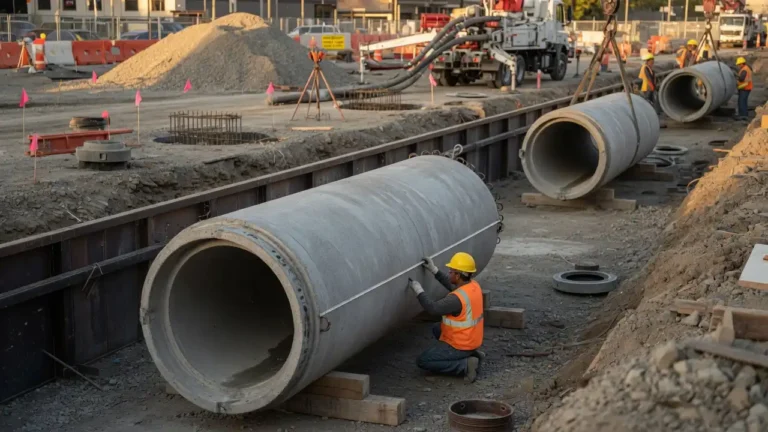
These are the jobs where precast box culverts, bridge beams, and retaining wall panels dominate the bid package.
If you’ve been following precast concrete trends across the Midwest, this won’t come as a surprise.
State DOTs pass federal dollars through to local projects, so new bills compliance deadlines US states construction materials requirements often reach county-level work as well.
Our contractors note that the cost increase is real: domestic materials, labor, and technology all cost more.
Predictable delivery has its own payoff. Dependable lead times help avoid delay penalties and escalation clause costs, and they give banks and surety companies more comfort in job completion dates.
Shamir Secret Sharing Reconstruction With Less Than Threshold Points Fails

How will this impact your next precast build?
Your next federally funded precast build will need documented origin for its embedded steel. That includes rebar, prestressing strand, lifting inserts, and connection hardware.
Statute excludes cement, cementitious materials, and aggregates from BABA’s “construction materials” category.
That does not exempt the steel cast inside the product.
For precast producers, new bills compliance deadlines US states construction materials scrutiny will fall hardest on reinforcement and hardware suppliers.
Construction industry insiders are noting a split market. Projects without federal funding will shift slowly, and many specifiers still accept longer waits in exchange for cheaper imported products.
Federal jobs offer no such flexibility.
What steps should precast contractors take now?
Precast contractors should build a repeatable compliance workflow before the 75% threshold takes effect.
Use this checklist to prepare for new bills compliance deadlines US states construction materials reviews:
- Identify the funding source. Confirm whether federal dollars flow into the project, either directly or through a state DOT.
- Classify each component. Sort items into iron/steel, manufactured products, or construction materials using OMB M-24-02 definitions.
- Audit your steel supply. Request mill certifications for every rebar, strand, and hardware supplier.
- Calculate domestic content. Run component cost percentages against the current 65% threshold.
- Document waivers early. Submit nonavailability or cost waiver requests before bid day, not after award.
- Lock lead times in writing. Add delivery commitments from domestic suppliers to your subcontracts.
- Re-price for 2029. Build the 75% threshold into any multi-year contract that extends past 2028.
Via Assarotti Construction Year Ligurian Republic French Period
New Bills Compliance Deadlines US States Construction Materials That makes new bills compliance deadlines US states construction materials a margin and scheduling… @constructdive @NahBabyNahNah @AGCofA https://t.co/C8Ntw0LSp5
— US News (@Us_news_ways) October 26, 2026
What’s the bottom line for property owners and builders?
Domestic sourcing costs more and delivers more certainty. For owners funding public or public-adjacent work, that trade-off protects completion dates and financing terms.
Our team recommends treating new bills compliance deadlines US states construction materials tracking as a standing agenda item in every preconstruction meeting.
Start by pulling mill certifications from your top three steel suppliers this week.