
In this guide, we will explore the critical role of the construction sign, the different categories of signage required by law, and how to strategically place them to ensure your project remains compliant and accident-free.
Why Every Job Site Needs a High-Quality Construction Sign
The primary purpose of any construction sign is communication. In an environment filled with heavy machinery, uneven terrain, and overhead risks, clear communication can quite literally be the difference between life and death.
Buc-ee’s Monroe County Construction Approval: Everything You Need to Know
According to safety standards outlined by the Occupational Safety and Health Administration (OSHA), standardized signage is a mandatory requirement for identifying hazards that could lead to accidental injury or property damage. Beyond mere compliance, effective signage improves site workflow. When delivery drivers, new contractors, and visitors can easily navigate a site via directional markers, the entire operation runs more smoothly.
The Legal Implications of Signage
Failing to display the correct construction sign isn’t just a safety risk—it’s a legal liability. Regulatory bodies perform routine inspections, and the absence of proper “Danger” or “Caution” markers can result in hefty fines and project shutdowns.
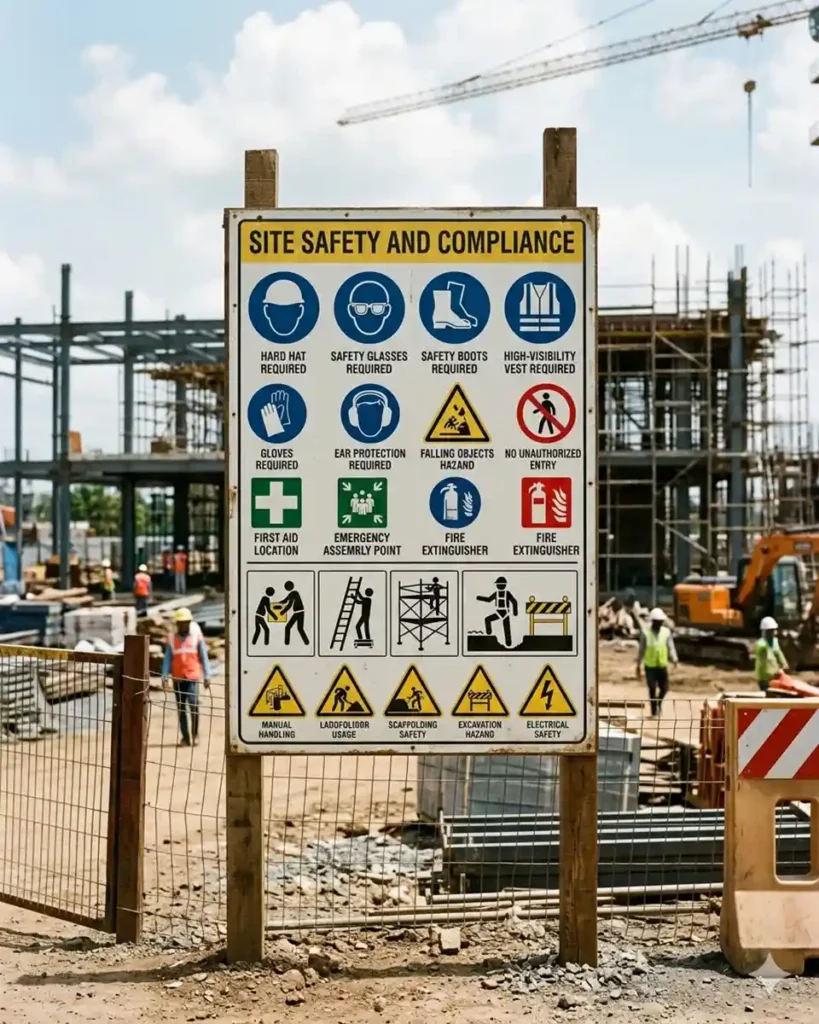
Key Categories of Safety Signage
Not all signs are created equal. To maintain an organized site, you need to understand the hierarchy of signage defined by color codes and header words.
1. Danger Signs
These are used only where an immediate hazard exists. They feature a red, black, and white color scheme. A “Danger” construction sign indicates that special precautions are necessary to avoid a life-threatening situation, such as “High Voltage” or “Open Trench.”
2. Warning Signs
Warning signs (typically orange or black and yellow) alert people to hazards that are serious but not immediately life-threatening. You’ll often see these used for “Construction Area” or “Hard Hat Required” zones.
Buc ee’s Monroe County construction Approval in Monroe County – Construction Begins
Construction Sign: The Ultimate Guide to Site Safety and Compliancehttps://t.co/vXZkGmEYnL
— Considering Apple (@consider_apple) May 4, 2026
3. Caution Signs
Yellow signs with black lettering are used to warn against potential hazards or to caution against unsafe practices. These are common for tripping hazards or areas where “Ear Protection” is mandatory.
4. Informational and Directional Signs
These provide general information to help people navigate the site. They may point toward the site office, first aid stations, or designated smoking areas.
Strategic Placement for Maximum Visibility
A construction sign is only effective if it is seen. Placement is an art that requires a deep understanding of human behavior and site logistics.
Height and Angle
Signs should be placed at eye level for pedestrians (typically 5 to 6 feet high) and at a height visible to motorists if the site borders a roadway. If a sign is placed too high, it may be missed by someone focusing on their footing; too low, and it may be obscured by equipment.
Lighting Conditions
For sites that operate 24/7, reflectivity is non-negotiable. Using high-intensity prismatic sheeting ensures that a construction sign remains visible under truck headlights or ambient street lighting. This is particularly important for perimeter fencing where the public might interact with the site boundaries at night.

Avoiding “Sign Blindness”
If you clutter a small area with twenty different signs, people will subconsciously tune them all out. This phenomenon, known as sign blindness, is a major safety hurdle. Group your signs logically and use high-contrast colors to ensure the most critical “Danger” messages stand out from general informational posters.
Building Materials News: 2026 Trends and Market Insights
Material Matters: Choosing the Right Substrate
Construction sites are brutal environments. Between UV exposure, heavy rain, and abrasive dust, your signage needs to be durable.
- Corrugated Plastic (Correx): Great for short-term projects or indoor use. It is lightweight and inexpensive but can become brittle in extreme sun.
- Aluminum (Dibond): The gold standard for long-term outdoor use. It doesn’t rust and offers high rigidity.
- PVC Foam: A middle-ground option that is waterproof and offers a professional finish for site office signs.
- Mesh Banners: Ideal for “Construction Sign” applications on temporary fencing. The mesh allows wind to pass through, preventing the fence from acting like a sail and blowing over in a storm.
Research from the American National Standards Institute (ANSI) suggests that the longevity of a sign’s legibility is directly tied to the quality of the UV-resistant inks used during the printing process.
FAQ
What is the most important construction sign?
While all are important, “Danger” signs are the most critical because they signal immediate threats to life and limb.
How often should I inspect my site signage?
Signage should be inspected weekly. In fast-moving environments, signs can be knocked over by machinery, covered in mud, or vandalized. A damaged construction sign is ineffective and can lead to non-compliance.
Are bilingual signs necessary?
In many regions, it is a best practice (and sometimes a legal requirement) to provide signage in both English and the primary language spoken by the local workforce. This ensures that safety instructions are understood by everyone on-site, regardless of their native tongue.
World of Concrete 2025: Shaping the Future of the Construction Industry
Improving Public Perception Through Signage
Believe it or not, a construction sign is also a branding tool. High-quality, clean, and well-organized signage tells the neighborhood that you are a professional outfit that cares about safety and order.
When you include your company logo on “Coming Soon” or “Site Entrance” signs, you are building brand equity. Conversely, faded or falling signs give the impression of a disorganized and potentially dangerous worksite. According to insights from ConstructConnect, project transparency and clear public-facing signage significantly reduce community complaints and friction during urban builds.
Final: Putting Safety First
The humble construction sign is the silent guardian of the job site. By choosing the right materials, adhering to color-coded regulations, and placing signs where they are most visible, you protect your workers, the public, and your bottom line.