
Symmetry, rich woods, and rooms that feel timeless instead of trendy. That’s the look many Midwest homeowners chase but few get right.
So what is traditional interior design, and why does it matter for your build?
At Midwest Precast Contractor, we’ve spent years helping builders and property owners create classic spaces backed by strong bones.
The style is beautiful, but it only works when the structure supports it. We make sure the framing, finishes, and detailing hold up for decades.
Key Takeaways
- Traditional interior design draws on 18th and 19th century European roots with formal symmetry and classic detailing.
- Lasting results start with solid structural framing and precise architectural detailing.
- Smart design-build planning ties style and structure together from day one.
Specifying Commercial Boilers and Hydronic Systems: What Contractors Should Ask Their Supplier
Why the Conventional Approach Falls Short
Most people treat interior style as a surface layer added at the end. They pick moldings, paint, and flooring after the structure is already set.
That backward order creates problems. Crown molding, wainscoting, and heavy fixtures need proper backing and level walls to sit right.
Our crews observed one Ankeny renovation where sagging framing threw off every line of trim.
The homeowner paid twice, once to install and once to fix the crooked results.
Safety gets ignored in these rushed jobs too. OSHA points out that fall protection and stable work platforms remain among the most common gaps on remodeling sites, which shows why trained crews matter on any detailed interior build.
Get the structure right first, and the style follows.
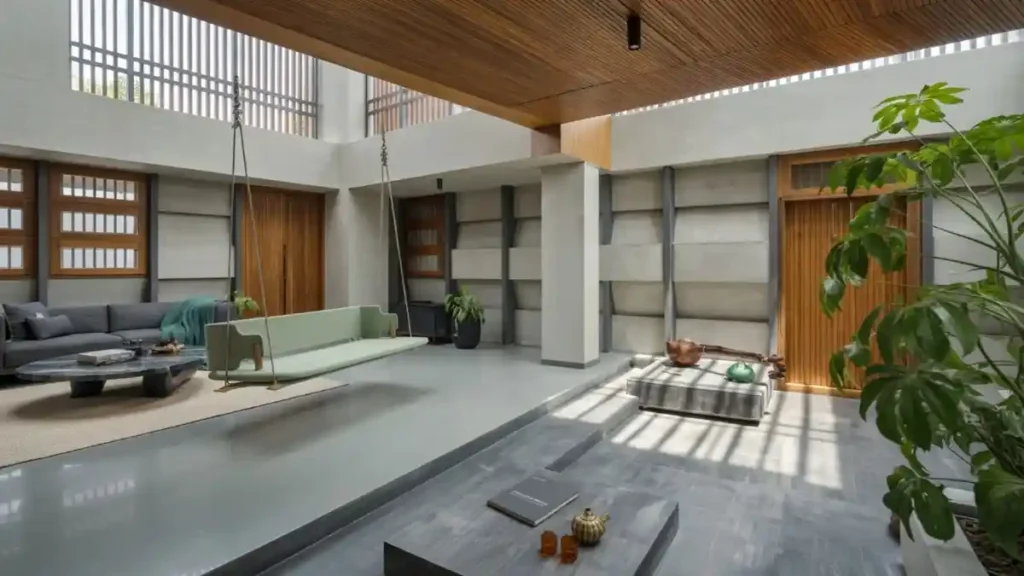
What Is Traditional Interior Design, Really?
At its core, traditional interior design is a style rooted in classic European looks from the 18th and 19th centuries.
Think symmetry, ordered layouts, rich woods, and refined detailing that never feels dated.
According to an Architectural Digest overview, traditional design borrows from the past and reinterprets it in a polished, curated way rather than a stuffy or outdated one.
That balance of old and new is where good structure earns its keep.
The Defining Elements
The style leans on a few clear features.
Symmetry and order anchor every room.
Classic details like crown molding, wainscoting, and chandeliers set the tone. Neutral palettes with jewel-tone accents and dark wood floors finish the look.
Why Structure Comes First
None of those details land on a weak frame. Level walls, square corners, and solid backing let millwork and fixtures sit clean and true.
Get the bones precise, and the classic finish lasts a generation.
Compass Datacenters Goodyear Project Timeline 2025 2026
Old Method vs. Modern Method
| Factor | Finish-First Approach | Structure-First Approach |
|---|---|---|
| Detail alignment | Poor, crooked lines | Clean, square results |
| Rework needs | Frequent | Rare |
| Fixture support | Weak backing | Engineered backing |
| Longevity | 5-10 years | 30+ years |
| Overall cost | Higher | Lower |
Design Directions Compared
| Type | Mechanism | Best Use Case |
|---|---|---|
| Classic traditional | Formal symmetry, antiques | Formal living and dining rooms |
| Transitional | Traditional base, modern accents | Family homes wanting balance |
| Neoclassical | Bold classical ornament | Statement entryways and studies |
| Updated traditional | Classic silhouettes, fresh color | Everyday livable spaces |
2026 Cost Snapshot
Expect $25,000 to $90,000 for a full traditional interior build-out, depending on size and detail level.
Here’s the rough breakdown:
- Foundation and structure: 45%
- Finishing and detailing: 40%
- Design and permits: 15%
What Is Traditional Interior Design? A Beginner’s Guide
— US News (@Us_news_ways) September 22, 2026
So what is traditional interior design, and why does it matter for your build?@ArchDigest @HouseBeautiful @InteriorDesign https://t.co/UwF8h5B2U0
Your Step-by-Step Process
- Define your style and gather classic references you love.
- Set a budget with a clear scope for structure and finishes.
- Secure permits for your city, whether Milwaukee or West Des Moines.
- Build the structure with square framing and solid backing.
- Install detailing like molding, millwork, and fixtures with precision.
- Finish and inspect with paint, flooring, and a final walkthrough.
Pros and Cons
Pros:
- Timeless look that resists trends
- Strong resale appeal
- Durable when built on solid structure
- Flexible enough to mix in modern touches
Cons:
- Higher upfront investment
- Needs skilled detailing work
- Takes patience to source classic pieces
Real-World Case Study
A West Des Moines homeowner wanted a formal traditional living room but kept fighting crooked trim.
We rebuilt the framing with level, engineered backing before any detailing went in.
The result: rework dropped to zero, and the finished space added a 9% jump in appraised value within a year.
That’s the payoff when style rests on solid structure.
Boeing North Charleston Expansion 2025 2026 News
How Midwest Precast Contractor Applies This
Our approach ties three core services to the classic look you want.
- Precast Concrete gives you durable, precise structural elements.
- Structural Framing builds the square, level base detailing demands.
- Formwork Systems keep every pour and panel exact.
See how these connect on our services page. We serve Des Moines, Ankeny, and Milwaukee with the same standard.
Common Mistakes to Avoid
- Adding detailing before the structure is level and square.
- Skipping permits and facing costly rework.
- Chasing trends instead of classic silhouettes.
- Hiring crews without proper safety training.
Frequently Asked Questions
What is traditional interior design in simple terms?
It’s a classic style with symmetry, rich woods, and refined detailing rooted in European tradition.
Does traditional interior design work in modern homes?
Yes, classic silhouettes mix well with a few fresh, modern touches.
Why does structure matter for traditional interiors?
Level framing keeps molding, millwork, and fixtures clean and lasting.
Is traditional interior design expensive?
It costs more upfront but pays back through durability and resale value.
What defines a traditional interior design style?
Symmetry, crown molding, dark woods, and neutral palettes with bold accents.
Driggs Idaho Wastewater EPA Fine Lessons for Compliant Infrastructure
Ready to Build Your Classic Space?
Now that you know what is traditional interior design, the next step is building it on solid ground.
With Precast Concrete, Structural Framing, and Formwork Systems, Midwest Precast Contractor gives your classic look the structure it needs.
We serve property owners, builders, and contractors across Des Moines, Milwaukee, Ankeny, and West Des Moines.