
Software failures show up as missed pours, late panels, and blown margins. That is why the top operations management platforms built for construction companies now decide whether a job stays on schedule and on budget. For project managers, developers, and owners, the right platform protects both structure and profit.
Key Takeaways Box
- Field-to-office visibility drives margin. Real-time cost data beats month-end surprises every time.
- One connected system reduces rework, since disconnected spreadsheets hide change orders and material timing gaps.
- Governance and safety documentation matter, with NIST CSF 2.0 and OSHA shaping data and jobsite standards.
CIIIB Cement Built for Midwest Durability
What Top Operations Management Platforms Built for Construction Companies Actually Need to Control
Construction runs on timing, cost, and proof. A platform that misses any one of those three fails on the jobsite. At Midwest Precast Contractor, our hands-on engineering experience shows software must map to how crews actually pour, set, and frame.
The core control points are clear. Scheduling, procurement, cost tracking, documentation, and QA all live or die on data quality. Census Construction Spending data confirms the market stays active, so precision matters more, not less.
Why operations software is now a structural delivery issue
Delivery and structure are linked. A late material order can force a rushed pour, which risks concrete quality in Midwest freeze-thaw conditions.
- Scheduling errors push pours into bad weather windows.
- Procurement gaps delay rebar, panels, or formwork.
- Cost blind spots hide overruns until it is too late.
- Weak documentation breaks the QA trail owners expect.
If you have been tracking precast concrete standards, this connection between schedule and quality will not come as a surprise. Good software protects the structure, not just the spreadsheet.
How field to office visibility changes margin control
Margin leaks where data lags. When site data lives in texts and the office finds out weeks later, cost overruns surface too late.
| Visibility gap | Field risk | Office impact |
|---|---|---|
| Delayed cost data | Overruns unseen | Late corrections |
| Manual measurement | Billing disputes | Slow certification |
| Siloed procurement | Material delays | Schedule slip |
| Paper QA records | Missing proof | Audit exposure |
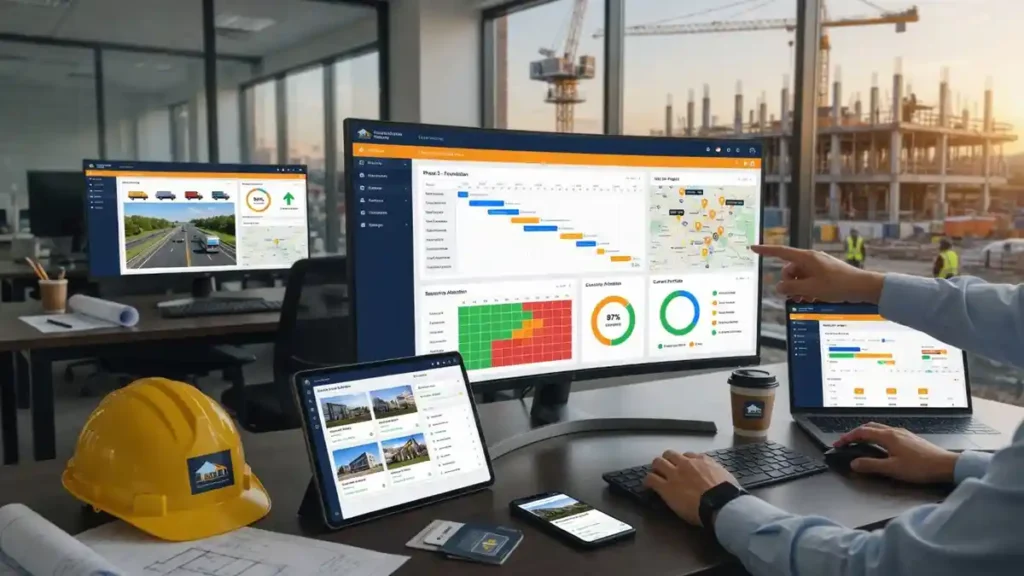
Real-time cost value tracking is the difference between reacting and controlling. Industry contractors are noting that live margin data now shapes daily decisions.
Midwest Precast Contractor’s View on Platform Requirements
We read software through a delivery lens. A platform that cannot track a pour schedule, a panel set, or a retention balance is not built for our world. Our 15 plus years and 500 plus projects taught us that discipline protects margin.
Weather resistance, engineering precision, and on-time delivery depend on clean data. A tool that ignores field reality creates rework, and rework is the most expensive line on any job.
Building the Dallas Holocaust and Human Rights Museum: A Study
Why concrete, formwork, and framing teams need different workflows
No two trades track work the same way. Concrete crews think in cubic yards and cure time, framing crews think in spans and connectors.
- Concrete and precast: pour schedules, batch records, panel tracking.
- Formwork: reuse tracking, tolerance checks, setup sequencing.
- Framing: load paths, connector specs, inspection sign-offs.
- All teams: photo documentation and daily field reports.
A platform should bend to these workflows, not force crews into generic templates. Fit beats feature count every time.
Where restoration and service work change platform priorities
Restoration and service work move faster and shorter. Dispatch, estimates, and quick invoicing matter more than long project controls.
- Fast dispatch gets the right crew to the right repair.
- Mobile estimates speed approvals on small scopes.
- Route efficiency reduces windshield time.
- Job history keeps a clean record for repeat clients.
Service-style tools, like those emphasizing dispatch and quick onboarding, fit this work well. The scope should pick the tool.
2026 Feature Breakdown for Construction Operations Platforms
Features only matter when they touch the field. The top operations management platforms built for construction companies pair strong controls with real usability. BLS PPI shows steady input-cost pressure, so cost visibility carries real weight in 2026.
We group the capabilities into five practical buckets below.
Reuben Brothers & Alan Faena Miami Development Project
Top Operations Management Platforms Built For Construction Companies
— US News (@Us_news_ways) September 7, 2026
That is why the top operations management platforms built for construction companies now decide whether a job stays…@Buildertrend @autodesk @procoretech https://t.co/vn0YfsGVHn
Scheduling, procurement, cost control, compliance, and reporting
Each function protects a different risk. Read them as a system, not a checklist.
| Function | What it controls | Why it matters |
|---|---|---|
| Scheduling | Sequence, weather windows | Protects pour quality |
| Procurement | Material timing, POs | Prevents delays |
| Cost control | Committed vs actual | Protects margin |
| Compliance | GST, tax, audit logs | Reduces risk |
| Reporting | Field and finance data | Speeds decisions |
Contract lifecycle tools add value too, with approvals, e-signature, and audit logs that firm up accountability.
Comparison table for field performance, cost visibility, and deployment fit
Judge platforms like you judge materials. Reliability and field usability outrank flashy dashboards. NIOSH reminds us that worker safety data belongs in the same system.
| Capability | Reliability | Field usability | Job-cost accuracy | Offline readiness | Audit strength | Deployment fit |
|---|---|---|---|---|---|---|
| Project controls suite | High | Moderate | High | Moderate | High | Office-heavy |
| Mobile field app | High | Very high | Moderate | High | Moderate | Site-first |
| Contract lifecycle | High | Moderate | Low | Low | Very high | Compliance |
| Monitoring dashboards | High | High | Low | Moderate | Moderate | Facilities |
| Dispatch and service | High | Very high | Moderate | Moderate | Moderate | Service work |
Offline readiness is not optional on remote or low-signal jobsites.
Site Execution Risks That Good Platforms Reduce
Every jobsite carries the same risks. Labor timing, material gaps, and loose change orders all threaten margin and schedule. We use software to close those gaps before they cost us.
Labor coordination, material timing, and change order discipline
Coordination is where most jobs slip. A missing crew or late panel resets the whole sequence.
- Lock the schedule and share it across office and site.
- Confirm material lead times before committing pours.
- Log change orders instantly with photos and sign-off.
- Track committed costs live to catch drift early.
Change order discipline protects both margin and trust. A documented change is a defensible change.
The Fire Engineering Value of Fire Resistance Period
Safety documentation, audits, and accountability checkpoints
Safety data is operational data. Material handling and equipment rules from OSHA belong inside your platform, not a binder.
- Log inspections with date, crew, and photo proof.
- Track equipment checks against required standards.
- Store incident records with a clear audit trail.
- Assign accountability so nothing falls through gaps.
Governance also protects data itself. NIST CSF 2.0 sets expectations for securing connected construction systems.
Structural Alternatives and Workflow Standardization
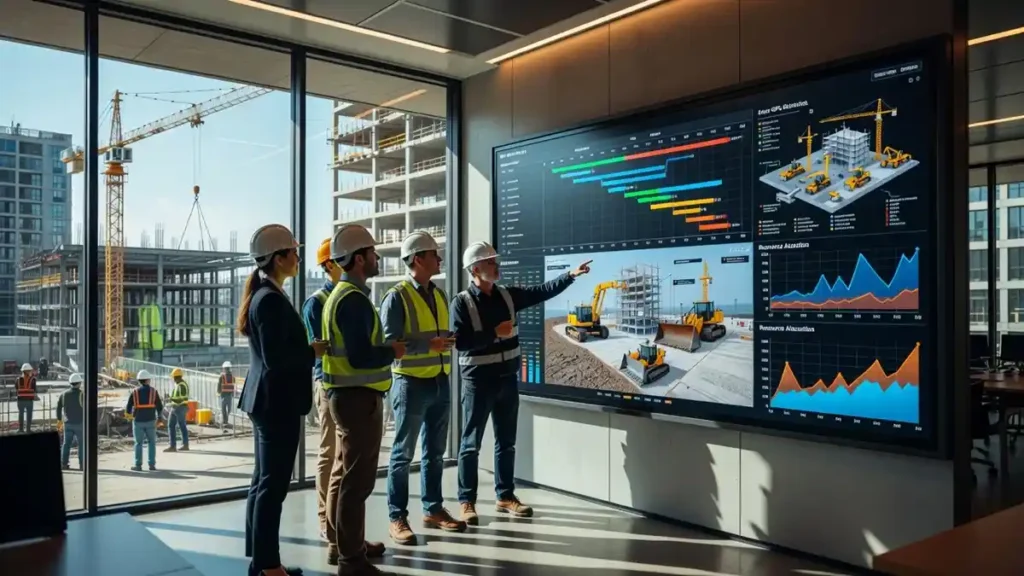
You always have options. The right architecture balances control, usability, and cost. We match the setup to project size, trade mix, and site conditions.
When one connected platform beats spreadsheets and point tools
Connected systems remove rekeying and blind spots.
Pros:
- Single source of truth across office and site.
- Real-time cost and schedule visibility.
- Cleaner audit and QA trails.
Risks:
- Higher upfront setup effort.
- Change management for crews.
- Migration from legacy spreadsheets.
One connected platform usually wins on medium and large projects with multiple concurrent jobs.
When specialized tools still make sense
Sometimes a focused tool fits better. A small restoration crew may not need full project controls.
| Scenario | Better fit | Reason |
|---|---|---|
| Large multi-site builds | Connected platform | Live margin control |
| Quick service repairs | Dispatch tool | Speed and simplicity |
| Contract-heavy work | Lifecycle software | Approvals and audit |
| Facility monitoring | Dashboard system | Real-time alerts |
Match the tool to the work, not the hype. A simpler stack often outperforms an overbuilt one.
Frequently Asked Questions
What defines the top operations management platforms built for construction companies?
Real-time cost tracking, strong scheduling, mobile field capture, solid documentation, and safety and audit support that hold up on active jobsites.
Do precast and framing teams need different software?
Yes. Concrete and precast track pours and panels, while framing tracks spans and connectors, so workflows should flex to each trade.
Is offline capability really necessary?
On remote or low-signal sites, yes. Crews need to capture data that syncs automatically once connectivity returns.
How do these platforms protect margin?
By surfacing committed versus actual costs live, so overruns show up early instead of at month end.
What about data security?
Connected systems hold sensitive financial and project data, so governance aligned with NIST CSF 2.0 matters.
Why does Midwest Precast Contractor stress field usability?
Because a tool crews will not use produces no data, and no data means no control.
Seattle Children’s Bellevue Clinic And Surgery Center Bellevue WA: A Precast Blueprint
Final Assessment from Midwest Precast Contractor
The story behind the top operations management platforms built for construction companies is practical, not theoretical. Schedule, cost, documentation, and safety all move together, and the right platform keeps them aligned. At Midwest Precast Contractor, we tie every software choice back to concrete quality, weather resistance, and on-time delivery.
For 2026, we prioritize a connected, mobile-first architecture with live cost tracking, offline field capture, strong audit trails, and secure governance. Do that, and your platform stops being overhead and starts being a margin tool. That is the standard we hold, on every pour and every panel.


