
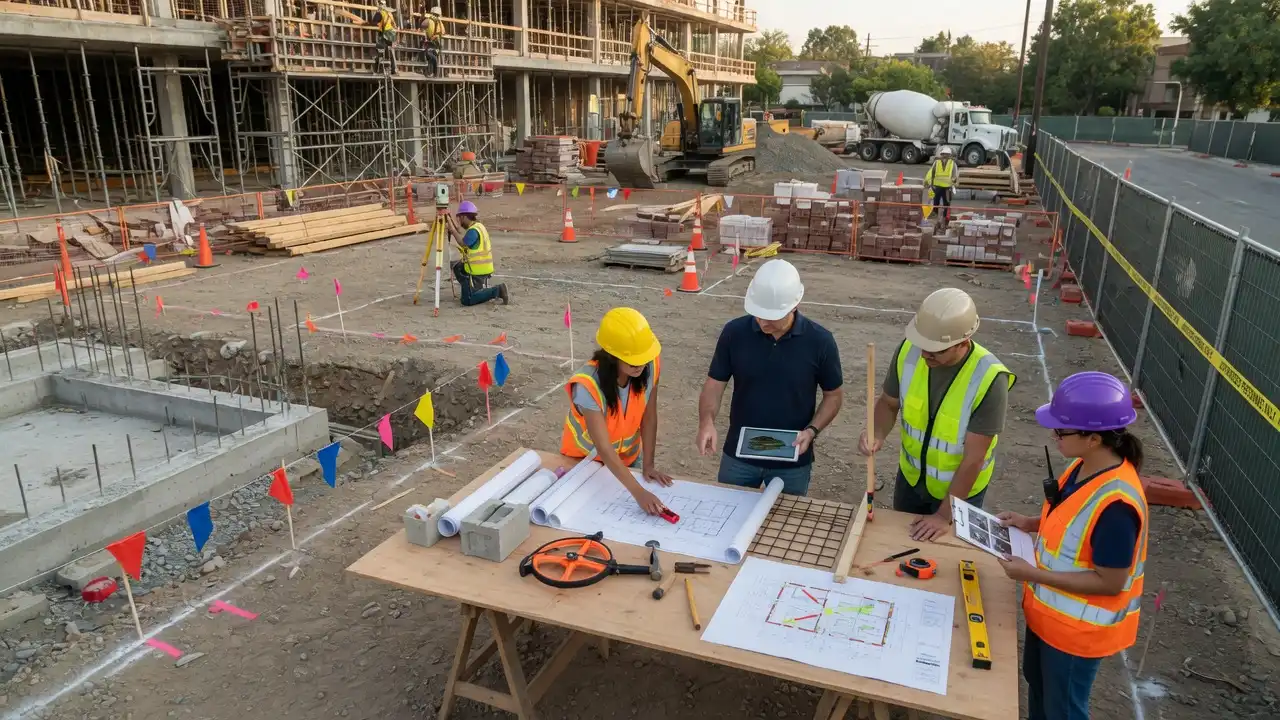
Knowing how to manage project scope on a construction site is the difference between a profitable build and a costly overrun and in precast concrete and structural framing, that margin matters more than ever.
Construction Training OSRS Transforms Precast Concrete
Key Takeaway
- Scope creep is the leading cause of budget overruns in precast concrete projects across the Midwest, often adding 15–30% to final costs.
- Structured scope management using precast component scheduling reduces on-site rework by up to 40%.
- Early stakeholder alignment on structural framing specifications prevents costly field modifications after fabrication has begun.
Why Is Scope Management Critical Right Now?
Construction industry insiders are noting a sharp rise in mid-project design changes across structural framing and precast concrete installations.
If you’ve been following precast concrete trends across the Midwest, this won’t come as a surprise.
Supply chain volatility and rising material costs have made reactive project management an expensive habit that few contractors can afford in 2024.
Our analysis suggests that most scope failures don’t happen during construction — they happen during the planning phase, when assumptions are left unaddressed.
According to the Project Management Institute’s Pulse of the Profession report, organizations that underinvest in scope definition waste an average of 11.4% of every dollar spent on their projects.
For precast concrete contractors managing multi-phase structural builds, that number is unacceptable.
NYS Construction Ban Precast Contractors
How to Manage Project Scope on a Construction Site: A Step-by-Step Framework
Understanding how to manage project scope on a construction site requires a structured, repeatable process — not improvisation.
Below is the framework our team applies on every precast concrete and structural framing engagement.
Step 1 — Define the Scope Document Before a Single Panel Is Cast
Draft a formal Scope of Work (SOW) document that includes:
- All precast concrete panel dimensions, mix specifications, and load-bearing requirements
- Structural framing connection details and tolerances
- Site access conditions and crane lift zones
- Delivery sequencing tied to the installation schedule
Every line in the SOW is a line of protection against scope creep.
Share this document with the owner, the design engineer, and the fabrication team before fabrication begins.
Step 2 — Establish a Change Order Protocol on Day One
Every project needs a written change order process before ground is broken.
This means defining who has authority to approve changes, what documentation is required, and how cost and schedule impacts are calculated.
Our contractors note that verbal approvals are where precast concrete projects most commonly go sideways.
If it isn’t written, it didn’t happen.
The American Institute of Architects’ contract documents provide standardized change order language that our team recommends for all structural framing projects.
Step 3 — Schedule Weekly Scope Review Meetings
Hold a standing weekly meeting with all stakeholders specifically focused on scope status.
This is not a general progress meeting it is a disciplined review of what is in scope, what has been requested as a change, and what has been formally approved.
Use a simple Scope Status Tracker like the one below:
| Item | Original Scope | Change Requested | Status | Cost Impact |
|---|---|---|---|---|
| Panel Count | 120 units | +8 units | Approved | +$14,400 |
| Foundation Depth | 4 ft | 5 ft | Pending | TBD |
| Structural Steel Connections | Standard | Custom | Rejected | $0 |
| Erection Sequence | Phase 1–3 | Phase 1–4 | Under Review | +$6,200 |
This format keeps all parties accountable and creates a clear paper trail.
Step 4 — Lock Fabrication Specifications Before Production
This is the single most important control point in a precast concrete project.
Once your fabrication team begins casting panels, changes to dimensions, reinforcement layout, or surface finish become exponentially more expensive.
According to NPCA’s Quality Control Manual for Precast Concrete, specification lock-in before production is the industry standard for a reason.
Our team enforces a 72-hour specification freeze before any pour begins.
Maharashtra Building and Other Construction Workers Welfare Board
Step 5 — Conduct a Scope Reconciliation at Project Closeout
Before final billing, run a formal reconciliation comparing the original SOW against every approved change order.
This protects your firm from disputed invoices and gives the owner a complete project record.
What Does This Mean for Midwest Contractors?
Our analysis of regional builds confirms that Midwest contractors working in precast concrete and structural framing face unique scope challenges — tight seasonal construction windows, long fabrication lead times, and rural site logistics that complicate mid-project adjustments.
Knowing how to manage project scope on a construction site isn’t a soft skill it is a technical discipline.
The Construction Industry Institute’s benchmarking data consistently shows that projects with active scope management deliver 20% better schedule performance than those without.
Understanding how to manage project scope on a construction site also means training your field supervisors, not just your project managers.
The Associated General Contractors of America offers field leadership training that our team recommends for any crew managing precast or structural framing installations.
Green World Construction Precast Concrete Builds Smarter
How to Manage Project Scope on a Construction Site
— US News (@Us_news_ways) July 22, 2026
Knowing how to manage project scope on a construction site is the difference between a profitable build and a costly and in precast…@constructdive @ADSK_Construct @procoretech https://t.co/uZFvPbedHF
The Bottom Line
How to manage project scope on a construction site is ultimately about protecting your client relationship, your profitability, and your reputation all three of which our team at Midwest Precast Contractor has built this business around.
A precast concrete project managed with disciplined scope control finishes on time, on budget, and with far fewer calls from frustrated owners.
That’s the standard we hold ourselves to, and it should be yours too.