
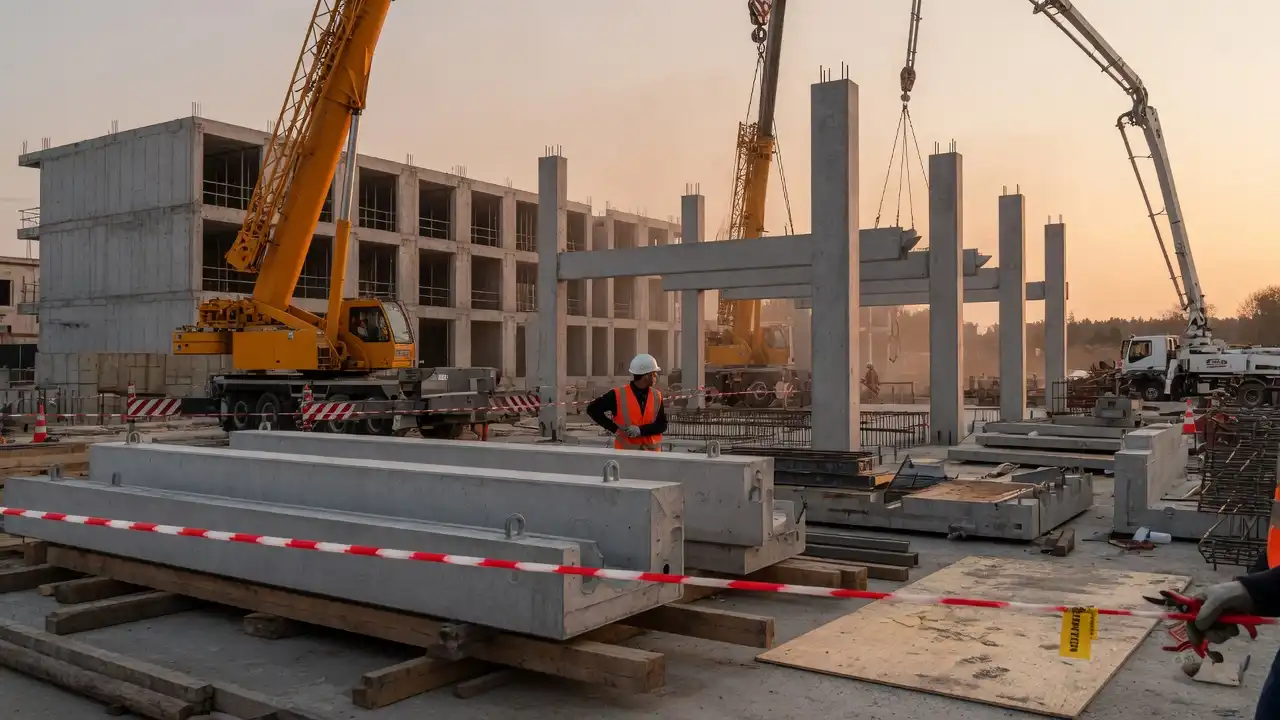
For every precast contractor who has watched 3% to 5% of hard-earned contract value sit locked away in someone else’s account for months or years this is the moment we’ve been waiting for.
The UK government’s announcement that construction retentions to be banned marks the most decisive payment reform in over a quarter century, and its ripple effects are already reaching Midwest project planning conversations.
If you’ve been following precast concrete trends across the Midwest, this won’t come as a surprise.
How to Manage Project Scope on a Construction Site
Key Takeaways
- The government has unveiled plans to abolish retentions in construction, calling it the toughest crackdown on late payment in more than 25 years — since the 1998 Late Payment of Commercial Debt Act.
- Late payment practices cost the UK economy an estimated £11 billion each year across all sectors — and construction carries the worst average delays.
- The collapse of construction giant Carillion in 2018 exposed over £800 million in unpaid retention payments and triggered a cascade of subcontractor insolvencies.
What Exactly Are Construction Retentions and Why Are They Being Abolished?
Retentions are commonly used as a payment mechanism in standard-form construction contracts to incentivize contractors to fulfill their obligations, particularly around build quality and defect rectification.
Historically, they represent a percentage of the contract sum — usually 3% to 5% withheld from each interim or milestone payment.
Half of the retention sum is often released at practical completion, while the remainder is held until the end of the defects liability period, typically 12 months later.
For precast concrete subcontractors, that timeline is particularly punishing.
Our teams routinely finish panel fabrication and erection months before a building reaches practical completion, yet the retained percentage stays locked.
The government has explicitly acknowledged that retentions are often treated as “free working capital” a practice placing disproportionate strain on smaller firms.
That’s precisely why construction retentions to be banned became a legislative priority rather than merely an industry talking point.
Construction Drawing Mastery Cuts Precast Project Risk
How Did the Government Reach This Decision?
On 24 March 2026, the UK government published its response to the 2025 Late Payment Consultation which ran from 31 July to 23 October 2025 under the title Time to Pay Up, setting out measures to tackle what it called the “scourge of late payments.”
The consultation explored two options: an outright ban on retentions or making it mandatory to hold retentions in third-party bank accounts. The government chose the more drastic option an outright ban.
Authorities rejected the alternative reform model used in countries like New Zealand, where retention monies must be held in escrow accounts, in favor of total abolition.
Our analysis suggests this binary choice reflects growing frustration with half-measures.
Industry bodies such as Build UK and the Civil Engineering Contractors Association (CECA) had published their “Roadmap to Zero Retentions” back in 2018 with a target of eliminating the practice by 2025.
That target was missed so legislation stepped in.
How to Start a Construction Company?
What Does This Mean for Midwest Precast Contractors?
While this legislation originates in the UK, the conversation about construction retentions to be banned is accelerating globally.
Our contractors note that U.S.-based subcontractors face nearly identical cash-flow pressures.
Subcontractors feel the brunt of retention impact because they sit at the bottom of the payment chain still paying suppliers and workers full amounts upfront while general contractors often impose higher retention rates on subs than what they themselves are held to.
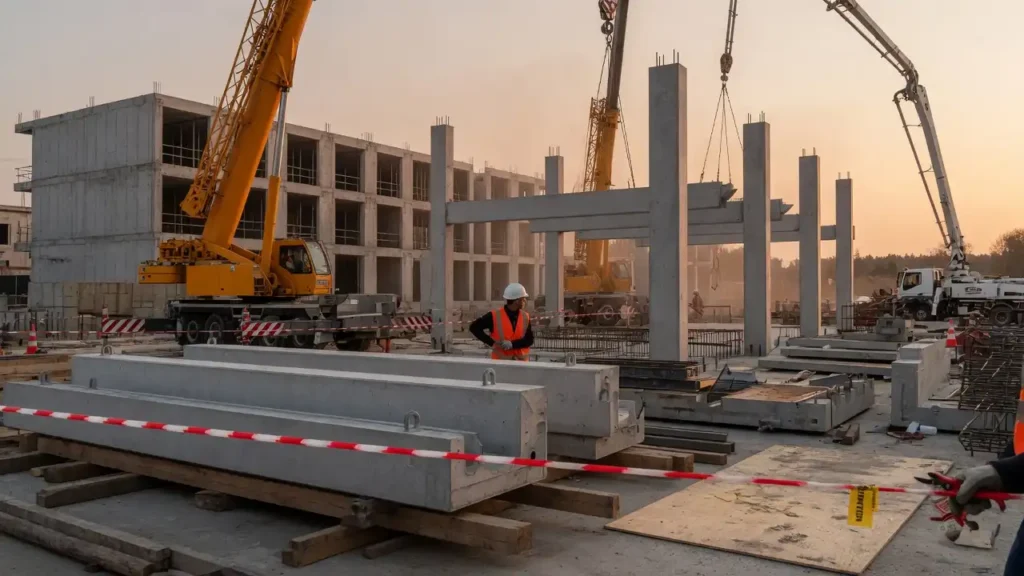
Here’s how retentions typically erode precast project economics:
| Factor | With Retentions (Current) | Post-Ban (Projected) |
|---|---|---|
| Cash held back per $1M contract (at 5%) | $50,000 withheld | $0 withheld |
| Typical release timeline | 12–18 months post-completion | Payment on certified milestone |
| Working capital strain | High — subs finance the gap | Low — payment aligns with delivery |
| Defect assurance mechanism | Retention pot | Performance bonds or surety instruments |
| Admin overhead | Tracking retention across tiers | Streamlined invoice-to-payment cycle |
The shift from retention pots to performance bonds is one of the biggest operational changes construction retentions to be banned will introduce.
Upfront construction costs are likely to increase across the board as the price of financial instruments like bonds is added to the contract sum and extra administration is priced in.
Construction Drawing Mastery Cuts Precast Project Risk
Construction Retentions to Be Banned Contractors Must Know
— US News (@Us_news_ways) July 24, 2026
The UK government's announcement that construction retentions to be banned marks the most decisive payment reform in over a quarter…@contractormag @CNplus @ConstWorldSA https://t.co/bpnoxFSntN
Will Banning Retentions Create New Problems?
Construction industry insiders are noting legitimate concerns.
While the intention is to improve cash flow to smaller companies, an outright retentions ban could have unintended consequences and increase complexity for parties to a construction contract.
The increased risk of disputes may emerge both during construction and after practical completion — without a retention pot to fall back on, employers are likely to tighten their approach to punch lists and snagging.
In New Mexico — the only jurisdiction globally to have implemented a complete retentions ban — main contractors responded by undervaluing interim payments and loading obligations toward contract end, effectively restructuring the financial pressure rather than eliminating it.
For precast specialists, this means quality documentation becomes even more critical.
Our team recommends the following preparation steps:
- Audit existing contracts — identify every active project carrying retention clauses and model the cash-flow impact of full release.
- Engage your surety provider — explore performance bond and warranty bond products as retention alternatives now, before demand spikes and pricing tightens.
- Strengthen QA/QC protocols — invest in documented inspection at every stage of precast panel production, from form setup through curing to erection.
- Update payment applications — align billing milestones to certified delivery stages, not a single practical-completion date.
- Monitor legislative developments — the UK government introduced the Commercial Payments Bill into Parliament on 19 May 2026, which includes specific provisions to ban retentions under construction contracts.
How to Start a Construction Company?
How Will This Reshape Precast Project Delivery?
The reality of construction retentions to be banned is that quality assurance replaces financial withholding as the primary defect-prevention tool.
For our precast operations, that’s actually a natural fit.
Factory-controlled production environments already deliver tighter tolerances than cast-in-place alternatives.
PCI-certified plants operate under third-party audit programs that document every mix design, reinforcement placement, and curing cycle.
When retention pots disappear, that documented traceability becomes a contractor’s strongest commercial asset.
The government recognizes the need to address concerns around build quality and is committed to working with the Construction Leadership Council and financial services sector to develop practical defect-minimization approaches and expand the surety market.
We see construction retentions to be banned not as a risk but as an overdue correction.
For smaller firms, late or non-payment of retentions has been one of the primary risks leading to insolvency, and the status quo has driven instability while restricting much-needed investment.
The precast sector with its emphasis on manufactured precision, documented quality, and milestone-based delivery is better positioned than most trades to thrive in a post-retention world.