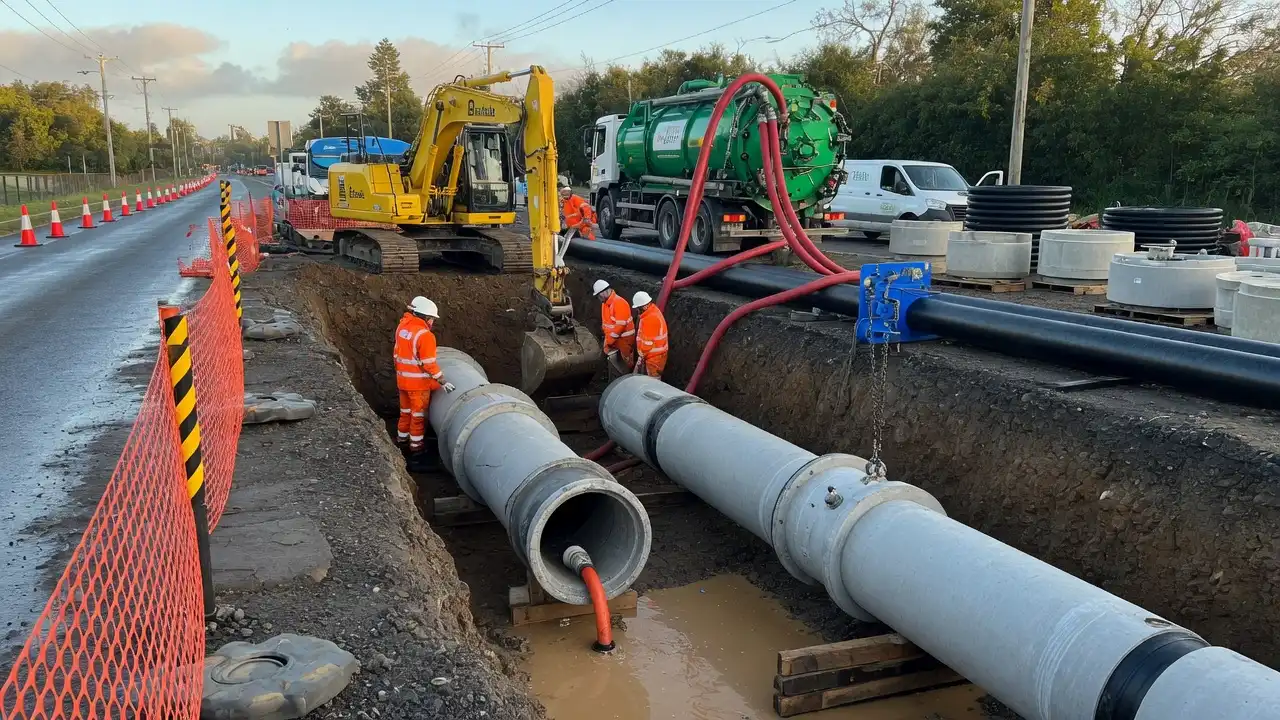
Barhale Trant Utilities sits at the crossroads of water networks, energy systems, and heavy civil engineering, and that matters for anyone planning large-scale builds. When a joint venture handles utility infrastructure at this level, the ripple reaches project managers, developers, and property owners who depend on durable, code-ready groundwork.
Key Takeaways
- Barhale Trant Utilities is a specialist civil and utilities partnership focused on water, energy, and buried infrastructure delivery.
- Its work leans heavily on precast concrete components for speed, tolerance control, and long service life.
- Lessons from this model apply directly to Midwest utility projects, where weather resistance and on-time delivery decide outcomes.
Read: Bringing Survey-Grade Precision to Live Construction Sites
What Barhale Trant Utilities Actually Is
Barhale Trant Utilities is a joint venture model pairing civil engineering strength with utilities delivery expertise. It targets water treatment, wastewater networks, and energy transmission work. If you have tracked infrastructure delivery, this collaborative structure will feel familiar.
- Scope: clean and dirty water, pipelines, pumping stations
- Approach: design, build, and maintain across asset lifecycles
- Value: shared risk, pooled specialist crews, single accountability
Our hands-on engineering experience shows this integrated model cuts handoffs and keeps quality consistent.
The Engineering and Structural Significance
Utility programs like these live or die on structural reliability. Buried assets face soil pressure, water tables, and freeze-thaw cycles, so tolerances cannot slip. According to load guidance from the American Concrete Institute, precise mix design and cover depth protect embedded steel for decades.
Industry contractors are noting three priorities:
- Load-bearing accuracy for traffic and backfill
- Watertight joints to stop infiltration
- Corrosion control in aggressive ground
These same principles guide every buried system we install.
Materials and Specifications
At Midwest Precast Contractor, we spec utility components the way large civil ventures do: consistent, tested, and traceable. The table below compares common material choices against the demands utility work places on them.
| Material | Load Capacity | Durability (Years) | Freeze-Thaw Resistance | Relative Cost |
|---|---|---|---|---|
| Precast Concrete | Very High | 75-100+ | Excellent | Medium |
| Cast-in-Place | High | 50-75 | Good | Medium-High |
| HDPE Pipe | Moderate | 50-70 | Good | Low-Medium |
| Ductile Iron | High | 50-100 | Good | High |
| Vitrified Clay | Moderate | 100+ | Fair | Medium |
Precast concrete balances strength, lifespan, and cost efficiency better than most alternatives for buried structures. Standards from ASTM International back these performance ranges.
Reuben Brothers & Alan Faena Miami Development Project
Utility Infrastructure Applications
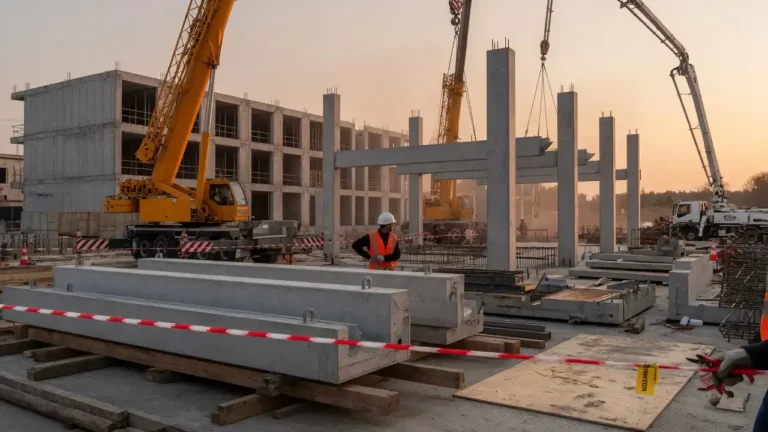
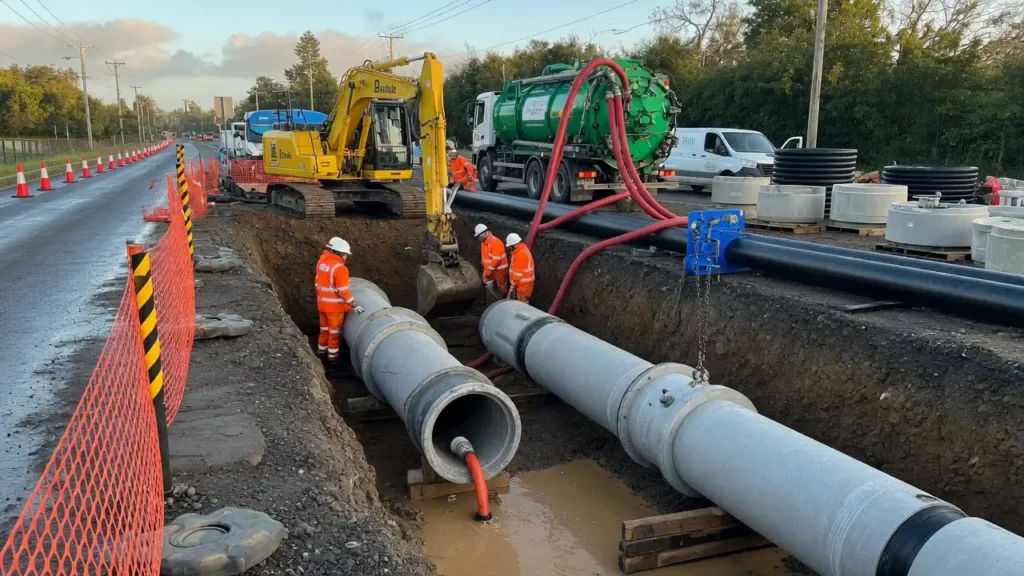
Utility ventures deploy precast across nearly every buried asset. Manholes, chambers, and culverts carry heavy loads while staying watertight. Our crews observed that factory-cast units install faster and reduce site risk.
- Manholes and access chambers for sewer and stormwater
- Pump station bases and wet wells
- Cable troughs and utility ducts
- Retaining walls for excavation support
- Box culverts for drainage crossings
The delivery discipline behind Barhale Trant Utilities mirrors how we sequence these components: cast, cure, deliver, install.
Precast Concrete’s Role in Utility Delivery
Precast changes the math on schedule and quality. Factory conditions hold tight tolerances that field pours struggle to match. Per OSHA excavation safety guidance, fewer hours in open trenches means fewer hazards.
Barhale Trant Utilities Stormwater Infrastructure
— US News (@Us_news_ways) July 23, 2026
As we track global advancements, the latest moves by Barhale Trant Utilities highlight a significant shift toward large-scale, tech…@UtilitiesWest @Trant_Eng @BaralGroup https://t.co/KCUONTfqer
Pros of precast for utilities:
- Faster installation and shorter trench exposure
- Consistent strength from controlled curing
- Lower defect rates and less rework
Cons to plan for:
- Crane and access requirements on tight sites
- Transport logistics for large units
The trade-off favors precast on most serious civil jobs.
The Midwest Construction Context
Midwest ground is unforgiving. Frost heave, clay swell, and heavy spring runoff test every buried asset. Research summarized by the National Ready Mixed Concrete Association confirms air-entrained concrete resists freeze-thaw damage far better than untreated mixes.
| Midwest Condition | Risk to Utilities | Precast Advantage |
|---|---|---|
| Freeze-Thaw | Cracking, spalling | Air-entrained mix resists it |
| Clay Soils | Shifting, uplift | Rigid units hold alignment |
| Heavy Rain | Infiltration | Sealed joints stay watertight |
| Frost Depth | Pipe damage | Deep, rated structures endure |
That is why the Barhale Trant Utilities delivery mindset translates so cleanly to work across Des Moines, Milwaukee, and the wider region.
Structural Alternatives Worth Comparing
Not every project starts with precast. We help clients weigh real options against budget, timeline, and ground conditions.
- Precast concrete: best for speed and long life
- Cast-in-place: flexible for odd geometries
- Modular polymer chambers: light, but lower load ratings
- Segmental block walls: strong for retaining, limited elsewhere
Guidance from the American Society of Civil Engineers reinforces matching the method to the load and environment, not habit.
Frequently Asked Questions
What does Barhale Trant Utilities specialize in?
Primarily water, wastewater, and energy infrastructure delivered through an integrated civil engineering partnership.
Why does precast matter for utility work?
It delivers tight tolerances, faster installs, and long service life with less trench exposure.
Does precast handle Midwest winters?
Yes. Air-entrained precast resists freeze-thaw and holds up under frost depth and clay movement.
Can these methods apply to my project?
Absolutely. The same delivery discipline scales to commercial and municipal builds of any size.
Seattle Children’s Bellevue Clinic And Surgery Center Bellevue WA: A Precast Blueprint
Build It Right With Midwest Precast Contractor
The delivery standards behind large utility ventures are exactly what we bring to every job. At Midwest Precast Contractor, we combine engineering precision, Midwest-tough weather resistance, and on-time delivery across manholes, culverts, retaining walls, and industrial foundations.
Ready to spec your next utility build? Call our team at (414) 285-5933 for a free, no-obligation consultation. Our crews are available 24/7 to help you plan durable, code-ready infrastructure that lasts.