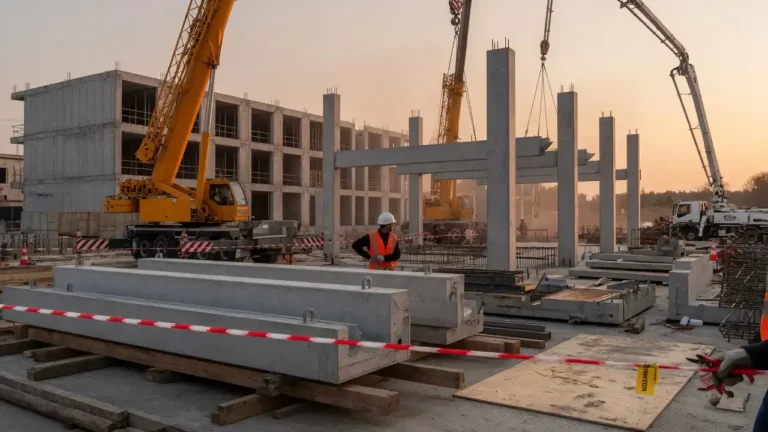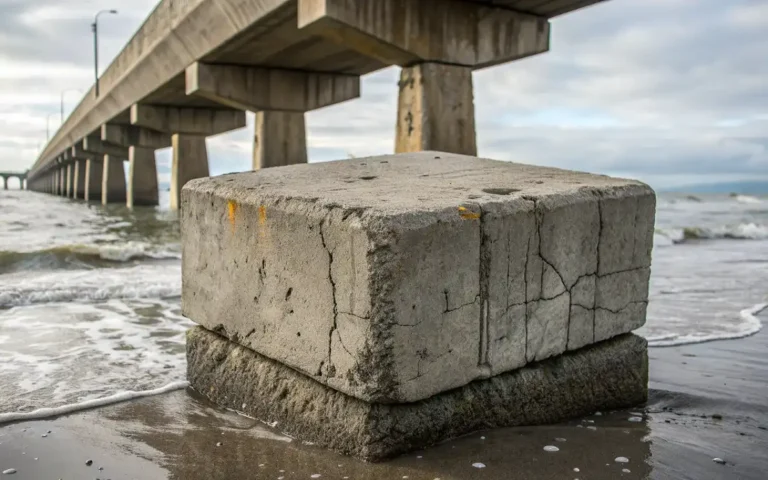
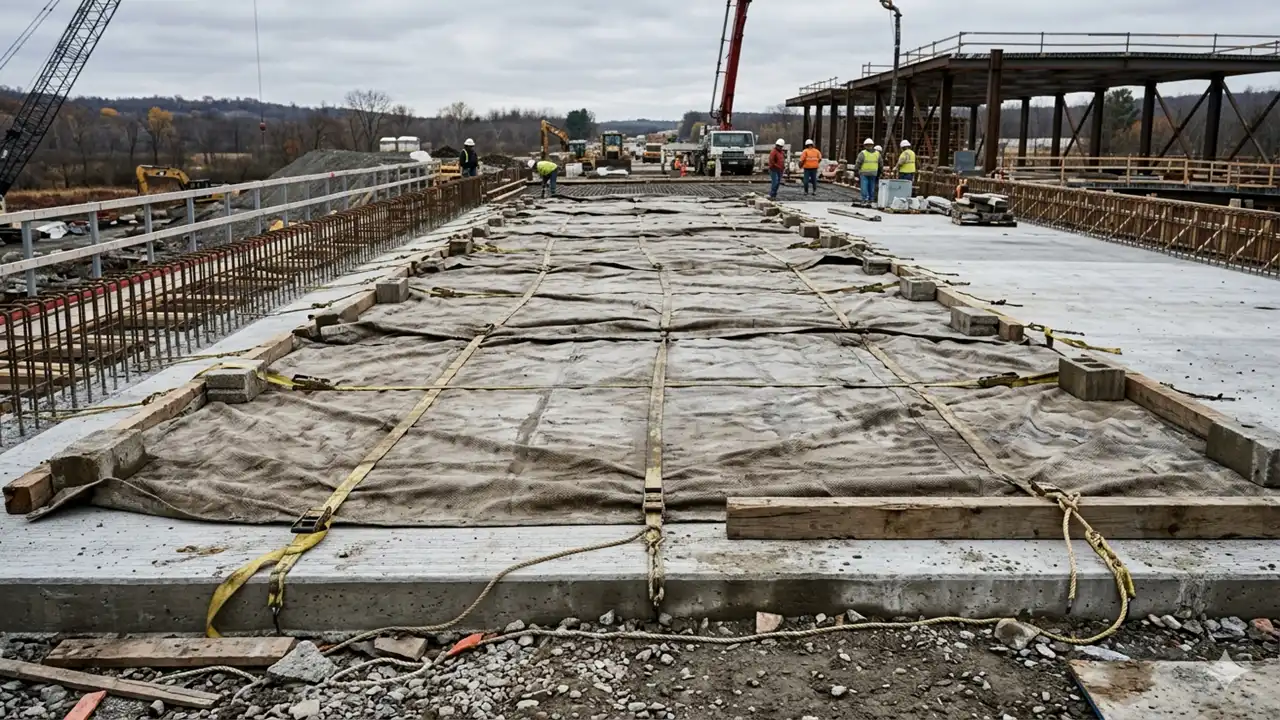
Pouring concrete is a race against the elements, and in cold weather, the stakes are even higher. If the water inside a fresh mix freezes before the concrete gains sufficient strength, you’re looking at permanent structural damage and a wasted budget. This is where concrete blankets become the most valuable tool on your job site.
In this guide, you will learn why thermal protection is non-negotiable for winter masonry, how to choose the right insulation for your specific climate, and best practices for ensuring your slab cures perfectly, even when the mercury drops.
Why Temperature Control Matters for Concrete
Concrete doesn’t just “dry”; it undergoes a chemical reaction called hydration. This process generates its own heat (heat of hydration), but in cold environments, that heat escapes too quickly.
If the temperature of the slab falls below 40°F (4°C), the hydration process slows to a crawl. If it hits freezing, the expanding ice crystals can reduce the ultimate strength of the concrete by up to 50%. Using concrete blankets acts as a thermal barrier, trapping the internal heat and maintaining the “sweet spot” temperature required for the chemical bond to finalize.
Types of Concrete Blankets for Every Project
Not all insulation is created equal. Depending on your zip code and the severity of the winter, you’ll likely choose between these three main categories:
1. Non-Electric Insulated Blankets
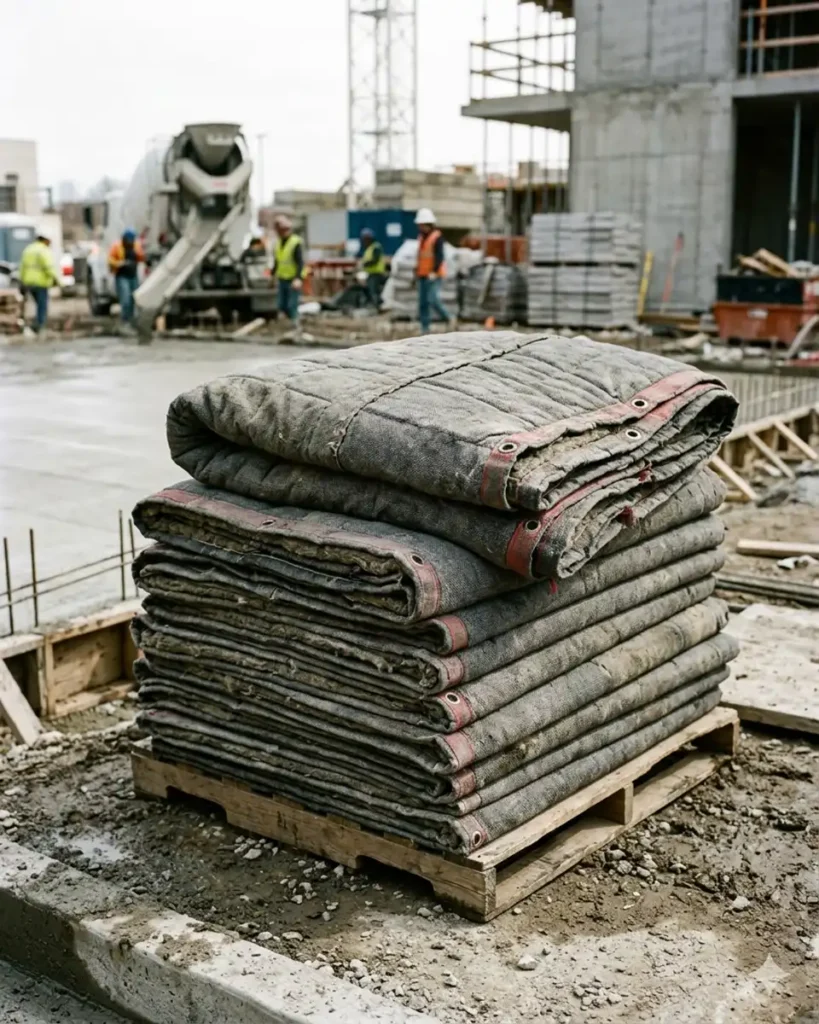
The industry standard for most contractors. These consist of closed-cell foam encased in a heavy-duty poly shell. They are rated by their R-value—the measure of thermal resistance. High-quality concrete blankets typically offer an R-value between 2.0 and 5.0.
Asphalt and Concrete Maintenance for Residential Communities
2. Heated (Electric) Blankets
When the ground is frozen solid or the ambient air is well below zero, passive insulation might not be enough. Electric concrete blankets plug into a power source to actively deliver heat to the slab, ensuring the curing process never stalls.
3. Vapor Barrier Integrated Blankets
Some premium options include a built-in vapor barrier to prevent moisture loss. This is a “two-birds-one-stone” solution that keeps the concrete warm while ensuring it stays hydrated for a more durable finish.
Key Benefits of Using Concrete Blankets
Investing in proper protection isn’t just about following code; it’s about protecting your bottom line.
- Extended Construction Season: You don’t have to shut down operations just because it’s November. With concrete blankets, you can maintain a year-round schedule.
- Faster Curing Times: By keeping the mix warm, you accelerate the hydration process, allowing you to pull forms and move on to the next phase of the build sooner.
- Prevention of Scaling and Spalling: Rapid cooling of the surface can cause the top layer to flake off later. Thermal protection ensures uniform cooling from the core to the surface.
- Cost Efficiency: Replacing a cracked, frozen driveway is significantly more expensive than the upfront cost of a few reliable concrete blankets.
How to Properly Use Concrete Blankets
To get the most out of your insulation, follow these professional steps:
- Preparation: Ensure the subgrade isn’t frozen before you pour. Pouring warm concrete on frozen ground will cause the bottom of the slab to fail.
- Timing: Apply the concrete blankets as soon as the concrete has set enough that the surface won’t be marred by the weight of the blanket.
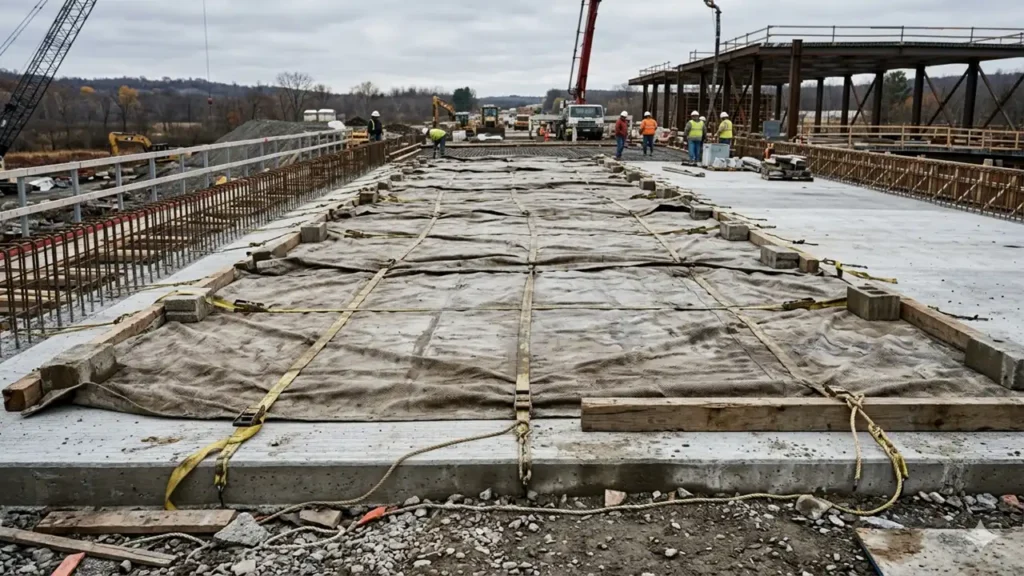
- Overlapping: Never leave gaps. Overlap the edges of the blankets by at least 12 inches and weigh them down with sandbags or lumber to prevent wind from whistling underneath.
- Monitoring: Use a thermal probe to check the internal temperature of the concrete. You want to maintain at least 50°F (10°C) for the first three to seven days.
- The Gradual Reveal: Don’t remove the blankets abruptly if the air is significantly colder than the concrete. Sudden “thermal shock” can cause cracking. Remove them in stages or during the warmest part of the day.
Common Mistakes to Avoid
Even experienced crews can run into trouble if they get complacent. Avoid these pitfalls:
- Using Wet Blankets: If the insulation inside the blanket gets wet, its R-value drops to almost zero. Always check for rips or tears.
- Ignoring the Corners: Corners and edges lose heat faster than the center of the slab. Double-layer your concrete blankets at the perimeter for extra security.
- Underestimating Wind Chill: Wind can strip heat away much faster than still air. If a storm is brewing, ensure your blankets are anchored securely.
Concrete Leveling: The Ultimate Guide to Fixing Uneven Surfaces
FAQ
Q: At what temperature do I need to start using concrete blankets? A: Generally, if the ambient temperature is expected to drop below 40°F (4°C) within 24 hours of your pour, you should have blankets ready to deploy.
Q: Can I use hay or straw instead of professional blankets? A: While straw was a traditional method, it is messy, flammable, and can stain the concrete. Modern concrete blankets are more effective, reusable, and provide a much more consistent R-value.
Q: How long should I leave the blankets on? A: For standard mixes, 3 to 7 days is typical. However, this depends on the type of cement used and the severity of the cold. Always consult your engineer’s specifications.
Q: Are concrete blankets waterproof? A: Most are designed with a reinforced poly outer shell that is water-resistant to prevent the inner insulation from soaking up moisture.
Protect Your Investment
In the world of construction, your reputation is built on the strength of your finished product. Don’t let a sudden cold snap compromise the integrity of your hard work. By using high-quality concrete blankets, you ensure that every pour results in a rock-solid, durable structure, regardless of what the weather app says.