
The AI building boom is pulling skilled trades off your job sites. Construction workers moving to data centers has become one of the sharpest labor shifts the Midwest has seen since 2008.
For contractors and property owners planning a build, this changes your timeline, your budget, and your hiring strategy right now.
Building Envelope of Concrete Wall Builder’s Guide
Key Takeaways
- Construction workers moving to data centers is deepening a skilled trades shortage already estimated at 300,000 workers, per the Home Builders Institute.
- US single-family housing starts fell to their lowest level in over 3.5 years in July 2026, while pending home sales hit a three-year low.
- Data center demand is accelerating, with the U.S. Department of Energy projecting these facilities could consume 6.7% to 12% of national electricity, up from 4.4% in 2023.
Why is this happening now?
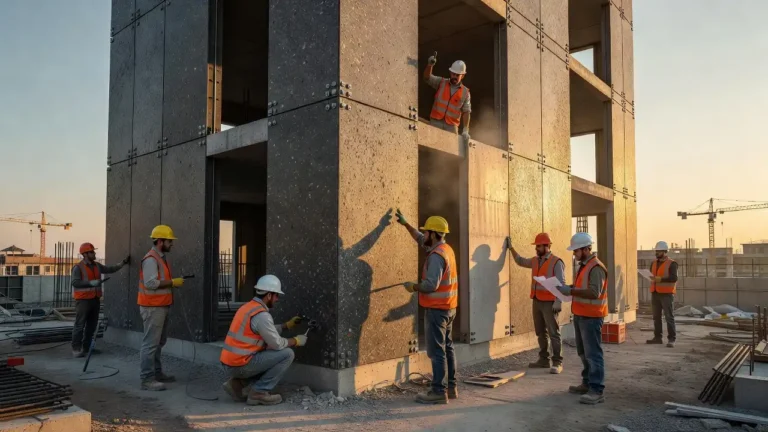
The frenzy to build the computing facilities behind the AI boom is scooping up the same trades that once framed homes.
Our analysis suggests the pull is simple: steady work at competitive pay.
According to reporting from Futurism, Home Builders Institute CEO Ed Brady put it plainly.
The housing market has softened, so many workers who built homes are moving to data center projects instead.
The labor supply has been trending down since the Great Recession of 2008. The data center surge is not the root cause.
It is the accelerant.
Brady warned the problem will grow more acute because training investment for the next generation of skilled labor remains too low.
How to Use a Stud Finder Before You Frame
What do the numbers tell us?
The housing side is under real pressure. Bloomberg reported pending home sales dropped to a three-year low.
That coincided with the steep decline in new home construction noted above.
Meanwhile, the demand for data center capacity keeps climbing. The U.S. Energy Information Administration projects electricity consumed by data center servers will rise sharply in its Annual Energy Outlook 2026.
More facilities means more concrete, more framing, and more skilled hands pulled toward those sites.
The staffing gap is not new, either. The Associated Builders and Contractors estimated the industry needs to attract roughly 349,000 net new workers in 2026 alone.
Current Bureau of Labor Statistics data on job openings and hires confirms the ongoing strain.
Construction Workers Moving to Data Centers
— US News (@Us_news_ways) August 24, 2026
Construction workers moving to data centers has become one of the sharpest labor shifts the Midwest has seen since 2008.@builderonline @CNplus @ConstrJunkie https://t.co/KGWqnoZRUe
How does the labor demand compare?
Here is how the two segments stack up as construction workers moving to data centers reshapes the market.
| Factor | Housing Construction | Data Center Construction |
|---|---|---|
| Current demand trend | Declining (starts at 3.5-year low) | Rising with AI expansion |
| Labor competition | Losing skilled trades | Gaining skilled trades |
| Project duration | Shorter, cyclical | Longer, sustained |
| Wage pressure | Softening market | Competitive, steady |
| Energy footprint | Standard grid load | 4.4% of US power (2023), projected 6.7–12% |
Our contractors note the sustained nature of data center work is the real draw.
A single facility can keep a crew busy far longer than a scattered set of homes.
How Much Does It Cost to Build a House With Precast?
What does this mean for Midwest contractors?
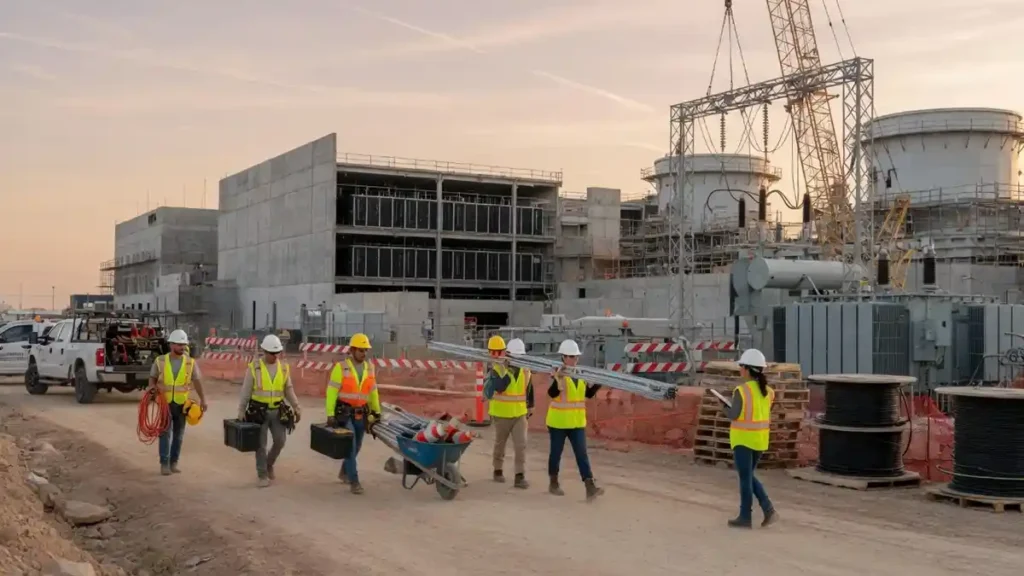
If you’ve been following construction technology trends across the Midwest, this shift won’t surprise you. The talent pool is being reallocated in real time.
Your bids now compete not just with other builders, but with hyperscale developers.
The practical effect is threefold.
- Longer lead times on skilled crews, especially electricians and concrete specialists.
- Higher wage expectations as workers weigh steady data center contracts.
- Tighter scheduling risk when a nearby facility breaks ground mid-project.
Construction workers moving to data centers means you cannot assume the labor you booked last year will be available at the same rate this year.
How can you adapt your workforce strategy?
We recommend a structured response rather than a reactive one. Here is the step-by-step approach our team uses.
- Audit your crew dependencies.
Identify which trades are most exposed to data center poaching in your region. - Lock in labor early.
Sign crews to project-length agreements before ground is broken nearby. - Lean into construction technology.
Shift labor-intensive tasks to precast concrete and prefabricated systems that require fewer on-site hands. - Invest in training partnerships.
Support apprenticeship programs to counter the training gap Brady flagged. - Build schedule buffers.
Add contingency days for trades that may be pulled to competing sites.
Each step reduces your exposure as construction workers moving to data centers tighten the market further.
Teleos RV Construction and Features Redefine Builds
Why does construction technology matter here?
The clearest hedge against a shrinking labor pool is building smarter, not just harder. Precast concrete components arrive ready to set, cutting the number of workers needed on site.
Prefabrication moves labor into a controlled plant environment, where fewer hands accomplish more.
Our analysis suggests firms that adopt these methods now will weather the shortage far better.
When construction workers moving to data centers reduce your available crews, efficiency per worker becomes your competitive edge.
Construction industry insiders are noting the same pattern. The winners will be builders who treat labor scarcity as a permanent condition, not a passing dip.
How to Remove a Stripped Screw on Job Sites
What should you do next?
The takeaway is direct. Construction workers moving to data centers is a structural shift, not a temporary blip, and the Department of Energy data confirms the demand driving it is still climbing.
Start today by auditing your crew exposure and pricing in higher labor costs on new bids. Then move labor-heavy scopes toward precast and prefabricated systems.
We built Midwest Precast Contractor to help you deliver on schedule even when skilled hands are scarce.
Plan for the tighter market now, and your next build stays on track.