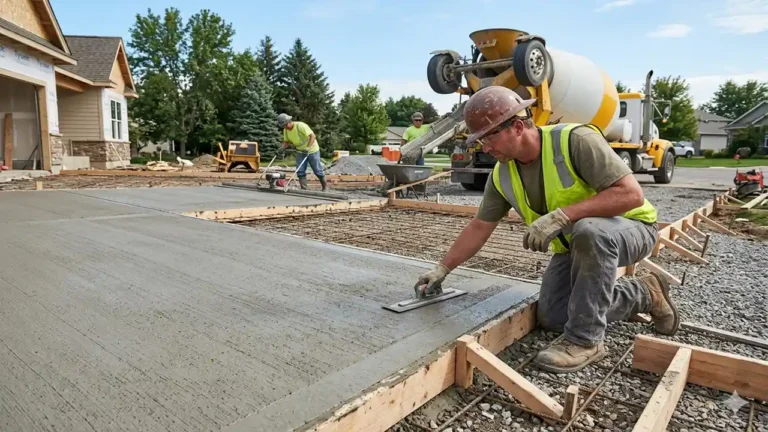
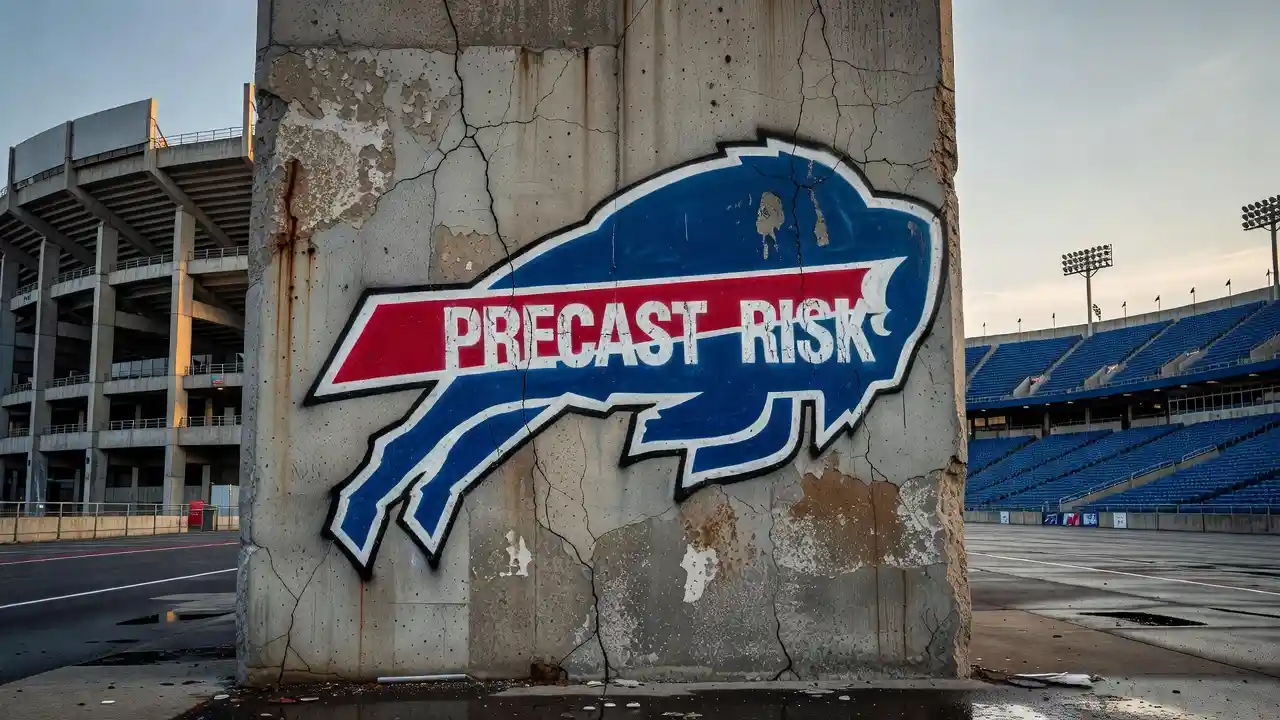
A single act of vandalism just cost a $2.1 billion project roughly $150,000 and nearly a full week of stopped work.
The buffalo bills stadium graffiti incident at Highmark Stadium is a warning for anyone finishing exposed masonry or precast surfaces.
If your build includes premium finishes, the cleanup math should concern you now, not after paint hits the wall.
New Construction Portland Shapes Precast
Key Takeaways
- Oil-based spray paint penetrated granite, marble, tile, wood, and flooring at the new Bills stadium, forcing removal and reinstallation rather than a simple wash.
- Prompt removal and the right cleaning method matter more than raw effort; the wrong approach can cause permanent staining known as a graffiti “ghost.”
- Architectural precast finishes carry the same porosity risk, so a written response protocol and a possible anti-graffiti barrier coating belong in your project plan.
What Happened at Highmark Stadium?
Construction on the 1.35 million-sq-ft, 60,000-seat open-air venue paused for nearly one week after vandals sprayed multiple areas, including luxury suites.
According to ENR, the Gilbane-Turner joint venture reported about $150,000 in damage.
Investigators found that oil-based paint worked its way into granite, marble, tile, wood finishes, and flooring.
That penetration is the problem.
Crews now have to chop out and reinstall marble and sections of floor because the stain will not lift.
A $100,000 reward led to identification of at least two site workers.
The stoppage supported the Gilbane-Turner zero-tolerance policy covering harassment across employees, subcontractors, and vendors.
Our analysis suggests the reputational and schedule cost outweighed even the repair bill.
The project topped out at 50% complete in April 2025, with a target opening before the 2026 NFL season.
Roughly 8,000 workers and more than 1.7 million craft-hours had gone into the build to that point.
Building a Swiss Watch Out of Concrete
Why Should Precast Contractors Care?
That same milestone release confirmed the stadium’s skin includes architectural precast panels forming the building’s exoskeleton.
This is the detail Midwest crews should sit with.
Precast surfaces are attractive, durable, and often porous.
Porosity is exactly what makes graffiti so hard to remove.
The NPS Preservation Brief 38 explains the mechanism plainly.
Paint carries pigment and binder in a solvent.
As the solvent evaporates, the binder hardens into the pores.
Total removal of pigment can still leave binder below the surface, producing a stubborn graffiti “ghost.”
Time works against you.
Once paint has cured for weeks, its solubility drops and removal gets harder.
This is why the buffalo bills stadium graffiti damage escalated into a removal-and-reinstall job rather than a quick clean.
Buffalo Bills Stadium Graffiti Exposes Precast Risk
— US News (@Us_news_ways) August 5, 2026
The buffalo bills stadium graffiti incident at Highmark Stadium is a warning for anyone finishing exposed…@HighmarkStadm @NFL @BuffaloBills https://t.co/XWsyZRY6W3
What Does This Mean for Midwest Precast Projects?
If you’ve been following architectural precast trends across the Midwest, this won’t come as a surprise.
Premium finishes raise the stakes when vandalism occurs.
Construction industry insiders are noting that finish selection and protection now belong in early planning, not final punch-out.
The PCI Architectural Precast Manual (MNL-122) sets surface finish standards and cleaning guidance that your specification should reference before pours begin.
Our contractors note one recurring gap: crews plan for placement and curing but rarely plan for defacement.
A precast panel that looks flawless at install can still absorb oil-based paint if left unprotected on an active, publicly visible site.
Amazon Louisa County Construction Dispute
Here is how common removal approaches compare by surface type.
| Surface / Situation | Typical Removal Method | Realistic Outcome |
|---|---|---|
| Uncoated porous precast | Poultice with solvent or NMP (N-methyl-2-pyrrolidone) remover, rinse, detergent wash | May leave a faint ghost; test first |
| Precast with sacrificial coating | Low-pressure water, reapply coating after | Usually removes cleanly; coating must be reapplied |
| Precast with permanent barrier coating | Low-pressure water and detergent or solvent | Removes well; recoat after several cleanings |
| Cured oil-based paint in stone/marble | Chop out and reinstall | Costly; often unavoidable once penetration is deep |
The table makes the point.
The cheapest fix is the one you plan before paint ever lands.
How Should Contractors Respond On-Site?
Speed and method both matter.
Prompt removal is the strongest deterrent against repeat vandalism, per the NPS brief.
But hasty use of harsh chemicals can cause damage worse than the graffiti itself.
Use this protocol as a starting point for architectural precast surfaces.
- Document first.
Photograph the graffiti for insurance and any active investigation before you touch it. - Identify the material.
Confirm whether you’re dealing with aerosol oil-based paint, a marker, or a water-soluble product, since each needs a different approach. - Test on a hidden area.
Run a small trial on an inconspicuous panel to check that your cleaner won’t etch or discolor the finish. - Suit up.
Require full PPE including respirators, chemical-resistant gloves, and eye protection, and confirm ventilation because many removers carry high VOCs. - Pre-wet correctly.
Pre-wet the surface and surrounding area when using an alkaline cleaner, but skip pre-wetting for solvent-based products that react poorly with water. - Apply and rinse bottom-to-top.
Rinse from the bottom upward to prevent cleaner from running down and staining lower panels. - Feather the edges.
Clean the full panel and fade the treatment outward so you don’t leave an obvious clean patch that invites more graffiti. - Check residue.
Test the surface with pH strips to confirm all cleaning agents are gone.
If penetration is deep, be honest with the owner.
Sometimes partial fading and careful color matching beat aggressive removal that scars the precast.
Southcoast Wind Permit Reconsideration Reshapes Structural Demand
Can You Prevent This Before the Next Pour?
You can reduce the risk, though no method removes it entirely.
An anti-graffiti barrier coating creates a layer that keeps paint from bonding to the pores.
Two broad types exist.
Sacrificial coatings wash off with the graffiti and get reapplied.
Permanent coatings resist cleaning agents and last through several removals before recoating.
Both carry tradeoffs.
Some clear coatings can alter color, add sheen, or reduce vapor permeability, so test on sample panels first and confirm compatibility with your MNL-122 finish spec.
Where Should Your Project Go From Here?
The buffalo bills stadium graffiti case is a reminder that finish protection is a scheduling and budget decision, not an afterthought.
Plan the response protocol, specify the coating strategy, and align both with your precast supplier early.
If you’re weighing finish selection or graffiti protection for an upcoming Midwest build, tell us where your project stands and what surfaces need protecting.
We can help you match the right precast finish and coating approach to your site’s exposure.