Key Takeaways
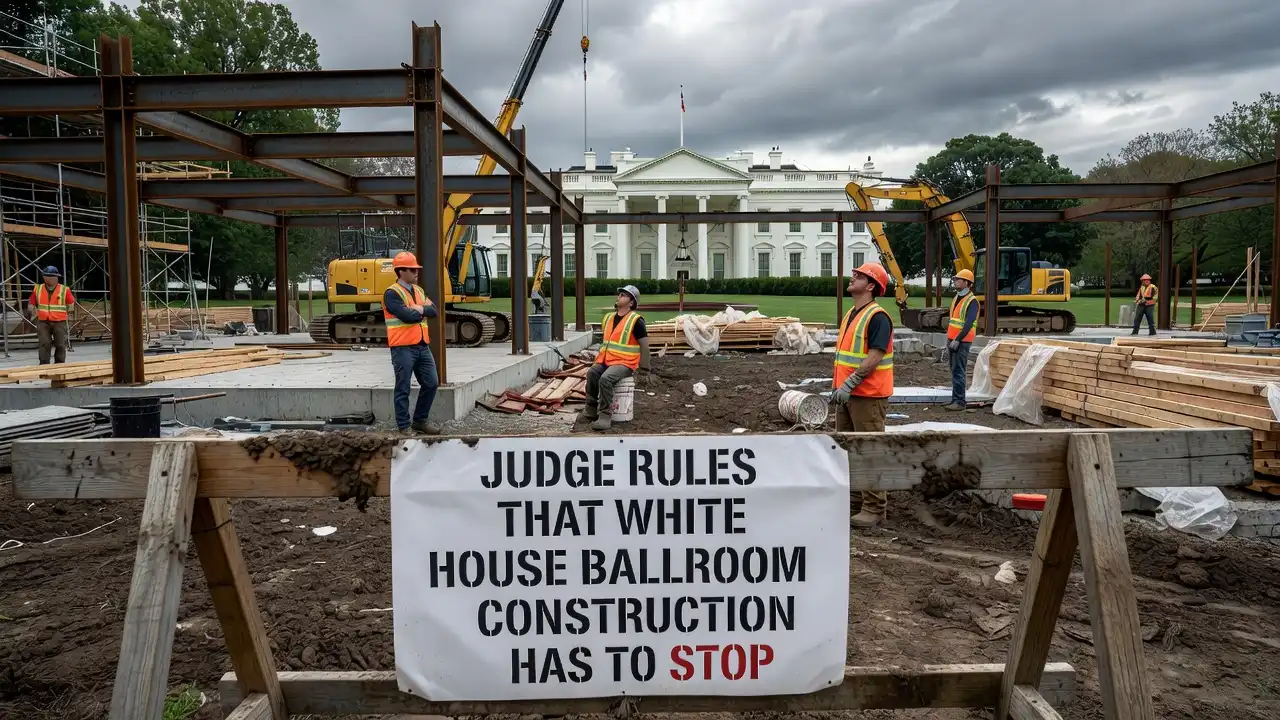
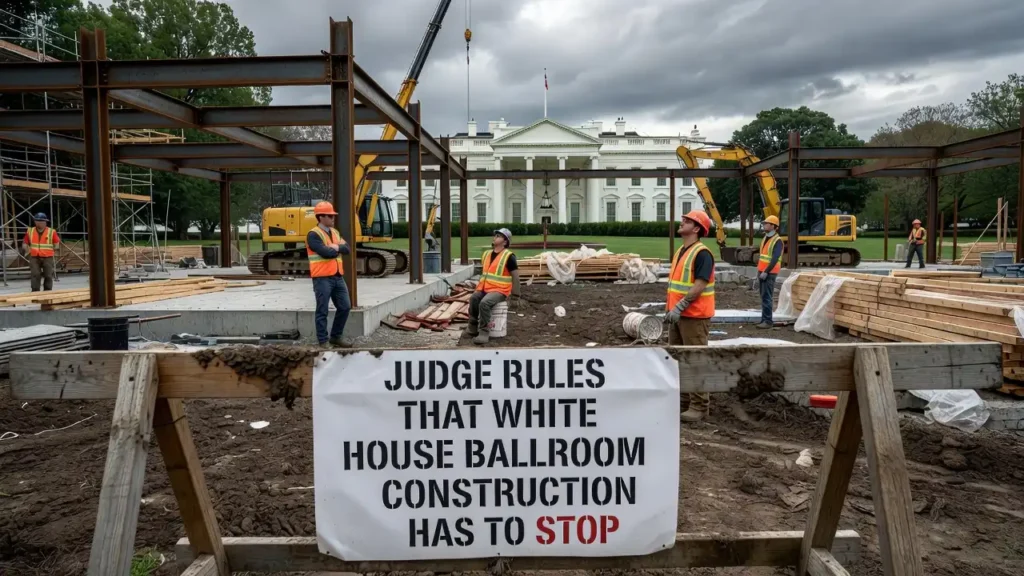
- A federal judge ruled that White House ballroom construction has to stop above-ground, while permitting below-grade structural work to continue under specific conditions.
- The legal pause creates a real-world case study in phased construction sequencing and underground structural planning.
- Midwest contractors can extract direct lessons about below-grade concrete strategy, regulatory compliance, and project continuity from this high-profile situation.
Emirates Stadium Capacity Shapes Precast Concrete Innovation
When a judge rules that White House ballroom construction has to stop, the entire construction industry pays attention.
This isn’t just a political story it’s a structural, legal, and logistical case study that every serious contractor, developer, and project manager should examine closely.
The ruling, which halted above-ground work while allowing below-ground construction to proceed, opens a critical conversation about phased project sequencing, underground concrete planning, and what happens when legal holds interrupt active builds.
What Actually Happened on the White House Ballroom Site?
According to reporting from Construction Connect Canada, a federal judge issued an order halting above-grade construction activity at the White House ballroom project site.
The same judge subsequently allowed below-ground work to continue, creating a split-scope ruling that is unusual but not unprecedented in federally sensitive construction zones.
This distinction above grade versus below grade is precisely where our analysis finds the most instructive industry lessons.
The project involves a proposed ballroom addition to the White House complex, a structure requiring significant foundational and underground infrastructure investment before any visible above-ground form could take shape.
The court’s decision to permit subterranean work to proceed suggests the judge recognized that halting foundation-level activity entirely would cause disproportionate structural and financial harm.
That reasoning mirrors the logic we see applied on major infrastructure projects across the Midwest every season.
Crescent Purchasing Consortium Cuts Precast Costs
Why Below-Grade Work Was Allowed to Continue
The decision to allow underground construction while the broader stop order remains active reflects a well-established legal and engineering principle: foundations are not structures until they rise above grade.
Courts and regulatory bodies have historically treated below-ground work including excavation, footing pours, grade beams, and basement wall forming as a separate phase with distinct permitting and legal exposure.
For contractors, this distinction matters enormously.
When legal disputes, environmental reviews, or permit challenges arise mid-project, understanding which phases are most legally insulated can determine whether a project survives a hold order or bleeds out financially.
Our team has observed this exact dynamic in large-scale commercial builds across Illinois, Ohio, and Indiana where zoning disputes froze above-grade steel erection while foundation crews kept working under separate approved permits.
What This Means for Midwest Contractors
When a judge rules that White House ballroom construction has to stop above ground, it forces a question every contractor should already have answered: What is your below-grade strategy, and is it independently executable?
Here is a structured approach we recommend for any project facing regulatory or legal uncertainty:
- Separate your permit packages — File for foundation and excavation permits independently from your above-grade structural permits wherever local codes allow.
- Identify below-grade scope early — Define all footings, grade beams, waterproofing systems, and underground utility rough-ins in a standalone scope document.
- Pre-pour concrete specifications — Confirm your below-grade concrete mix design, typically 4,000 PSI minimum compressive strength for commercial foundations per ACI 318 standards, before any hold order can disrupt material procurement.
- Coordinate legal and field teams — Ensure your project attorney and site superintendent speak the same language about which scopes are affected by any stop-work order language.
- Document independently — Keep below-grade inspection records, pour logs, and compaction reports entirely separate from above-grade documentation packages.
ESH Winning United Kingdom Sets a New Bar
This sequencing discipline is not just theoretical.
ACI 318 — Building Code Requirements for Structural Concrete provides the technical foundation for specifying concrete systems that can be installed, inspected, and left dormant during above-grade hold periods without structural compromise.
The Structural Framing Implications Nobody Is Talking About
Most coverage of this story focuses on the politics.
When above-grade structural framing is halted mid-project, the below-grade system must be designed to tolerate an extended load-free period sometimes months or years.
That means post-tensioned slabs, reinforced grade beams, and waterproofed foundation walls must be specified with long-term durability in mind from day one.
| Below-Grade Element | Recommended Spec | Industry Standard Reference |
|---|---|---|
| Footings | Min. 4,000 PSI concrete | ACI 318-19 |
| Foundation Walls | 5,000 PSI with W/C ratio ≤ 0.45 | ACI 332 |
| Waterproofing Membrane | 60-mil HDPE or crystalline coating | ASTM D4551 |
| Reinforcement Cover | 3 inches minimum below grade | ACI 318, Section 20.6 |
| Concrete Cure Time Before Backfill | 28 days minimum | PCI MNL-116 |
The Precast/Prestressed Concrete Institute (PCI) maintains detailed guidance on precast foundation systems that can be installed in phased sequences precisely the kind of approach that would survive a split-scope legal ruling like the one we’re analyzing here.
How This High-Profile Case Reflects a Broader Regulatory Reality
The fact that a judge rules that White House ballroom construction has to stop above grade while green-lighting underground activity is not an anomaly.
It is a preview of the regulatory environment contractors are entering as federal, state, and municipal oversight intensifies on high-visibility projects.
The Engineering News-Record (ENR) has tracked a measurable increase in mid-project stop-work orders tied to historic preservation challenges, environmental review requirements, and federal procurement disputes over the past five years.
Our contractors note that projects touching any federally designated zone are increasingly vulnerable to exactly this type of phased legal interruption.
The White House ballroom situation illustrates that legal resilience is now a project planning discipline, not just a legal department concern.
Contractors who structure their scopes, permits, and concrete specifications for phase-independence will be best positioned to keep crews working even when a portion of their project goes into legal hold.
Barhale Trant Utilities Stormwater Infrastructure
Judge Rules That White House Ballroom Construction Has to Stop
— US News (@Us_news_ways) July 27, 2026
A federal judge ruled that White House ballroom construction has to stop above-ground, while permitting below-grade structural…@Reuters @ASAPMOB @WhiteHouse https://t.co/ek9Q42ModX
What Your Next Underground Pour Should Account For
Since the judge rules that White House ballroom construction has to stop and since below-grade work continues — the industry conversation is now appropriately focused on what makes below-grade concrete durable enough to wait.
Our recommendations for any project that could face a phased hold:
- Specify Type II or Type V cement for enhanced sulfate resistance in below-grade pours.
- Use integral crystalline waterproofing admixtures rather than relying solely on membrane systems, which can degrade during extended construction pauses.
- Require pull-out tested anchor bolts and embedded plates be installed during the foundation pour, not retrofitted later — delays make field-welded connections the costly fallback.
- Confirm all rebar lap splices meet ACI 318 Class B splice requirements before any above-grade hold becomes a long-term situation.
The Portland Cement Association offers technical briefs on extended-cure concrete performance that are directly applicable to projects where above-grade timelines are uncertain.
How to Extend a Bridge’s Service Life?
The Broader Lesson for High-Stakes Builds
Every time a judge rules that White House ballroom construction has to stop, it resets the conversation about how contractors sequence, spec, and legally protect their below grade investment.
The White House project whatever its ultimate political fateis now a permanent reference point in how sophisticated project teams think about regulatory exposure.
We believe Midwest contractors are uniquely positioned to adopt these lessons quickly.
Our regional base of precast and cast-in-place concrete specialists already understands phased construction, independent permit packages, and the kind of durable underground systems that can anchor a project through any above-grade uncertainty.