Every bridge is built with a target design life, but few reach it without deliberate care. Aging infrastructure, heavier traffic, and decades of environmental exposure all push structures toward early deterioration. The good news is that owners can add years, sometimes decades, to a bridge through disciplined inspection, protection, and monitoring. This guide breaks down the main threats to bridge longevity and the strategies that keep structures safe and in service longer.
Why Does a Bridge’s Service Life Matter?
A bridge’s service life is the period it can safely carry traffic before major rehabilitation or replacement becomes necessary. Extending that window protects public safety and preserves a large public investment. When owners plan for longevity early, they avoid the disruption and expense of premature reconstruction.
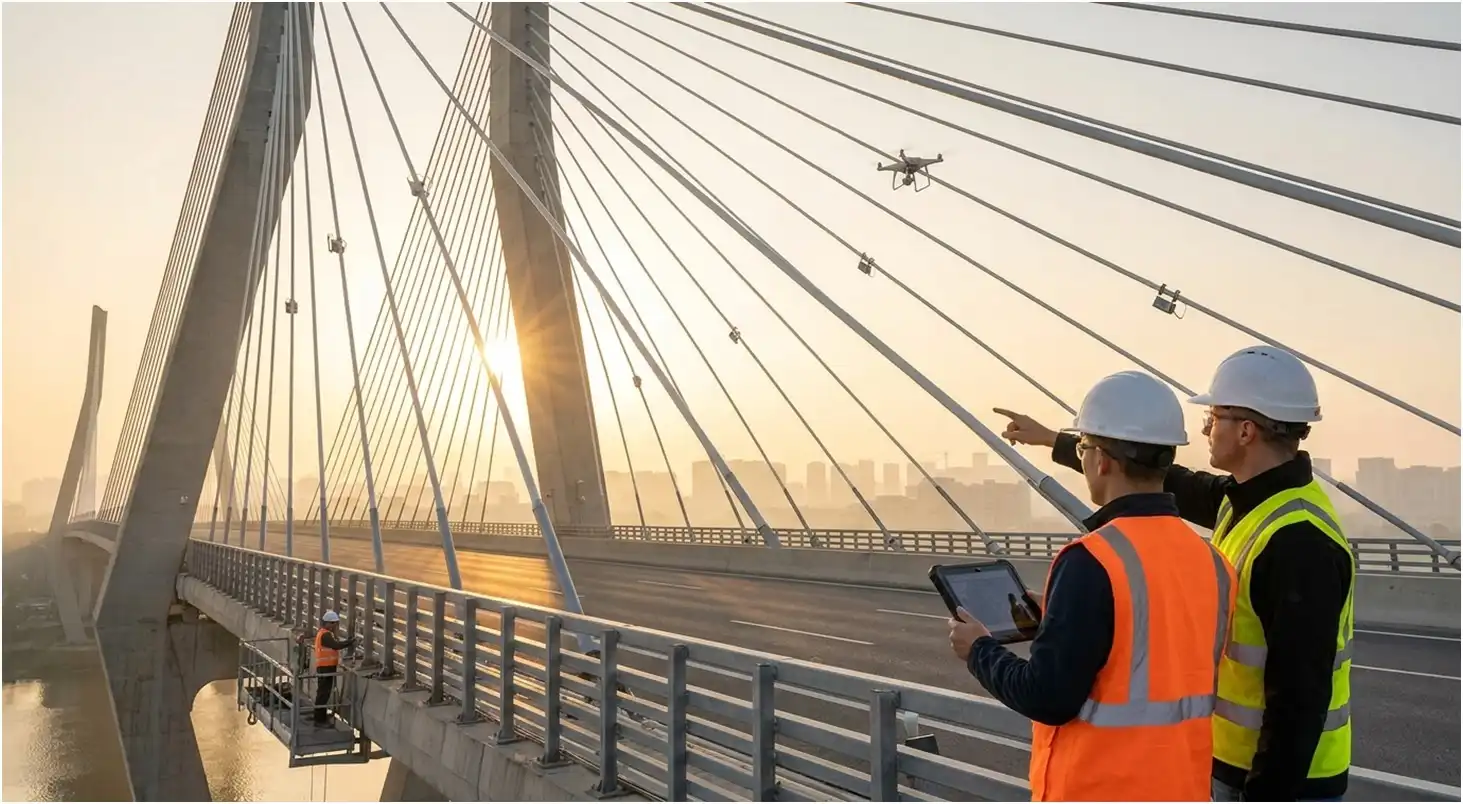
The biggest gains often come from protecting the components that carry the most risk. On cable-stayed bridges, hidden defects in the cables can undermine longevity long before they show, so firms like Freyssinet USA rely on specialized stay cable inspection to catch internal wire breaks and corrosion early. Acting on those findings lets owners repair small problems on schedule and keep the structure in service for decades longer.
What Is the Typical Design Life of a Bridge?
Most modern highway bridges are designed for a service life of about 75 years, and many older structures were built to a 50-year standard. Signature structures like long-span cable-stayed bridges are often designed with 100-year targets. The actual lifespan depends far more on maintenance than on the original design number, since a well-maintained bridge routinely outlasts its design life.
How Does Early Intervention Reduce Lifecycle Costs?
Small defects are cheap to fix, while advanced damage is not. A minor coating repair or joint replacement costs a fraction of a full structural rehabilitation. Because deterioration accelerates once it starts, catching problems early interrupts that cycle and spreads spending across predictable maintenance rather than emergency repairs.
What Are the Biggest Threats to Bridge Longevity?
Bridges face a handful of recurring enemies, and most premature failures trace back to them. Understanding these threats is the first step toward controlling them.
How Does Corrosion Compromise Structural Integrity?
Corrosion is the leading cause of deterioration in steel and reinforced concrete bridges. When moisture and chlorides from road salt reach embedded steel, the metal rusts, expands, and cracks the surrounding concrete. This section loss weakens load-bearing capacity and, if left unchecked, threatens the very components a bridge depends on most.
Why Is High Fatigue Loading a Long-Term Risk for Cables and Connections?
Bridges flex under every vehicle that crosses them, and that repeated cycling causes fatigue. Stay cables on cable-stayed bridges are especially exposed, since they carry high fatigue stress from both axial load and bending, on top of wind and traffic vibration. Over time this constant cycling can initiate cracks in strands and anchorage components, which is why fatigue-prone elements demand focused attention.
How Does Water and Moisture Intrusion Speed Up Deterioration?
Water is the vehicle that carries most damage into a structure. It enters through failed seals, cracked sheaths, and worn joints, then attacks steel and degrades protective grout from the inside. Because the internal environment is hard to reach, even a small breach can lead to extensive hidden damage before any sign appears on the surface.
How Does a Structured Inspection Program Extend Service Life?
Inspection is the foundation of every long-lived bridge. A structured program turns maintenance from guesswork into a data-driven plan.
What Does a Comprehensive Bridge Inspection Cover?
A thorough inspection documents the condition of the deck, girders, bearings, joints, and connections. Inspectors record surface defects, measure section loss, and flag active corrosion or cracking. The result is a baseline that lets engineers track how each component changes between visits.
Why Do Cable-Stayed Bridges Require Specialized Testing?
Cable-stayed bridges hide their most dangerous defects inside the cable system, where standard visual methods can’t see them. A cable can lose significant capacity to internal wire breaks with no external sign at all. That’s why specialized non-destructive testing, such as magnetic flux leakage and acoustic emission monitoring, is needed to evaluate internal condition without dismantling anything.
How Often Should Bridges Be Inspected?
Federal standards call for routine bridge inspections at least every 24 months, with more frequent checks for structures in poor condition or with fracture-critical members. Cable systems and other high-risk elements often follow a tighter schedule set by the bridge owner. Inspection frequency should scale with a structure’s age, exposure, and known vulnerabilities.
Which Maintenance and Repair Strategies Add Decades to a Bridge?
Inspection identifies problems, but maintenance solves them. A few core strategies do most of the work of extending service life.
How Do Corrosion Protection Systems Work?
Corrosion protection creates a barrier between steel and the environment. Protective coatings, sealants, and cathodic protection systems slow or stop the electrochemical reaction that drives rust. Renewing these systems on schedule keeps corrosion from ever reaching the structural steel they’re meant to shield.
When Is Component Strengthening or Replacement Necessary?
When a component has lost capacity but the structure is otherwise sound, strengthening restores performance without full replacement. Techniques like external post-tensioning and fiber-reinforced composites add load capacity to existing members. When individual elements are too far gone, targeted replacement, such as swapping out a corroded stay cable, brings the structure back to full strength.
Why Does Individual Cable Anchorage Simplify Long-Term Maintenance?
On US cable-stayed bridges, individual anchorages at the pylon and deck are the preferred design. This arrangement lets crews inspect, re-tension, or fully replace a single stay without disturbing the rest of the cable system. That flexibility is a major maintenance advantage, because it keeps the bridge in service while work proceeds one cable at a time.
What Role Does Structural Health Monitoring Play?
Monitoring extends the reach of periodic inspection by watching a structure continuously.
How Does Continuous Monitoring Detect Hidden Damage?
Structural health monitoring uses sensors to track strain, vibration, corrosion activity, and cable tension in real time. These systems catch changes between scheduled inspections and can alert engineers the moment a component behaves abnormally. Early signals give owners time to act before a small problem becomes a safety concern.
How Does Inspection Data Support Long-Term Asset Management?
Every inspection and sensor reading feeds a record of how a structure ages. Comparing results over time reveals trends, ranks risk across a bridge network, and helps owners direct budgets where they matter most. This asset management approach turns raw data into a long-term plan for extending service life.
Key Takeaways for Maximizing Bridge Service Life
Extending a bridge’s service life is less about any single fix and more about a disciplined cycle. Inspect early and often, protect steel from corrosion, address fatigue and water intrusion before they spread, and monitor high-risk elements continuously. Owners who commit to that routine keep their structures safe, reliable, and in service well beyond their original design life.
Frequently Asked Questions About Extending a Bridge’s Service Life
How Much Can Proper Maintenance Extend a Bridge’s Service Life?
There’s no fixed number, but well-maintained bridges routinely serve decades beyond their original design life. The gain depends on the structure’s condition, exposure, and how consistently maintenance is performed. Proactive care is the single biggest factor in how long a bridge lasts.
What Is the Difference Between Stay Cables and Post-Tensioning Tendons?
Stay cables and post-tensioning tendons are different systems and shouldn’t be confused. Stay cables are large external elements that support the deck of a cable-stayed bridge and carry high fatigue loads, typically containing 10 to 127 strands each. Post-tensioning tendons are smaller internal elements that compress concrete members, usually holding 4 to 37 strands.
How Can Engineers Detect Hidden Corrosion Inside Bridge Cables?
Hidden corrosion is found with non-destructive testing rather than visual inspection alone. Magnetic flux leakage testing detects internal wire breaks and section loss, while acoustic emission monitoring listens for active wire breaks as they happen. Together these methods reveal internal damage without cutting into the cable.