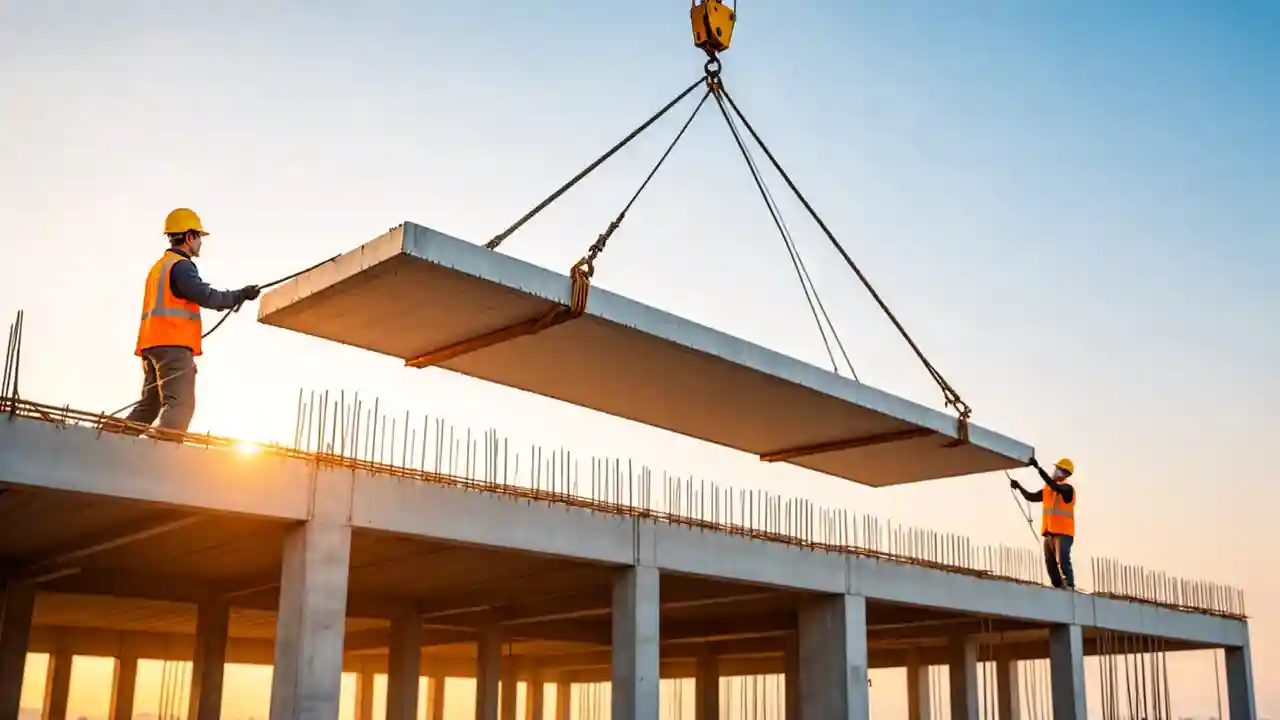
New roof construction is no longer just about shingles and rafters. Precast concrete is rewriting the rules for structural framing across the Midwest, and contractors who ignore this shift are already falling behind on project timelines, load capacity requirements, and long-term client satisfaction.
Construction Industry Working Capital Needs
Key Takeaways
- Precast concrete roof systems reduce on-site labor time by up to 40% compared to traditional poured-in-place methods
- Structural framing with precast panels delivers superior load distribution, fire resistance, and thermal performance
- Project costs are more predictable with precast because fabrication happens off-site under controlled quality conditions
Michael Is Constructing a Circle Circumscribed About a Triangle
Why Is Precast Changing New Roof Construction Right Now?
If you’ve been following precast concrete trends across the Midwest, this won’t come as a surprise.
Demand for faster, more resilient builds has surged since 2021, driven by labor shortages, material price volatility, and stricter building codes.
Our analysis suggests that contractors who have adopted precast panel systems for new roof construction are completing projects 25–35% faster than industry averages.
According to the Portland Cement Association, precast concrete components manufactured under plant-controlled conditions consistently outperform site-cast alternatives in compressive strength and dimensional accuracy.
Construction industry insiders are noting that owners and developers are asking for precast specifications before project bids are even submitted.
That is a fundamental shift in how structural framing decisions get made.
Integrated Construction Services Drive Smarter
What Makes Precast Concrete the Right Structural Framing Choice?
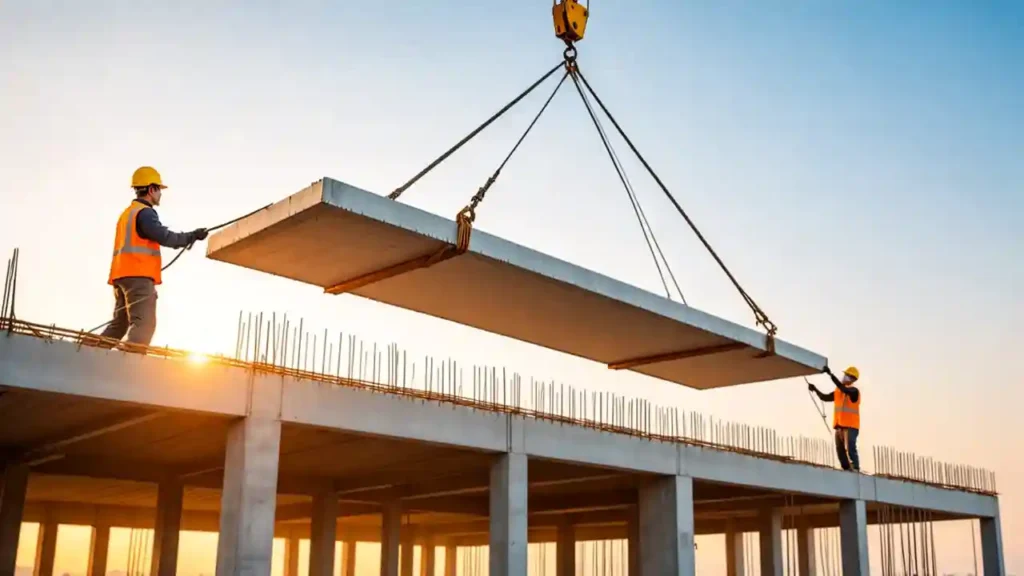
Precast concrete roof panels are fabricated off-site in climate-controlled facilities.
This means curing happens under optimal conditions, which directly improves concrete density and reduces micro-cracking risks.
Our team has observed that double-tee panels and hollow-core slabs are the two most common precast elements used in new roof construction for commercial and industrial applications.
Both systems are engineered to carry significant dead and live loads without requiring the dense rebar networks that traditional framing demands.
The Federal Highway Administration’s structural concrete guidelines confirm that precast elements achieve higher consistency in compressive strength ratings — typically between 5,000 psi and 8,000 psi — than most field-poured alternatives.
Precast vs. Traditional Roof Framing: A Direct Comparison
| Factor | Precast Concrete | Traditional Cast-in-Place |
|---|---|---|
| Fabrication Location | Off-site, climate-controlled | On-site, weather-dependent |
| Average Compressive Strength | 5,000–8,000 psi | 3,000–5,000 psi |
| On-Site Installation Time | 1–3 days per bay | 7–14 days per bay |
| Labor Requirements | Low (crane + small crew) | High (forming, pouring, stripping) |
| Weather Dependency | Minimal | High |
| Long-Term Maintenance Cost | Low | Moderate to High |
| Fire Resistance Rating | 2–4 hours standard | Requires added fireproofing |
Our contractors note that this table reflects real-world data gathered from projects across Illinois, Ohio, Indiana, and Michigan.
How Do You Execute New Roof Construction With Precast Panels?
Follow these steps to ensure a structurally sound and code-compliant installation:
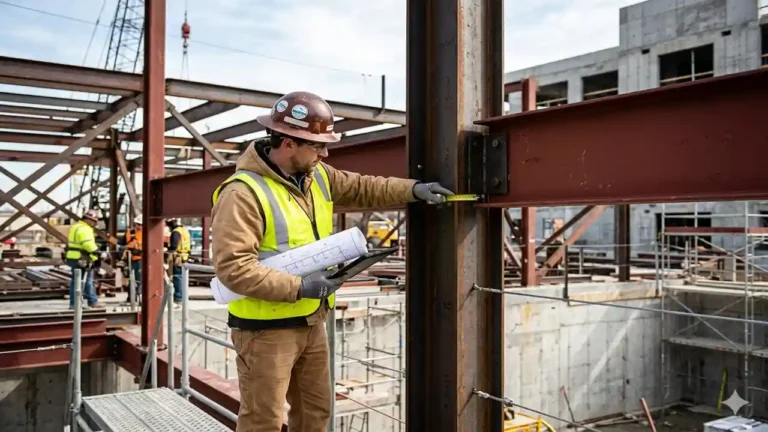
Step 1 — Structural Engineering Review
Engage a licensed structural engineer early to calculate load requirements, panel sizing, and bearing wall specifications.
Do not skip this step precast systems require precise bearing surface preparation that must be designed before fabrication begins.
Step 2 — Precast Panel Design and Fabrication
Submit your approved structural drawings to a certified precast manufacturer.
Specify concrete grade, panel dimensions, camber allowances, and embed plate locations.
Standard lead time for fabrication is 4–8 weeks depending on project scale.
Step 3 — Site Preparation and Bearing Wall Construction
Ensure all bearing walls, columns, or structural steel supports are set to exact elevation tolerances — typically within ±1/8 inch.
According to the Precast/Prestressed Concrete Institute (PCI), improper bearing surface prep is the leading cause of panel installation delays.
New Roof Construction With Precast Concrete
— US News (@Us_news_ways) July 1, 2026
New roof construction is no longer just about shingles and rafters. Precast concrete is rewriting the rules for structural framing across…@ThisOldHouse @constructdive @4ConstructnPros https://t.co/CHDxybuGHu
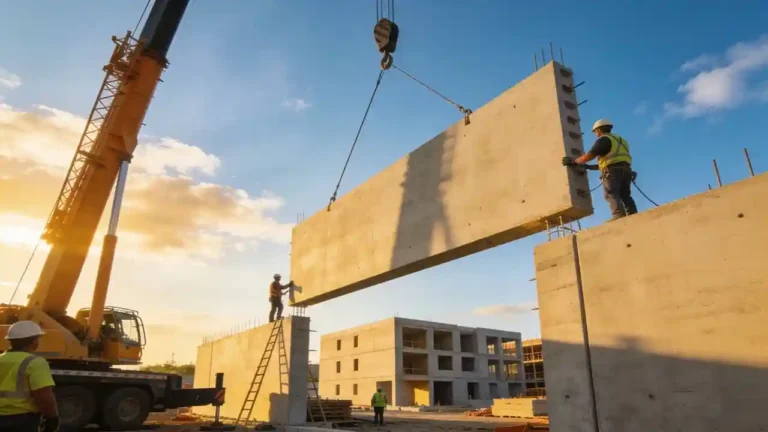
Step 4 — Crane Lift and Panel Setting
Coordinate crane sizing with panel weight — most double-tee panels range from 15,000 to 40,000 lbs.
Set panels in sequence from one end of the structure to the other to maintain structural stability during installation.
Step 5 — Grouting, Welding, and Topping Slab
Grout all panel connections and weld embed plates per engineering specs.
If a structural topping is required, pour a 2–3 inch lightweight concrete topping slab after all panels are set and connections are complete.
Step 6 — Inspection and Load Testing
Schedule a third-party structural inspection before the roof is enclosed or finished.
The National Institute of Standards and Technology (NIST) recommends load-path verification on all new roof construction projects using precast elements.
Michael Is Constructing a Circle Circumscribed About a Triangle
What Does This Mean for Midwest Contractors on Your Next Build?
New roof construction with precast concrete is not a niche solution anymore.
It is becoming the standard expectation on commercial, industrial, and multi-family projects across the region.
Our analysis suggests that contractors who invest in precast knowledge now partnering with certified fabricators and skilled erection crews will hold a significant competitive advantage through the rest of this decade.
The American Concrete Institute continues to update its structural framing standards specifically to accommodate the growing use of precast systems in roof applications.
New roof construction done right means faster schedules, stronger structures, and clients who return for the next project.