Why Choose Concrete Pool Construction?
Before digging the first hole, it is important to understand why concrete (specifically shotcrete or gunite) remains the top choice for homeowners.
- Unmatched Durability: Concrete pools are built to last decades. They withstand extreme weather conditions and are less prone to punctures than vinyl.
- Complete Customization: You aren’t limited to a catalog of shapes. If you can dream it, your builder can shape it.
- Increased Property Value: A well-executed concrete pool construction project is a permanent home improvement that significantly boosts curb appeal and resale value.
The Step-by-Step Concrete Pool Construction Process
Building a pool is a complex engineering feat. Here is the typical timeline you can expect:
1. Design and Permitting
Every great pool starts on paper. During this phase, you’ll finalize the dimensions, depth, and features. Once the blueprints are ready, your contractor will handle the local building permits. This ensures the pool meets safety codes and zoning laws.
2. Layout and Excavation
Once the permits are cleared, the heavy machinery arrives. The “layout” involves marking the pool’s perimeter with stakes and forms. Then, the excavation team digs out the earth. It looks messy at first, but this is the literal foundation of your dream.
Excavating Contractors Near Me
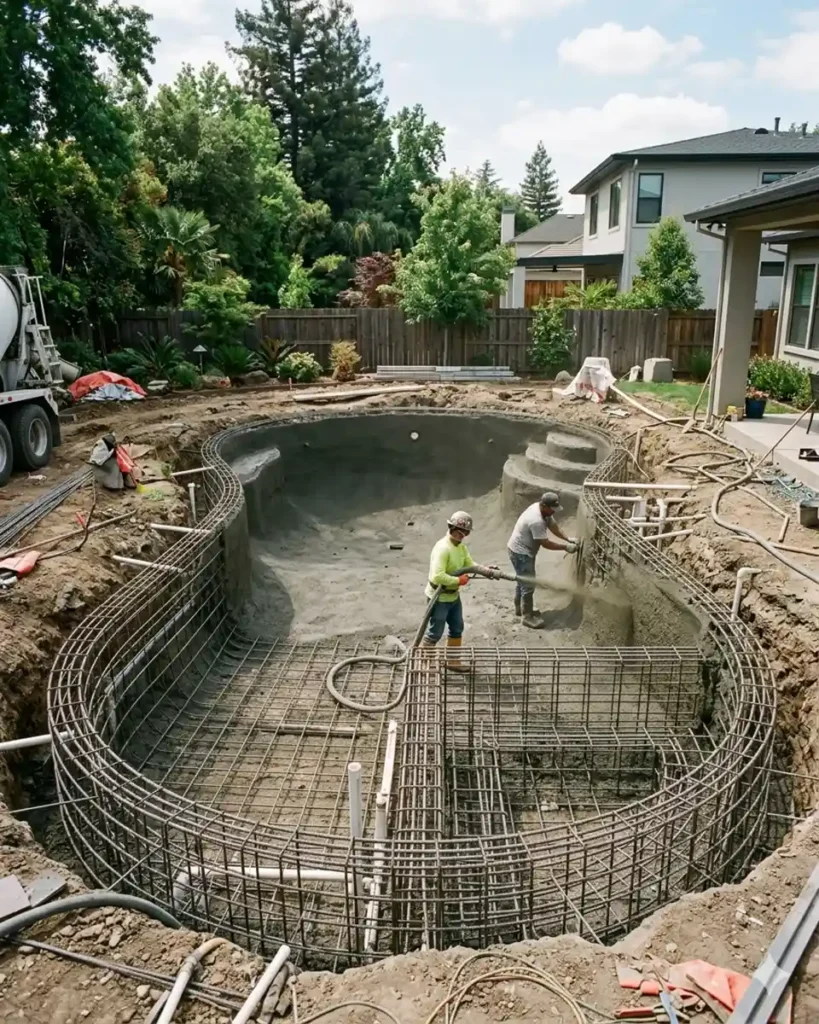
3. Steel Reinforcement (Rebar)
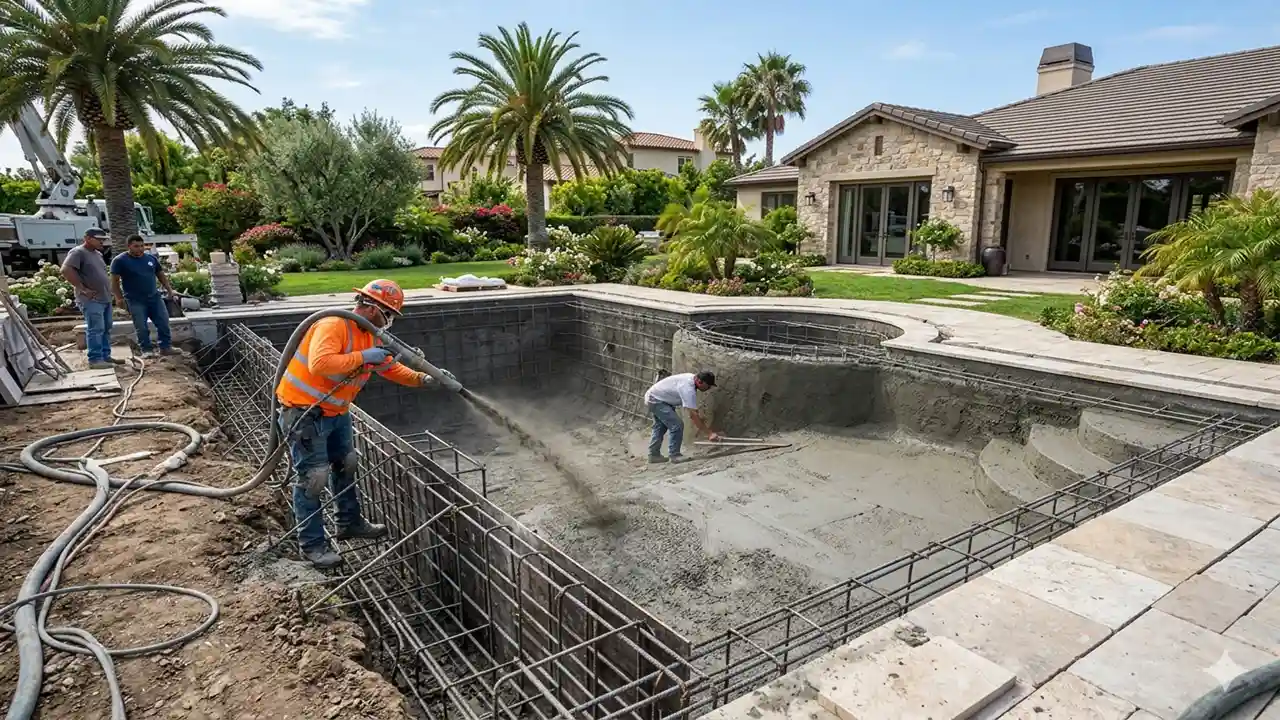
To ensure the structure doesn’t crack under the weight of the water, a cage of steel rebar is installed. This creates a “skeleton” for the concrete to grip onto, providing the structural integrity required for long-term concrete pool construction success.
Concrete Pool Construction: The Ultimate Guide to Building Your Backyard Oasishttps://t.co/xZjKnCDl2M
— Atholton News (@atholtonnews55) April 17, 2026
4. Plumbing and Electrical
Before the concrete is poured, the “vitals” are installed. This includes the pipes for filtration, drains, skimmers, and the conduits for underwater lighting. High-efficiency pumps and salt-water systems are often integrated at this stage.
Shotcrete vs Gunite: What’s the Difference?
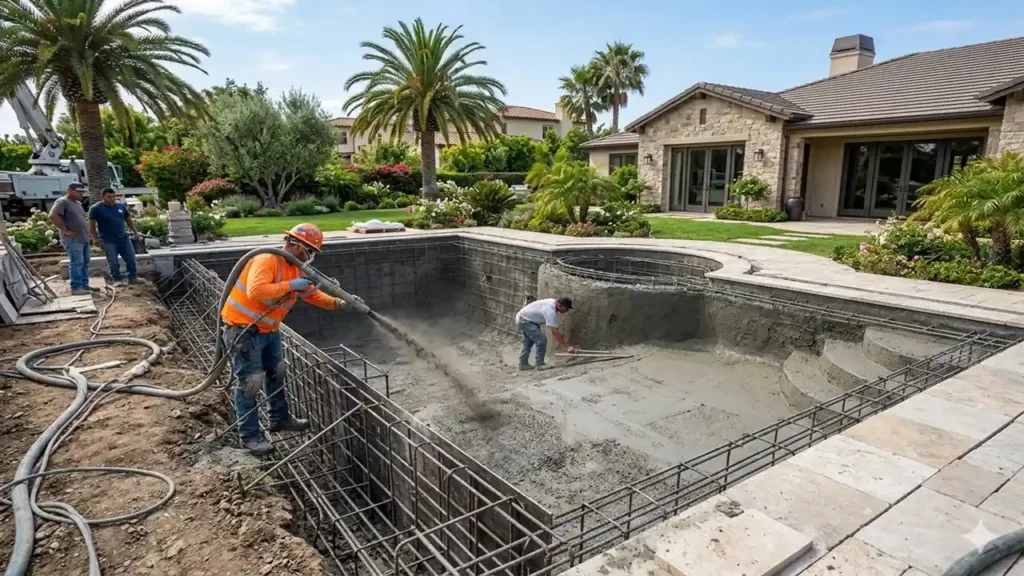
In the world of concrete pool construction, you’ll often hear the terms “Gunite” and “Shotcrete.” Both are forms of pneumatically applied concrete, meaning they are sprayed through a high-pressure hose.
| Feature | Gunite | Shotcrete |
| Mixing Process | Mixed dry at the nozzle with water. | Pre-mixed “wet” before reaching the hose. |
| Consistency | Highly dependent on the nozzleman’s skill. | Very consistent and predictable. |
| Strength | Extremely high when applied correctly. | Consistently high PSI ratings. |
Most modern builders prefer shotcrete for its uniformity, but both methods yield a rock-solid pool shell.
Choosing the Right Interior Finish
The “concrete” part of the pool is actually just the shell. To make it waterproof and beautiful, you need a finish. This is where your concrete pool construction truly comes to life.
- Plaster: The classic white finish. It’s smooth and cost-effective but may require more frequent chemical balancing.
- Aggregate (Pebble): These finishes (like PebbleTec) use small polished stones. They are incredibly durable, slip-resistant, and offer a natural, high-end look.
- Tile: While more expensive, a fully tiled concrete pool is the height of luxury, offering easy cleaning and a stunning shimmer.
Managing Costs and Timelines
It is no secret that concrete pool construction is an investment. While a vinyl pool might take 3–4 weeks, a concrete pool typically takes 8 to 12 weeks to complete.
Factors that influence the price include:
- Soil Conditions: Striking rock or high water tables can increase excavation costs.
- Access: Can heavy machinery easily get into your backyard?
- Add-ons: Spas, heaters, and automated covers add to the final tally.
Despite the higher upfront cost, the longevity of concrete often results in a lower “cost per year” over the life of the home.
Why Precast Concrete Finishing Delivers Better Quality Than On-Site Work
Maintenance Tips for New Concrete Pools
Once the concrete pool construction is finished, the first 30 days are critical. This is known as the “curing” period.
- Brush Regularly: You’ll need to brush the walls twice a day to remove plaster dust.
- Monitor Chemistry: Concrete is alkaline. You will likely need to add acid frequently in the beginning to keep the pH balanced.
- Wait to Heat: Do not turn on the pool heater for at least three weeks to allow the interior finish to set properly.
FAQ
How long does a concrete pool last?
With proper maintenance, the structural shell of a concrete pool can last 50 years or more. The interior finish (plaster or pebble) typically needs refreshing every 10–15 years.
Can concrete pools crack?
While rare, “spider cracks” can occur in the plaster. However, structural cracks are prevented by the heavy-duty rebar used during concrete pool construction. Choosing an experienced builder is the best way to prevent structural issues.
Are concrete pools harder to clean than fiberglass?
Because concrete is more porous than fiberglass, it can be more prone to algae if chemicals are neglected. However, modern salt-water systems and robotic cleaners make maintaining a concrete pool very manageable.
Why Roads Made of Precast Concrete Last Longer Than Asphalt
Start Your Journey Today
Investing in concrete pool construction is about more than just adding a feature to your home; it’s about creating a lifestyle. From the initial excavation to the final tile placement, every step is a move toward a personalized sanctuary that will provide memories for decades.