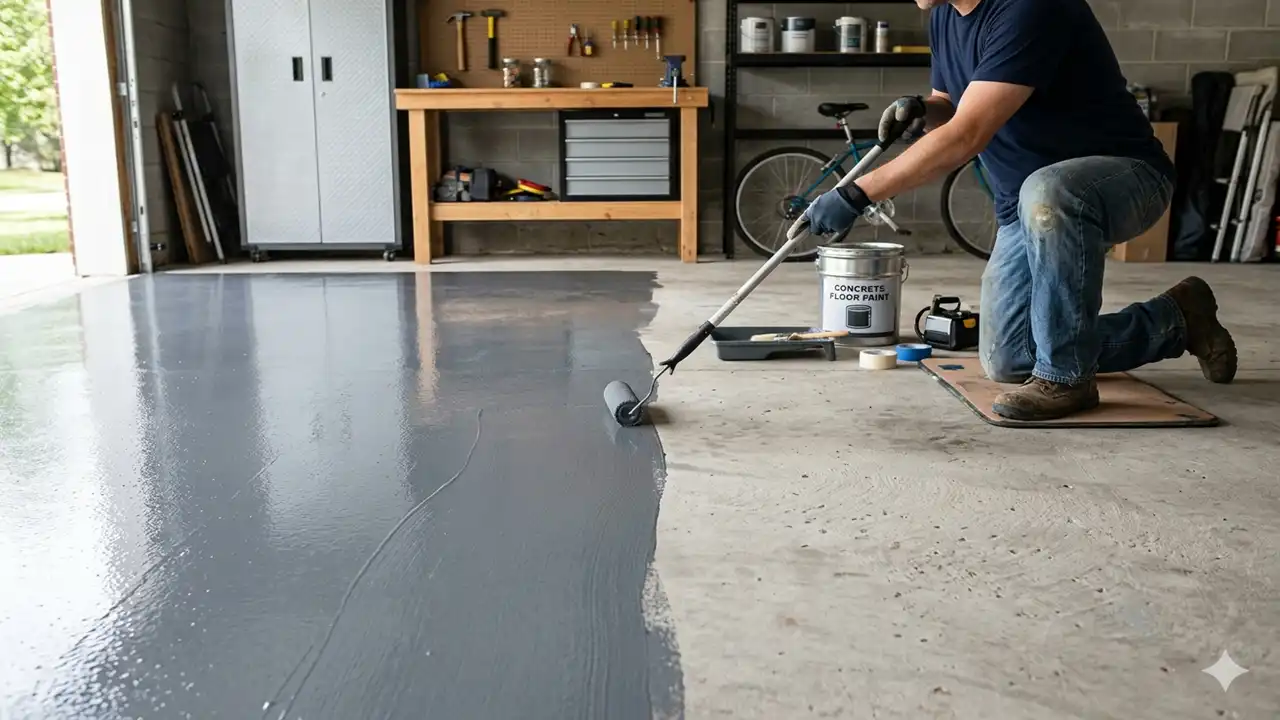
Why Should You Paint Your Concrete Floors?
Many homeowners view painting concrete as a purely aesthetic choice, but it’s actually a functional upgrade. Unsealed concrete is porous, meaning it acts like a giant sponge for oil, chemicals, and moisture.
Applying a high-quality concrete floor paint provides several key benefits:
- Dust Reduction: Bare concrete constantly sheds fine dust (efflorescence). A coat of paint seals the surface and keeps your space cleaner.
- Enhanced Lighting: Light colors reflect more light, making dim garages or workshops feel much brighter.
- Easy Maintenance: Spills stay on the surface rather than soaking in, allowing for a quick wipe-down.
Choosing the Right Type of Concrete Floor Paint
Not all paints are created equal. Using a standard wall paint on a floor is a recipe for peeling and heartbreak. You need a formula specifically engineered for foot traffic and hot-tire pickup.
1. Acrylic Latex Paint
This is the most user-friendly option. It’s water-based, low-odor, and dries quickly. It is ideal for low-traffic areas like basement laundry rooms or storage closets. While easy to apply, it isn’t as durable as chemical-based alternatives.
Why Precast Concrete Post and Rail Fences Are the Future of Durable Property Lines
2. Epoxy-Based Coatings
If you are looking for a “showroom” finish in your garage, epoxy is the gold standard. Technically a resin rather than a simple paint, epoxy bonds chemically with the concrete. It resists oil stains, gasoline, and heavy machinery better than any other concrete floor paint on the market.
3. Concrete Stains and Sealers
If you prefer a natural, marbled look, stains soak into the concrete to change its color without creating a thick film on top. These are often finished with a clear topcoat for added shine and protection.
The Secret to Success: Surface Preparation
If you skip the prep, your paint will fail. It’s that simple. Before you even open a can of concrete floor paint, you must ensure the surface is clean, dry, and “open.”
Testing for Moisture
Tape a 2×2 foot piece of plastic wrap to your floor, sealing all edges. Wait 24 hours. If there is condensation under the plastic or the concrete looks darker, you have a moisture problem that must be addressed with a specialized sealer before painting.
Cleaning and Etching
You must remove all grease and oil. After cleaning, many professionals use a mild acid etching solution (or a mechanical grinder) to open up the pores of the concrete. The goal is to give the concrete a texture similar to fine-grit sandpaper so the concrete floor paint has something to “grab” onto.
Concrete Masonry Unit with Precast Concrete
Step-by-Step Guide to Applying Concrete Floor Paint
Ready to roll? Follow these steps for a professional-grade finish:
- Clear the Area: Remove everything from the room. Use a shop vac to remove every last speck of dust.
- Tape the Edges: Use painter’s tape along baseboards or walls.
- Prime (Optional but Recommended): Use a primer specifically designed for masonry to ensure maximum adhesion.
- Cut in the Edges: Use a brush to paint the perimeter of the room.
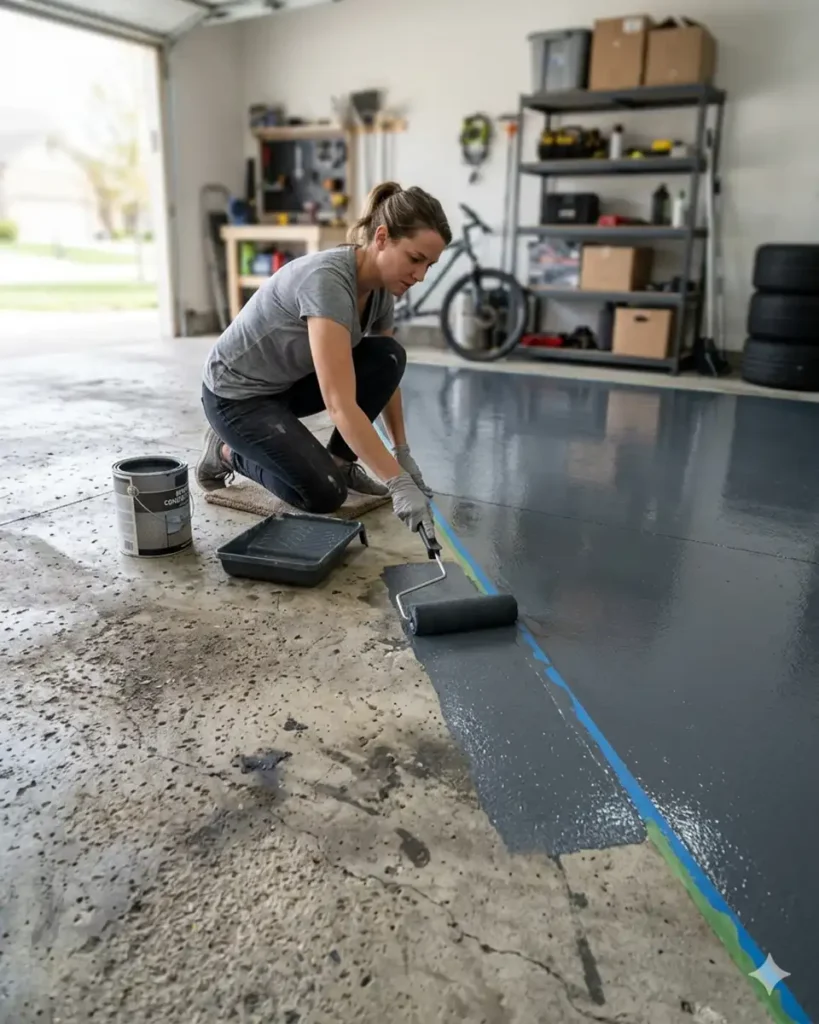
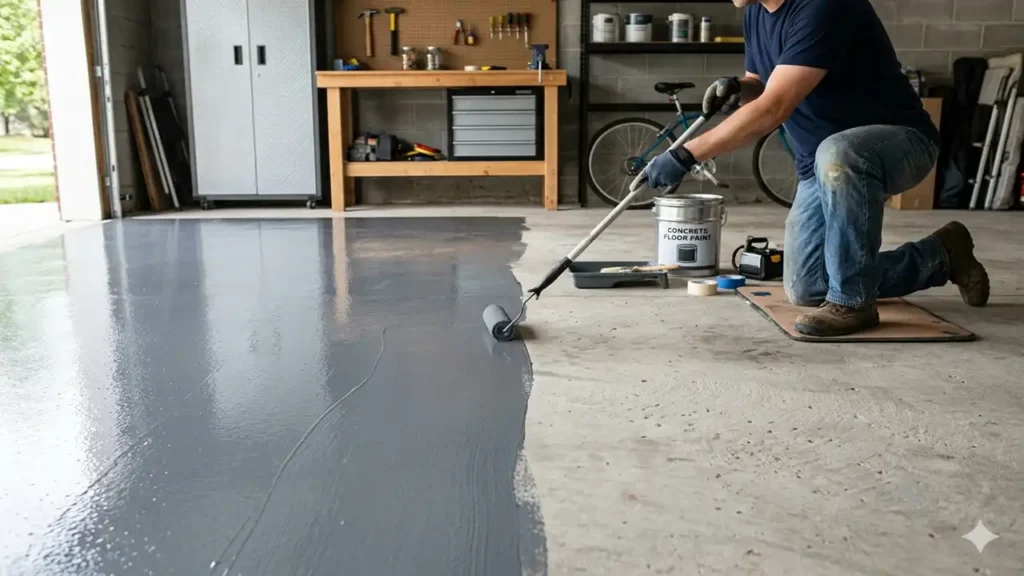
- Roll the Main Floor: Use a long-handled roller. Work in small sections, maintaining a “wet edge” to avoid visible lap marks.
- Apply a Second Coat: Most concrete floor paint requires two coats. Wait at least 24 hours between applications, or as directed by the manufacturer.
Maintenance Tips for a Long-Lasting Finish
Once your floor is dry, treat it with care for the first week. While it may feel dry to the touch in hours, it can take up to seven days to fully cure. Avoid dragging heavy furniture or parking a car on it during this window.
To keep your concrete floor paint looking new, avoid harsh acidic cleaners. A simple mixture of warm water and a pH-neutral soap is usually all you need to keep the shine alive.
Common Questions About Painting Concrete
How long does concrete floor paint last?
Depending on foot traffic and the quality of the product, a well-applied coat can last between 3 to 5 years for acrylics, and 10+ years for high-quality epoxies.
Lancaster County Convention Center Reinvented with Precast Concrete Innovation
Can I paint over old paint?
Yes, but only if the old paint is well-bonded. You must sand down any peeling areas and degloss the existing finish so the new concrete floor paint can stick to it.
Why is my paint peeling off in sheets?
This usually happens because of “laitance” (a weak top layer of concrete) or because the floor was too damp/oily when the paint was applied. Proper etching usually prevents this.
Transform Your Space Today
Adding a fresh coat of concrete floor paint is one of the most satisfying DIY projects you can undertake. It’s an affordable way to add value to your home and turn a rugged utility space into a clean, inviting environment.