
What are Concrete Wedge Anchors?
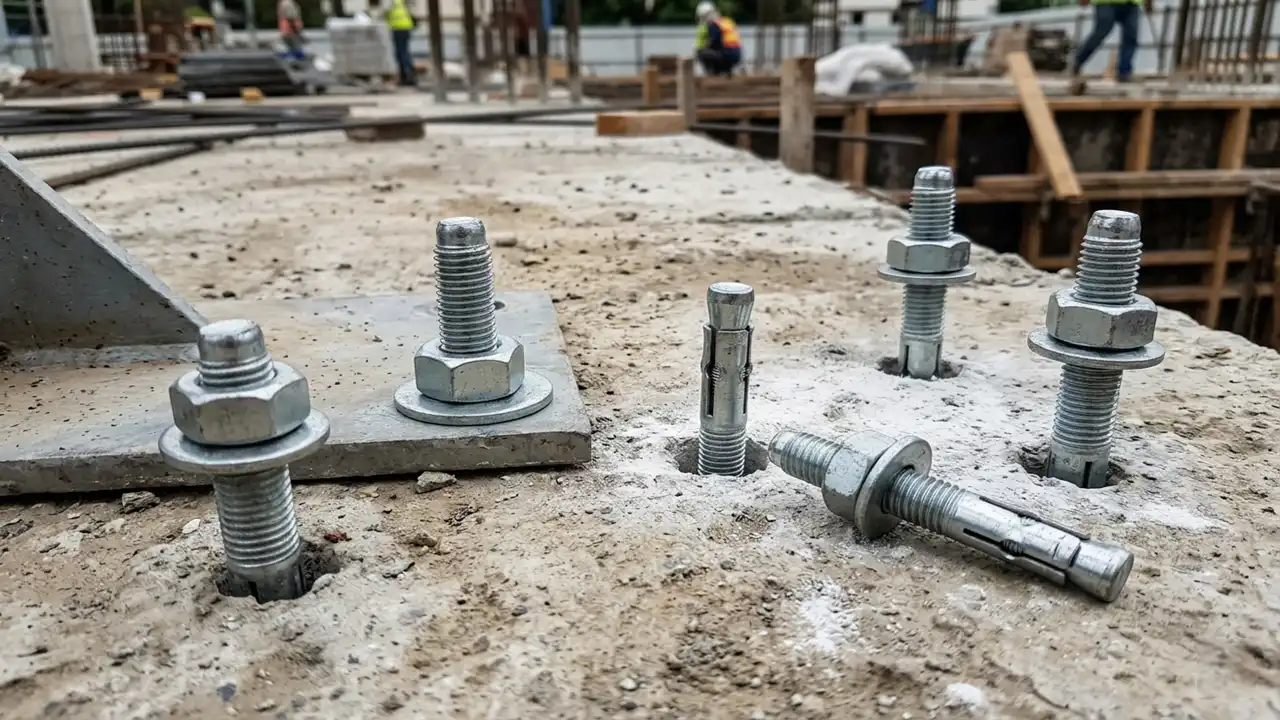
A concrete wedge anchor is a specialized mechanical fastener used to anchor objects into solid concrete. It consists of a threaded stud, a nut, a washer, and a unique expansion clip (the “wedge”) at the bottom.
Unlike screws that rely on threads cutting into a material, these anchors work through expansion. As you tighten the nut, the stud is pulled upward, forcing the expansion clip to spread against the walls of the pre-drilled hole. This creates a high-friction bond that is incredibly difficult to pull out.
Why Use Wedge Anchors?
- High Load Capacity: They are designed for heavy-duty structural loads.
- Permanent Solution: Once installed, they are not meant to be removed.
- Versatility: Available in various lengths and diameters for different project scales.
Selecting the Right Size for Your Project
Choosing the correct concrete wedge anchors is about more than just picking a thick bolt. You need to consider three main factors: Diameter, Embedment Depth, and Material.
1. Determining Diameter
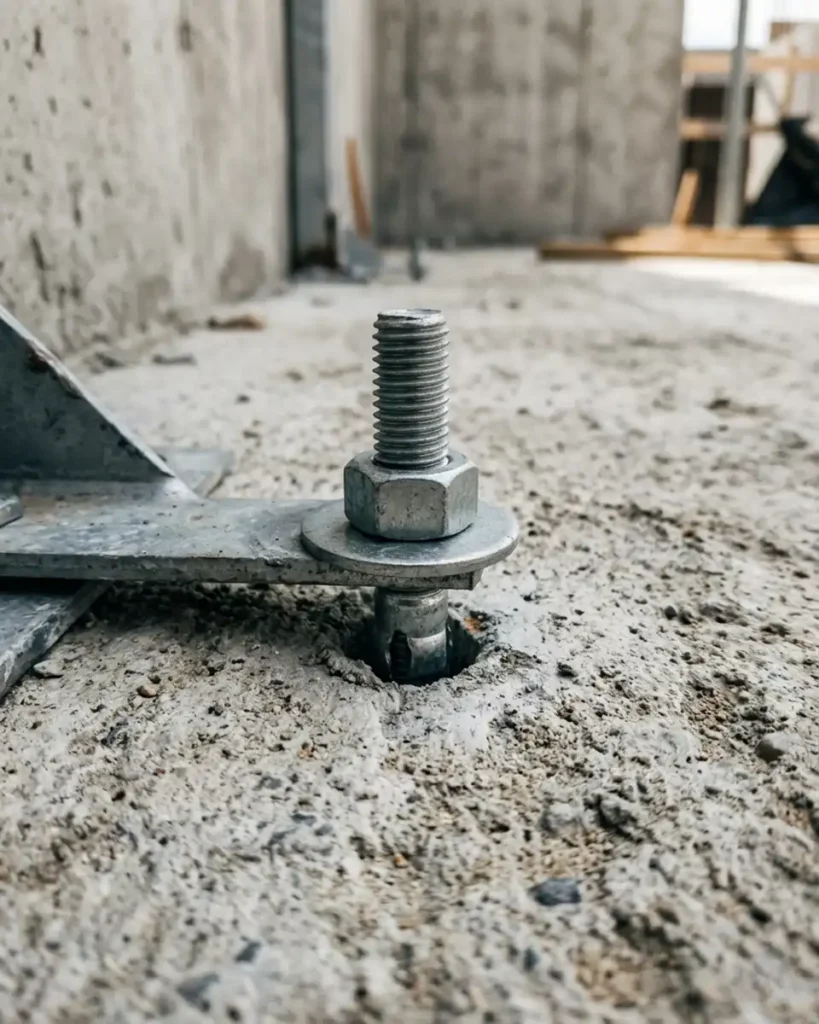
The diameter of the anchor usually matches the weight of the load. Common sizes range from $1/4″$ to $1-1/4″$. For most residential projects, like mounting a deck ledger board, a $1/2″$ diameter is a standard choice.
2. Understanding Embedment Depth
To achieve maximum holding power, the anchor must be embedded deep enough into the concrete. A good rule of thumb is that the anchor should sit at least 4 to 5 diameters deep into the solid material.
3. Material and Coating
- Zinc-Plated: Best for indoor, dry environments.
- Galvanized: Ideal for outdoor use where moisture is present.
- Stainless Steel: The premium choice for coastal areas or chemical-heavy environments where corrosion is a major risk.
Fire Resistance Period: A Complete Guide to Building Safety
Step-by-Step Installation Guide
Proper installation is the difference between a secure fixture and a dangerous failure. Follow these steps to ensure your concrete wedge anchors perform as intended.
Step 1: Drill the Hole
Use a hammer drill and a carbide-tipped masonry bit. Crucial Tip: The bit diameter must be the exact same size as the anchor diameter. If you are using a $5/8″$ anchor, use a $5/8″$ bit.
Step 2: Clean the Hole
Dust is the enemy of friction. Use a blow-out bulb or compressed air to remove all concrete dust from the hole. If dust remains, the wedge may slip instead of gripping the concrete.
Step 3: Prepare the Anchor
Thread the nut onto the top of the anchor to protect the threads. Drive the anchor through the fixture and into the hole using a hammer until the washer is flush against the surface.
Step 4: Tighten to Torque
Using a wrench, turn the nut. This pulls the wedge up the mandrel and expands it. For the best results, use a torque wrench to meet the manufacturer’s specific foot-pound requirements.
Common Mistakes to Avoid
Even pros can run into trouble with concrete wedge anchors if they take shortcuts. Avoid these common pitfalls:
- Using in Brick or Block: These anchors are designed only for solid concrete. Using them in hollow block or brick can cause the material to crack or the anchor to fail because there isn’t enough density to resist the expansion force.
- Drilling Too Shallow: If the hole isn’t deep enough, the anchor will bottom out before the nut is tight. Always drill at least one inch deeper than the intended embedment.
- Over-Tightening: Applying too much torque can snap the bolt or “strip” the concrete hole, rendering the anchor useless.
Concrete Repair Near Me: Why Precast Solutions Last Longer
Featured Snippet: How deep should a wedge anchor go?
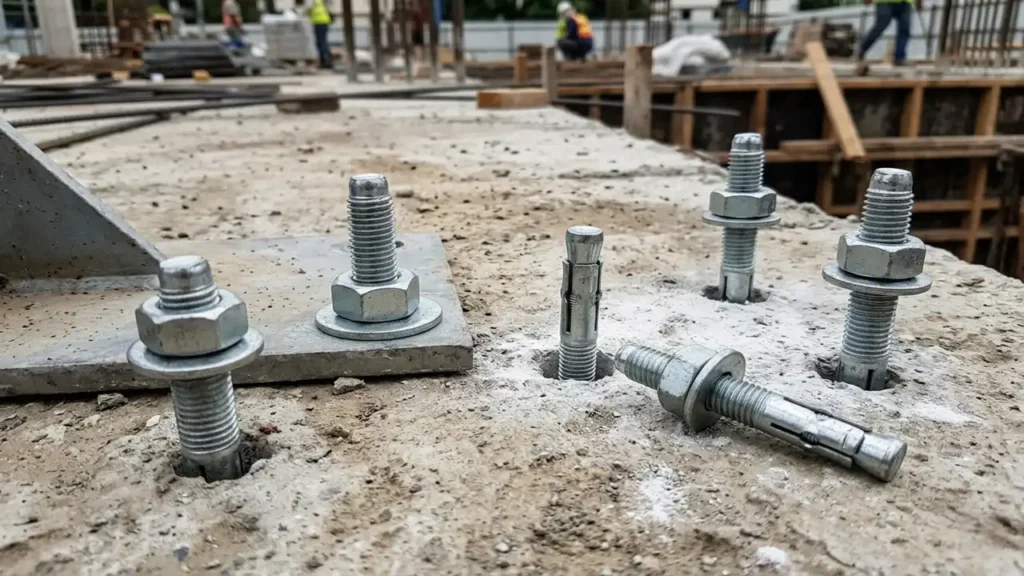
To ensure maximum safety, a concrete wedge anchor should be embedded at a minimum of 4 to 5 times its diameter. For example, a $1/2″$ anchor should have at least $2″$ to $2-1/2″$ of embedment into the solid concrete (excluding the thickness of the fixture you are fastening).
FAQ
Can I reuse a wedge anchor?
No. Concrete wedge anchors are permanent. Once the clip has expanded into the concrete, it cannot be “un-expanded.” If you need to remove one, you typically have to cut it off flush with the surface with a grinder.
Do I need a special drill bit?
Yes, you must use a masonry bit rated for hammer drills. Ensure the bit meets ANSI standards to guarantee the hole diameter is precise enough for the anchor to grip.
What is the difference between a sleeve anchor and a wedge anchor?
While both expand, sleeve anchors are better for thinner concrete or medium-duty tasks. Concrete wedge anchors are superior for heavy-duty, structural applications in solid, high-psi concrete.
Build to Last
When it comes to structural integrity, there is no room for guesswork. Using high-quality concrete wedge anchors ensures that your heavy equipment, framing, or shelving stays exactly where you put it. By selecting the right material and following precise installation steps, you can tackle even the toughest masonry projects with ease.