Whether you manage an expansive Homeowners Association (HOA), a townhome complex, or an apartment complex, understanding the pillars of asphalt and concrete maintenance for residential communities is essential to avoiding premature failure and astronomical repair bills.
Asphalt and Concrete Maintenance for Residential Communities comprehensive guide breaks down everything community leaders, property managers, and board members need to know to establish a cost-effective, durable preventative pavement program.
SPML Infra Water Project Indore: Transforming Urban Water Distribution
The Core Differences Between Asphalt and Concrete Surfaces
Before diving into maintenance strategies, it is essential to understand that asphalt and concrete are entirely different materials with distinct engineering profiles, lifespans, and stress responses.
- Asphalt is a flexible pavement. It consists of aggregate stone bound together by liquid petroleum (asphalt cement). It is highly resilient against freezing temperatures, flexible under changing loads, and significantly cheaper to install initially. However, it requires frequent structural upkeep and is highly susceptible to UV degradation and water intrusion.
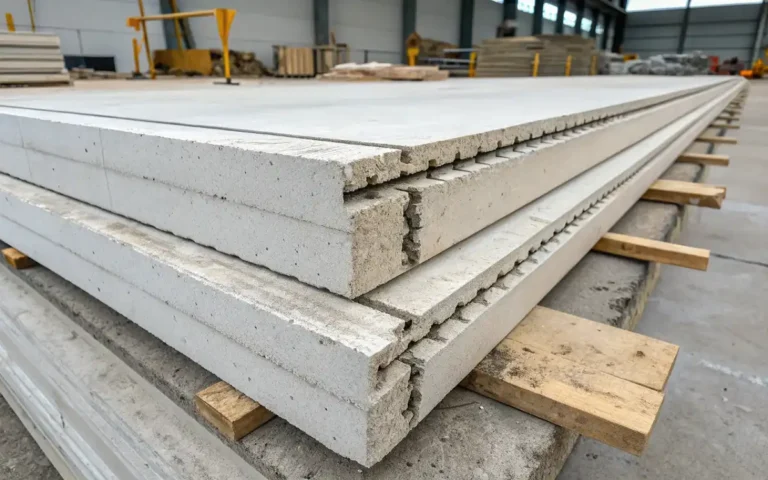
- Concrete is a rigid pavement. Made from aggregates mixed with water and Portland cement, it handles immense loads and easily spans decades with minimal intervention. However, concrete is expensive to install, highly prone to surface cracking under extreme thermal shifts, and difficult to repair seamlessly when structural failure occurs (Roesler et al., 2016).
Asphalt and Concrete Maintenance for Residential Communities how these materials age allows communities to deploy targeted asset management plans that prevent minor cosmetic flaws from becoming full-scale structural liabilities.
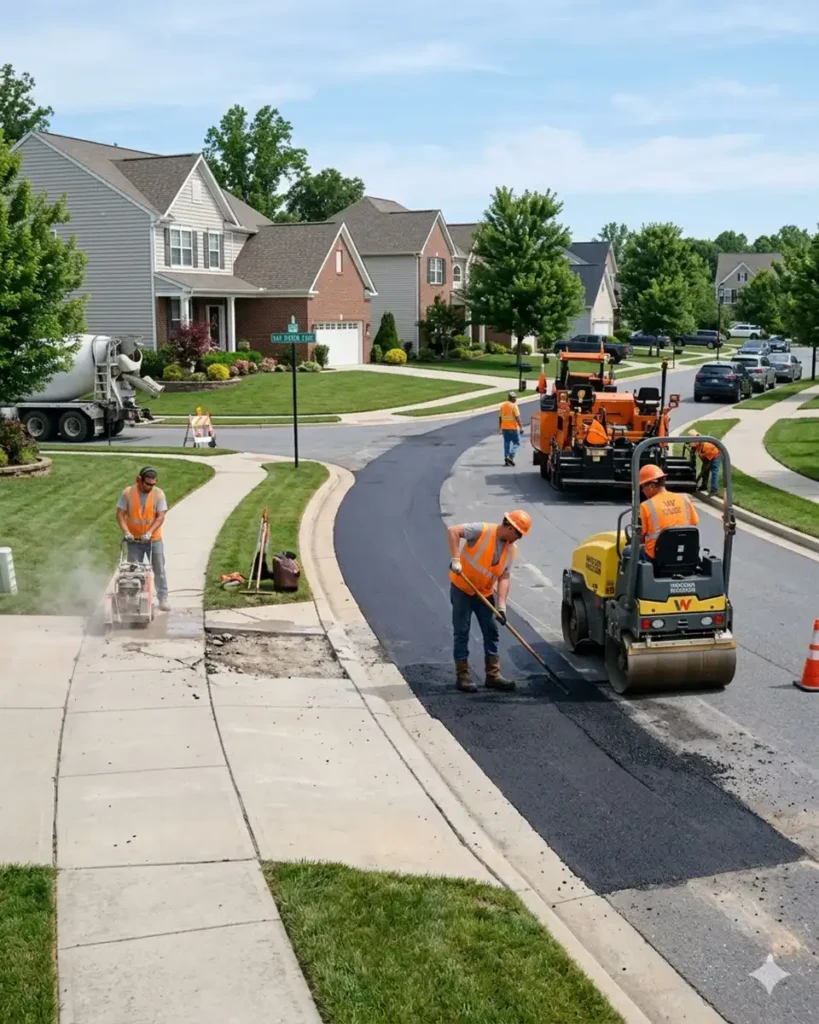
Essential Asphalt Maintenance Practices for HOAs
Because asphalt is flexible, it begins to degrade the moment it is laid down due to sunlight exposure, vehicular oil drips, and water penetration. Implementing a systematic care routine is vital to protecting this investment.
1. Crack Sealing and Filling
Cracks are the entry point for asphalt’s greatest enemy: water. According to comprehensive pavement studies by the Strategic Highway Research Program, sealing cracks as soon as they reach a width of $\frac{1}{8}$ inch is the single most cost-effective treatment available (Bond, n.d.; Smith & Romine, 1993). Hot-applied rubberized sealants prevent water from seeping into the subgrade base, which softens the underlying soil and causes localized collapses known as potholes (Bond, n.d.).
2. Routine Sealcoating
Asphalt and Concrete Maintenance for Residential Communities acts as a protective sunscreen for your neighborhood’s roads. Liquid sealants (typically asphalt emulsion or refined tar-based) shield the asphalt from the oxidizing effects of ultraviolet rays and chemical spills. Industry data indicates that sealcoating should be applied every three to five years to maximize structural longevity and preserve a deep, dark black aesthetic.
The Future with Acue Marmonite Inc.
3. Pothole Patching and Surface Restoration
When structural failure occurs, localized patching is required. Property managers have two choices:
- Cold Mix Patching: Best utilized as a temporary, rapid fix during freezing winter months when hot asphalt plants are closed.
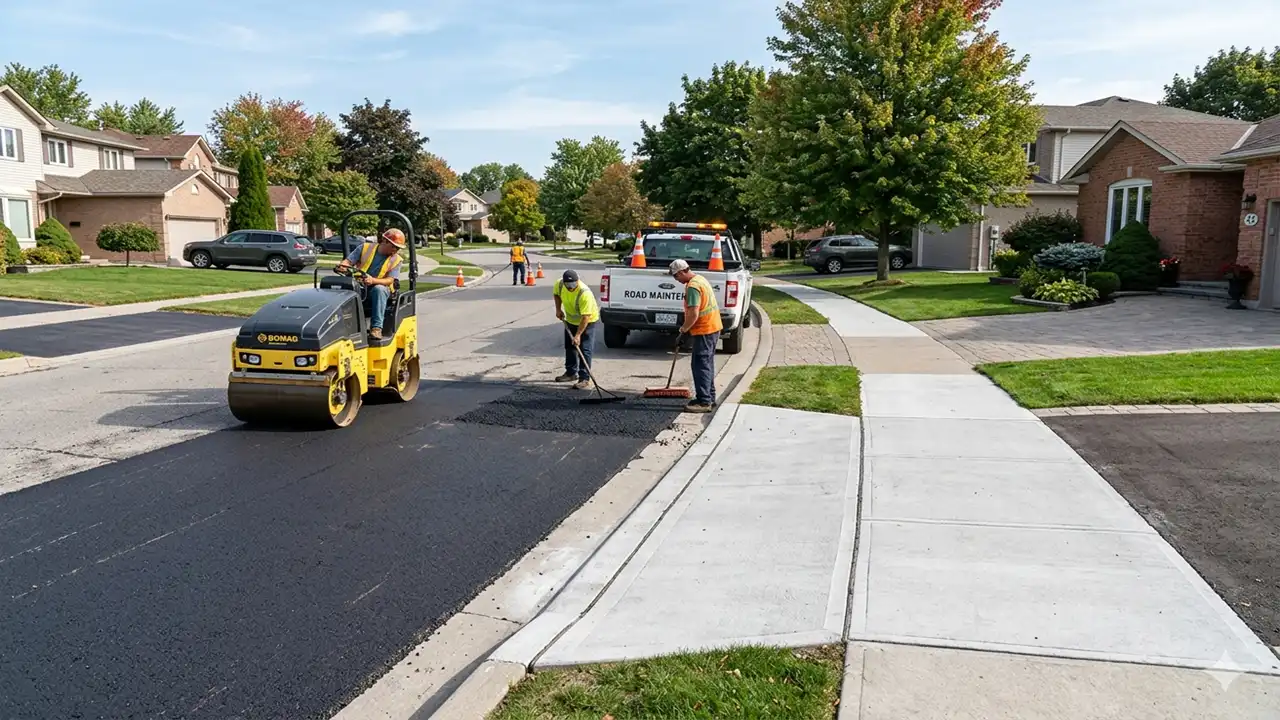
- Hot Mix Patching: A permanent, highly structural repair where damaged asphalt is squared off, removed, and replaced with fresh, compacted hot asphalt (Bond, n.d.).
Concrete Maintenance Strategies for Residential Walks and Curbs
Concrete may require less frequent interventions than asphalt, but deferred maintenance can yield severe tripping hazards that expose an HOA to immense legal liabilities.
Joint Sealing and Cleaning
Concrete slabs expand and contract as environmental temperatures Asphalt and Concrete Maintenance for Residential Communities. Expansion joints are deliberately engineered into sidewalks and curbs to control this movement. Over time, these joints lose their flexible sealants, allowing water to infiltrate and weeds to grow. Cleaning and reapplying polyurethane joint sealants keeps moisture out and prevents the slabs from buckling or shifting.
Mudjacking and Polyleveling
When water washes away the soil beneath a concrete walkway or driveway slab, the concrete drops, creating an uneven edge. Rather than tearing out the entire slab, communities can use mudjacking (pumping a slurry of sand and cement under the slab) or polyurethane foam injection to hydraulically lift the concrete back to its original level line.
Ryobi Pressure Washer Recall: Affected Models, Safety Risks, and Next Steps
Proactive Preservation: Why Deferring Maintenance Costs More
A common pitfall for residential community boards is deferring pavement care to save short-term budgetary funds. However, reactive management is an exceptionally expensive strategy.
Featured Snippet Optimization:
How much does Asphalt and Concrete Maintenance for Residential Communities save a residential community?
Implementing a routine plan for asphalt and concrete maintenance for residential communities saves up to 50% to 70% in long-term infrastructure costs. Spending $1 on timely preventative crack sealing and sealcoating avoids spending $5 to $7 on premature structural reconstruction down the line.
According to a long-term economic analysis compiled by the Transportation Research Board, random or delayed maintenance schedules directly cause rapid asset degradation and significantly higher life-cycle expenditures (Brown, 1988). When preventative maintenance treatments like slurry seals or rejuvenators are applied systematically, they keep the pavement in a stable condition for decades, deferring the disruptive and budget-breaking need for complete road replacement (Brown, 1988; Roger & Cheng, 2022).
Creating a Long-Term Pavement Management Budget
Successful asphalt and concrete maintenance for residential communities requires a strategic financial approach backed by an engineering assessment. Boards should focus on three specific milestones:
| Maintenance Phase | Frequency | Primary Objective | Estimated Lifespan Impact |
| Inspection & Crack Sealing | Annually / Bi-annually | Stop water from reaching subbase soils | Prevents immediate pothole creation |
| Sealcoating & Joint Care | Every 3–5 Years | Shield against UV rays and fuel spills | Extends surface life by 5–10 years |
| Overlays & Structural Repairs | Every 15–20 Years | Restore structural integrity and friction | Resets pavement life-cycle clock |
Property managers should commission a professional reserve study every three years. This engineering evaluation assesses the remaining structural life of all paved assets, ensuring the HOA reserves are adequately funded before major rehabilitation operations become necessary.
Choosing the Right Pavement Contractor for Your Community
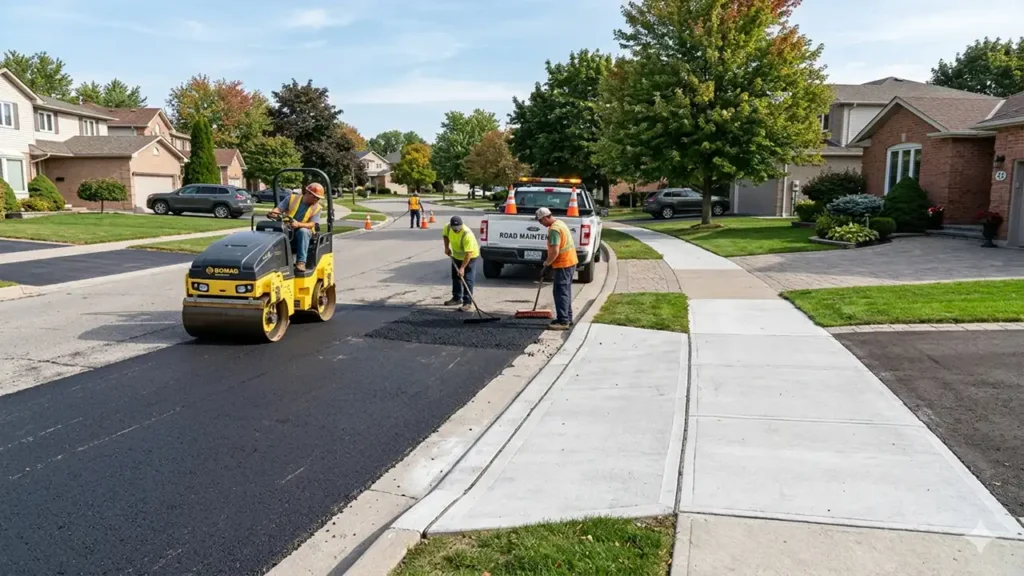
Not all commercial paving companies are equipped to handle the Asphalt and Concrete Maintenance for Residential Communities challenges of residential communities. When sourcing bids for an upcoming community project, ensure you vet candidates using these parameters:
- Residential Experience: Contractors must understand how to execute projects in phases, ensuring residents retain access to their homes, emergency vehicles can pass, and traffic disruptions are minimized.
- Verifiable Licensing and Insurance: Request comprehensive general liability and workers’ compensation certifications to insulate the community association from legal risk.
- Detailed Material Specifications: Avoid ambiguous quotes. Ensure the proposals explicitly state the mix design, aggregate types, application thickness, compaction methods, and specific warranties provided.
Altus Air Force Base Construction Contract Contractors
Final: Protect Your Infrastructure Investment
MaintaiAsphalt and Concrete Maintenance for Residential Communities ing the roads and walkways of a neighborhood is an ongoing commitment that requires a careful blend of engineering strategy and proactive budgeting. Prioritizing asphalt and concrete maintenance for residential communities allows board members to protect neighborhood curb appeal, ensure pedestrian safety, and preserve valuable capital reserves.