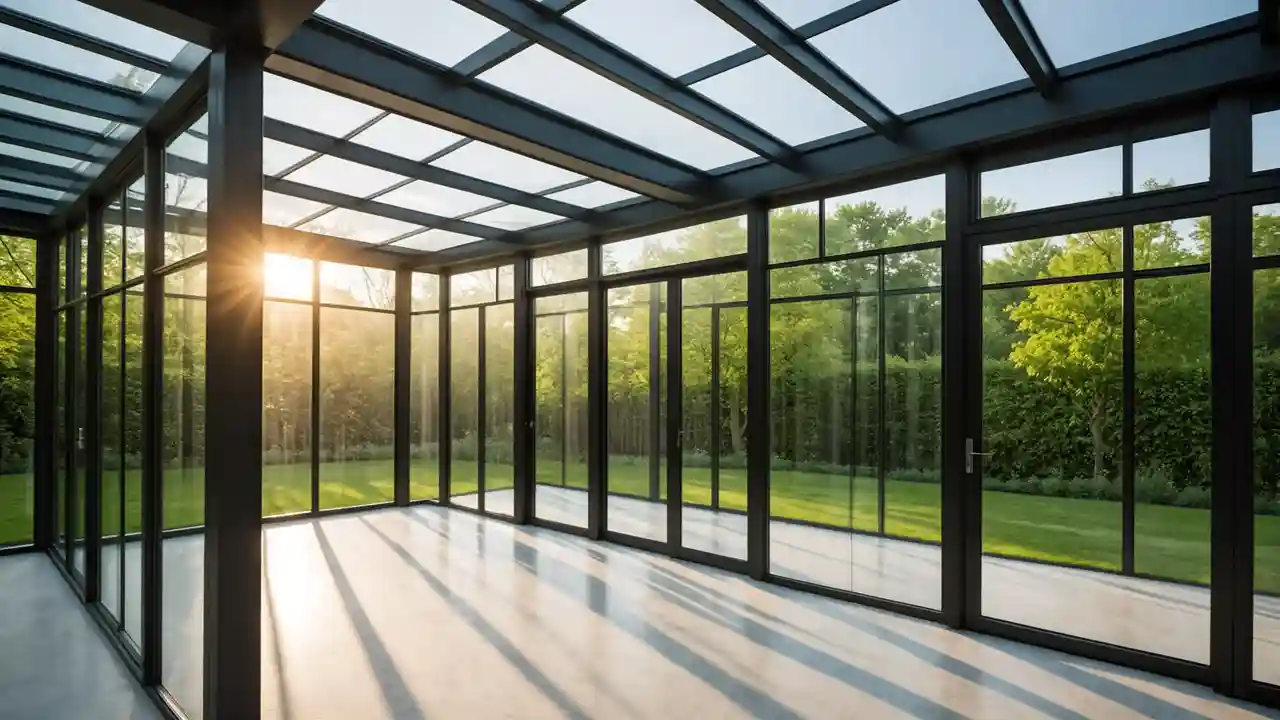
Our analysis suggests that property owners and general contractors are moving away from lightweight aluminum-frame sunroom construction services toward engineered structural solutions built to last decades.
Precast concrete foundations and structural framing components are driving this change at every project scale.
The Portland Cement Association has documented consistent growth in precast applications for residential additions, citing improved thermal mass, moisture resistance, and dimensional accuracy as primary factors.
These aren’t marginal benefits they directly affect project timelines, inspection outcomes, and long-term structural integrity.
When a sunroom foundation fails, the entire addition is at risk.
New Construction Home Inspector Guide to Precast Framing
What Makes Precast Concrete the Right Choice for Sunroom Framing?
Construction industry insiders are noting a clear pattern: precast concrete outperforms site-poured alternatives in nearly every measurable category for sunroom structural systems.
Here’s why our contractors consistently recommend precast for these projects:
- Dimensional consistency — factory-controlled casting eliminates field variance
- Compressive strength — precast panels typically achieve 5,000–8,000 PSI, far exceeding standard residential requirements
- Weather resistance — critical in Midwest climates where freeze-thaw cycles compromise poured concrete integrity
- Speed of installation — precast structural components arrive site-ready, cutting framing schedules significantly
- Load path clarity — engineered connections simplify structural inspections and permit approvals
The American Concrete Institute (ACI) provides clear guidance on precast performance standards that our team applies to every sunroom structural framing scope.
New Construction Loans Fuel Precast Concrete Growth
Precast vs. Traditional Framing: A Direct Comparison
| Category | Precast Concrete Framing | Traditional Wood/Poured Concrete |
|---|---|---|
| Curing Time Required | None (factory-cured) | 28 days minimum |
| Dimensional Accuracy | ±1/8 inch tolerance | ±1/2 inch typical |
| Compressive Strength | 5,000–8,000 PSI | 3,000–4,000 PSI typical |
| Freeze-Thaw Resistance | High | Moderate |
| Install Time (Foundation) | 1–2 days | 5–10 days |
| Long-Term Maintenance | Minimal | Moderate to High |
| Permit Inspection Complexity | Low (pre-engineered) | Higher (site-dependent) |
This table illustrates why our team defaults to precast systems when clients invest in quality sunroom construction services.
How Do You Execute a Precast Sunroom Addition the Right Way?
Proper execution separates a structurally sound addition from a costly liability.
Our contractors follow a proven step-by-step process that integrates precast components from day one.
Step 1: Site Assessment and Soil Bearing Evaluation
Conduct a geotechnical review of the sunroom footprint.
Identify soil bearing capacity, drainage patterns, and frost depth in the Midwest, frost depths commonly reach 42 inches, which directly determines footing design.
Step 2: Structural Engineering and Load Calculations
Engage a licensed structural engineer to calculate live loads, dead loads, and thermal movement tolerances.
Reference ASCE 7 load standards to ensure compliance with current design requirements.
Step 3: Precast Panel Design and Factory Ordering
Submit approved structural drawings to a certified precast fabricator.
Specify concrete mix design, reinforcement layout, embedded anchor locations, and surface finish.
Allow 3–6 weeks for fabrication depending on panel complexity and batch scheduling.
Step 4: Foundation Preparation and Footing Placement
Pour reinforced concrete footings to engineer-specified depth and width.
Allow full curing before precast panel placement do not rush this phase.
Step 5: Precast Panel Delivery and Setting
Coordinate crane or boom truck access before delivery.
Set precast structural panels per engineered connection details, verifying plumb and level at each panel.
Grout all bearing connections immediately after setting.
Step 6: Structural Framing Integration
Connect roof framing, glazing systems, and mechanical rough-ins to the precast structural shell.
Our team recommends thermally broken connection hardware at all steel-to-precast interfaces to prevent condensation pathways.
Step 7: Inspections and Final Envelope Closure
Schedule structural, framing, and waterproofing inspections before any interior finishing begins.
The International Building Code (IBC) governs sunroom additions in most Midwest jurisdictions and should be referenced throughout.
Construction Jobs Near Me Hiring
Sunroom Construction Services That Deliver Structural
— US News (@Us_news_ways) July 1, 2026
Our analysis suggests that property owners and general contractors are moving away from lightweight aluminum-frame sunroom construction.@ThisOldHouse @hgtv @houzz https://t.co/FoSax1iDih
What Does This Mean for Your Next Sunroom Project?
Our contractors note that clients who invest in properly engineered sunroom construction services consistently report fewer callbacks, stronger resale positioning, and reduced long-term maintenance costs.
The structural system you choose at the start determines every outcome that follows.
We’ve observed that contractors who integrate precast concrete framing into their sunroom scopes also gain a measurable competitive advantage during the bidding process.
Owners recognize the value of factory-engineered precision over field-assembled alternatives.
According to research supported by the National Precast Concrete Association, precast structural systems now account for a growing percentage of residential addition foundations precisely because the performance data is undeniable.
Sunroom construction services delivered with precast precision aren’t just a trend across the Midwest — they represent the new structural standard.