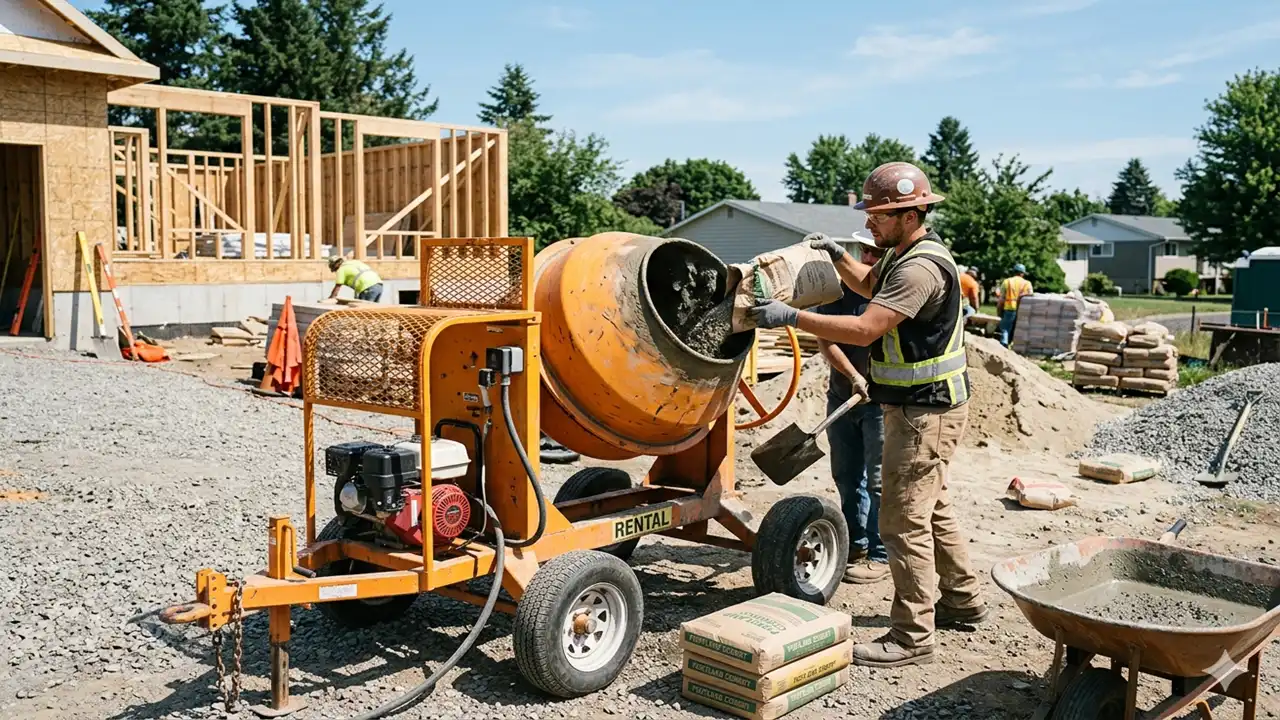
Why Choose a Concrete Mixer Rental Over Buying?
For most homeowners and small contractors, purchasing a professional-grade mixer is a significant investment that requires storage space and ongoing maintenance. Opting for a concrete mixer rental offers several distinct advantages:
- Cost-Efficiency: You only pay for the time you actually use the machine.
- Zero Maintenance: Rental yards handle the cleaning, engine tuning, and part replacements.
- The Right Tool for the Job: You can choose a small electric model for indoor work or a heavy-duty gas-powered towable mixer for larger outdoor slabs.
- Professional Results: Mechanical mixing ensures a uniform distribution of water, aggregate, and cement, which prevents structural weak spots.
Types of Concrete Mixers Available for Rent
Before you head to the rental yard, it is important to understand which machine fits your specific needs. Not all mixers are created equal.
Electric Portable Mixers
These are perfect for indoor projects or small outdoor tasks like setting fence posts. They are lightweight, quiet, and can be plugged into a standard household outlet. If you are working in a basement or a confined space, an electric concrete mixer rental is your best bet to avoid exhaust fumes.
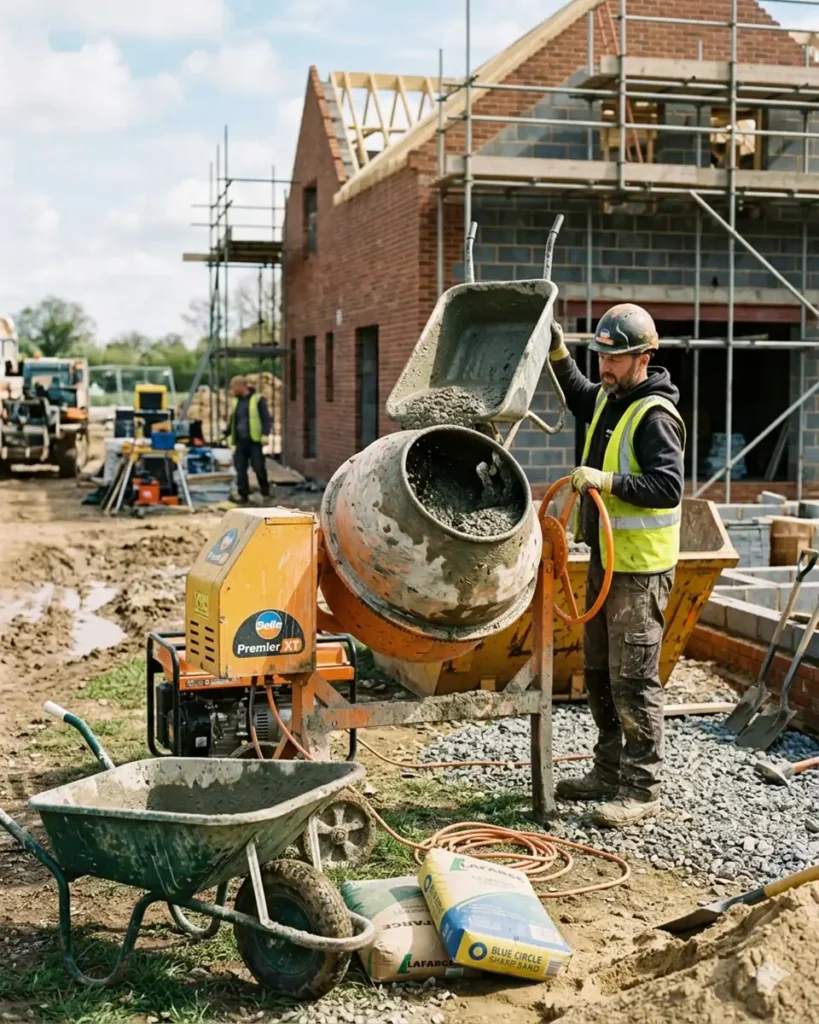
The Ultimate Guide to Choosing and Using a concrete buggy
Gas-Powered Towable Mixers
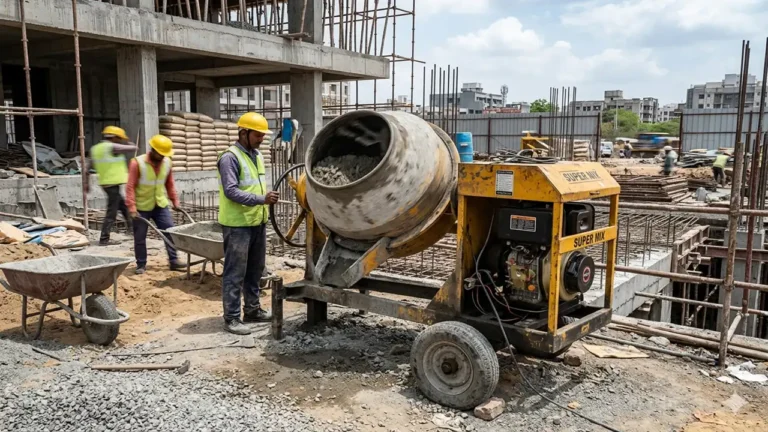
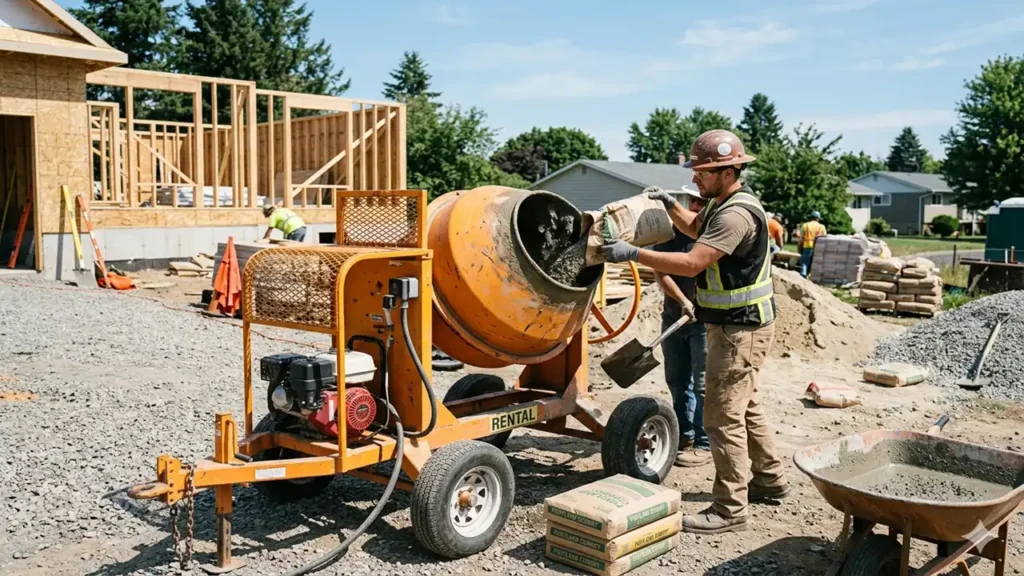
If you are pouring a driveway or a large patio, you need volume. Gas-powered mixers usually have a larger drum capacity (typically 6 to 9 cubic feet). Because they are towable, you can hitch them to your truck and transport them directly to the job site.
Mortar vs. Concrete Mixers
It is a common mistake to think these are interchangeable. Concrete mixers use revolving drums to tumble large aggregates (gravel), while mortar mixers use internal paddles to stir sand and cement. Always specify that you need a concrete mixer rental if your recipe includes stone or gravel.
How Much Does a Concrete Mixer Rental Cost?
Budgeting is a key part of any construction project. While prices vary by location and equipment size, here is a general breakdown of what to expect:
| Rental Duration | Estimated Cost (Electric) | Estimated Cost (Gas/Towable) |
| 4 Hours (Half Day) | $45 – $60 | $75 – $95 |
| 24 Hours (Full Day) | $65 – $85 | $110 – $140 |
| Weekly | $220 – $280 | $350 – $450 |
Pro Tip: Always factor in the cost of a “cleaning fee.” Most rental companies will charge an extra $50 to $100 if you return the mixer with dried concrete stuck inside the drum.
Why Precast Concrete Lifting Is the Smartest Repair Method in 2025
Step-by-Step: Getting the Most Out of Your Rental
To maximize your concrete mixer rental period, preparation is essential. Follow these steps to ensure a smooth pour:
- Prep the Site First: Do not pick up the mixer until your forms are set, your rebar is laid, and your site is leveled. You don’t want to pay for a rental while you’re still digging.
- Check Your Power/Fuel: If using electric, ensure you have a heavy-duty extension cord. If using gas, keep a spare canister of fresh fuel on hand.
- The “Dry-to-Wet” Method: Start the mixer, add half the water, then add the dry mix, then the remaining water. This prevents “clumping” at the bottom of the drum.
- Clean as You Go: Between batches, toss a bucket of water and some coarse gravel into the drum and let it spin for two minutes. This keeps the blades clean and saves you from a massive scrubbing job at the end of the day.
Safety Precautions When Using a Concrete Mixer
Operating heavy machinery requires respect for safety protocols. When you pick up your concrete mixer rental, ensure you have the following:
- Eye Protection: Concrete dust is caustic and can cause chemical burns to the eyes.
- Gloves and Long Sleeves: Wet concrete can irritate or burn the skin.
- Stable Grounding: Always operate the mixer on level ground to prevent it from tipping over while the heavy drum is spinning.
- No Loose Clothing: Keep hoodies, strings, and jewelry away from the moving gears and the rotating drum.
Precast Concrete Blockwork Walls: 6 Benefits That Make Them a Builder’s Favorite
Common Mistakes to Avoid with Concrete Mixer Rentals
Even experienced DIYers can run into trouble. Avoid these three pitfalls:
- Overloading the Drum: Just because a drum is 9 cubic feet doesn’t mean it can mix 9 cubic feet of wet concrete. Most mixers should only be filled to about 60% capacity to allow for proper tumbling.
- Incorrect Water Ratio: Adding too much water makes the concrete easier to pour, but it significantly weakens the final structure. Follow the bag instructions closely.
- Keeping the Rental Too Long: Many people underestimate the time it takes to finish. Plan for a full-day concrete mixer rental even for medium-sized jobs to avoid rushing the finishing work.
FAQ
1. How big of a mixer do I need for a patio?
For a standard 10×10 patio, a 6-cubic foot gas-powered mixer is usually the most efficient. It allows you to mix enough volume to keep a “wet edge” so your sections blend seamlessly.
2. Can I transport a concrete mixer rental in my SUV?
Small electric mixers can often be disassembled or tilted to fit in a large SUV or hatchback. However, towable gas mixers require a vehicle with a hitch and a 2-inch ball.
3. What happens if the mixer breaks down during my project?
Most reputable rental companies provide a “swap-out” guarantee. If the engine fails or a belt snaps through normal use, they will bring a replacement to your site to ensure your concrete doesn’t harden in the forms.
Ready to Start Your Project?
A successful build starts with the right equipment. By choosing a concrete mixer rental, you are giving yourself the professional advantage of a consistent mix without the overhead of owning heavy machinery. Remember to prep your site in advance, choose the right power source for your environment, and always clean the drum before the concrete sets.