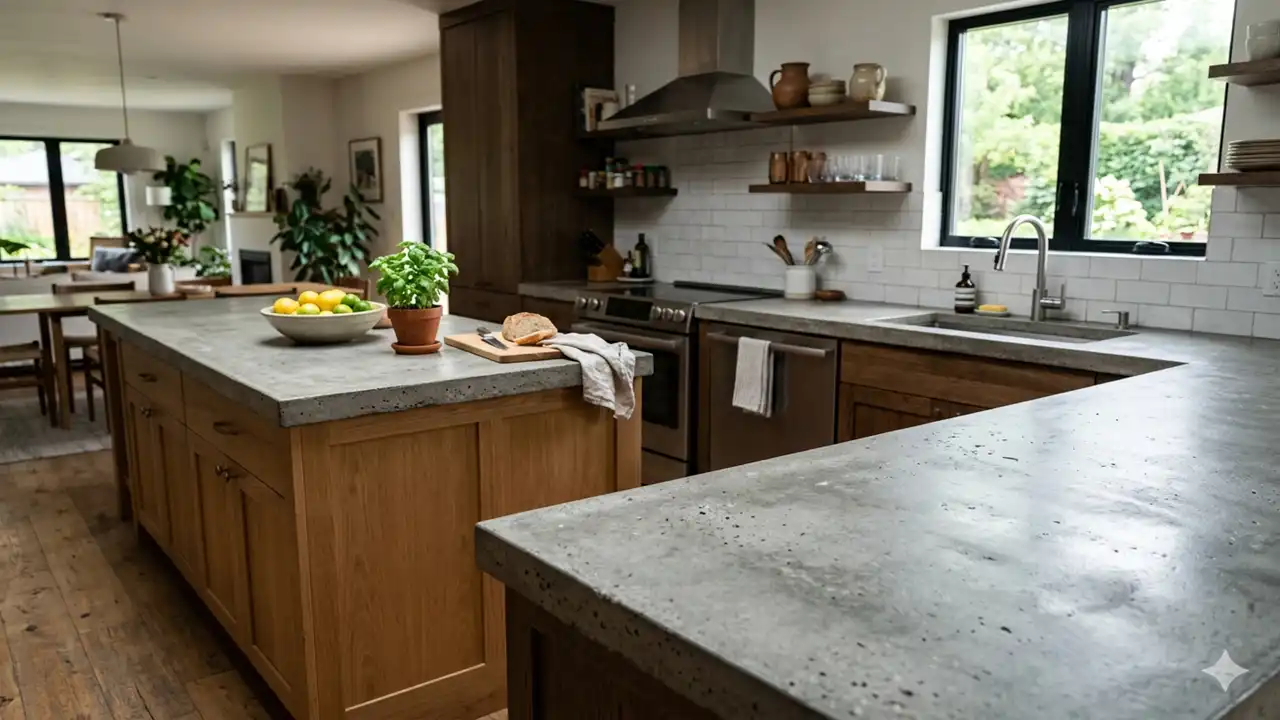
Why Choose Concrete Countertops for Your Home?
The primary reason homeowners gravitate toward concrete countertops is the sheer level of personalization. Unlike stone slabs pre-cut in a warehouse, concrete is “liquid stone.” This means it can be cast in any shape, thickness, or color you can imagine.
Aesthetic Versatility
Concrete can be stained to mimic natural stone, polished to a high-gloss mirror finish, or left matte for a raw, contemporary feel. You can even embed personal touches directly into the surface, such as:
- Recycled glass fragments for a terrazzo look.
- Fiber-optic lighting for a “starry night” effect.
- Integrated drainboards or trivets.
Exceptional Durability
When properly reinforced and sealed, concrete countertops are incredibly resilient. They handle the daily wear and tear of a busy kitchen with ease. Because they are cast as a solid mass, they are also less prone to the chipping often seen on the edges of thin porcelain or laminate surfaces.
BIM Manager Insights: Smarter Workflows for Precast Concrete Structures
The True Cost of Concrete Surfaces
One of the most common questions is whether concrete is a “budget” alternative to marble. The short answer is: not necessarily. While the raw materials (sand, cement, and water) are inexpensive, the cost of concrete countertops lies in the labor and expertise required.
| Factor | Description | Estimated Cost |
| Professional Install | Custom templating, casting, and finishing. | $70 – $150 per sq. ft. |
| DIY Projects | Purchasing bags of mix, forms, and sealers. | $15 – $30 per sq. ft. |
| Custom Features | Integral sinks, custom pigments, or thick edges. | Adds 20-30% to total. |
If you are looking for a unique, artisanal piece, the price reflects the craftsmanship of the maker. However, for the handy homeowner, a DIY approach can make these stunning surfaces incredibly affordable.
Maintenance: Keeping Your Surfaces Pristine
Many people worry that concrete countertops are high-maintenance. While they do require a bit more attention than quartz, the process is straightforward.
The Importance of Sealing
Concrete is naturally porous. To prevent stains from red wine, oil, or coffee, a high-quality sealer is non-negotiable. Most professionals use a penetrating sealer or a topical coating.
- Penetrating Sealers: Soak into the pores; they look more natural but require regular waxing.
- Topical Sealers: Create a film on top; they offer better stain resistance but can be sensitive to high heat.
Daily Care Tips
To keep your concrete countertops looking new, avoid abrasive cleaners. A simple mixture of mild dish soap and warm water is all you need. Always use a cutting board while the concrete is hard, cutting directly on the surface can damage the sealer and dull your knives.
Design Trends: Integrated Sinks and Texture
Modern contraction and design techniques have pushed concrete countertops into the realm of high art. We are currently seeing a shift toward “seamless” kitchen designs.
Integrated Sinks
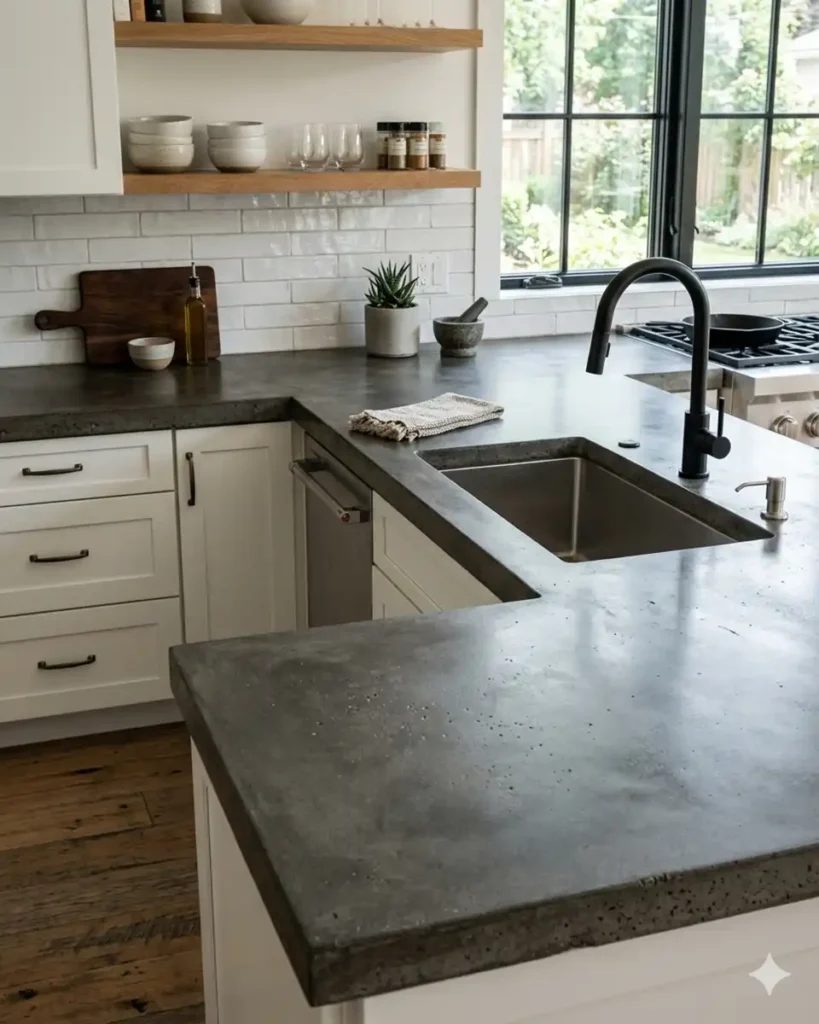
One of the coolest features of concrete is the ability to cast the sink and the countertop as one continuous piece. This eliminates the “gunk” that usually builds up in the seams between a traditional sink and the counter, creating a hygienic and visually stunning workspace.
Tactile Finishes
While smooth surfaces are classic, many designers are experimenting with texture. From “pressed” finishes that look like weathered stone to wood-grain textures created by casting concrete against reclaimed timber, the tactile nature of the material is a major selling point.
Can You DIY Concrete Countertops?
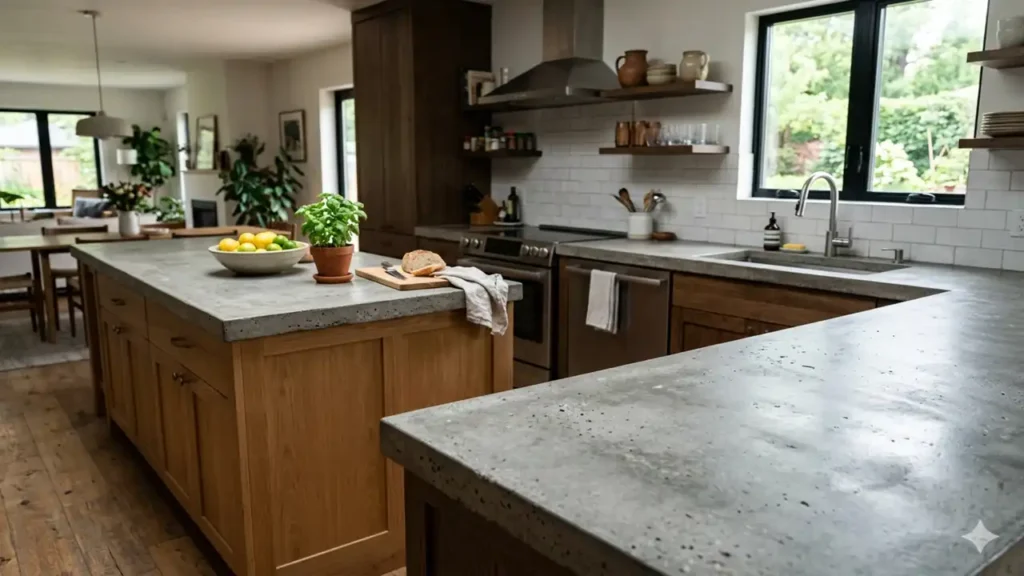
The “Do-It-Yourself” movement has embraced concrete countertops wholeheartedly. If you are patient and meticulous, you can create a beautiful surface over a weekend.
- Template: Create a precise template of your cabinets using strips of wood.
- Forming: Build a mold (usually from melamine) based on your template.
- Pouring: Use a high-strength concrete mix, ensuring you vibrate the mold to remove air bubbles.
- Curing: Let the slab sit for at least 48 to 72 hours.
- Finishing: Sand the surface to reveal the desired smoothness and apply multiple coats of sealer.
Frequently Asked Questions
Do concrete countertops crack?
Small hairline cracks may develop over time as the house settles or the concrete shrinks slightly. Most enthusiasts call this “patina” and feel it adds character. However, using structural fibers and steel reinforcement significantly reduces the risk of large cracks.
Are they heat resistant?
Concrete itself is extremely heat resistant. However, the sealers applied to the surface can be damaged by hot pans. Always use a trivet to protect the finish.
How often should I reseal them?
Depending on the type of sealer used, you should plan to reseal every 1 to 5 years. If water stops “beading” on the surface, it’s time for a fresh coat.
Is Concrete Right for You?
Choosing concrete countertops is about more than just finding a place to chop vegetables; it’s about making a statement. They offer a blend of industrial strength and artisan beauty that few materials can match. While they require a bit of care and a professional touch for the best results, the payoff is a one-of-a-kind surface that ages gracefully with your home.