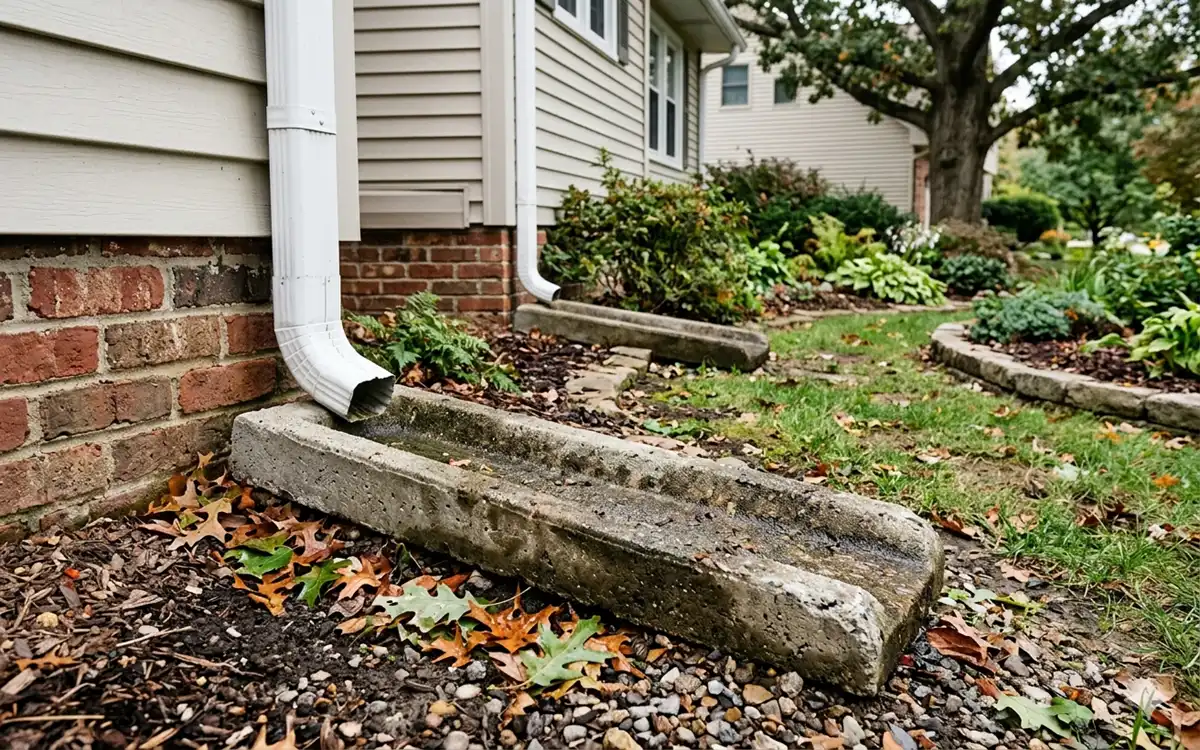
Concrete splash blocks direct rainwater away from home foundations, preventing erosion and water damage that can lead to costly repairs. These simple yet effective tools are essential for any property owner looking to protect their investment long-term.
What Are Concrete Splash Blocks?
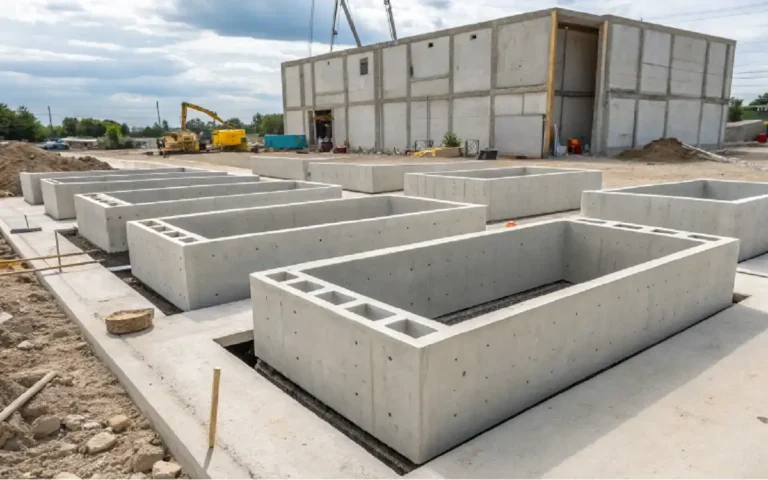
Concrete splash blocks are sturdy, precast concrete pieces placed under downspouts to guide water flow away from a building’s base. They come in sizes like 2-foot or 3-foot lengths, often weighing 55 to 93 pounds, made from high-strength concrete with 5,000 to 8,500 psi ratings for durability.
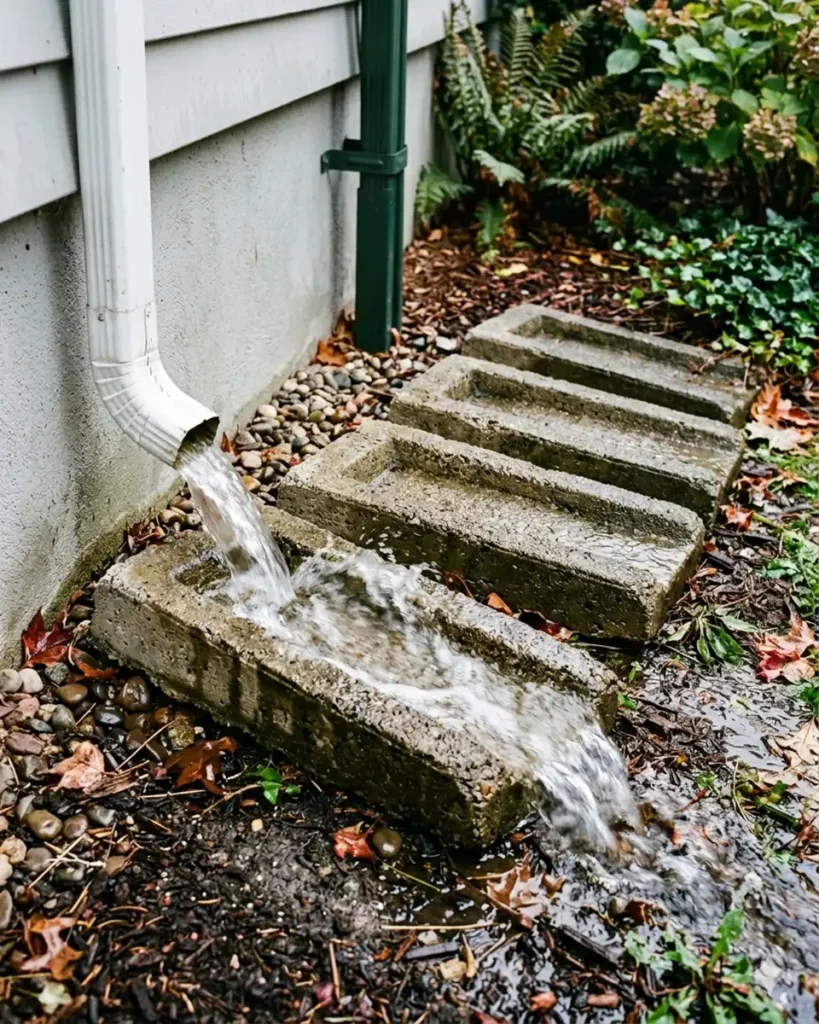
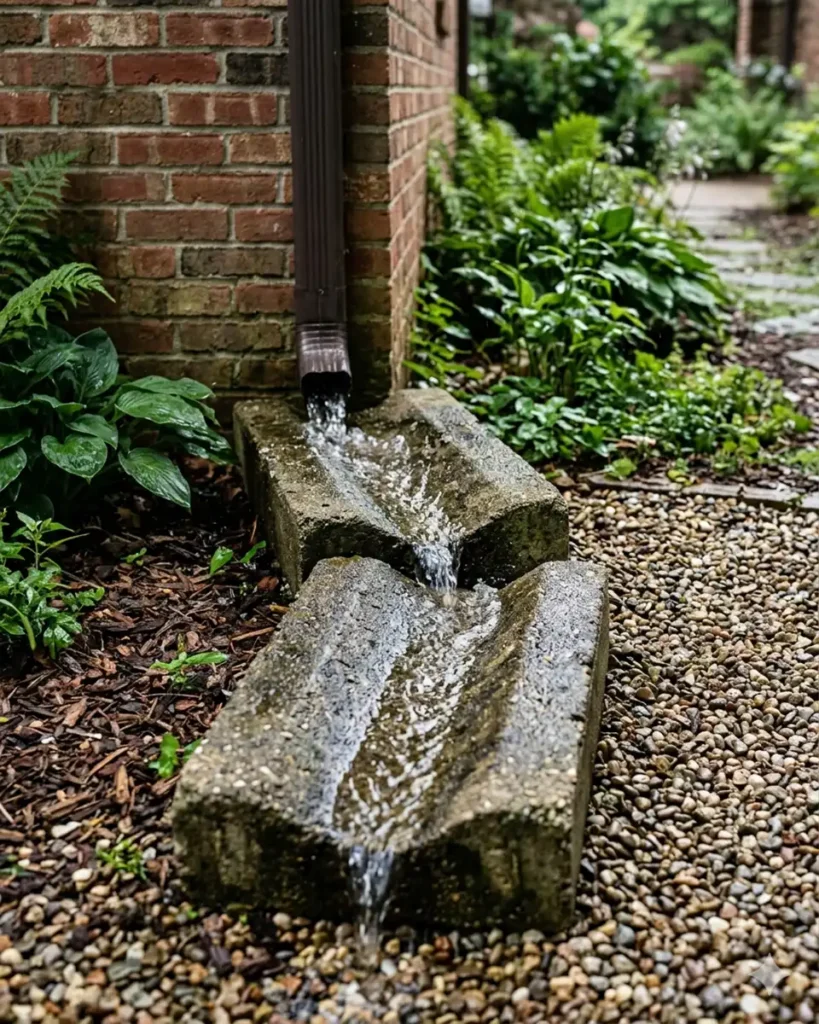
These blocks feature a sloped or channeled surface that spreads water over a wider area, reducing splash-back and soil saturation near walls. Unlike plastic versions, they stay put in wind and storms, requiring no maintenance for years.
In landscaping, they blend into yards or gardens while handling heavy rain effectively. Recent uses extend to patios, poolsides, and commercial sites for better water management.
Why Foundations Need Protection
Rainwater from gutters can erode soil around foundations, causing cracks, settling, or basement leaks if not diverted properly. Without protection, this leads to mold, flooding, and repairs costing thousands.
Concrete splash blocks solve this by channeling water at least 5-10 feet away, keeping soil stable and walls clean from mud splatters. They prevent hydrostatic pressure buildup that pushes water into basements.
Homeowners in rainy areas see the biggest gains, as these blocks cut long-term maintenance by lasting decades in harsh weather.
Key Benefits of Concrete Splash Blocks
These blocks offer unmatched strength compared to plastic or aluminum options that crack or shift. Their weight ensures stability, and low absorption rates under 6% keep them from deteriorating.
They boost curb appeal by hiding neatly in landscaping and support eco-friendly practices through sustainable production. No painting or sealing needed just rinse occasionally.
For businesses, they handle high-volume runoff in parking lots or sidewalks without failing.
Durability Comparison Table
| Material | Strength (PSI) | Weight (per 3-ft) | Lifespan | Wind Resistance | Cost per Unit |
| Concrete Splash Blocks | 5,000-8,500 | 93 lbs | 20+ years | High | $20-40 |
| Plastic | Low | 5-10 lbs | 5-10 years | Low | $5-15 |
| Aluminum | Medium | 20 lbs | 10-15 years | Medium | $15-30 |
This table shows why concrete outperforms others in tough conditions.
Types and Sizes Available
Standard precast concrete splash blocks measure 11.5 inches wide by 2.75 inches high, in 24-inch or 36-inch lengths. Choose 2-foot for tight spots like sidewalks; 3-foot for heavier flow from large gutters.
Precast versions are factory-made for precision, while some use recycled concrete for green builds. Tags like precast concrete and linear foot apply here, as costs often run per linear foot in bulk orders.
Newer designs include interlocking edges for custom runs along foundations.
2026 Updates and Standards
As of March 2026, no major new releases dominate, but ongoing precast standards like BS EN 13369 emphasize common rules for products, including splash blocks, with focus on low porosity and strength.
A March 2026 article highlights reinforced concrete splash blocks for better freeze-thaw resistance in patios and stormwater areas. Sustainability pushes recycled concrete options, reducing waste while matching virgin material performance.
Prototyping costs for custom precast items range $150-320 per linear foot initially, dropping in production key for developers testing designs.
Installation Guide
Prep the site by clearing debris and leveling soil under the downspout. Dig a shallow trench, add 4-6 inches of gravel base, and compact it for stability.
Place the block with the open end away from the house, sloping 1-2% downward to direct water. Secure with stakes if needed in loose soil; no anchors usually required due to weight.
Test with water to ensure flow; adjust as needed. Full install takes 15-30 minutes per block.
Cost Breakdown and Savings
Single units cost $20-40, or about $10-20 per linear foot in quantity. Add $50-100 for gravel and tools for DIY.
Over time, they save on repairs foundation fixes average $5,000+, versus pennies yearly upkeep. Bulk precast buys lower prototyping costs for pros.
Eco-Friendly Options
Recycled concrete splash blocks use construction waste, cutting landfill use and energy in production. They match standard strength and aid groundwater recharge by slowing runoff.
These align with green building, like Godrej’s recycled blocks, for sustainable homes.
Real-World Applications
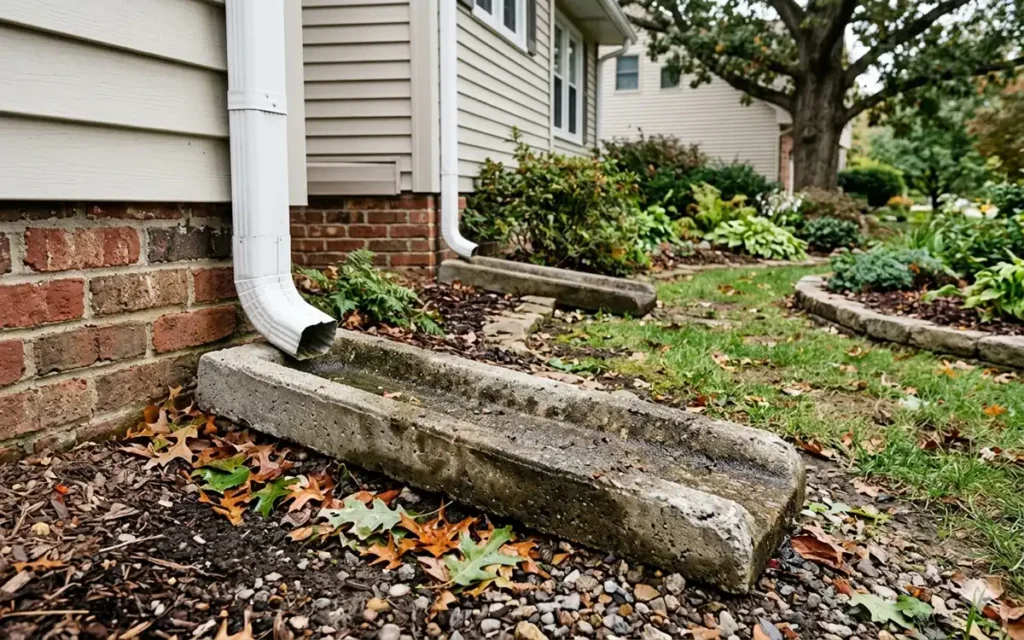
In homes, place under every downspout; for pools, line surrounds to stop erosion. Commercial spots use them in lots for stormwater control.
They pair with French drains for ultimate protection in wet climates.
Maintenance Tips
Inspect yearly for cracks; seal with silicone-based product if porous most don’t need it. Clear debris to keep channels open.
In freeze areas, ensure proper drainage prevents ice lift.
For Repair and Services
1924 W Edward Ln, Milwaukee, WI 53209, United States
Phone: +14142855933
Email: [email protected]