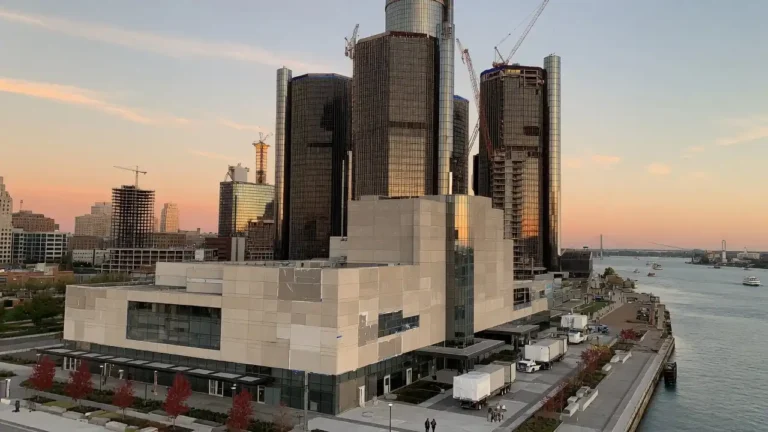

Floor-to-floor gaps in a building envelope expose vents, slab ends, wiring, and mechanical equipment. Those elements read as visual clutter from the street.
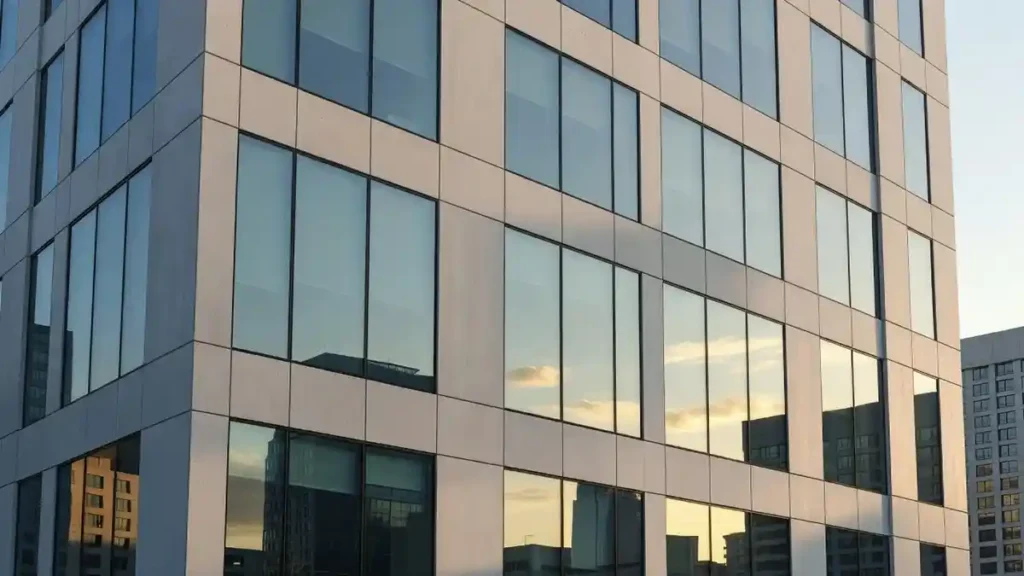
Spandrel glass solves that problem by turning opaque panels into a controlled part of the facade.
For contractors and property owners planning precast-integrated envelopes this season, the coordination between glazing and panel work is where most schedule risk lives.
New Home Construction Jacksonville Demand Now
Key Takeaways
- Spandrel glass is opaque by design and conceals the non-vision zones between floors, including slab ends and building mechanicals.
- All spandrel lites should be heat-strengthened to manage thermal stress, since color and coating choices raise heat absorption.
- Fabrication and placement details, such as putting the opacifier on the correct surface, help reduce VOC and thermal-breakage risk over the life of the panel.
What Is Spandrel Glass, and Why Does It Matter for Precast?
Vision glass is meant to be seen through. Spandrel glass is meant to hide what sits behind it.
According to the Vitro Glazings glass education center, the effect comes from an opacifier applied to the indoor surface of the glass lite.
That opacifier is usually a silicone-based paint or ceramic frits.
The result is a tinted or colored panel that lines up with the rest of the facade.
If you’ve been following architectural precast trends across the Midwest, this pairing won’t surprise you.
Owners want the crisp look of a continuous glass line without the cost of full vision glazing across dead zones.
Spandrel glass gives the facade a uniform read while the precast carries the structural and thermal load behind it.
Legal Notice Open Shelter Area Summit Metro Parks Construction
Which Spandrel Glass Type Fits Your Build?
There are three common approaches, and each carries its own tradeoffs.
Our team observed that most coordination problems trace back to picking the wrong type for the wall condition.
| Type | Fabrication | Heat Treatment | Main Advantage | Main Risk |
|---|---|---|---|---|
| Monolithic | Single lite with opacifier applied to the interior surface | Heat-strengthening recommended | Simpler, lower-cost panel | Less thermal buffer than an insulated unit |
| Insulating Glass (IG) | Two lites with a sealed air space; opacifier on the fourth surface | Heat-strengthening recommended | Better thermal performance | Added insulation can trap solar energy and raise breakage risk |
| Shadow Box | Clear or tinted lite backed by an insulated metal sheet or light-blocking material | Heat-strengthening recommended | Adds visual depth to the facade | Condensation staining, trapped debris, and hot spots from poor backing |
The right choice depends on your wall assembly, your thermal targets, and how much depth the design calls for.
Spandrel Glass Cleaner Precast Facades
— US News (@Us_news_ways) August 14, 2026
Spandrel glass solves that problem by turning opaque panels into a controlled part of the facade.@KawneerUK @ViraconGlass @guardianglass https://t.co/2AwVd4R877
Why Does Heat Treatment Come First?
Color absorbs heat.
Darker and more reflective tints, which happen to harmonize best with vision glass, absorb even more.
That heat builds up in the panel and creates thermal stress.
Our analysis suggests this is the single most common failure point in poorly specified spandrel jobs.
Every lite used in a spandrel should be heat-strengthened to resist that stress.
The Glass Association through glass.org points to ASTM E1300 as the practice design professionals use to determine load resistance and required glass type.
The GANA Glazing Manual remains a useful reference for glazing quality standards and design considerations on the same question.
Construction Company Proposal and Estimate Closing Rate Problems
How Should You Specify Spandrel Glass Correctly?
Getting the sequence right helps reduce rework and warranty exposure.
Here is the order our contractors note works best.
- Confirm the wall condition first.
Identify every floor-to-floor zone the panel must hide, including slab ends, vents, and mechanical runs. - Match the tint to the vision glass early.
Highly transparent vision glass cannot be perfectly matched, so lean toward darker or more reflective tints for closer harmonization. - Select the spandrel type.
Choose monolithic, IG units, or shadow box based on your thermal targets and depth requirements from the table above. - Specify heat treatment on every lite.
Verify the required treatment against a thermal-stress evaluation before fabrication. - Set opacifier placement.
For IG spandrels, Vitro recommends placing the opacifier on the fourth surface to avoid releasing VOCs inside the sealed unit. - Review insulation compatibility.
If insulation backs an IG panel, confirm the adhesive and insulation are rated for that use, since trapped solar energy can stress the adhesive and the glass. - Coordinate glazing and precast timing.
Sequence panel install so shadow box units are not left open to construction debris or wet trades.
New Home Construction Jacksonville Demand Now
What Are the Common Failure Points to Watch?
Shadow box spandrels need the most attention on site.
They are vulnerable to condensation and drying, which can leave unsightly stains even behind a good moisture barrier.
They can also trap construction debris between glazing and insulation install. VOCs from paint and sealants can leave a permanent residue on the finished surface.
Improper backing can create hot spots that lead to breakage.
None of these are reasons to avoid spandrel glass. They are reasons to control fabrication detail and install sequence.
What Does This Mean for Midwest Contractors?
Construction industry insiders are noting a steady move toward pre-painted stock options that simplify shop work.
Spandrelite™ by Vitro is one example, offered pre-painted in black, white, and warm gray.
It is low-VOC and built to be cut, fabricated, and heat-treated without a custom coating step.
For deeper technical detail on tolerances and evaluation, Vitro Technical Document TD-145 is worth keeping on file.
For the precast side of the assembly, the PCI Mid-Atlantic architectural precast design guide covers facade finishing that pairs well with a spandrel line.
Spandrel glass can support a cleaner, more uniform facade when the type, heat treatment, and install sequence are settled early.
Tell us where your project stands and which wall conditions you need to hide, and we can help you map the spandrel and precast coordination before fabrication starts.