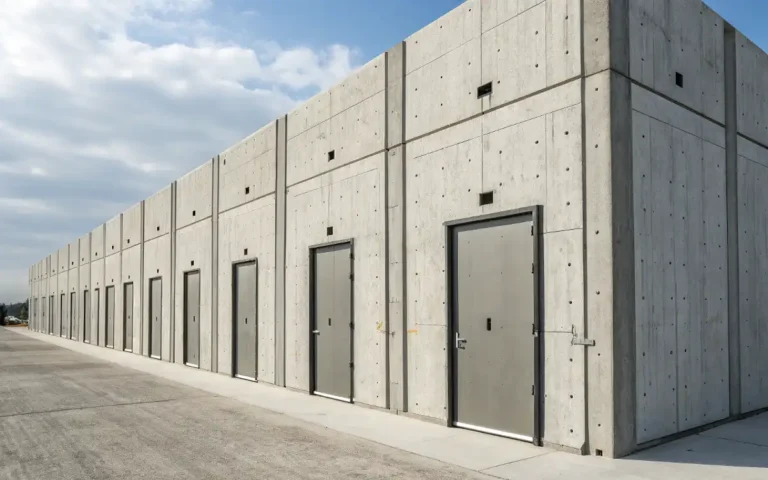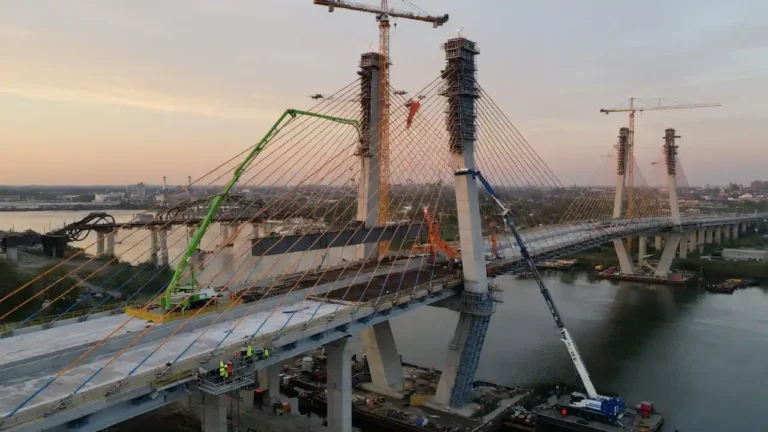

As construction shifts toward modular efficiency and reduced site timelines, precast concrete is emerging as the gold standard for structural framing.
Our team has observed a massive transition in how Midwestern contractors approach complex site challenges, prioritizing speed without sacrificing durability.
If you have been following these trends across the region, this shift will not come as a surprise.
We recognize that modern projects require higher precision, and precast concrete provides that in a factory-controlled environment.
Shri Sai Construction Modern Precast
Key Takeaways
- Precast as construction components, such as beams and columns, can cut onsite project timelines by 30-40% compared to traditional cast-in-place methods.
- Factory-controlled casting ensures consistent high-strength concrete quality, minimizing structural defects and weather-related delays.
- The inherent thermal mass and durability of precast systems contribute to lower long-term maintenance and superior energy efficiency for structural framing.
Why is Precast Concrete Defining Modern Structural Framing?
Construction industry insiders are noting that developers are no longer willing to wait for weather-dependent site pouring.
Our analysis suggests that the predictability of off-site manufacturing is the single biggest driver for this transition.
When you utilize precast concrete, you remove the variable of on-site curing times.
According to the latest industry standards from the Precast/Prestressed Concrete Institute, this shift allows for accelerated erection schedules that keep projects ahead of critical path deadlines.
Beyond speed, the structural integrity of these components is unmatched.
We often explain to our clients that factory-cast elements are subject to rigorous quality assurance that simply cannot be replicated in a muddy field.
Whether it is for multi-story parking structures or commercial developments, the precision of these connections is vital.
Structural framing with precast elements ensures that every connection point meets exact engineering tolerances.
OM Construction Your Precast Concrete Build

How Does Precast Compare to Traditional Methods?
Many builders still debate the merits of traditional cast-in-place versus modern precast solutions.
The following table breaks down the core differences our team observes on active job sites.
| Feature | Cast-in-Place Concrete | Precast Concrete |
| Site Timeline | Slower (requires curing) | Faster (Just-in-time) |
| Quality Control | Variable (site conditions) | High (factory-controlled) |
| Weather Impact | High | Minimal |
| Labor Needs | High onsite demand | Optimized onsite assembly |
| Consistency | Moderate | Excellent |
How Will This Impact Your Next Build?
If you are a contractor looking to maximize profit and efficiency, integrating these systems is a logical step.
Our contractors note that the reduced need for onsite formwork is a major safety and cost advantage.
By moving the work into the factory, you eliminate the risk of form blowouts or uneven grading.
Furthermore, the construction sector is increasingly focused on waste reduction, and precast manufacturing excels at minimizing excess material.
Mr Construction Precast Structural Framing
Step-by-Step Guide for Precast Installation
- Site Preparation: Ensure the as construction bearing capacity is sufficient for heavy cranes and transport logistics.
- Foundation Verification: Check that all anchor bolts and embed plates are perfectly aligned according to the shop drawings before the arrival of components.
- Staging: Designate a clear, level staging area that allows for the sequence-based offloading of pieces to maintain an efficient workflow.
- Rigging and Lifting: Use certified lifting hardware and spreader bars to ensure the as construction integrity of the elements during transport from the truck to the final position.
- Temporary Bracing: Secure each panel or beam with temporary bracing systems immediately to ensure stability until permanent connections are fully welded or grouted.
- Structural Connection: Perform welding or bolting of connections according to the engineer’s specifications.
- Final Grouting: Apply high-strength, non-shrink grout to all joints to ensure long-term durability and structural continuity.
1000 sq ft house construction cost
Looking Toward the Future of Structural Framing
The data supports a clear trajectory for the industry.
As NIST continues to investigate new, resilient connection methods, we expect the adoption of precast concrete to skyrocket.
Our team remains committed to as construction at the forefront of this, ensuring our clients receive the best in structural efficiency.
The construction landscape is changing rapidly, and choosing the right framework is the first step toward project success.
If you are planning your next major development, consider how these precast concrete systems can redefine your bottom line.