Modern waterfront projects demand a rigorous approach to structural framing and material selection.
As inland and coastal property owners push for resilient infrastructure, dock construction has shifted toward advanced high-performance materials.
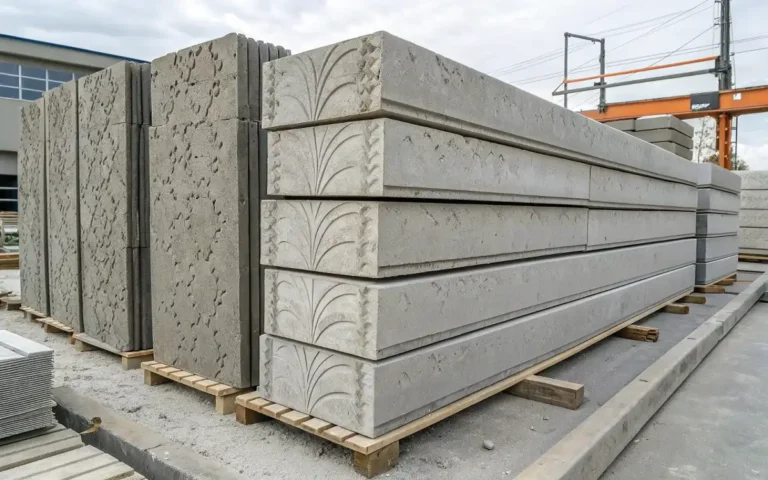
Our team at Midwest Precast Contractor observes that the move toward precast concrete is no longer just a trend.
It is now the standard for achieving long-term asset protection in harsh aquatic environments.
PCC in Construction Structural Advantages
Key Takeaways
- Durability: Precast units offer superior resistance to chloride-induced corrosion compared to cast-in-place alternatives.
- Efficiency: Factory-controlled manufacturing ensures consistent structural integrity and significantly reduces site disruption.
- Resilience: High-strength precast concrete provides the density required to withstand cyclic wave loading and freeze-thaw cycles.
If you have been following structural framing trends across the Midwest, this shift toward off-site fabrication will not come as a surprise.
The inherent precision of precast components allows contractors to maintain tight tolerances that are difficult to replicate in variable weather conditions.
Dock construction requires a keen understanding of load-bearing capacity and environmental exposure.
According to guidance from the American Concrete Institute, structures in marine environments require specific water-cement ratios to mitigate the risk of premature degradation (ACI 318, 2014).
Tie Rod Construction Structural Stability
How does precast impact your project timeline?
Our analysis suggests that using modular elements can shorten installation windows by weeks.
Instead of managing site-poured forms and extended cure times, crews can focus on precise site preparation and component assembly.
This streamlined method is vital for projects with tight permitting windows or those located in ecologically sensitive areas.
Proper dock construction relies on a clear understanding of the interaction between the structural frame and the seabed foundation.
| Feature | Cast-in-Place | Precast Concrete |
| Cure Time | 28+ days on-site | Ready for install |
| Quality Control | Variable | Factory-Certified |
| Durability | Moderate | High (Dense Mixes) |
| Site Impact | High | Minimal |
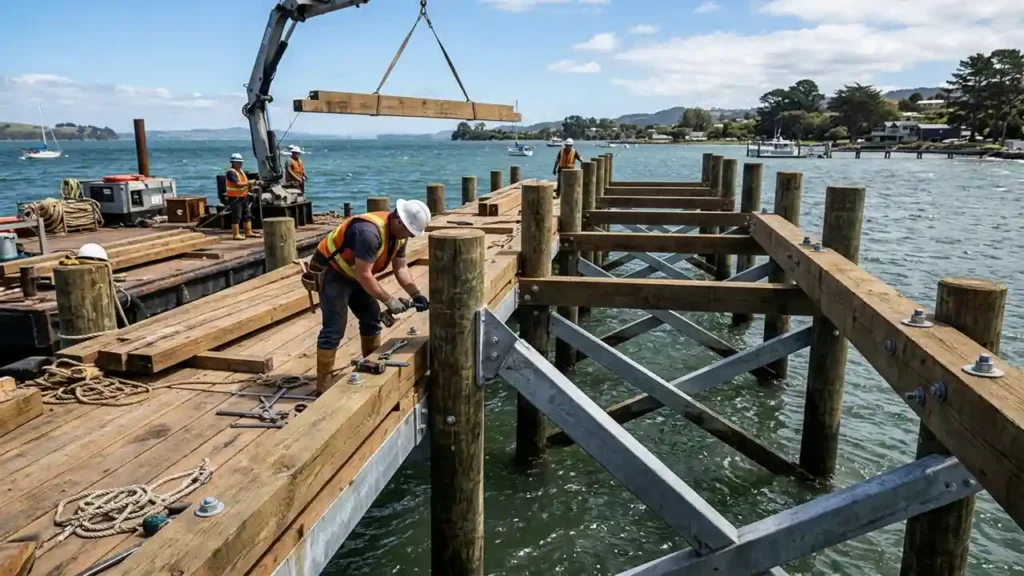
Steps for successful site installation
To achieve professional results, we follow a strictly phased installation process.
- Site Assessment: Evaluate existing soil bearing capacity and potential for localized scour.
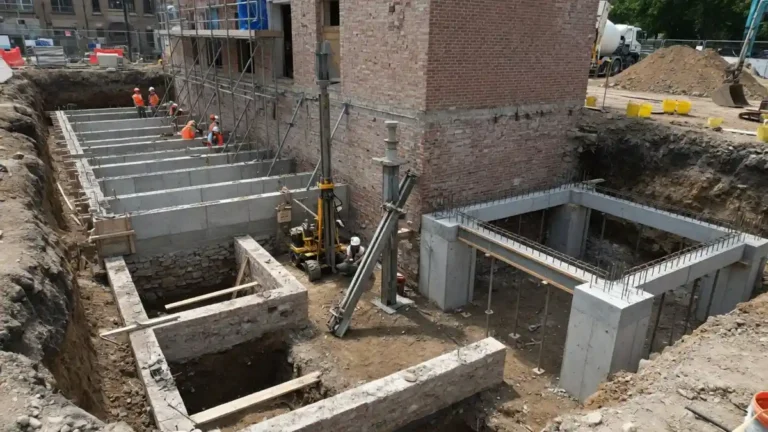
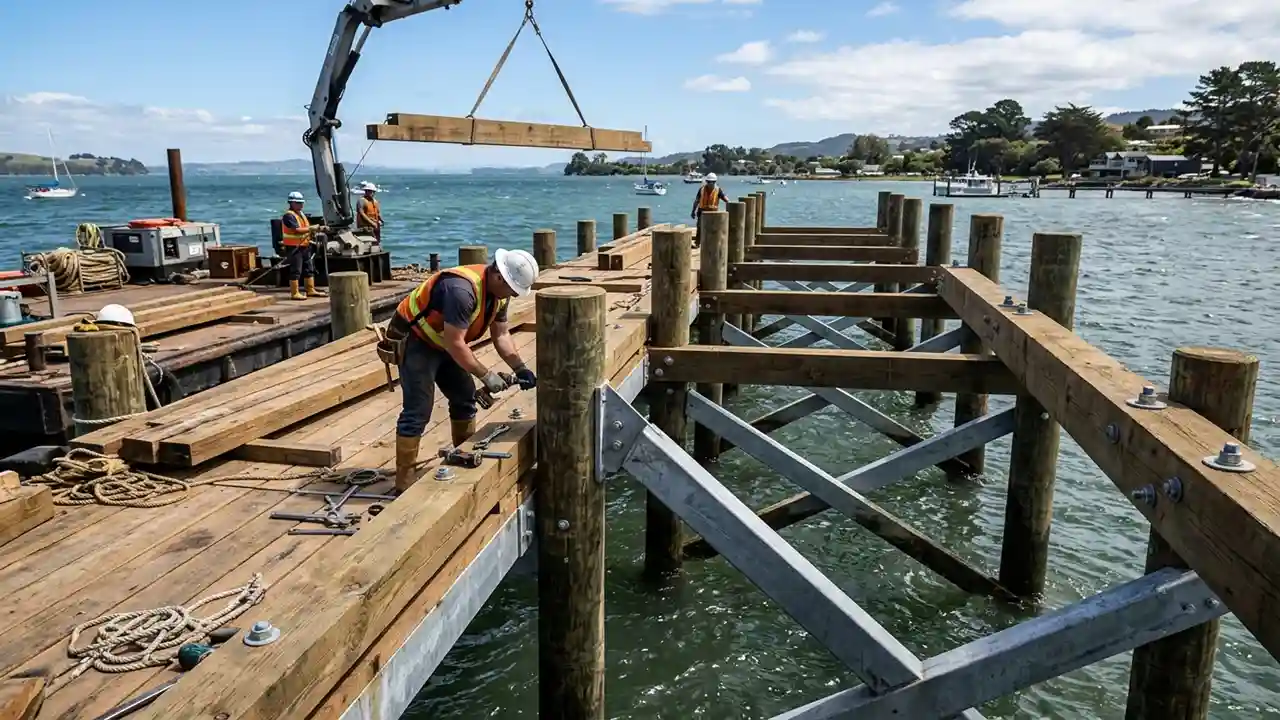
- Structural Foundation: Drive piles to the required depth to ensure stable dock construction that resists lateral movement.
- Leveling and Alignment: Utilize laser-guided systems to set the base elevation of the precast components.
- Structural Framing Attachment: Secure the precast deck panels to the primary frame using corrosion-resistant hardware.
- Final Inspection: Verify that all connection points are sealed against water ingress to prevent future reinforcement oxidation.
Hyatt Regency Architecture Modern Construction
Dock Construction Structural Durability
— US News (@Us_news_ways) June 10, 2026
As inland and coastal property owners push for resilient infrastructure, dock construction has shifted toward advanced high-performance materials.@ConstWorldSA @EngNewsZA @CivilEngDis https://t.co/FbiZEZNWEA
What does this mean for Midwest contractors?
The industry is moving toward high-performance, low-maintenance materials for all waterfront developments.
Construction industry insiders are noting that property owners now prioritize a 50-year service life over lower initial costs.
This demand forces us to optimize our structural framing designs for maximum longevity.
When planning dock construction, ensure your team addresses the specific marine exposure zones as outlined in regional engineering standards.
The combination of high-density concrete and advanced admixtures creates a robust defense against common failure points.
By choosing precast concrete modules, you are not just building a deck; you are investing in a stable foundation for the future.
Successful dock construction integrates these elements into a cohesive, long-lasting structure.
If you are currently evaluating your next project, consider how the modular nature of precast systems might simplify your logistics.
Using Models to Predict Molecular Structure Lab
Our team remains dedicated to pushing the boundaries of what is possible in regional infrastructure.
We encourage all stakeholders to prioritize structural documentation and rigorous site testing during the planning phase of any dock construction project.
As we look forward, the integration of new structural framing technology will continue to define our standards.
The future of water-dependent property development relies on the durability of the materials we select today.