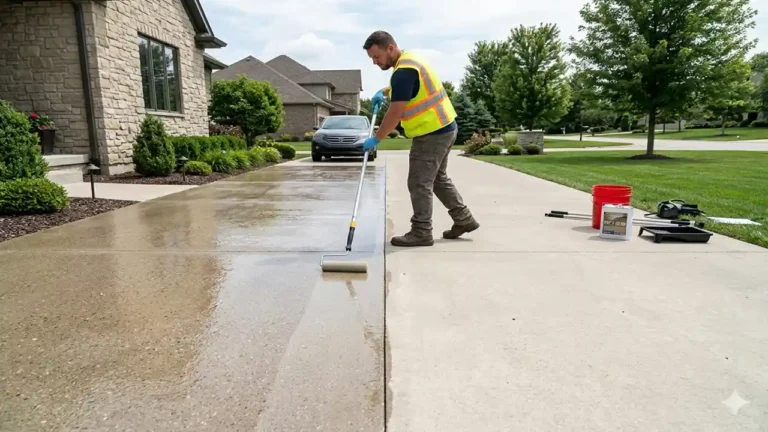

Are you tired of grout lines that trap dirt or heavy floor slabs that require massive structural support? Whether you are renovating a chic urban loft or upgrading a commercial showroom, micro concrete flooring has emerged as the definitive solution for high-end aesthetics without the industrial headache.
What is Micro Concrete Flooring?
Micro concrete flooring is a high-performance, cement-based coating designed to be applied in ultra-thin layers—typically between 2mm and 3mm (Living Concrete, n.d.). Unlike traditional concrete, which requires significant depth and heavy reinforcement, micro concrete utilizes specialized polymers and fine aggregates to provide immense strength in a lightweight form.
Understanding the Slump Value of Concrete: A Complete Guide to Workability
This material was originally developed to reduce water consumption and provide a reliable method for repairing cracked or aging structures (Living Concrete, n.d.). Today, it has evolved into a premier decorative finish. Because it bonds effectively to almost any stable substrate including wood, existing tiles, and plaster—it allows for a complete floor transformation without the need for messy demolition (Topcret, 2024).
Why Choose Micro Concrete Flooring Over Polished Concrete?
When selecting a “concrete look,” many homeowners struggle between traditional polished slabs and micro concrete flooring. While both offer a sleek, industrial vibe, the technical advantages of micro concrete are substantial:
1. Minimal Thickness and Weight
Traditional polished concrete usually requires a thickness of at least 100mm to ensure structural integrity (DC Flooring, 2024). In contrast, micro concrete flooring achieves the same aesthetic at a fraction of the weight. This makes it ideal for second-story renovations where floor load limits are a concern.
2. No Expansion Joints Needed
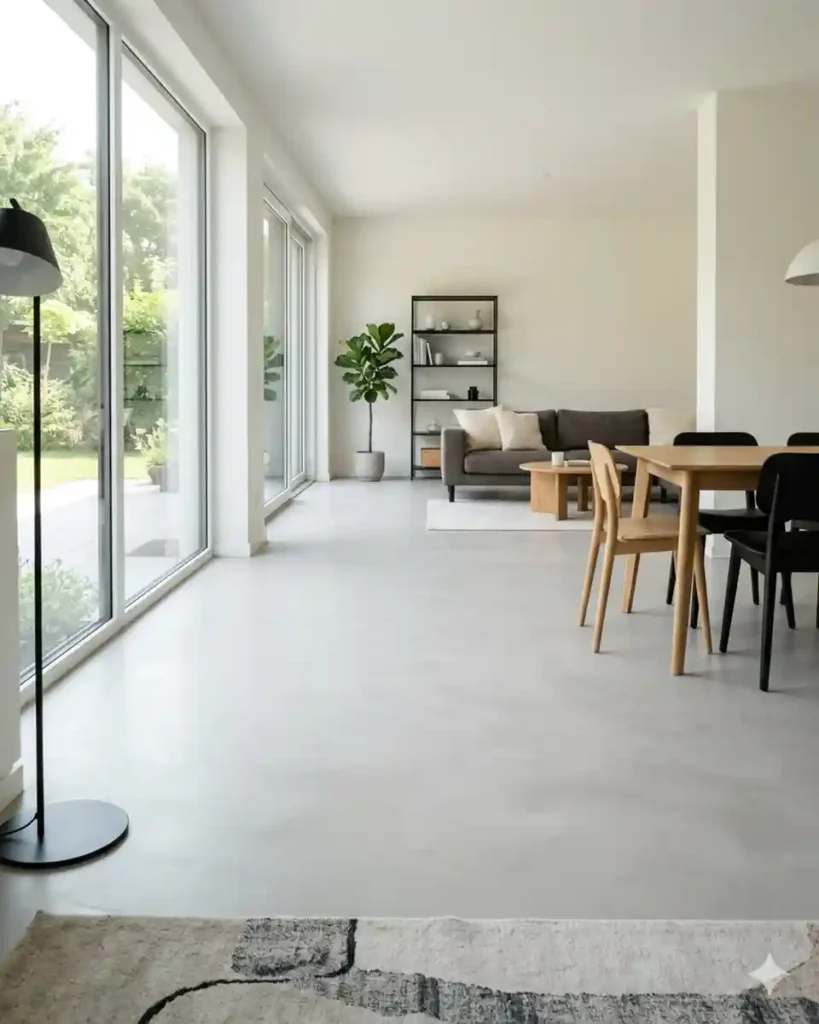
One of the biggest pain points with large concrete slabs is the need for expansion joints every 4 to 5 meters to prevent cracking (Topcret, n.d.). These joints break up the visual flow of the room. Micro concrete is a continuous, flexible material that allows for a truly seamless, “joint-free” finish across large open-plan areas.
Concrete Cleaning: The Ultimate Guide to Restoring Your Surfaces
Micro Concrete Flooring: The Ultimate Guide to Modern Seamless Surfaceshttps://t.co/77EDvchYCG
— Considering Apple (@consider_apple) May 1, 2026
3. Superior Thermal Conductivity
In 2026, energy efficiency is a top priority for builders. According to technical specifications from SEMCO Surfaces, microcement and micro concrete systems exhibit excellent thermal conductivity, making them far more compatible with modern underfloor heating systems than thick, traditional concrete slabs (SEMCO Surfaces, 2026).
Key Benefits: Durability and Aesthetics in 2026
The surge in popularity for micro concrete flooring isn’t just about looks; it’s about performance. Modern formulations have reached a level of durability that rivals industrial-grade materials.
- Waterproof & Hygienic: Its low permeability makes it a “fantastic choice” for wet areas like bathrooms and kitchens, where it resists mold and staining (Living Concrete, n.d.).
- High Compressive Strength: High-quality mixes can reach a compressive strength of over $38 \, \text{N/mm}^2$ after 28 days, ensuring it stands up to high foot traffic (Micro Concrete Flooring, n.d.).
- Rapid Installation: While traditional concrete can take weeks to fully cure and polish, a micro concrete flooring project can often be functional within 24 to 48 hours (Living Concrete, n.d.).
The Installation Process: From Prep to Polish
Achieving a professional-grade micro concrete flooring finish requires a meticulous multi-step process. While “one-component” mixes have made it more accessible, following the industry standards set by organizations like ASTM International is crucial for longevity.
Step 1: Surface Preparation
The substrate must be completely clean, dry, and free of dust or oils. Any loose material or brittle layers must be removed to ensure a strong mechanical bond.
Concrete Mixer Machine Price: A Comprehensive Buyer’s Guide for 2026
Step 2: Priming
A specialist primer is applied to the base. This step is non-negotiable as it prevents the substrate from absorbing moisture from the micro concrete and ensures consistent adhesion (Micro Concrete Flooring, n.d.).
Step 3: Mixing and Application
The powder is mixed with water—usually at a ratio of approximately 1:8—using a mechanical whisk at low speeds to avoid air entrainment (Living Concrete, n.d.). The mix is then hand-applied using a trowel in two or three thin coats.
Step 4: Sealing
To protect the floor from stains and UV damage, a high-quality sealer (such as a polyurethane or sacrificial wax) is applied once the material has cured.
Common FAQs About Micro Concrete Flooring
How much does micro concrete flooring cost per square foot?
In 2026, costs vary by region and complexity. Basic applications can start around ₹50/sq ft for materials, while professional-grade, multi-layered installations in major metropolitan areas often range from ₹210 to ₹350 per square foot (IndiaMART, 2026).
M10 Concrete Ratio: The Complete Guide to Mix Proportions and Usage
Can it be applied over old tiles?
Yes. One of the primary advantages of micro concrete flooring is its ability to adhere to existing ceramics, saving you the cost and dust of tile removal.
Is micro concrete prone to cracking?
Because it contains flexible polymers, it is significantly less prone to cracking than standard concrete. However, it is essential that the underlying substrate is stable and “movement-free.”

Transform Your Space Today
Micro concrete flooring represents the perfect intersection of industrial strength and modern elegance. By eliminating the need for joints, reducing structural weight, and offering a waterproof, customizable finish, it has solidified its place as the go-to material for 2026 construction projects.