In this guide, we will break down why concrete blocks remain the gold standard in construction, exploring their different types, the benefits of using them over traditional wood, and how to choose the right ones for your next big build.
What Exactly Are Concrete Blocks?
At its simplest, a concrete block often referred to as a Concrete Masonry Unit (CMU) is a precast building material made from a precise mixture of Portland cement, water, and aggregates like sand or crushed stone.
While the classic “cinder block” is a term often used interchangeably, true concrete blocks are denser and stronger, designed to handle immense structural loads. They are manufactured in factories under controlled conditions, ensuring that every block you receive is uniform in size and strength, which is a massive win for builders who value precision.
The Anatomy of a Block
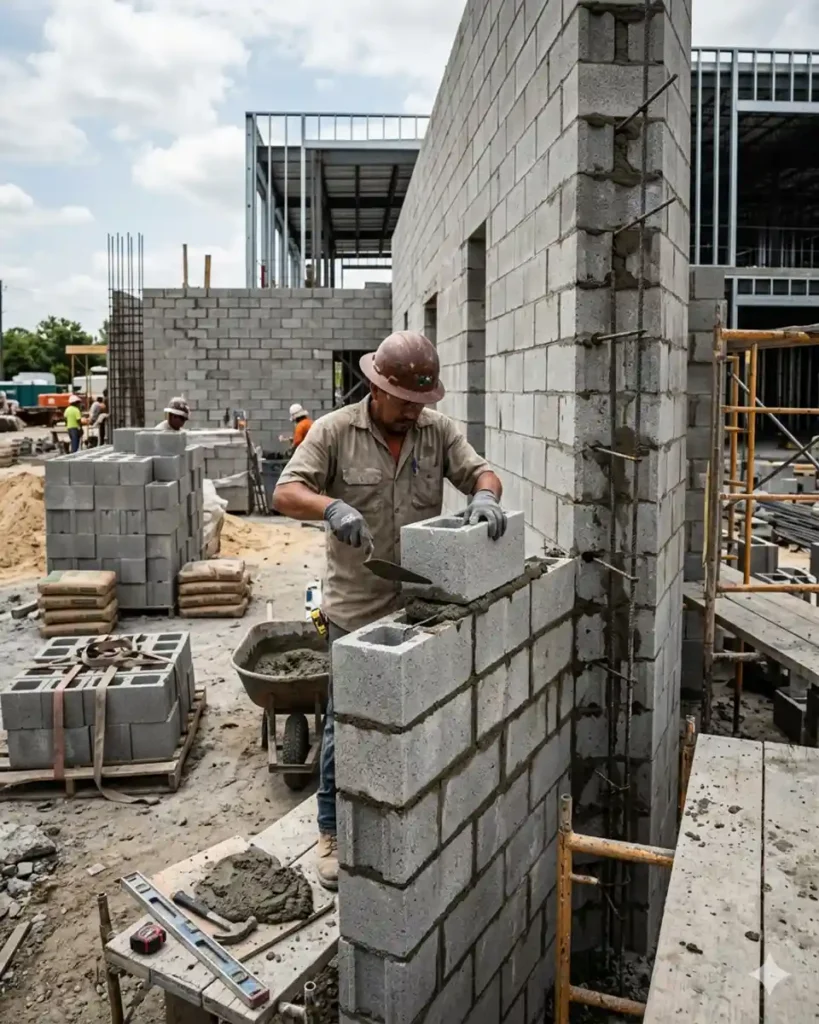
Most blocks feature hollow “cores” or cells. This design serves three main purposes:
- Weight Reduction: Making them easier for masons to handle.
- Insulation: The air pockets provide a thermal barrier.
- Reinforcement: These cores can be filled with rebar and grout to create a wall that is virtually indestructible.
The Ultimate Guide to the Concrete Saw
The Primary Types of Concrete Blocks
Not all projects require the same level of density or finish. Understanding the variety available will help you save money and improve the longevity of your build.
1. Hollow Blocks
These are the most common concrete blocks used in residential and commercial walls. They usually come with two or three holes. Because they are lighter, they speed up the construction process significantly.
2. Solid Blocks
As the name suggests, these have no large hollow cores. They are incredibly heavy and provide superior fire resistance and soundproofing. You’ll typically see these used for heavy-duty load-bearing walls or as paving stones.
Concrete Blocks: The Essential Guide to Modern Buildinghttps://t.co/0qEZLbbFUV
— Atholton News (@atholtonnews55) April 22, 2026
3. Autoclaved Aerated Concrete (AAC)
This is the “high-tech” version of the family. AAC blocks are lightweight and contain tiny air bubbles. They offer incredible insulation properties, making them a favorite for eco-conscious builders looking to slash energy bills.
4. Decorative or “Split-Face” Blocks
Who says concrete has to be boring? These blocks have a rough, stone-like texture on one side. They are used for the exterior of buildings to provide an aesthetic finish without needing an extra layer of siding or brick.
Why Choose Concrete Blocks Over Other Materials?
If you are debating between a wood-frame house and a masonry build, the advantages of concrete blocks are hard to ignore.
Unmatched Durability
Wood rots, warps, and falls prey to termites. Concrete does none of those things. A structure built with quality blocks can easily last over a century with minimal maintenance. It is the definition of “set it and forget it” construction.
Fire and Storm Resistance
Concrete is non-combustible. In the event of a fire, masonry walls help contain the flames rather than fueling them. Furthermore, in regions prone to hurricanes or high winds, concrete blocks provide a level of ballistic protection that lightweight materials simply cannot match.
Energy Efficiency
Concrete has “thermal mass.” This means it absorbs heat during the day and releases it slowly at night. This natural regulation helps keep the interior of a building cool in the summer and warm in the winter, reducing the strain on your HVAC system.
Installation Basics: Getting the Job Done Right
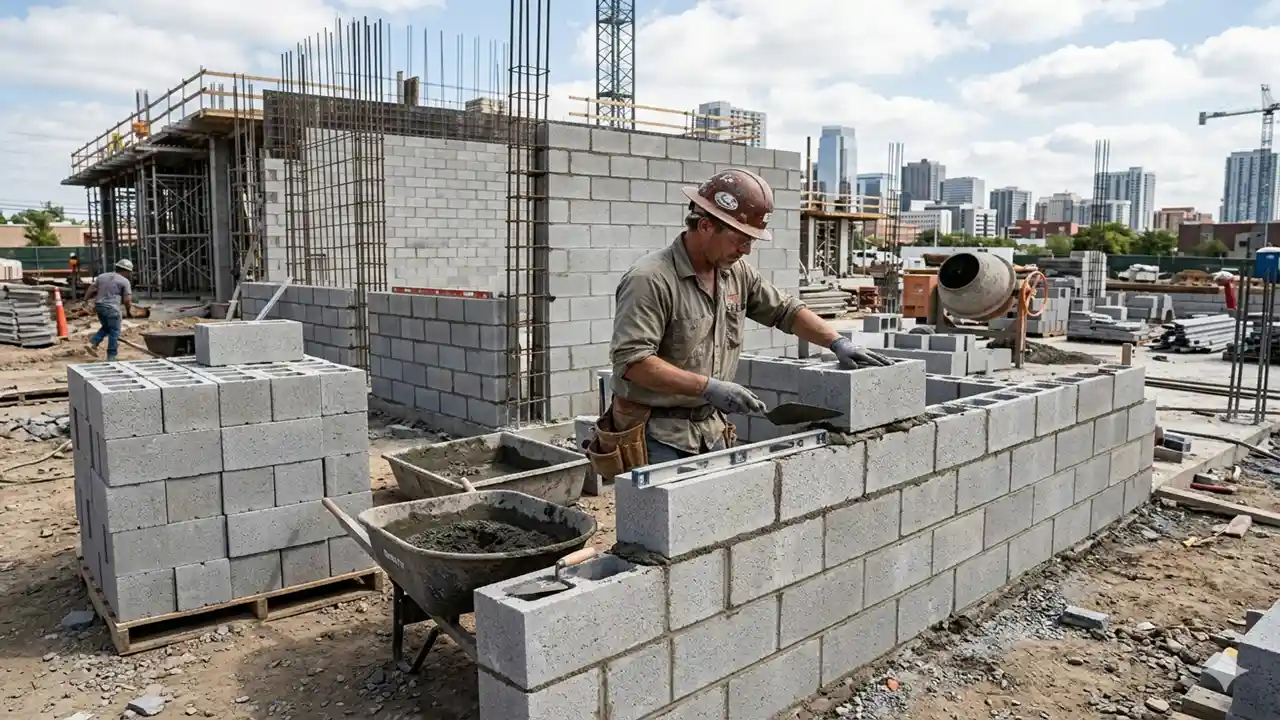
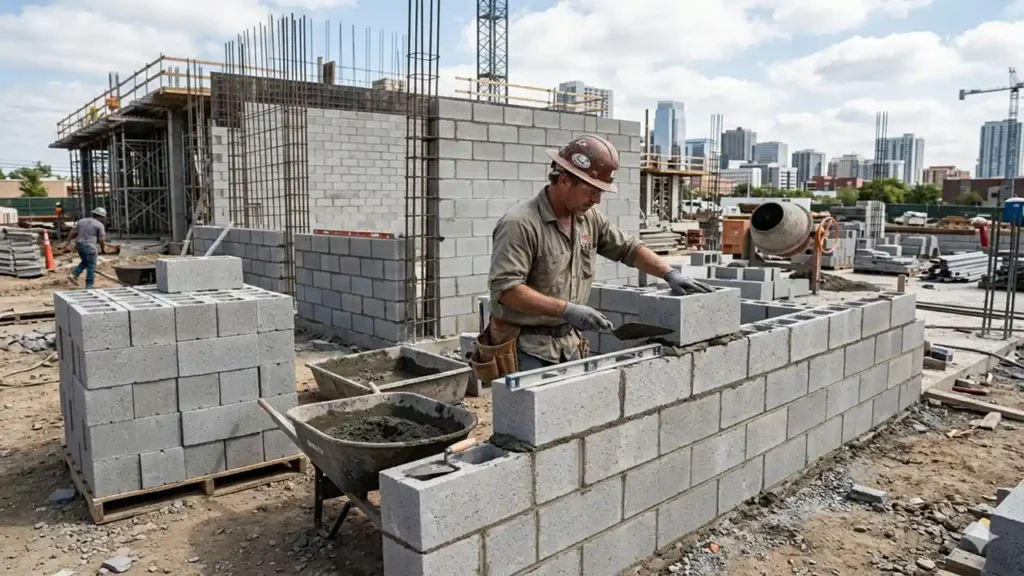
Installing concrete blocks is an art form that requires patience and the right tools. Whether you are building a retaining wall or a garage, the process follows a few non-negotiable steps:
- The Foundation: You cannot lay blocks on bare dirt. You need a level concrete footing that is wider than the block itself to distribute the weight.
- The Mortar Mix: Mortar is the “glue.” It needs to be the right consistency thick enough to hold the weight of the block but wet enough to be workable.
- Leveling and Plumb: Every single row (called a “course“) must be checked with a level. If you are off by even a fraction of an inch at the bottom, your wall will be noticeably crooked by the time you reach the top.
- The “Buttering” Process: This involves applying mortar to the ends of the block before pushing it against the previous one, ensuring a tight, water-resistant seal.
Altus Air Force Base Construction Contract
Common Questions About Concrete Blocks
How many concrete blocks do I need for my project? The standard block size is usually 8″ x 8″ x 16″ (including the mortar joint). To estimate, calculate the total square footage of your wall and multiply by 1.125. Always order 5-10% extra for cuts and breakage.
Are concrete blocks waterproof? While they are highly resistant to water, concrete is porous. For basement walls or exterior structures, it is essential to apply a waterproof sealant or membrane to prevent moisture from seeping through over time.
Can I paint concrete blocks? Absolutely! In fact, painting or staining concrete blocks is a great way to improve curb appeal. Just ensure you use a masonry primer first to help the paint adhere to the porous surface.
Sustainability and the Future of Masonry
In today’s world, “green” building is no longer optional. The industry is evolving, and concrete blocks are part of the solution. Many manufacturers now use recycled aggregates or industrial by-products like fly ash to reduce the carbon footprint of production. Additionally, because concrete is 100% recyclable, old blocks can be crushed and reused in new roadbeds or foundations, keeping waste out of landfills.
Construction Enquirer: Your Essential Guide to the UK Building Industry
Build to Last
Whether you are a professional contractor or a DIY enthusiast planning a backyard renovation, concrete blocks offer a level of reliability that is hard to beat. They provide a safe, quiet, and energy-efficient environment while standing up to the harshest elements nature can throw at them.
When you choose to build with concrete blocks, you aren’t just building for today you are building for the next generation.