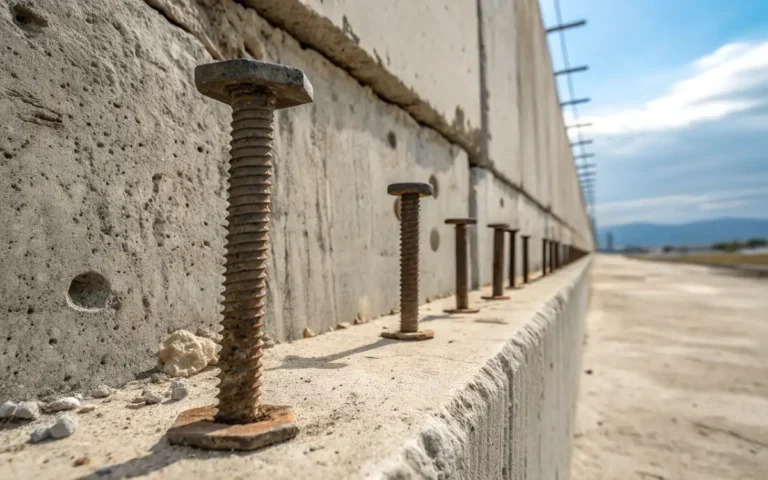
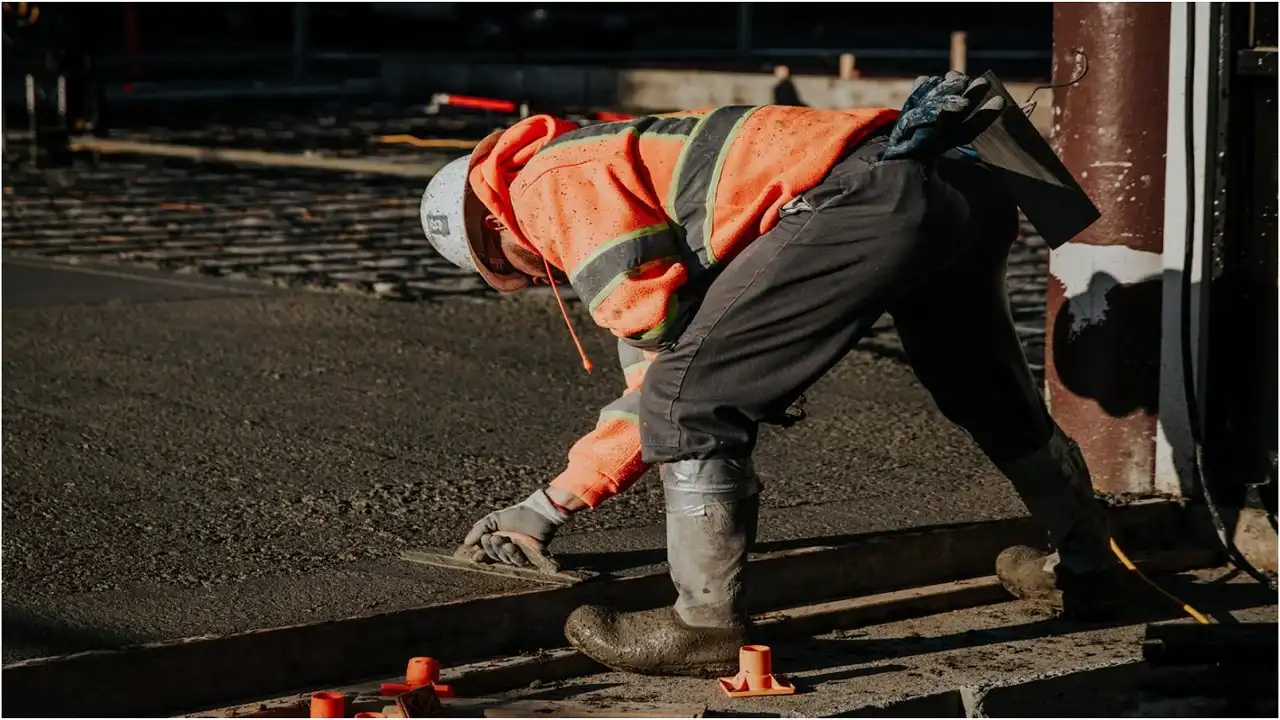
Concrete is an extraordinarily durable material, which is precisely why the failures that do occur tend to surprise people. Structures fail at their foundations far more often than in the middle, and the culprit is almost never load. It is water: water that was allowed to sit against a wall, water that saturated soil until it moved, water that got into a crack and froze. For anyone working in the Midwest, where a single season delivers heavy rain, saturated spring ground, and repeated freeze-thaw cycles, water management is not a landscaping afterthought. It is structural work.
The Damage Happens Slowly and Then All at Once
The pattern is remarkably consistent. Water that is not directed away from a structure saturates the soil immediately around the foundation. Saturated soil exerts hydrostatic pressure against foundation walls, which is far greater than most people appreciate. In freezing conditions that same moisture expands, and repeated cycles work at any crack that already exists. Nothing about this is dramatic in year one. By year ten there is a bowed wall, a settled slab, or persistent water in a basement that no interior sealant will fix, and by then the remedy is excavation rather than maintenance.
The soil movement itself compounds the problem. Ground that swells when saturated and shrinks as it dries puts a structure through a slow cycle of loading and unloading that no foundation was designed to absorb indefinitely, and the cracks that result become the pathway for the next round of water. Interrupting that cycle by controlling moisture is far more effective than attempting to resist its consequences.
Grading Is Doing More Work Than Anything Else
Before gutters, drains, or membranes, the ground itself is the first line of defense, and it is the thing most often gotten wrong or quietly undone. Soil should slope away from a structure for a meaningful distance, and settled backfill around a foundation frequently reverses that slope within a few years of construction without anyone noticing. Landscaping compounds it: beds built up against a wall, edging that traps water, and mulch piled above grade all work against drainage. Bringing in an exterior contractor to assess grading and drainage as a system, rather than treating gutters as an isolated item, tends to catch the problems that develop after the builder has left.
Roof Water Has to Go Somewhere Specific
A roof collects a genuinely large volume of water during a storm, and everything about a drainage system exists to move that volume away from the building. Undersized or poorly maintained gutters overflow at exactly the moments when the volume is highest. Downspouts that discharge at the foundation deliver concentrated water precisely where it does the most harm, which is why extensions and underground discharge lines matter so much. Ice damming during Midwest winters adds a further complication, backing water up under roofing and finding its way inside.
None of these are exotic problems, and all of them are cheaper to prevent than to repair. Maintenance is the part that quietly determines whether any of it works. Gutters clogged with leaves overflow exactly as though they were never installed, discharge extensions get moved during landscaping and not replaced, and underground lines can silt up or crack without any visible sign until water starts appearing where it should not. An inspection each spring and fall takes very little time and catches almost everything before it becomes structural.
Design for the Storms You Now Get
Drainage systems sized to historical rainfall have been struggling in many regions as intense storm events have become more frequent. Federal building science resources published by FEMA address flood and water damage mitigation for buildings, including how site drainage and foundation protection reduce risk, and they are a useful reference when specifying rather than defaulting to what was standard a decade ago. For anyone building or renovating, sizing drainage for the heavy events rather than for the average is a modest incremental cost against a category of damage that is expensive and disruptive to correct. Soil type belongs in that calculation as well.
Heavy clay soils common across much of the region drain slowly and hold water against foundations far longer than sandier ground, which means a drainage approach that performs adequately on one site can be inadequate a few miles away. Knowing what you are building on is the difference between a system sized for the conditions and one sized for a generic assumption.
Coordinate It Before the Concrete Cures
The practical lesson for anyone involved in construction is that drainage belongs in the plan alongside the structure, not in a separate conversation after the fact. Foundation drainage, waterproofing, final grade, and roof discharge all interact, and when each is handled by a different party without coordination the gaps between them are where water gets in. Getting those elements specified together, and inspected before backfill hides them, is the difference between a foundation that performs for decades and one that produces a call in year eight about a wall that has started to move.
Retrofitting Costs Several Times More
For buildings already in service, the arithmetic is harsher. Correcting drainage after the fact means excavating around a foundation that is now surrounded by finished landscaping, driveways, utilities, and mature trees, and the interior symptoms usually need addressing as well. That is why the failures worth chasing hardest are the ones that have not happened yet. An honest assessment of grading and roof discharge on an existing structure costs very little and identifies the problems while they can still be solved with a shovel rather than an excavator.