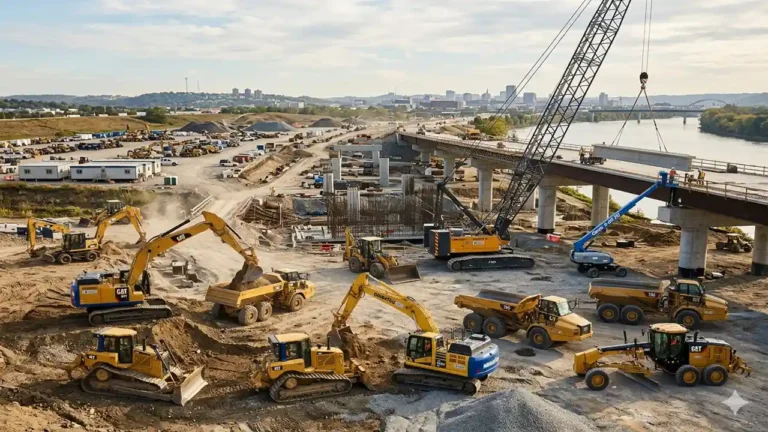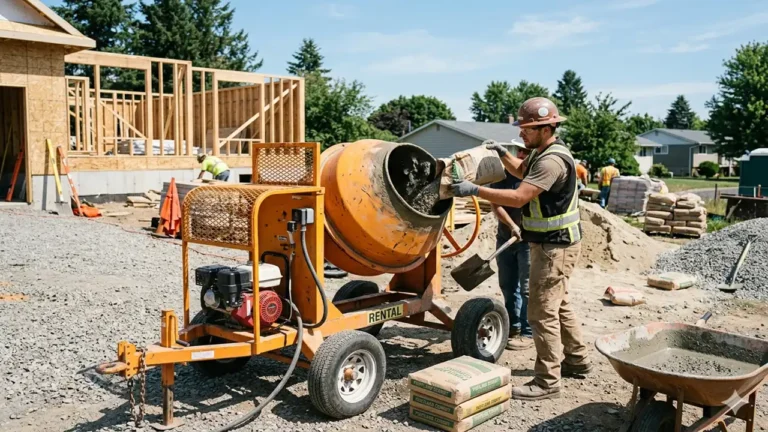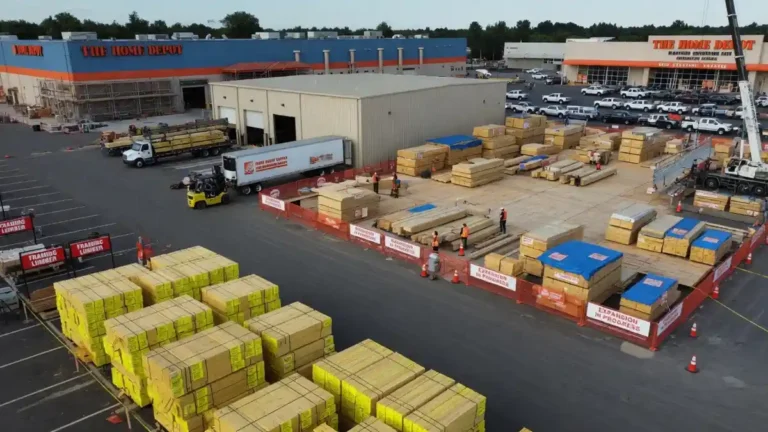
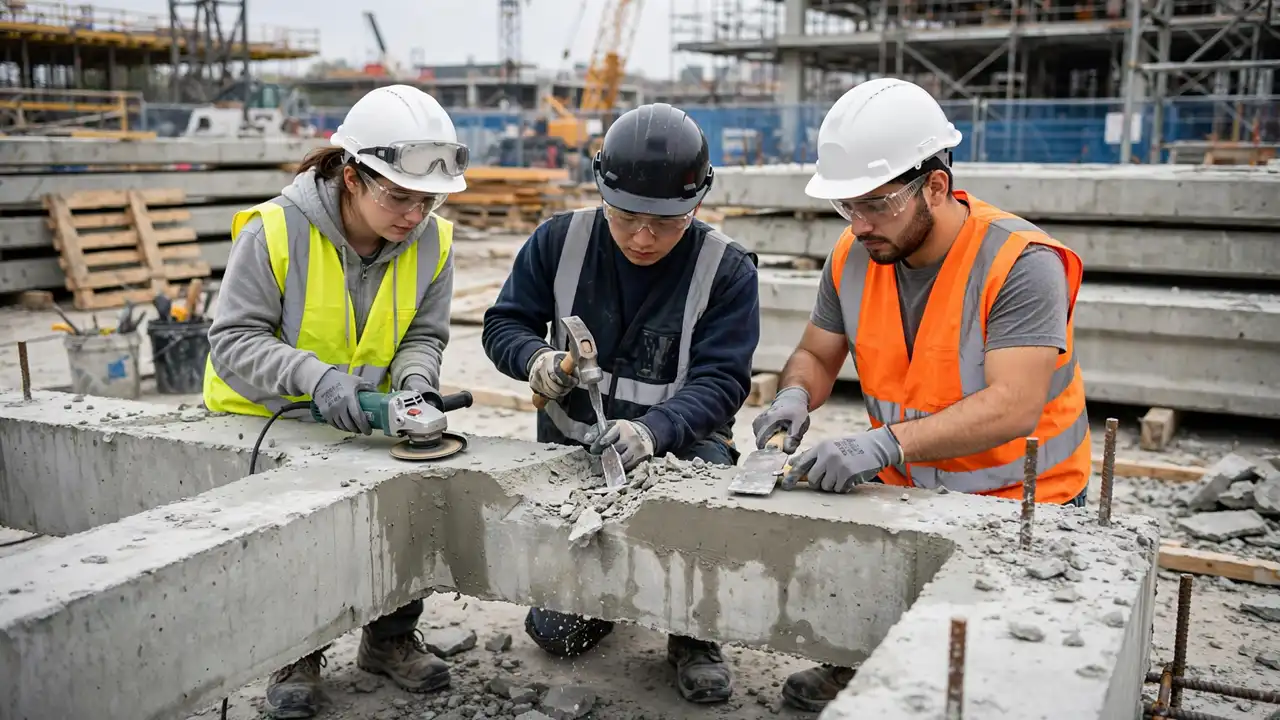
Construction interns are no longer just coffee runners or paperwork handlers on modern job sites.
They are becoming pivotal contributors to how precast concrete and structural framing projects are planned, executed, and delivered across the Midwest.
The industry is facing a skilled labor transition unlike anything seen in the past two decades, and construction interns are arriving at exactly the right moment to fill critical gaps in precast operations.
Construction Company Business Plan
Key Takeaways:
- Construction interns trained in precast concrete methods reduce on-site error rates by reinforcing quality control checkpoints during panel placement and structural framing sequences.
- Structured internship programs tied to precast projects cut crew training time by an estimated 30–40% when interns transition into full-time roles.
- Midwest contractors who integrate interns into active precast workflows report faster project documentation, better BIM coordination, and stronger compliance tracking.
What Is Actually Changing on Precast Job Sites Right Now?
If you’ve been following precast concrete and structural framing trends across the Midwest, this won’t come as a surprise.
The labor pipeline is thinning at the top while demand for complex precast panel systems, load-bearing wall assemblies, and structural double-tee installations is surging.
Our analysis suggests that contractors who are proactively recruiting and structuring internship programs around precast operations are outpacing competitors on both delivery timelines and crew retention.
According to the National Center for Construction Education and Research (NCCER), structured workforce development programs that begin at the intern level produce tradespeople who are significantly more competent in technical specification reading, material handling protocols, and site safety compliance.
Construction industry insiders are noting a measurable shift: construction interns embedded in precast operations from week one are contributing to real deliverables, not just shadowing.
This is not an accident it is the result of intentional program design.
New Construction Homes Nashville
How Should a Precast Contractor Structure an Internship Program?
Our team has observed that the most effective precast internship models follow a phased, skills-progressive format.
Here is a step-by-step structure we recommend for Midwest contractors integrating construction interns into active precast framing projects:
Step 1 – Site Orientation and Safety Certification (Week 1–2)
- Complete OSHA 10 or OSHA 30 certification before any yard or field access.
- Review precast plant layout, panel casting beds, curing protocols, and crane lift zones.
- Assign a licensed journeyman or project engineer as a direct mentor.
Step 2 – Plant-Level Exposure and QC Integration (Week 3–4)
- Shadow quality control inspectors during form stripping and embed placement verification.
- Learn to read shop drawings and cross-reference with structural framing specifications.
- Document panel dimensions, reinforcement placement, and concrete compressive strength readings (f’c 5,000 psi minimum for most structural applications).
Step 3 – Field Placement Participation (Week 5–8)
- Assist in coordinating delivery sequencing using erection drawings.
- Observe and document crane picks, connection hardware torque specifications, and bearing pad placement.
- Contribute to daily field reports and RFI (Request for Information) logs.
Step 4 – Project Closeout and Documentation (Week 9–12)
- Support as-built drawing compilation and final inspection checklists.
- Assist with warranty documentation and owner turnover packages.
- Participate in a structured debrief session with the project manager.
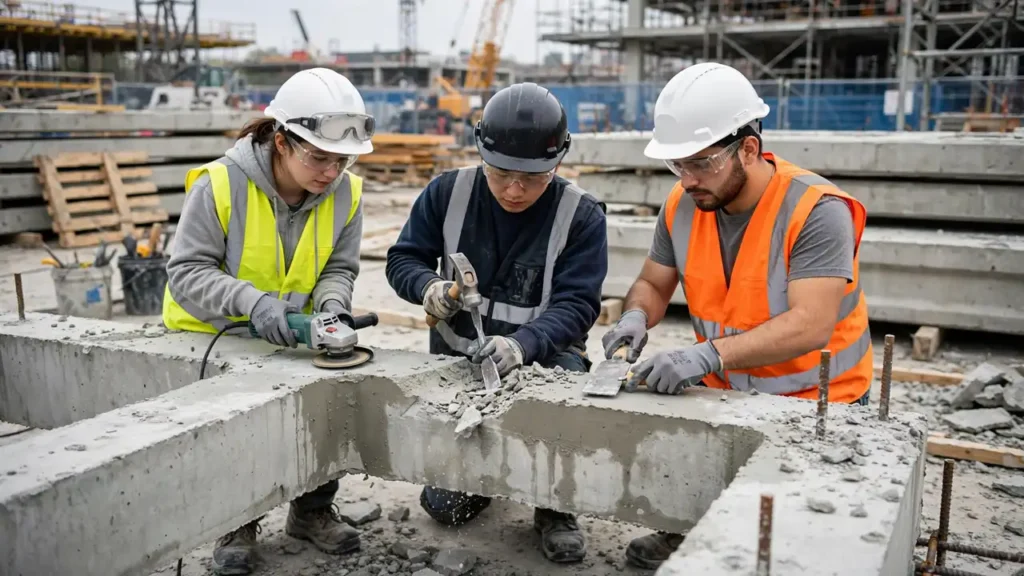
What Does This Mean for Midwest Contractors Competing for Large Bids?
The Bureau of Labor Statistics projects continued growth in construction and extraction occupations through 2032, with specialty concrete work among the fastest-expanding subcategories.
Contractors who build their talent bench now through structured construction interns programs will have a staffing advantage when bid volumes increase.
Our contractors note that interns assigned to precast projects often develop a specialized skill set that generalist construction labor programs rarely replicate.
Exposure to prestressed concrete strand tensioning, bearing connection design, and erection sequence planning creates a fundamentally different kind of junior professional.
| Internship Model | Time to Field Readiness | Cost to Train | Retention Rate (Year 1) |
|---|---|---|---|
| Unstructured/Ad Hoc | 8–12 months | High | ~45% |
| Structured Precast Program | 3–4 months | Moderate | ~78% |
| University-Partnered Co-op | 4–6 months | Low–Moderate | ~82% |
According to the Precast/Prestressed Concrete Institute (PCI), workforce alignment between academic programs and precast producers is one of the most underdeveloped opportunities in the structural concrete sector.
This is a gap that forward-thinking contractors can exploit immediately.
How to Maintain a Construction Site Diary?
Construction Interns Reshaping Precast Concrete Framing
— US News (@Us_news_ways) July 20, 2026
Construction interns are no longer just coffee runners or paperwork handlers on modern job sites.@engineers_feed @4ConstructnPros @ConstWorldSA https://t.co/ybO7ay2WSR
Are Construction Interns Actually Qualified for Structural Framing Work?
The honest answer is: not immediately, but faster than most contractors assume.
The American Concrete Institute (ACI) offers student-level resources and certification pathways that align directly with precast concrete knowledge requirements.
Construction interns entering programs with ACI coursework exposure arrive with foundational vocabulary around mix design, curing standards, and structural load principles.
Our analysis suggests pairing these interns with experienced precast erectors during their first field rotation dramatically compresses the learning curve.
The Associated General Contractors of America (AGC) has also published workforce development frameworks showing that mentored interns outperform traditionally hired entry-level workers on technical task accuracy within 60 days.
Roughing House Frames Faster With Precast Structural Systems
The Bottom Line for Midwest Precast Operations
Construction interns represent one of the most cost-effective and strategically sound investments a precast contractor can make in 2025 and beyond.
Structured programs tied to real precast concrete and structural framing deliverables produce field-ready professionals faster, reduce long-term hiring costs, and build the regional workforce that Midwest infrastructure demands.
Start building your program before your competitors do because in precast concrete, timing is everything.