What Are Concrete Stamps and Why Use Them?
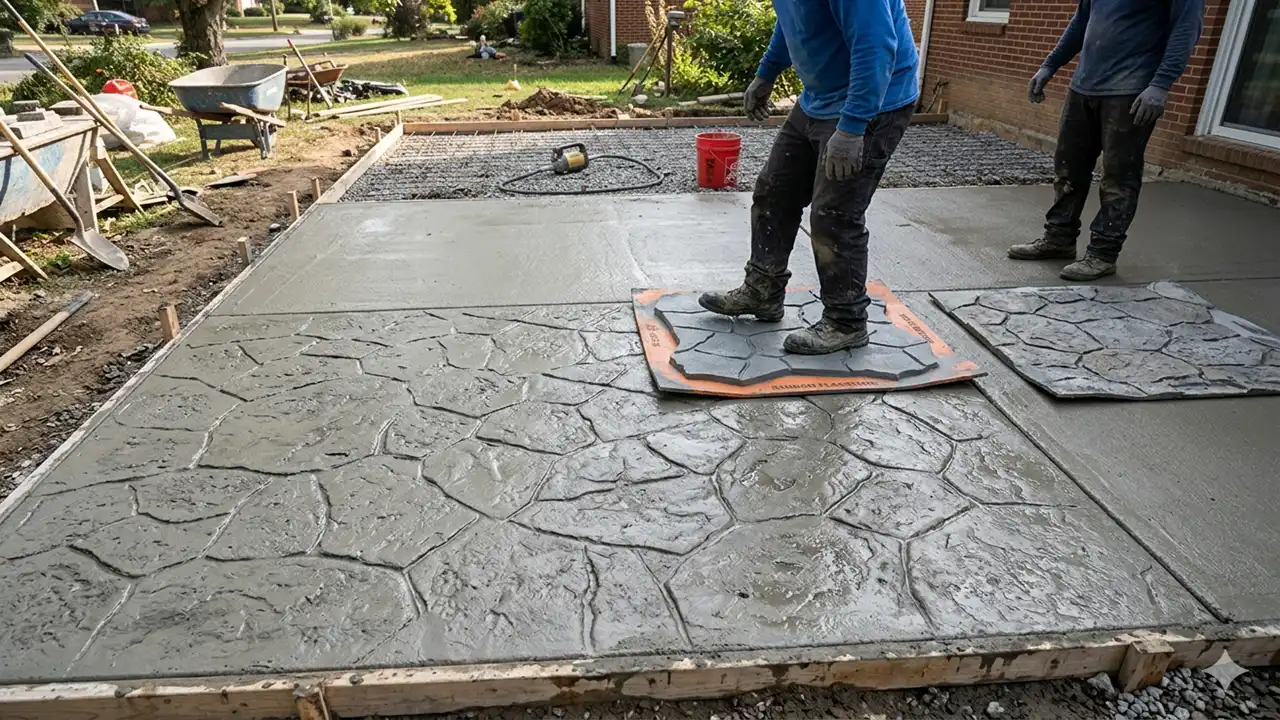
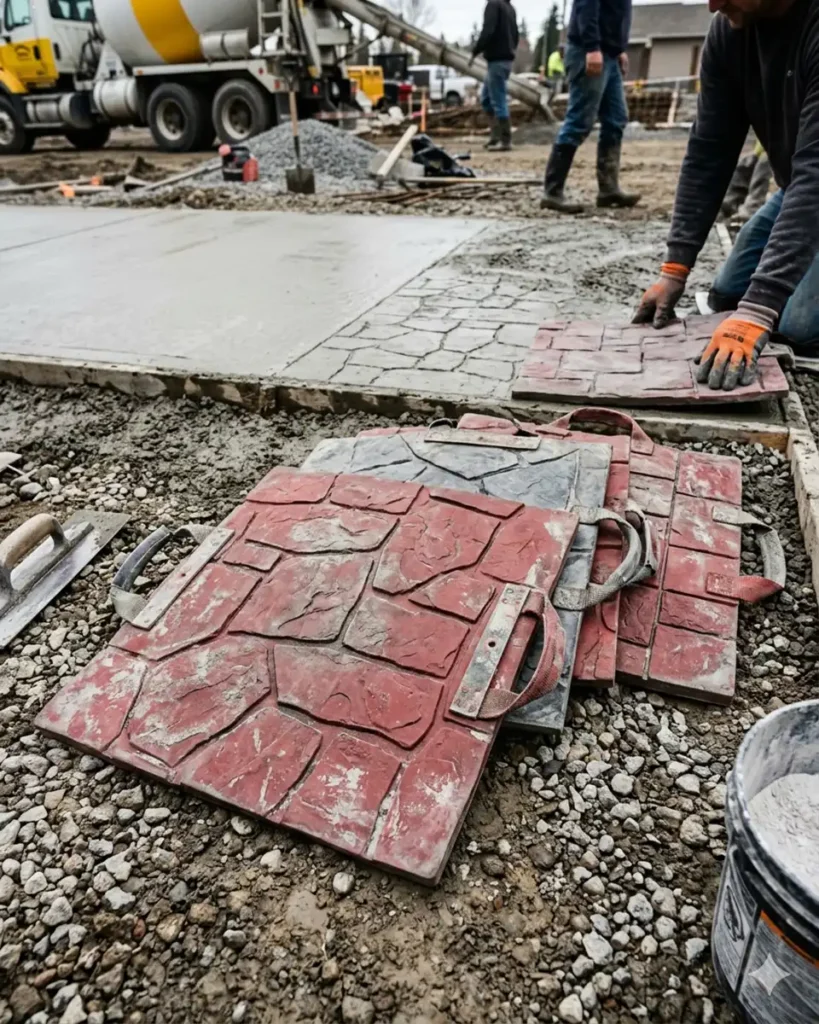
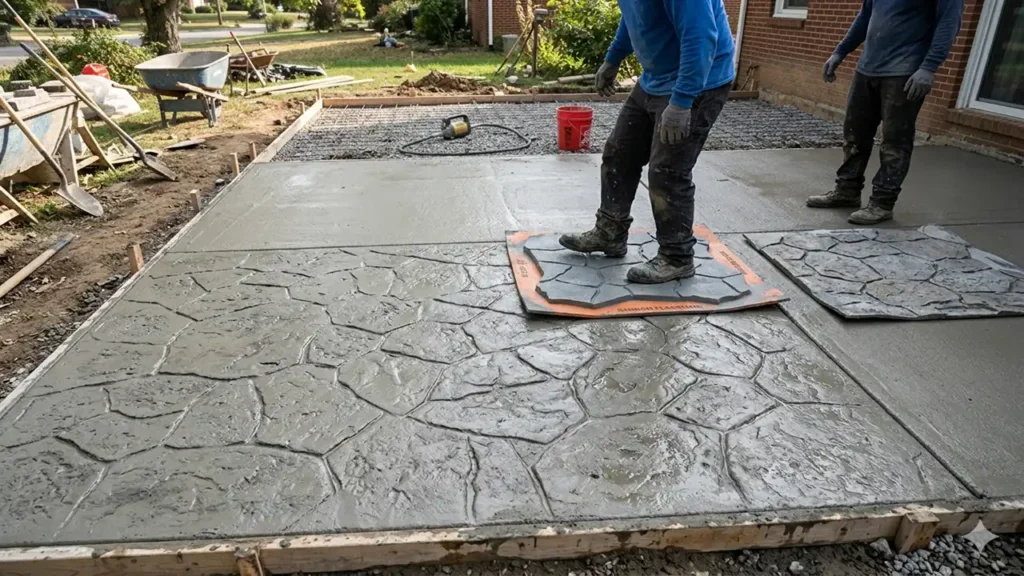
At its core, the process involves pressing decorative concrete stamps into fresh, wet concrete to create textures that mimic natural materials. This technique has evolved significantly over the last few decades. Today’s stamps are made from high-quality polyurethane, molded from actual pieces of stone or wood to ensure every “impercussion” looks authentic.
Benefits of Choosing Stamped Surfaces
- Cost-Efficiency: You get the look of slate or marble at a fraction of the material and labor costs.
- Low Maintenance: Unlike pavers, there are no joints where weeds can grow or sand can wash away.
- Durability: Stamped concrete is a continuous surface, making it less prone to shifting or uneven settling compared to individual bricks.
Popular Patterns and Textures for Every Style
When it comes to concrete stamps, the design possibilities are virtually limitless. Your choice should complement the architectural style of your home.
1. Ashlar Slate
This is perhaps the most popular choice for patios. It features a random interlocking pattern of squares and rectangles, providing a sophisticated, timeless look.
2. Wood Plank
Believe it or not, you can achieve a rustic “boardwalk” or “hardwood” look outdoors. Wood-grain concrete stamps capture the knots and ridges of timber without the risk of rot or splinters.
3. Cobblestone and Brick
Perfect for driveways or traditional garden paths, these patterns offer an Old World charm. They provide excellent grip and a classic aesthetic that boosts curb appeal.
Spalling Concrete: Causes, Prevention, and Expert Repair Solutions
The Installation Process: How It’s Done
Creating a masterpiece with concrete stamps is a race against time. Because concrete begins to harden the moment it is poured, professional installers follow a strict rhythm.
- Preparation and Pouring: The site is excavated and a sub-base is compacted. The concrete is then poured and leveled (screeded).
- Color Application: Color can be “integral” (mixed into the concrete) or applied as a “color hardener” on the surface.
- Release Agent: A powder or liquid release agent is applied to prevent the concrete stamps from sticking to the wet surface.
- Stamping: The mats are laid out in a specific sequence and pressed into the surface using a tamper.
- Curing and Sealing: After the concrete dries, it is washed and coated with a high-quality sealer to protect the color and add a slight sheen.
DIY vs. Professional: Which Is Right for You?
While you can rent concrete stamps at many local hardware stores, this is one of the more challenging DIY projects.
Expert Tip: If you are a beginner, start with a small project like a garden landing or a single walkway. For large areas like driveways, hiring a professional is usually safer. Stamping requires a crew of at least three people to manage the concrete before it sets too hard to take an impression.
Maintenance: Keeping Your Stamped Concrete Like New
One of the biggest selling points of using concrete stamps is how easy they are to maintain. Unlike wood decks that need staining or pavers that need re-sanding, stamped concrete just needs a bit of basic care.
- Sweep and Wash: Keep the surface free of debris and dirt. A garden hose and a mild detergent are usually enough.
- Reseal Every 2–3 Years: The sealer is what keeps the colors vibrant and prevents water penetration. If the surface starts to look dull, a fresh coat of sealer will bring it back to life.
- Avoid Harsh Chemicals: Avoid using de-icing salts in the winter, as these can eat away at the sealer and damage the texture.
Frequently Asked Questions
Does stamped concrete crack?
Like all concrete, it can crack due to thermal expansion or ground movement. However, professionals use “control joints” hidden within the pattern lines of the concrete stamps to ensure that if a crack occurs, it happens where you can’t see it.
Is it slippery when wet?
It can be, especially with a high-gloss sealer. To prevent this, most contractors mix a “non-slip” additive (like a fine clear grit) into the final sealer coat to provide extra traction.
How much do concrete stamps cost?
Prices vary by region, but generally, stamped concrete costs between $12 and $22 per square foot. This is significantly cheaper than laying individual natural stones, which can exceed $30 per square foot.
Why Builders Prefer Precast Concrete Rail Fences Over Traditional Wood
Elevate Your Home Today
Investing in concrete stamps is one of the most effective ways to add value and beauty to your property. By mimicking the most expensive building materials on earth with a durable, easy-to-clean surface, you get the best of both worlds: luxury and longevity.