What Exactly Is a Concrete Drill Bit?
To the untrained eye, many drill bits look similar. However, a concrete drill bit is engineered specifically to withstand the high friction and heat generated by stone, brick, and mortar.
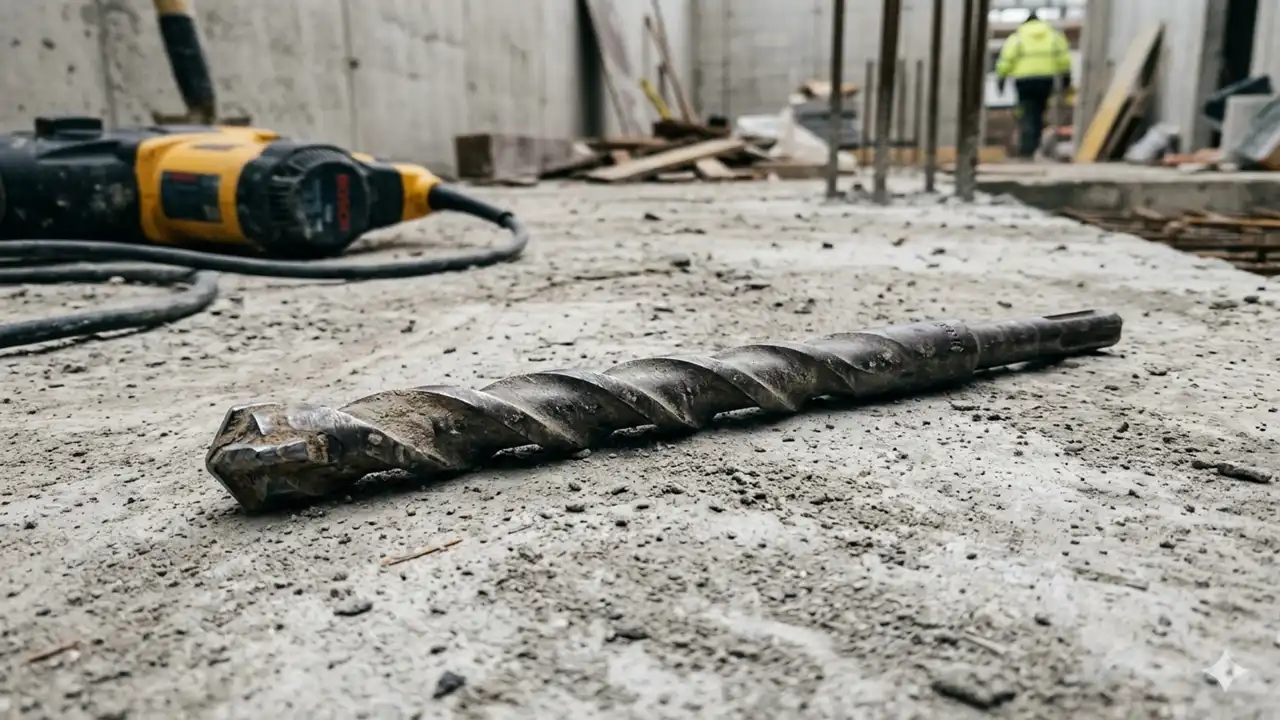
Most of these bits are “masonry bits” characterized by a wide, wing-like tip made of tungsten carbide. This hardened material acts like a chisel rather than a blade. While a wood bit slices through fibers, a masonry bit pulverizes the material through a combination of rotation and hammering action.
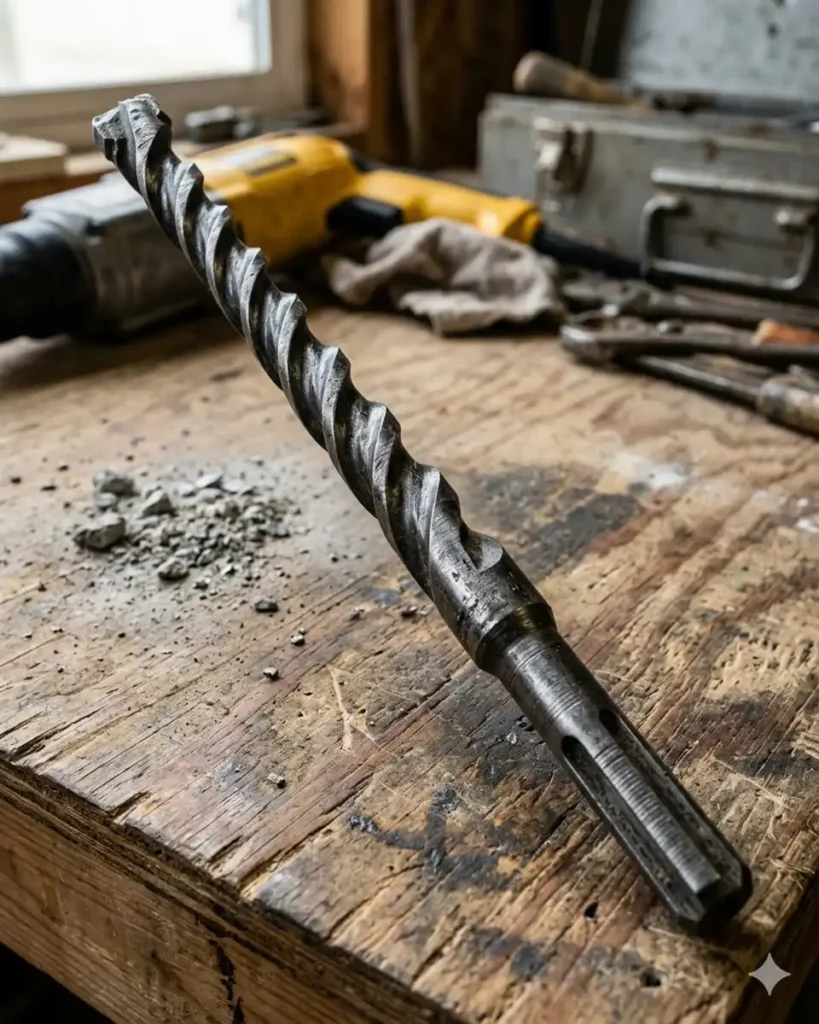
Anatomy of a Masonry Bit
- The Shank: The part that fits into your drill.
- The Flute: The spiral groove that pulls dust out of the hole.
- The Carbide Tip: The powerhouse that breaks the concrete.
Different Types of Masonry Bits for Every Project
Choosing the right concrete drill bit depends largely on the tool you are using and the hardness of the material you’re facing.
1. Standard Masonry Bits
These are designed for use with a traditional “hammer drill.” They typically have a smooth, round shank. They are perfect for light-duty tasks like drilling into brick or soft mortar.
2. SDS and SDS-Plus Bits
If you are using a rotary hammer (a heavy-duty tool), you will need SDS (Slotted Drive System) bits. These have grooves on the shank that allow the bit to slide back and forth, maximizing the “impact” force. This is the go-to concrete drill bit for thick foundation walls or high-PSI concrete.
3. Multi-Purpose Bits
Some modern bits are marketed as “all-in-one.” While convenient for switching between wood and light masonry, they often lack the longevity of a dedicated carbide-tipped bit when used on heavy stone.
What is CIIIB in Construction? Complete Guide
How to Match Your Bit to the Material
Not all “concrete” is created equal. The density of the material determines which concrete drill bit variation you should reach for.
- Brick and Mortar: Generally softer and more porous. A standard carbide bit works wonders here.
- Poured Concrete: This is much denser. You’ll want a bit with a reinforced head to prevent the tip from snapping or melting.
- Stone and Granite: These require specialized diamond-core bits or high-end carbide bits, as standard masonry bits may dull within seconds.
Expert Tips for Drilling into Concrete
Having the right concrete drill bit is only half the battle. Your technique is what prevents “blowouts” (where the back of the hole shatters) or burnt-out bits.
Manage the Heat
Heat is the enemy of carbide. When drilling deep holes, pull the bit out every 10 to 15 seconds to let it cool and to clear the dust. If the dust stays in the hole, it creates friction, which can ruin your concrete drill bit instantly.
Let the Tool Do the Work
A common mistake is leaning your entire body weight into the drill. If you are using a hammer drill, the internal mechanism provides the force. Applying too much pressure can actually slow down the rotation and cause the bit to overheat.
Mark Your Depth
Concrete is unforgiving. Use a piece of masking tape on the bit to mark your desired depth so you don’t accidentally drill through to the other side of a wall.
Common Mistakes to Avoid
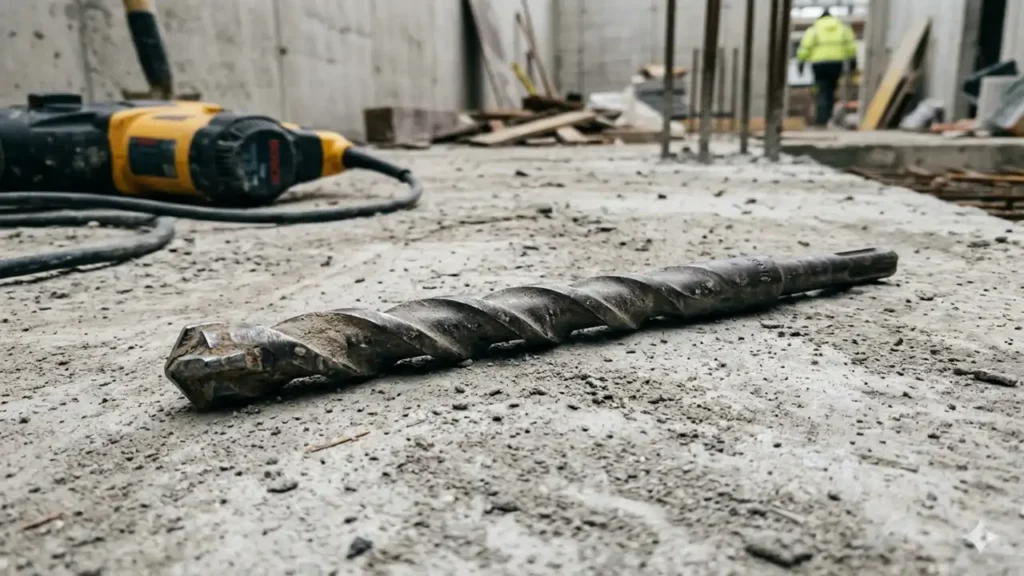
Even professionals can run into trouble if they get complacent. To ensure your concrete drill bit lasts for years, avoid these pitfalls:
- Using “Rotation-Only” Mode: Unless you are drilling into very soft brick, always use the hammer setting on your drill.
- Starting Too Fast: Start at a slow speed to create a “pilot” indentation so the bit doesn’t wander across the surface.
- Ignoring Rebar: If your bit stops moving and starts sparking, you’ve likely hit rebar (steel reinforcement). You will need a specialized rebar cutter bit to proceed.
Frequently Asked Questions
Can I use a regular drill bit for concrete?
No. A standard HSS (High-Speed Steel) bit will dull almost instantly against concrete. You must use a concrete drill bit with a carbide tip to successfully penetrate masonry without ruining your tools.
Why Wall Putty is Essential for Precast Concrete Surfaces
Why is my drill bit getting red hot?
This usually happens because of excessive speed or failing to clear the dust. Slow down your RPMs and frequently pull the bit out of the hole to allow the flutes to eject the “flour” (concrete dust).
How long does a concrete drill bit last?
It depends on the material. A high-quality bit might last for 20-30 holes in soft brick, but only 5-10 holes in high-strength, reinforced concrete. If the tip looks rounded or blueish, it’s time for a replacement.
Setting Yourself Up for Success
Selecting the proper concrete drill bit is the difference between a five-minute task and a frustrated afternoon of ruined walls and broken tools. By matching the bit to your drill type and the material density, you ensure safety and precision.
Ready to start your project? Check your local hardware store for a high-quality carbide-tipped set, and remember: let the hammer action do the heavy lifting!