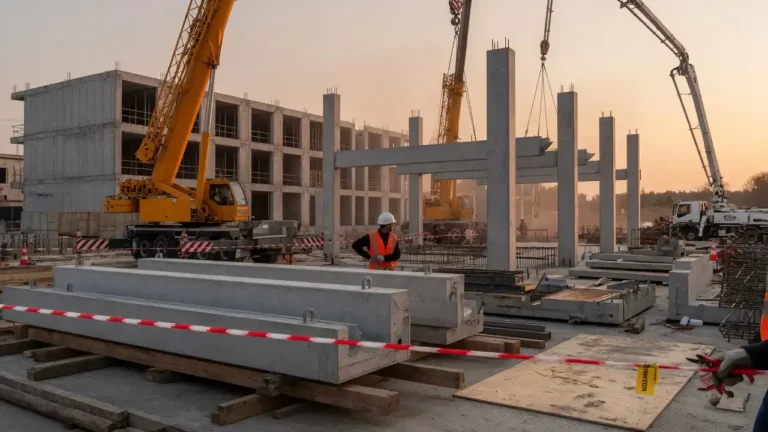

Most downtown towers are slowed by the jobsite, not the design. Tight lots, brutal winters, and no room for staging can push schedules back by weeks.
191 North Wacker Drive Chicago Illinois 60606 shows a better path. This 37-story Class A office tower near the Chicago River shows how planning, prefabrication, and disciplined sequencing can turn a cramped urban site into a finished landmark.
At Midwest Precast Contractor, we study projects like this for a reason. We bring the same principles to commercial builds across Des Moines, Milwaukee, Ankeny, and West Des Moines.
Key Takeaways
- Off-site fabrication reduces weather risk and crane congestion on tight urban sites.
- Early sequencing between structure and envelope trades protects the schedule.
- Precast components deliver consistent quality that field-cast work often can’t match.
Nicholson Hall University of Minnesota Construction Date
Why Conventional High-Rise Methods Struggle
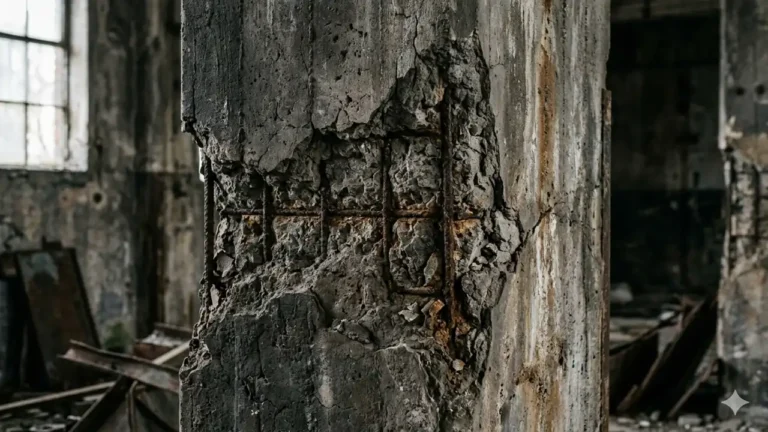
Traditional construction relies on cast-in-place everything. Forms go up, concrete gets poured, and every floor waits on curing. On a busy downtown street, that means crowded deliveries, idle crews, and constant weather exposure.
Our crews have seen this firsthand. On mid-rise jobs in downtown Des Moines, a single January cold snap delayed planned pours by several days while heaters and blankets were brought in.
The industry knows this risk well. Guidance from the American Concrete Institute (ACI) on cold-weather concreting makes the point: when air temperatures drop below about 40°F, fresh concrete needs added protection, because it gains strength slowly and can be damaged if it freezes early.
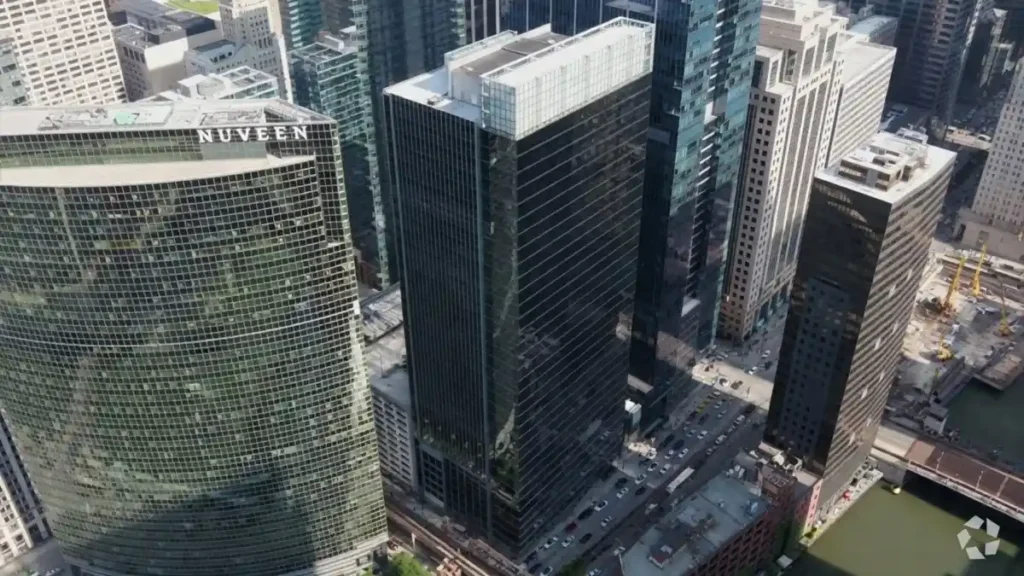
How 191 North Wacker Drive Chicago Illinois 60606 Was Built Smarter
The core idea is simple: control what you can off-site, and choreograph everything else.
Structure and Sequencing on a Tight Site
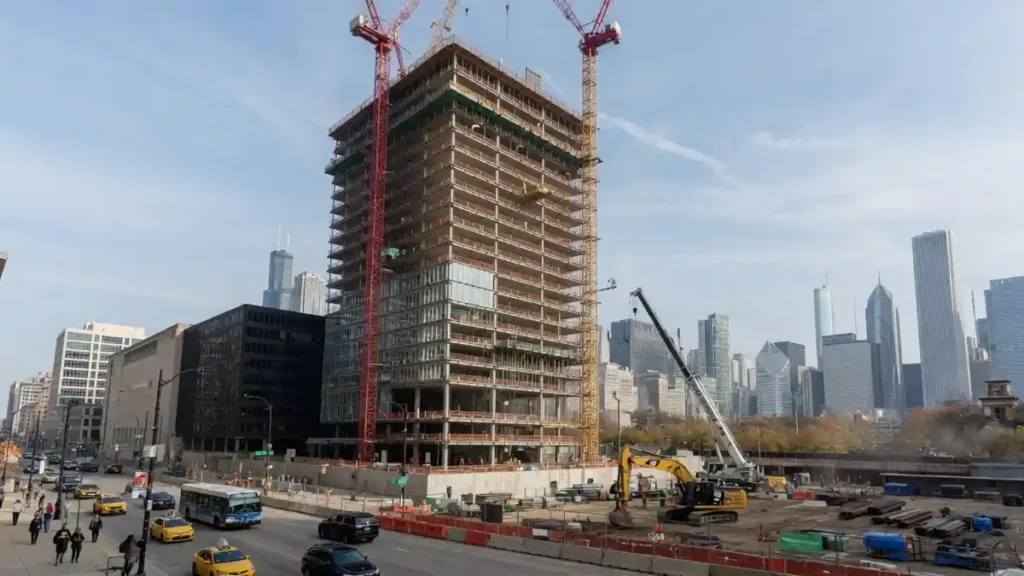
Wacker Drive leaves little room for laydown space. Success depended on just-in-time deliveries, tight crane scheduling, and having trades work floor by floor in a set order. According to Clark Construction’s project overview, the tower was delivered as a premier downtown office building that required close coordination on a dense, high-traffic Chicago site.
Envelope and Precision Detailing
A high-rise skin has to handle wind, temperature swings, and moisture off the river. Factory-made envelope systems allow tighter tolerances, faster installation, and fewer leaks than assembling everything in the field.
Traditional vs. Modern Methods
| Factor | Traditional Cast-in-Place | Modern Precast/Prefab |
|---|---|---|
| Weather risk | High | Low |
| Site congestion | Heavy staging | Just-in-time delivery |
| Quality control | Varies by crew | Factory-controlled |
| Schedule | Sequential | Parallel |
| Waste | Higher | Up to 50% lower |
Common Building Methods
| Type | Mechanism | Best Use Case |
|---|---|---|
| Precast panels | Cast off-site, then craned into place | Facades, parking structures |
| Structural framing | Steel or concrete skeleton | Mid- and high-rise towers |
| Formwork systems | Reusable molds for on-site pours | Cores, foundations |
191 North Wacker Drive Chicago Illinois 60606 Construction
— US News (@Us_news_ways) October 1, 2026
191 North Wacker Drive Chicago Illinois 60606 shows a better path. This 37-story Class A office tower near…@CNplus @chiarchitecture @ChicagoConstru1 https://t.co/1zIR59VHv0
2026 Cost Overview
Core-and-shell commercial construction in major Midwest markets typically runs $350–$600 per square foot in 2026. Precast facade panels often add $45–$85 per square foot of panel area. These are estimates, so treat them as a starting point.
Typical breakdown:
- Foundation/structure: 45–55%
- Finishing/envelope: 30–40%
- Design/permits: 10–15%
Step-by-Step Process
- Site assessment: Map access, crane reach, and delivery windows.
- Design coordination: Lock in precast details early with architects and engineers.
- Fabrication: Produce components in a controlled plant setting.
- Foundation and formwork: Pour cores and footings while panels cure off-site.
- Erection: Set structure and panels using a tightly scheduled crane plan.
- Inspection and closeout: Verify connections, sealants, and tolerances.
Construction Blueprint Showing Foundation and Framed Wall
Pros and Cons
Pros:
- Faster schedules because work happens in parallel
- Consistent quality from factory conditions
- Less weather downtime during Midwest winters
- Safer, cleaner sites
Cons:
- Higher up-front design effort
- Transport limits on panel size
- Less flexibility for late design changes
Case Study: 191 North Wacker Drive
Completed in 2002, 191 North Wacker rises 37 stories and contains roughly 700,000+ square feet of office space. It was built on a constrained riverfront lot with almost no staging room.
The team relied on careful sequencing and coordinated deliveries to keep a major Wacker Drive corridor running during construction. More than two decades later, the tower still stands as a top-tier Loop office address.
How Midwest Precast Contractor Applies This
We scale these big-city lessons to Midwest commercial projects through our core services:
- Precast Concrete: Plant-cast panels, beams, and walls that cut weather delays.
- Structural Framing: Strong, efficient frames for mid-rise offices, warehouses, and retail.
- Formwork Systems: Reusable, precise forms for cores and foundations.
Bidexpress com Summit Metro Parks Open Shelter Area Construction Sealed Bids
Common Mistakes to Avoid
- Finalizing precast details too late, which triggers costly redesigns
- Ignoring crane logistics on tight urban lots
- Skipping cold-weather plans for on-site pours
- Underestimating connection tolerances between panels and the frame
FAQ
What is 191 North Wacker Drive in Chicago?
It’s a 37-story Class A office tower in Chicago’s Loop. It was completed in 2002.
Who built 191 N. Wacker Drive, Chicago, IL 60606?
Clark Construction served as the builder. The project is featured in its portfolio.
What can Midwest builders learn from 191 North Wacker?
Tight-site sequencing and off-site fabrication save time. Both ideas work well on smaller regional projects.
Is precast cost-effective for Iowa and Wisconsin projects?
Often, yes, especially for winter schedules. Savings come from shorter timelines and less rework.
Does Midwest Precast Contractor work in Chicago?
We focus on Des Moines, Milwaukee, Ankeny, and West Des Moines. Contact us about projects outside those areas.
Town of Guadalupe AZ Megaproject Annexation Construction 2025 2026
Build Smarter With Midwest Precast Contractor
191 North Wacker Drive Chicago Illinois 60606 proves that planning and prefabrication beat congestion and weather. With the right approach, your next commercial project can move faster, stay safer, and last longer.
Midwest Precast Contractor delivers Precast Concrete, Structural Framing, and Formwork Systems across the Midwest.