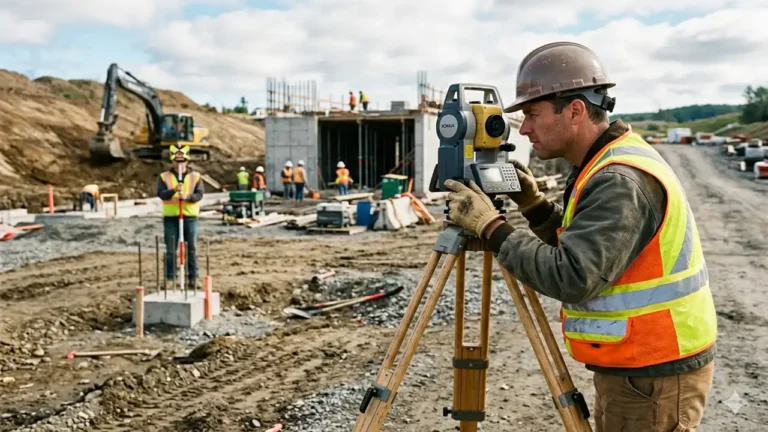

Big institutional projects fail on the schedule long before they fail on the budget. The Westville Correctional Facility Westville IN 46391 is a clear case study: a $1.2 billion, 1.4-million-square-foot replacement prison built to house 4,200 inmates, with a completion target of early 2027. Projects that size punish slow methods.
At Midwest Precast Contractor, we build across Des Moines, Milwaukee, Ankeny, and West Des Moines using the same principles that make large correctional and institutional builds work. The lesson is simple: manufacturing structure off-site beats pouring it on-site.
Here’s what the Westville project teaches contractors and owners planning the next big build.
- Precast concrete compresses timelines by moving structural work into a controlled plant.
- Large correctional facilities demand security-grade walls and predictable delivery — precast delivers both.
- Weather delays and labor shortages hit cast-in-place projects hardest, and the Midwest sees plenty of both.
Coxschepp com leadership Team Names And Titles Drive Precast Tech
Why Conventional Large-Facility Construction Falls Behind
Conventional large-facility construction falls behind because it depends on the weather and the crew size at the same time. Cast-in-place concrete needs forms built on-site, rebar tied by hand, pours scheduled around temperature, and curing time before the next stage begins. Every step waits on the one before it.
Our crews observed this firsthand on Midwest institutional jobs: a single cold snap in Milwaukee can push a cast-in-place pour by a week, and that week cascades through every trade downstream.
The American Concrete Institute (ACI) is direct about the risk. ACI guidance notes that concrete cured below 40°F without protection can lose significant strength, forcing crews to heat, tent, or simply wait. On a 1.4-million-square-foot facility, waiting is the most expensive line item there is.
How Precast Concrete Powers Large Correctional Builds
Precast concrete powers large correctional builds by turning the job site into an assembly line. Panels, cells, and structural members are cast in a plant, cured under controlled conditions, then trucked in and set. Site work and manufacturing happen at the same time — not one after the other.
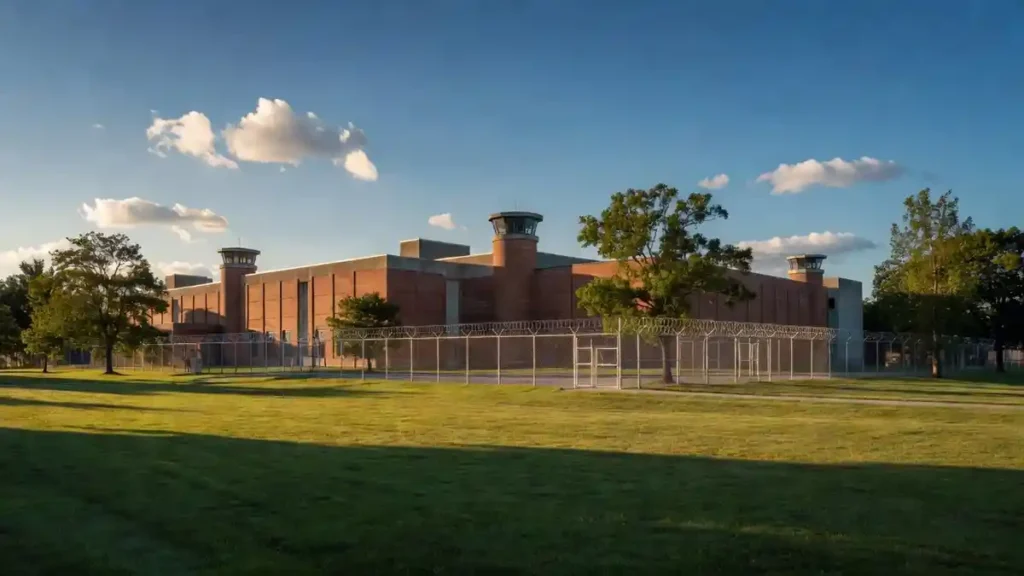
The Westville project reflects the scale where this matters. Construction Dive reported that the $1.2 billion Westville Correctional Facility is Indiana’s most expensive state building project, spanning 1.4 million square feet with capacity for 4,200 inmates and a target completion of early 2027. A build that large runs on delivery certainty.
Security-Grade Structure, Built to Spec
Security-grade structure is where precast earns its place in corrections. Cell modules and perimeter walls can be cast with embedded steel, high-strength mixes, and consistent thickness every unit identical. That repeatability is hard to match with hand-formed pours.
Speed Through Parallel Work
Speed comes from doing two jobs at once. While a joint venture like Build Westville — Granger Construction, F.A. Wilhelm Construction, and Garmong Construction Services — prepares foundations, the plant casts the structure. Erection then moves fast because the parts are already made.
AWS was17 – Amazon Merlin Building Redefines Concrete
Cast-in-Place vs. Precast: A Direct Comparison
| Factor | Traditional Cast-in-Place | Precast Concrete |
|---|---|---|
| Schedule | Sequential, weather-bound | Parallel, plant-controlled |
| Weather risk | High | Low |
| Quality control | Variable on-site | Consistent in plant |
| Labor demand | Large on-site crews | Smaller erection crews |
| Repeatability | Difficult | Built-in |
Precast Types and Their Best Use
| Type | Mechanism | Best Use Case |
|---|---|---|
| Wall panels | Cast flat, tilted and set | Perimeters, security walls |
| Cell modules | Full units cast complete | Housing blocks |
| Hollow-core plank | Voided slabs span long | Floors, ceilings |
| Structural beams/columns | Load-bearing frame members | Building skeleton |
Westville Correctional Facility Westville IN 46391 Precast Construction Lessons for the Midwest
— US News (@Us_news_ways) September 15, 2026
The Westville Correctional Facility Westville IN 46391 is a clear case study: a $1.2 billion, 1.4…@INDOT @Ingovlok69 @WestvilleO https://t.co/Mfexijd3vm
2026 Cost Snapshot
Precast institutional structure in 2026 runs roughly $120 to $250 per square foot, depending on complexity and finish. A typical cost split looks like this:
- Foundation and structure: 55%
- Finishing: 30%
- Design and permits: 15%
The Precast Process, Step by Step
- Design and detail the panels and modules with the engineer and architect.
- Prepare the site — foundations and utilities go in while casting begins.
- Cast components in the plant under controlled curing conditions.
- Transport finished units on schedule to the job site.
- Erect and connect members with cranes and set crews.
- Seal and finish joints, then move to interior trades.
Pros and Cons
Pros
- Faster overall schedule
- Consistent, plant-verified quality
- Less exposure to Midwest weather
- Smaller on-site labor footprint
Cons
- Higher upfront design coordination
- Transport logistics for large pieces
- Crane access required on-site
- Less flexibility for late design changes
How an Office Fitouts Contractor Southbank Uses
Case Study: A Regional Institutional Build
A 220,000-square-foot institutional facility in the Midwest switched from cast-in-place to precast wall panels and hollow-core plank mid-planning. The result: the structural phase finished in 14 weeks instead of a projected 22, a 36% time reduction. Weather delays dropped to near zero, and the owner recovered roughly $1.4 million in avoided general-condition costs.

How Midwest Precast Contractor Applies This
We apply these lessons on every institutional and commercial job across our region. Our core services map directly to what large builds need:
- Precast Concrete — security-grade panels and modules cast to spec.
- Structural Framing — beams and columns that go up fast.
- Formwork Systems — engineered forms that keep tolerances tight.
You get the delivery certainty of a plant-built structure with a local crew that knows Midwest conditions.
Common Mistakes to Avoid
- Finalizing design too late — precast rewards early coordination.
- Ignoring crane and site access — plan the erection path first.
- Skipping joint detailing — connections drive both strength and speed.
- Underestimating transport — oversized loads need routing and permits.
Construction Materials Testing Precast Wins
FAQ
What is the Westville Correctional Facility Westville IN 46391?
It’s a $1.2 billion replacement prison in Westville, Indiana, spanning 1.4 million square feet with capacity for 4,200 inmates.
Why does precast suit a project like the Westville Correctional Facility?
Its scale and 2027 deadline reward parallel work, and precast delivers consistent security-grade structure fast.
Who is building the Westville Correctional Facility?
Build Westville, a joint venture of Granger Construction, F.A. Wilhelm Construction, and Garmong Construction Services.
Is precast more expensive than cast-in-place?
Upfront design costs more, but faster schedules and fewer delays often lower the total project cost.
Does Midwest Precast Contractor build institutional projects?
Yes — we deliver precast concrete, structural framing, and formwork across Des Moines, Milwaukee, Ankeny, and West Des Moines.
Conclusion
The Westville Correctional Facility Westville IN 46391 proves what big builds already know: precast structure delivers on time when conventional methods stall. From Precast Concrete to Structural Framing and Formwork Systems, Midwest Precast Contractor brings that same edge to your project.