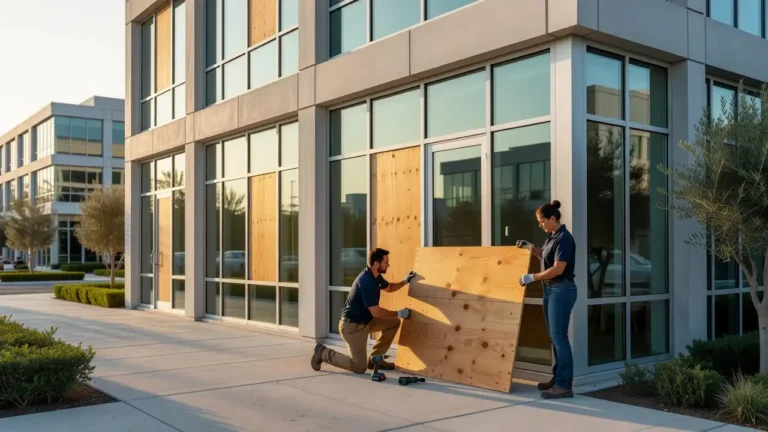
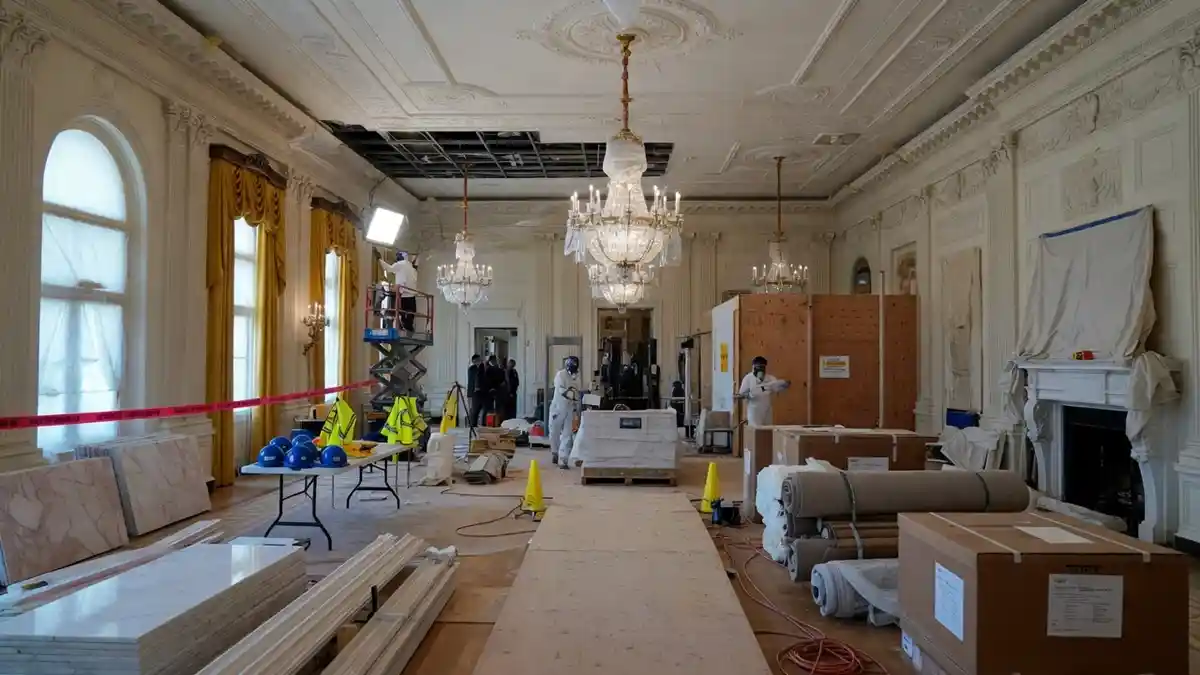
A federal court has ordered a halt to aboveground work on the largest structural project the White House grounds have seen in 80 years.
For any contractor managing a large-scale concrete pour under regulatory pressure, the doj white house ballroom construction dispute is a working case study in what happens when legal review collides with an active build schedule.
The $400 million ballroom sits at roughly 65% completion, and the stop-work order landed mid-sequence.
That timing matters, and it carries lessons for your next project.
Key Takeaways
- The doj white house ballroom construction halt applies only to aboveground work; underground structural work continues.
- The project planned to place 1 million pounds of rebar and pour 3,000 cubic yards of concrete in a single week before the order.
- Splitting a build into legally distinct scopes can keep part of a project moving when another part stalls.
Construction Company Proposal and Estimate Closing Rate Problems
What is actually happening on the site?
The East Wing was demolished in the fall of 2025 to clear space for a 90,000-square-foot (8,400-square-meter) ballroom.
Construction has run for 10 months.
According to PBS NewsHour, the D.C. Circuit ruled 2-1 that aboveground construction must stop until Congress approves the project.
The administration asked the Supreme Court to lift that order while it appeals. The National Trust for Historic Preservation is the plaintiff.
The ballroom was first designed for 650 people, then expanded to hold 1,000. Our analysis suggests the scope change alone would have reshaped the structural framing plan significantly.
A larger occupancy load means longer clear spans, heavier roof framing, and revised foundation loading.
Elon Musk Terafab Construction Plan What It Signals
Why does the aboveground/underground split matter?
The court order draws a clean line. Aboveground work stops. Underground work, including bunkers, military installations, and medical facilities, continues.
For contractors, this is the practical part. A project defined as one continuous scope stops entirely under a single injunction.
A project structured as separable work packages can keep part of the crew productive while another part waits.
Our contractors note that this kind of scope segmentation is not just a legal tactic.
DOJ White House Ballroom Construction: What It Means
— US News (@Us_news_ways) August 18, 2026
For any contractor managing a large-scale concrete pour under regulatory pressure, the doj white house ballroom construction…@TheJusticeDept @realDonaldTrump @WhiteHouse https://t.co/O2uaPG7LJg
It is sound sequencing.
| Scope | Status Under Order | Typical Structural Work | Risk If Halted Mid-Pour |
|---|---|---|---|
| Aboveground ballroom shell | Stopped | Steel/precast framing, slab-on-deck, roof structure | Cold joints, exposed rebar corrosion, load-path gaps |
| Underground levels | Allowed | Foundation walls, mat slabs, below-grade bunkers | Lower — enclosed, continuous pour feasible |
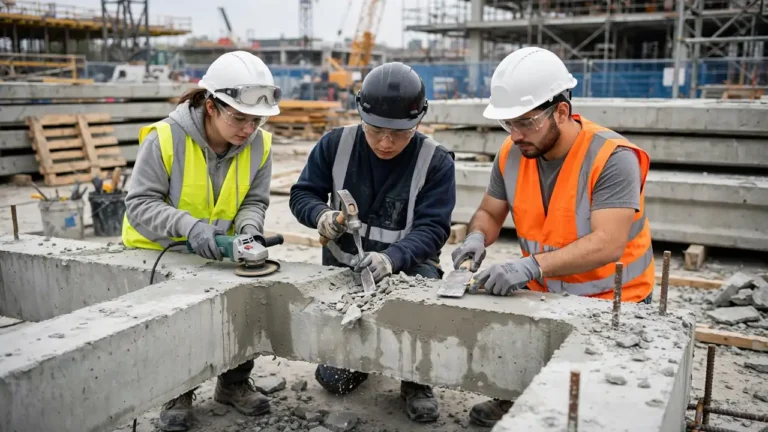
A stopped pour is a real problem, not a paperwork issue. When a placement is interrupted, you risk cold joints where fresh concrete meets a hardened surface.
The American Concrete Institute addresses these conditions in ACI 301 and ACI 318, which govern structural concrete specifications and joint treatment.
Left unmanaged, an unplanned joint becomes a weak plane in a wall or slab.
How big is 1 million pounds of rebar, really?
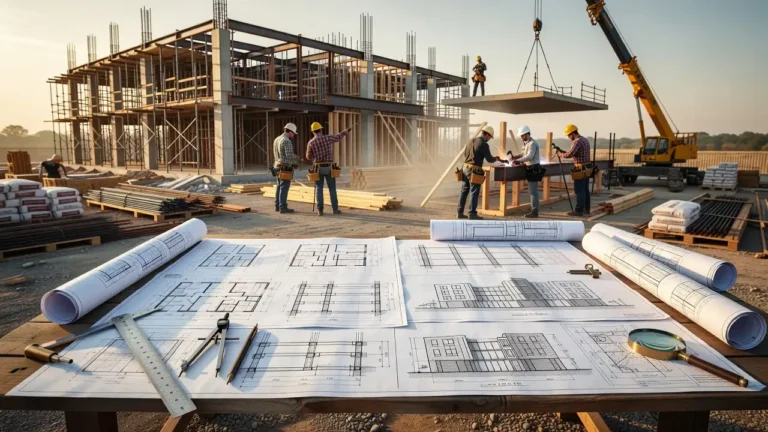
The plaintiffs pointed to plans to install 1 million pounds of reinforcing steel and pour 3,000 cubic yards of concrete in a single week.
That volume tells you the structure is heavily reinforced and built for a long service life. Three thousand cubic yards is roughly 300 truckloads at 10 yards each.
Coordinating that many deliveries under a compressed schedule requires tight logistics, and any legal interruption ripples through the entire batch plan.
Grade 60 rebar (60,000 psi yield) is standard for structural work at this scale.
The concrete mix for a project like this typically runs 4,000 to 5,000 psi for structural elements, depending on load and exposure.
If you have been following structural framing trends across the Midwest, this reinforcement density won’t surprise you.
Public and institutional buildings increasingly specify heavier reinforcement to meet security and longevity requirements.
Foundation Underpinning Methods That Hold
How should contractors plan a large pour under legal constraints?
When a project faces potential stop-work orders, sequencing becomes a risk-management tool.
Here is the approach our team uses.
- Map the legal and regulatory boundaries first. Identify which portions of the work carry separate approvals or exemptions before mobilizing.
- Segment the structure into independent work packages. Separate below-grade from aboveground scope so one halt does not stop everything.
- Define safe stopping points in the pour plan. Locate construction joints where ACI guidelines allow a clean, engineered interruption.
- Stage materials for continuity, not just speed. Confirm you can complete a placement to a planned joint before a truck leaves the plant.
- Document the load path at each stage. A partial structure must remain stable and code-compliant if work pauses.
- Keep a curing and protection plan ready. Exposed rebar and green concrete need weather and corrosion protection during any delay.
This sequence does not guarantee a project avoids delay. It does reduce the damage a delay can cause.
What does the preservation angle mean for the build?
The White House is exempt from Section 106 review under the National Historic Preservation Act of 1966.
That exemption is why this project moved without the review most federal buildings undergo.
The National Park Service still publishes guidelines stating that new additions should be compatible with the historic materials, scale, and massing of the property.
Those guidelines are advisory here, not binding. For contractors, the takeaway is straightforward.
Regulatory exemptions can speed a project, but they do not remove the structural and legal exposure that comes with building at this scale.
Underpinning Foundation Methods That Work
What should your next project take from this?
The doj white house ballroom construction case shows how legal review and construction technology intersect on a live site.
Industry insiders are watching how the courts treat an integrated build split into separable scopes.
Publications like ENR and standards bodies such as the Precast/Prestressed Concrete Institute continue to track how large structural projects manage interruption risk.
The doj white house ballroom construction halt is a reminder that a build plan is also a risk plan.
Segment your scope. Define your stopping points. Protect your pours.
If you are planning a large structural concrete or precast project and want to build interruption resilience into your schedule, tell us where your project stands and what the structure needs to accomplish.