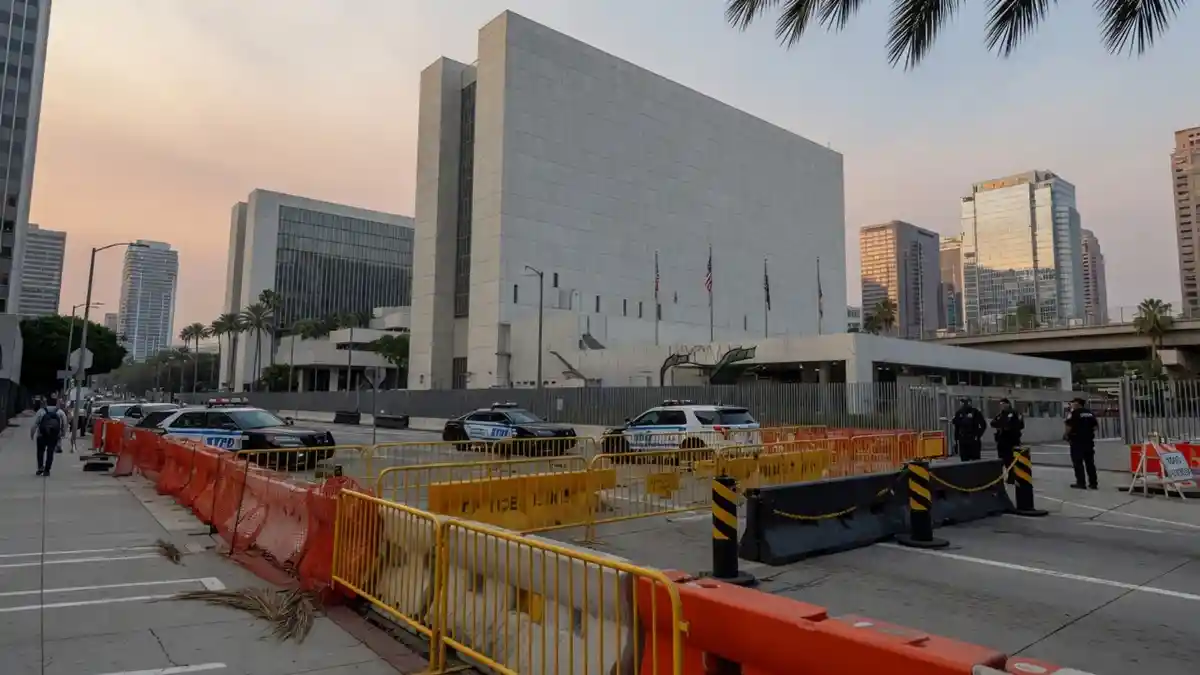
For contractors and property owners, though, the real story sits at the curb, not the upper floors.
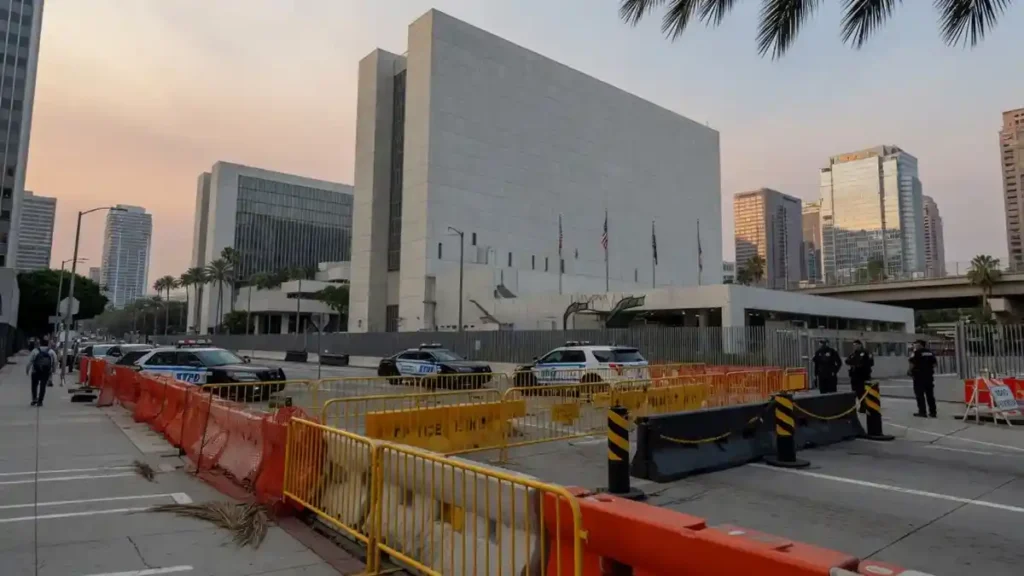
Events like this keep pushing downtown LA federal building barricades and similar perimeter systems to the top of every civic security budget.
That shift matters now because engineered precast concrete barriers are moving from optional to expected.
Kosciuszko Bridge New Construction Tech Lessons
Key Takeaways
- The GSA already maintains 14,000+ security barriers and funds courthouse hardening at $15M (FY2022) and $12.5M (FY2023) across 67 courthouses.
- Federal perimeter design leans on precast concrete for its speed, consistency, and tested blast/ballistic performance.
- A properly specified precast barrier resists a 15,000 lb threat vehicle and meets UL 752 Level III at just 4 in (102mm) of 3,000 psi reinforced concrete.
Why do federal building incidents drive precast demand?
Our contractors note a clear pattern. Every security event, whether a breach, a standoff, or a vehicle threat, triggers a fresh look at the standoff perimeter.
According to GSA testimony before the House Committee on Transportation and Infrastructure, the agency assigns each site a Facility Security Level (FSL) ranging from Levels 1–5.
As the FSL climbs, so do requirements for setbacks, façade hardening, and progressive collapse protection.
That is where the demand for downtown LA federal building barricades and comparable systems starts to grow.
Our analysis suggests property owners near federal or civic buildings should expect these standards to spill into private projects too.
When a courthouse hardens its curb line, adjacent developments often follow.
What makes precast the right barrier material?
The Whole Building Design Guide (WBDG) organizes federal sites into six security zones, from the neighborhood edge to building operations.
Zone 2, the standoff perimeter, is where barriers do their heaviest work. WBDG lists bollards, walls, sculptural barriers, and topography as accepted options.
We found precast fits nearly all of them.
Precast lets you cast a bollard, a seat wall, or a planter that reads as streetscape but performs as a barrier. That dual role is exactly what modern federal design calls for.
Under UFC 4-022-01, vehicle barriers are split into passive and active systems.
Passive barriers channel and stop traffic without moving parts, which suits most fixed perimeters around downtown LA federal building barricades and their civic counterparts.
The same standard sets a common threat benchmark: a 15,000 lb gross-weight vehicle at its maximum attainable speed.
Construction Truck Accident Lawyer Contractors Must Know
How does precast compare to other barrier types?
Here is how the main options stack up for a federal-grade perimeter.
| Feature | Precast Concrete Barrier | Cast-in-Place Wall | Standard Jersey Barrier |
|---|---|---|---|
| Install speed | Fast — delivered cured | Slow — on-site curing | Fast |
| Quality control | High — plant-cast | Variable — weather-dependent | Moderate |
| Aesthetic options | Wide — form liners, finishes | Wide but costly | Very limited |
| Anti-ram rating | Engineered to 15,000 lb threat | Engineered, site-dependent | Limited |
| Ballistic option | 4 in @ 3,000 psi meets UL 752 Level III | Achievable, thicker | Not rated |
| Best fit | Permanent civic perimeters | Monolithic custom work | Temporary staging |
For most downtown LA federal building barricades projects, precast wins on schedule and repeatability.
Cast-in-place still has a place for unusual geometry. Jersey barriers remain a temporary answer, not a finished one.
What concrete specs actually meet federal standards?
The numbers are specific, and they matter. UFC 4-022-01 notes that reinforced concrete at 3,000 psi just 4 in (102mm) thick resists UL 752 Level III ballistic threats.
For anti-ram duty, the barrier and its foundation must absorb that 15,000 lb vehicle impact.
We typically design perimeter units above the ballistic minimum to carry both blast and vehicle loads with margin.
Overdesign at the plant is cheaper than a retrofit at the curb.
Downtown LA Federal Building Barricades
— US News (@Us_news_ways) August 10, 2026
Events like this keep pushing downtown LA federal building barricades and similar perimeter systems to the top of every civic security budget.@LAPDHQ @LAFD @CityOfLasVegas https://t.co/aUkbjLosf2
How do you specify and install precast perimeter barriers?
Here is the sequence our teams follow on federal and civic sites.
- Confirm the FSL. Work with the tenant agency or Facility Security Committee to lock the Facility Security Level (FSL) before design.
- Define the threat. Adopt the 15,000 lb vehicle standard from UFC 4-022-01 unless a site assessment requires more.
- Map the standoff zone. Use the WBDG six-zone model to set the perimeter line and required setback distance.
- Select the mix. Specify a minimum 3,000 psi design, then increase strength and reinforcement for combined blast and anti-ram duty.
- Detail the anchorage. Engineer the foundation, dowels, and connections to transfer impact loads into the ground.
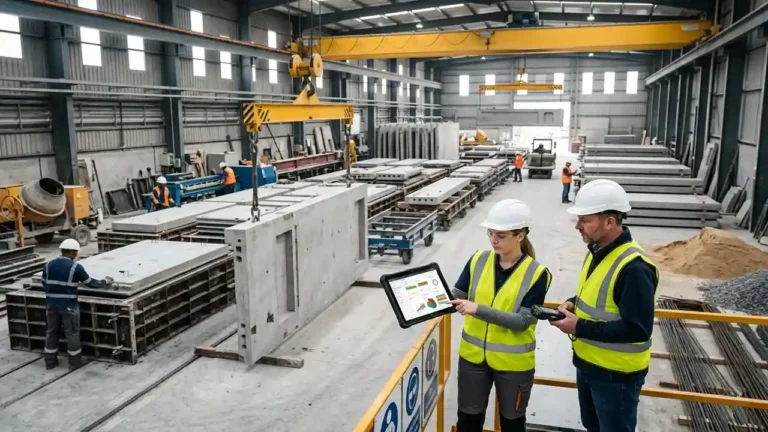
- Cast and cure at the plant. Plant casting gives consistent strength and lets you add finishes or form liners for streetscape appeal.
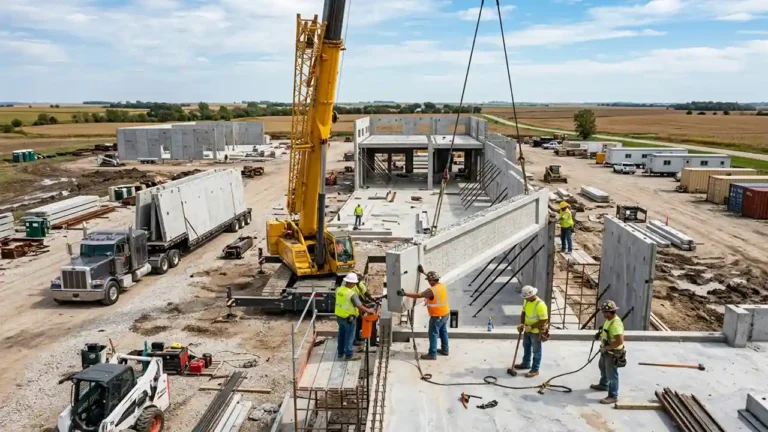
- Coordinate delivery and setting. Sequence crane picks and setting crews to limit street closures downtown.
- Inspect and document. Verify placement, tolerances, and load paths against the approved shop drawings.
If you have been following precast concrete trends across the Midwest, this workflow won’t surprise you.
The same discipline that governs downtown LA federal building barricades now shapes courthouse hardening nationwide.
Home Depot Acquisition Expansion Reshapes Framing Supply
What this means for your next build
Federal funding backs this shift directly.
GSA reported $15M in FY2022 and $12.5M in FY2023 for courthouse hardening across 67 courthouses, with many still in design.
That pipeline signals steady work for contractors who understand engineered perimeters.
Property owners near these sites should plan for tighter standoff and higher barrier expectations.
We help teams translate the standards behind downtown LA federal building barricades into buildable precast details.