


Introduction
How to Find Linear Feet? Precast projects require careful budgeting, planning, and estimating installations. Calcultations on linear feet for any type of precast construction is one of the most important.
Understand the concept of linear feet for building concrete fences, walls, or any other precast elements ensures cost effective construction, minimimizing project delays, and waste.
The following methods take into account the 2025 methods working standards, a practical approach for builders and contractors of any level, and construction updated tools and methods.
How to Find Linear Feet?
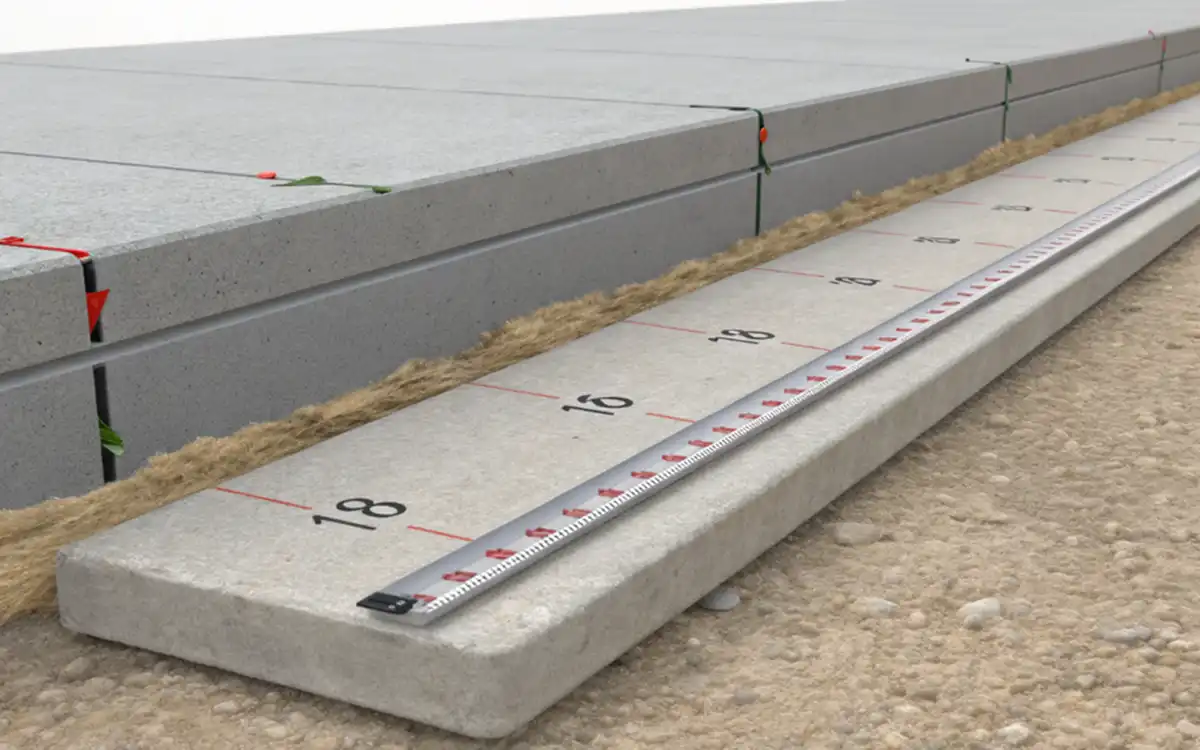
A linear foot is simply 12 inches of material on a straight line. It is one of the constructions building measurements and standards of length. It is also one of the precast concrete and precast cement components building measurements.
It also does not involve the height and width of the object, simply measuring the length of the object. Most construction materials (boards, steel bars, etc.) sold are linear feet and this measure is very essential in preparing cost estimates.

Importance of linear feet for precast concrete
Ordering inline foot materials and reducing waste when working on precast concrete. For example, designing modular precast walls or installing a concrete fence precisely measuring linear feet.
- Efficient planning for labor and equipment.
- Accurate installation alignment and proof of structural stability.
- Improved clarity for suppliers and contractors (contractors frequently request dimensions in linear feet).
Most Recent Update (2025) for Measuring in How to Find Linear Feet?
The guidelines for 2025 focus on the use of electronic construction and integrated measuring technology for value. Builders should use the following:
- Laser distance precast cement measuring devices for quick and precise distance measurement.
- Measurement applications for mobile devices that automate measuring and interlink with construction documents.
- Revised digital blueprint applications that analyze portions of the blueprint automatically.
Updated concrete standards that incorporate strength basics and linear infrastructure standards significantly improve the overall measurement and documentation precision.
Step-by-Step: How to Determine Linear Feet
Obtain Appropriate Measuring Devices
- Construction of modern structures requires the following devices,
- A heavy-duty steel measuring tape for short-range measurement.
- A laser rangefinder for long-range measurement and measurement of irregularly shaped areas.
- A mobile measuring application, digital blueprint software for measurement that integrates with the plan, and automated calculations for the project.
Divide Your Precast Structure
- Direction for structures of linear concrete fences, measure each straight-run portion individually for simplified measurement.
- For walls or structural panels, divide the all enclosing perimeter or the linear boundary into lengths to ease the measure of and improve accuracy.
- If the sections to be measured consist of curves, divide the curve into straight segments and measure each and total the results for the overall measure.
- Apply the measuring tape or device to each straight measure.

You need to record each section’s dimensions in How to Find Linear Feet?(if in inches, convert by dividing by twelve).
To measure curved parts, you can use flexible measuring tools, or for easier calculations, you can approximate the bend using straight sections.
- Total Lengths
You can get the total amount of linear feet you need by adding each segment’s measurements. For example, a fence made of three straight sections of 40ft, 25 ft, and 60ft, would total to:
- Allow for Errors and Waste
It is a good idea to add a waste factor of 5-10% to all of your totals, just for f room in case you add or subtract things you hadn’t planned for.
For example, if your linear feet total is 125, you’d probably order 138 linear feet to cover the material you would need.
- Confirm and Document
Make a table (as shown below) to organize your measurements and avoid the need for repeat calculations. Good documentation prevents confusion during time of order and installation.
- Contact Precast Standards or Suppliers
If you are unsure don’t hesitate to contact your precast supplier or installer. They will verify quantities from your layout and help with 2025 compliance or assist with digital tools.
Sample Table for Calculating Linear Feet
This also helps with material procurement and installation. You can change the sections accordingly for your specific precast concrete project.
| Section | Measurement (ft) | Description | Notes |
| A1 | 40 | Front wall | Straight section |
| B1 | 25 | Fence near driveway | Includes gate pillar |
| C1 | 60 | Rear boundary | Two curve adjustments |
| D1 | 5 | Miscellaneous trim | Small gap/finishing |
| Total | 130 | — | — |
Curves and Irregular Shapes
How to Find Linear Feet?If your project has some curved pieces, for example, decorative concrete fences or winding walls, use a flexible measuring tape or use a method of marking short straight lines along the curve. Count and total each straight piece of the curve. Digital or laser tools are also helpful for highly irregular shaped projects because they give more reliable outcomes.

FAQs
- What is the difference between linear feet and square feet?
- Linear feet only measures the straight linear distance. Square feet is an area measurement and represents the total surface area which includes the height or width and the overall area calculations, for example, wall panels or floor covering.
- Can curved lines be counted as part of linear feet measurement?
- Of course. You can deconstruct the curve into a series of straight, manageable pieces, measure each, and add them for the total linear feet.
- Are modern tools really needed for measuring linear feet?
- Digital apps and laser meters are certainly not needed but they do increase the accuracy, speed, and ease of measuring, particularly for complex and large projects.
- They may be suggested for the 2025 updates, but for smaller or simple layouts, a basic tape measure will still do the job just fine.
- How to Find Linear Feet?
- Mistakes are inevitable when cutting, trimming, and installing. To eliminate the possibility of a shortage and limit disruptions to the flow of your project, it is recommended to add a waste factor, usually 5–10%, during the planning stage.
- Does linear footage change with the thickness or height of the material?
- Absolutely not. Linear feet are a measure of length. Any thickness or height will be factored in during other estimates, e.g., concrete volume, and will be in different metrics, usually area.
Conclusion
Determining how to find linear feet for your precast concrete projects is simple. Divide the structure into measurable sections, reliable tools to measure, add the lengths of the segments counting a waste factor, and you are ready to go.
The current 2025 updates for construction do emphasize digital tools for documentation and measuring, but basic methods still work for simple builds. Keep measurements in organized tables, check with your supplier, and keep everything validated for a precast project to eliminate headaches.
Whether you are constructing a concrete fence or a modular wall, or other structures, mastering this calculation will improve the planning, budgeting, and execution for builders and contractors alike.
For Repair and Services
1924 W Edward Ln, Milwaukee, WI 53209, United States
Phone: +14142855933
Email: [email protected]