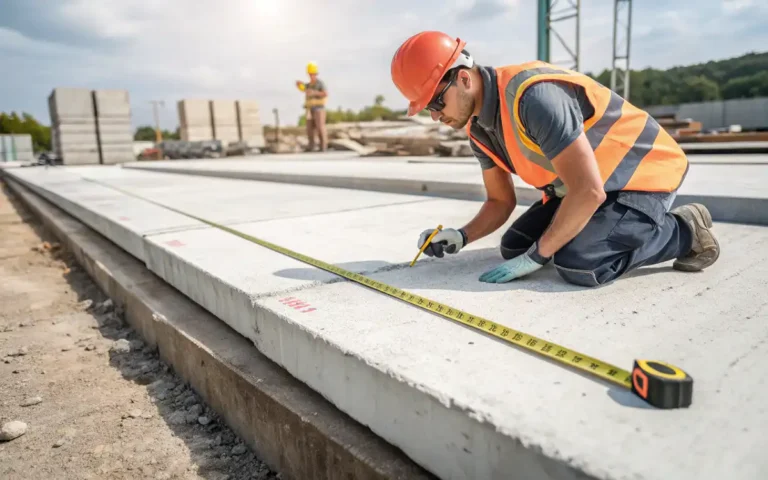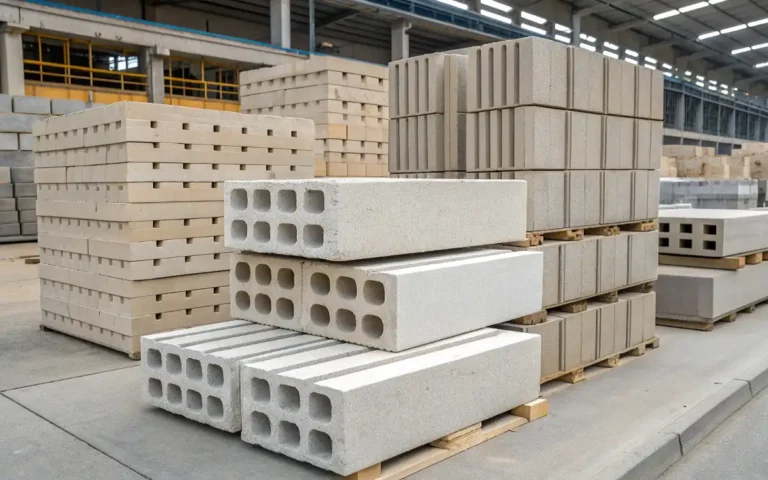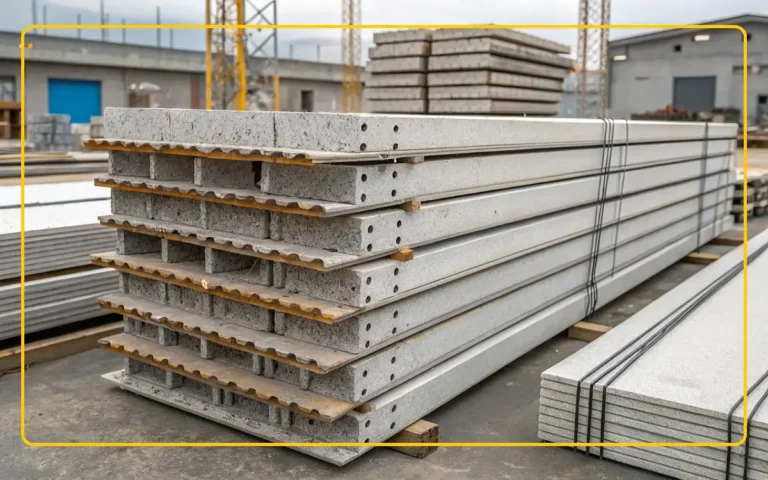
In precast concrete projects, determining materials, dimensions, and measuring Linear square foot is essential for determining project costs, planning materials, and overall project success. Linear square foot combines measurements of linear footage, which is length, and square footage, which is area.
Learning how to calculate them provides the basis for determining the estimated material needed for concrete panels, fences, and forms so contractors, engineers, and builders avoid wastage and shortages. In this article, I will explain, step-by-step, how to calculate linear square foot for precast concrete projects based on the new methods and technology of 2025.
linear square foot
Linear Foot vs. Square Foot
Linear foot is a form of length measurement, which is 1D. For instance, a panel that is 10 foot long on one edge can also be said to be 10 linear feet long. It does not involve height and width.
On the other hand, square foot measures 2D. It involves area which is length times width (or height). For example, a precast concrete panel that is 10 foot long and 5 foot high will have an area of 50 square foot.
When people talk about square feet, they are usually talking about the surface area along a single figure linear, like the face area of a precast concrete wall or the deface area of a fence panel along its length.
It’s important to have an idea about both linear and square feet. This is because materials and their costs might be calculated based on linear feet, while the work scope and surface treatments will square feet.
With modern precast concrete, understanding both measurements is a necessity for planning, logistics, budgeting, and installation.
Calculating linear square foot on precast concrete projects is simple if you follow the simple steps.
Start with measuring the linear length
It’s best to use precision tools like laser distance meters, digital measuring wheels, or even a tape measure.
For curved or segmented structures, measure each piece separately and then add them.
Next, measure concrete forms height or width (depth) of the area, for example the height of a fence panel or the wall section.
linear square foot
Finally, multiply the linear length by the height (or width):
If you are working on international projects, you might have to do some unit conversions.
Panel Dimensions (ft)
Height (ft)
Weight per Linear Foot (lbs)
Surface Area per Linear Foot (sq ft)
10 x 5
5
4500
50
8 x 6
6
3555
48
12 x 7
7
5400
84
6 x 4
4
2200
24
15 x 8
8
6750
120
For example, you can divide by 12 to convert inches to feet, or multiply meters by 3.281 to get feet.
Example:
Imagine you have a precast fence that is 100 linear feet long and is 6 feet high.
This outcome indicates the surface area of the cement along the specified distance.
Highlights include:
The term linear measurement refers to a distance.
When talking about linear square feet, we discuss the height, and therefore, the surface area along the length.
This is a common method in precast concrete for fences, walls, and barrier panels.
The most recent, 2025, Technology and Updates in Linear Square Foot Measurement.
According to 2025 construction guidelines, one of the primary areas of focus, in terms of construction for precast concrete, is effective and precise linear square foot calculation using smart measurement technology:
linear square foot
Quick and precise measurement using Bluetooth laser distance meters and measuring wheels.
Apps that use BIM technology to document linear and square foot conversions on the go.
Auto-calculation of material square and linear footage along with planning using AI estimation software that was built to examine 2D blueprints and 3D building models. Automated unit changes and validations by digital photography.
Cloud applications allow measurement and calculation updates to flow in for dispute resolution.
Smart construction techniques focus on linear square foot calculation to minimize material waste and enhance cost efficiency.
For best, most effective, and most efficient results, stylish and explain the importance of measurement from fixed and stable points, and document measurements.
When dealing with curved or unusual shaped precast structures, measure each straight part one at a time.
To confirm your measurements, check them again or use digital methods.
Do not forget to convert units if your suppliers or contractors operate on different measurement systems.
To maintain accuracy, use appropriate, well-maintained tools.
For complex projects, software modeling can be an excellent compliment to your manual measurements.
Helpful Resources: Sample Sizes and Weights of Precast Concrete Panels and Their Dimensions per Linear Foot
For standard precast panels, this shows how weight and area affect a panel’s length, making estimating material requirements easier by linear square foot.
In Closing
For precast concrete projects, linear square foot calculations are a basic and necessary skill for maintaining precision and avoiding unnecessary costs. Linear lengths and heights, along with knowledge of surface area, allows contractors and engineers to plan materials, manage cash flow, and ease the installation process.
The industry has centered its attention on the use of digital tools and AI-powered software for accurate, error-free measurement and planning for the 2025 standards.
For Repair and Services
1924 W Edward Ln, Milwaukee, WI 53209, United States
How to Find Linear Feet? Precast projects require careful budgeting, planning, and estimating installations. Calcultations on linear feet for any type of precast construction is one of the most important.
Understand the concept of linear feet for building concrete fences, walls, or any other precast elements ensures cost effective construction, minimimizing project delays, and waste.
The following methods take into account the 2025 methods working standards, a practical approach for builders and contractors of any level, and construction updated tools and methods.
How to Find Linear Feet?
A linear foot is simply 12 inches of material on a straight line. It is one of the constructions building measurements and standards of length. It is also one of the precast concrete and precast cement components building measurements.
It also does not involve the height and width of the object, simply measuring the length of the object. Most construction materials (boards, steel bars, etc.) sold are linear feet and this measure is very essential in preparing cost estimates.
how to find linear feet
Importance of linear feet for precast concrete
Ordering inline foot materials and reducing waste when working on precast concrete. For example, designing modular precast walls or installing a concrete fence precisely measuring linear feet.
Efficient planning for labor and equipment.
Accurate installation alignment and proof of structural stability.
Improved clarity for suppliers and contractors (contractors frequently request dimensions in linear feet).
Most Recent Update (2025) for Measuring in How to Find Linear Feet?
The guidelines for 2025 focus on the use of electronic construction and integrated measuring technology for value. Builders should use the following:
Laser distance precast cement measuring devices for quick and precise distance measurement.
Measurement applications for mobile devices that automate measuring and interlink with construction documents.
Revised digital blueprint applications that analyze portions of the blueprint automatically.
Updated concrete standards that incorporate strength basics and linear infrastructure standards significantly improve the overall measurement and documentation precision.
Step-by-Step: How to Determine Linear Feet
Obtain Appropriate Measuring Devices
Construction of modern structures requires the following devices,
A heavy-duty steel measuring tape for short-range measurement.
A laser rangefinder for long-range measurement and measurement of irregularly shaped areas.
A mobile measuring application, digital blueprint software for measurement that integrates with the plan, and automated calculations for the project.
Divide Your Precast Structure
Direction for structures of linear concrete fences, measure each straight-run portion individually for simplified measurement.
For walls or structural panels, divide the all enclosing perimeter or the linear boundary into lengths to ease the measure of and improve accuracy.
If the sections to be measured consist of curves, divide the curve into straight segments and measure each and total the results for the overall measure.
Apply the measuring tape or device to each straight measure.
how to find linear feet
You need to record each section’s dimensions in How to Find Linear Feet?(if in inches, convert by dividing by twelve).
To measure curved parts, you can use flexible measuring tools, or for easier calculations, you can approximate the bend using straight sections.
Total Lengths
You can get the total amount of linear feet you need by adding each segment’s measurements. For example, a fence made of three straight sections of 40ft, 25 ft, and 60ft, would total to:
Allow for Errors and Waste
It is a good idea to add a waste factor of 5-10% to all of your totals, just for f room in case you add or subtract things you hadn’t planned for.
For example, if your linear feet total is 125, you’d probably order 138 linear feet to cover the material you would need.
Confirm and Document
Make a table (as shown below) to organize your measurements and avoid the need for repeat calculations. Good documentation prevents confusion during time of order and installation.
Contact Precast Standards or Suppliers
If you are unsure don’t hesitate to contact your precast supplier or installer. They will verify quantities from your layout and help with 2025 compliance or assist with digital tools.
Sample Table for Calculating Linear Feet
This also helps with material procurement and installation. You can change the sections accordingly for your specific precast concrete project.
Section
Measurement (ft)
Description
Notes
A1
40
Front wall
Straight section
B1
25
Fence near driveway
Includes gate pillar
C1
60
Rear boundary
Two curve adjustments
D1
5
Miscellaneous trim
Small gap/finishing
Total
130
—
—
Curves and Irregular Shapes
How to Find Linear Feet?If your project has some curved pieces, for example, decorative concrete fences or winding walls, use a flexible measuring tape or use a method of marking short straight lines along the curve. Count and total each straight piece of the curve. Digital or laser tools are also helpful for highly irregular shaped projects because they give more reliable outcomes.
Linear feet only measures the straight linear distance. Square feet is an area measurement and represents the total surface area which includes the height or width and the overall area calculations, for example, wall panels or floor covering.
Can curved lines be counted as part of linear feet measurement?
Of course. You can deconstruct the curve into a series of straight, manageable pieces, measure each, and add them for the total linear feet.
Are modern tools really needed for measuring linear feet?
Digital apps and laser meters are certainly not needed but they do increase the accuracy, speed, and ease of measuring, particularly for complex and large projects.
They may be suggested for the 2025 updates, but for smaller or simple layouts, a basic tape measure will still do the job just fine.
How to Find Linear Feet?
Mistakes are inevitable when cutting, trimming, and installing. To eliminate the possibility of a shortage and limit disruptions to the flow of your project, it is recommended to add a waste factor, usually 5–10%, during the planning stage.
Does linear footage change with the thickness or height of the material?
Absolutely not. Linear feet are a measure of length. Any thickness or height will be factored in during other estimates, e.g., concrete volume, and will be in different metrics, usually area.
Conclusion
Determining how to find linear feet for your precast concrete projects is simple. Divide the structure into measurable sections, reliable tools to measure, add the lengths of the segments counting a waste factor, and you are ready to go.
The current 2025 updates for construction do emphasize digital tools for documentation and measuring, but basic methods still work for simple builds. Keep measurements in organized tables, check with your supplier, and keep everything validated for a precast project to eliminate headaches.
Whether you are constructing a concrete fence or a modular wall, or other structures, mastering this calculation will improve the planning, budgeting, and execution for builders and contractors alike.
For Repair and Services
1924 W Edward Ln, Milwaukee, WI 53209, United States
Fencing helps to mark the boundaries of a property and offers privacy and safety to residents, whether the property is residential or commercial. Of all construction trends, the precast concrete post and rail fence has the strongest growth.
From a simple structural feature, 2025’s advancements in materials, manufacturing and sustainability will turn fences into smart, design-integrated system eco-friendly perimeter systems.
Builders, homeowners and architects will adapt to modern renencing systems and appreciate their strength, functionality and low maintenance.
The Evolution of Fencing in Modern Construction
For decades, old wooden, metal, or vinyl fences have been used and offered their own set of advantages such as low cost and visual appeal.
Unfortunately, these materials and even modern precast concrete will suffer the same issues, lie rot, rust and destroy the fences leading to their frequent repair and replacement cycles.
post and rail fence
The new precast concrete post and rail fence will be the most used fencing.
Based on 2025 market insights, the global precast concrete fence industry stands at over $428 million, increasing gradually at a 2.5% CAGR, more than likely due to the demand for sustainable, low-maintenance fencing systems.
This trend shows a strong global preference for durable, smartly designed systems.
What Makes Precast Concrete Unique
Unlike poured concrete, precast concrete is made in a controlled environment and then transported to the site. This process allows for better precision and quality, which is something onsite mixing and pouring cannot provide consistently.
In modern precast technology, the expected benefits include:
Greater Strength: Concrete becomes more durable, resistant to cracking, and stronger with the use of fibrous, high-performance admixtures and engineered mix.
Sustainable Manufacturing: Lots of companies these days use recycled aggregates and low-carbon binders to reduce environmental footprints.
Design Freedom: Once a precast panel is completed, it has the ability to mimic a variety of textures, including brick, stone, and wood, all concrete wall while keeping the concrete strong enough to withstand different structural loads.
Smart Technology Integration-2025
New upgrades have turned the precast concrete fence systems into smart systems. Owners can easily know when a fence needs servicing and can monitor and detect problems well before they arise due to built-in sensors that keep track of humidity, pressure, and temperature.
This smart fence is one of the many examples of newer construction systems that use IoT or Instant of Things technology to improve the value of a property.
All these features meet the objectives set by various nations to create sustainable smart infrastructures that use science and technology to do surface monitoring.
Design Trends and Aesthetic Possibilities
In 2025, concrete does not have to mean dull slabs. Thanks to 3D printing and digital modeling, concrete can be transformed to create unique custom fences while combining a variety of textures, a wood grain with geometric patterns.
Precast is especially desired by homeowners living in cities of concrete, and is able to transform a barren landscape, to an oasis of nature.
Post and rail fences have increased their functionality by providing varying fusible aesthetics and patterns that improve curb appeal.
post and rail fence
The Sustainability Edge
The Precast Concrete market has grown in response to Sustainability. For example, the production methods of precast concrete have become more environmentally friendly by practicing waste reuse and adopting energy-efficient approaches in curing. Carbon emissions have dropped since 2025.
Precast Concrete has the ability to circular reuse and recycle, and cities embraced climate changes and green infrastructure, particularly the reusable concrete fencing.
Comparing Post and Rail Fence Types
The type of material influences the overall performance. For example, performance of the precast concrete post-and-rail fence in comparison to other options in the market. Out of the options in the market, concrete offers the best customization and durability.
Fence Type
Durability
Maintenance Needs
Weather Resistance
Average Lifespan
Aesthetic Options
Wood Fence
Moderate
Requires regular sealing and painting
Poor (affected by moisture)
10–15 years
High
Metal Fence
High
Rust protection needed
Good (except coastal areas)
20–25 years
Limited
Vinyl Fence
Moderate
Easy maintenance
Poor under high UV exposure
15–20 years
Moderate
Precast Concrete Post and Rail Fence
Very High
Minimal maintenance
Excellent in all climates
50+ years
Customizable textures and finishes
Installation Speed and Efficiency
One of the best things about precast fencing is how easy and quick it is to install. Assembled precast panels cut down on the Expected labor and time needed for the project, which is important in city settings.
In 2025, builders using modular precast systems reported completing installations 60% faster than traditional methods while maintaining quality finishes.
This is especially important in city settings, as it reduces disruption to residents and businesses.
Cost and Value per Linear Foot
When looking at total ownership costs, over time, a precast concrete post and rail fence is more economical. Though the initial costs per linear foot are still higher than wood or vinyl, the long service life and less maintenance make it a better value.
Average cost estimates may be right or wrong based on the complexity of the design and labor costs per regions.
Property owners, without the need to repaint, seal, or replace damaged components, block wall, recover these higher initial costs within several years due to the longevity of the installation.
Longevity and Structural Integrity
Precast technology is synonymous with longevity. With the use of corrosion-resistant steel reinforcement and fibre additives, it is easy for the panels to last over 50 years with only minor degradation.
Relatively, panels are the most fencing alternatives for UV, frost, thaw, and moisture damage.
post and rail fence
Enhanced load management is the most important of engineered post anchors and strong fences against high wind, soil pressure, and seismic stress.
Agricultural Zones: Strong rail designs help control livestock without frequent replacement needs.
Commercial Properties: Offer cost-effective security and noise reduction.
Public Infrastructure: Municipalities employ precast systems for parks, sound barriers, and decorative boundary walls.
Highway and Transit Projects: The U.S. Department of Transportation and India’s Road Ministry have followed the recommendation to have fencing for non-critical structures made of precast concrete. This is safer and also creates less delay.
The global use of these techniques shows the impact of precast concrete on global infrastructure.
Future Outlook: Beyond 2025
Precast fence technology is becoming more automated, digitally integrated, and sustainable. Robotic manufacturing and smart systems for predictive maintenance are game changers for managing costs on new projects.
From 2025 to 2034 the global market for concrete fence posts will continue to grow at 2-3% a year, with the growth driven by smart technology and eco-friendly integration.
Precast concrete post and rail fence is more than just a construction material. It’s a construction material. It’s indicative of changing integrated urban development planned around sustainability.
Conclusion
Strong, modern, and eco-friendly, the precast concrete post and rail fence is the future of modern fencing. These fences are built to last over 50 years, and are extremely low-maintenance and eco-friendly.
It’s no wonder property owners consider them the solution for fences that are both durable and beautiful, especially with the added innovations of 3D-printed design elements, embedded sensors, and modular construction.
As the construction industry in 2025 continues to focus on smart and sustainable materials, precast concrete post and rail fences will stand as the future of durable property lines.
For Repair and Services
1924 W Edward Ln, Milwaukee, WI 53209, United States
Knowing how to estimate precast concrete correctly is essential to construction project success.
Each wall, fence, and foundation segment construction relies on precise figure linear ft measurements to incorporate optimal cost control, exact precision, and desired structural performance. This guide articulates how to calculate linear feet in precast concrete.
We have compiled seven innovative and contemporary techniques that meet the 2025 construction standards. Efficiency and reliability in concrete projects require full mastery in measurement whether you work as a contractor, a site engineer or a do-it-yourselfer.
Understanding Figure Linear Ft
Figure linear ft deals with length measurement of materials in figure linear ft in a straight line with the height or depth being disregarded. This is important to understand for accurate execution of a project.
This becomes clearer in the context of linear feet of precast wall. If a person indicates that they need a 150 linear feet precast wall, they mean to say that the total running length of the wall is 150 feet, irrespective of the thickness and height of the wall.
This description is necessary to place an order for precast panels, calculate the quantity of reinforcement, estimate the required transport and installation time, and more.
By 2025, the order of the descriptions is more likely to include new technology such as laser range finders and mobile measuring applications, to ensure accuracy and adherence to local building regulations.
Why Linear Measurement is Important in Precast Concrete
Precast concrete components like compound walls, sound barriers, and façade panels are tailored to the particular dimensions of the construction site. Consequently, the linear footage estimation accuracy is fundamental for the success of the installation.
You Need to Pay More Attention to Measurement
Mistakes lead to material shortages, production delays, and wasted resources. Recent projects have shown that a 2% miscalculation in linear footage can, and has, resulted in a 15% increase in the cost of concrete due to logistics and installation adjustments.
figure linear ft
Advancements in Measuring Linear Footage
The 2025 construction guidelines update focuses on digital measuring and recording as the new industry standard. Precast contractors use smartphone measuring software.
These digital tools measure linear footage and perform quick conversions between feet, inches, and meters to eliminate conversion errors in linear footage calculations.
Key updates in 2025 include the use of:
Laser measuring devices and Bluetooth digital measuring wheels for high precision.
Integrated measurements with Building Information Modeling (BIM) systems.
Photographic or digital measure validation in many regions as a requirement to document control.
Automated metric to imperial unit conversions.
7 Smart Ways to Figure Linear Ft in Precast Concrete
1. Use Reliable Measurement Tools
The first step in calculating figure linear footage is the collection of high-accuracy measuring devices. Laser rangefinders and mobile-integrated measuring systems are more accurate than tape measures.
These instruments take quick readings and transfer the results directly to design applications for enhanced workflow convenience.
Laser distance meter for longer and irregularly shaped areas
Digital blueprint software for automated section measurement
2. Structure Segmentation for Precision
To avoid complexity in measurement, fences, precast walls, and panels should be measured in straight portions. concrete forms section’s length can be added to yield the total linear footage for the project.
For instance, a boundary wall with three straight runs of 60, 40, and 30 feet results in a total linear footage of 130 feet. This method not only facilitates accurate production but also simplifies the installation alignment.
3. Clearly Document Each Measurement
To eliminate confusion, a basic table or a digital spreadsheet works well. To avoid rounding errors during later conversions, the individual section feet and inch measurements should be documented. This saves considerable time. Many contractors have tools that automatically produce marked-up illustrations based on the measured inputs.
Recording a Sample Table:
Section
Measurement (ft)
Description
Notes
A1
40
Front wall
Straight section
B1
25
Fence near driveway
Includes gate pillar
C1
60
Rear boundary
Two curve adjustments
Total
125 ft
—
—
4. Convert Units When Necessary
Conversions are important for international projects with metric system suppliers. Remember:
Convert inches to feet by dividing total inches by 12.
Convert meters to feet by multiplying by 3.281.
Example:
For a precast panel run measuring 8 meters, the figure linear ft = 8 × 3.281 = 26.25 ft.
These conversions can be done automatically in modern apps within design tools.
figure linear ft
5. Validate and Cross-Check Measurements
Check and review recorded data to site drawings and layout plans. Cross-verification checks if the design and physical lengths correspond. To mitigate disputes and prevent costly adjustments in the pre-manufacture of materials, contractors validate figure linear ft calculations using GPS-based mapping for large commercial installations.
This is required by many 2025 regional standards as a step in the cross-verification process before precast manufacturing approval.
6. Factor in Wall Thickness and Joints
It is important to understand the effect of total materials use even when figure linear ft only measures the length. For example, precast walls taller than 8 feet as a structural element use thicker panels or reinforced base units.
In 2025, the average cost for a 6 to 8 ft tall precast wall, with installation included, ranges from 150to150to320 per linear foot. Thus, small estimation errors can lead to large cost impacts on the overall project.
7. Use estimation Software and AI Tools
The latest modeling apps of 2025 perform AI-driven blueprint analyses and immediate linear foot calculations. These apps enable drag and drop changes, 3D renderings, and real-time connections to suppliers for immediate price estimates.
Some recent utilities also automatically identify overlapping structures and propose variations to reduce costs which streamlines the precision and efficacy of project bids.
As for costs associated with precast concrete, these are influenced by labor, materials, and transportation costs. Summary Table. Market Pricing Summary.
Costs vary depending on the geographical area; for instance, Bengaluru (India) rates for block wall compound walls are ₹72–₹88 per square foot, whereas in the U.S. it is approximately $320 per linear foot.
The Unhelpful U.S. Customary System: Linear/Square/Cubic Figure Linear Ft
The terms are associated with each other, yet… Precast concrete is factory-made and molded to specific measurements, it is therefore prioritized for linear measurements during order placement and installation.
Measurement Type
Definition
Typical Use in Construction
Linear Footage
Measures only length
Fence layout, walls, slabs
Square Footage
Length × Width = Area
Flooring, surface design
Cubic Footage
Length × Width × Height
Foundation, filling volume
Common Mistakes in Figuring Linear ft
Ignoring irregular boundaries – Precast concrete is jointed; angled and curved boundaries must be straightened.
Mixing measurement units – Systems must be unified and compatible. Precast concrete joints (normally ½ inch to 1 inch wide) and slit gaps contribute to extensiveness, overlooked joint gaps, and gaps in planning contribute to wasted material and time. Rechecking is critical. Access openings must be considered. Door openings, gates, and other access points should be deducted.
Precast Contractors Functions
Current precast contractors incorporate automated validation systems and utilize drones for documentation. Using sophisticated tools and modular systems, some contractors claim they can install 1,000 linear feet of walls each week.
figure linear ft
Some of their specific functions include:
Verifying and approving figure linear ft calculations before the production stage
Aligning the molds to the measured drawings and supervising this task
Transporting and placing each component with precision
Maintaining and managing inspection records, including those required for compliance audits scheduled for 2025.
How Accuracy Improves the Bottom Line
Accurate linear footage estimates translate to better financial results. Research and Markets projected the growth of the global precast concrete industry to be 2.6% annually, with revenue reaching $127.5 billion USD in 2025, due to improvements in modular construction.
The growth highlights the effectiveness of digital measurements and waste reduction techniques, which rely heavily on accurate linear foot measurements.
Enhancements in measuring linear feet
AI-based construction estimation tools are expected to fully automate figure linear ft estimation by 2030.
The future tools will likely incorporate real-time construction site scanning to automatically detect drawing-to-ground setup discrepancies and will close the loop with suppliers to automate order finalization.
With cloud technology, project teams are able to share real-time updates and prepare measurement audits to minimize disputes and support their sustainability claims.
Estimating Figure Linear Ft Example
Let’s picture a project that incorporates the following:
Front boundary wall: 80 ft
Side wall left: 60 ft
Side wall right: 60 ft
Rear wall: 70 ft
Assessment Step 1: Take all four sides together: 80 + 60 + 60 + 70 = total 270 ft.
Assessment Step 2: Substract the visible width of the gates opened.(assume 10 ft)
Last result: 270 – 10 = 260 linear ft.
Providing installation of 200perlinearft.thetotalofthisprojectis=260∗200perlinearft.thetotalofthisprojectis=260∗200 = $52,000.
To prevent any differences when rounding, was done using the 2025 template digital estimating for estimating. It will automatically adapt for the design tolerances.
Advantages of Learning Linear Foot Measurement
Maintaining control over the budget by eliminating the risk of over-ordering materials.
Guaranteeing the project deadlines are achieved on time while avoiding delays waiting for extra panels.
Improving layout and installation accuracy on site.
Aligning with sustainability initiatives by minimizing waste.
Documentation for 2025 standards will be easier to complete.
Summary
The key to successful work in precast concrete starts with the easy and precise calculation of linear feet. The recent digitization and 2025 standards in technology will help complete measurements and designs eliminating discrepancies and aligning to plans in real time.
Proper linear measurement will ensure the work whether it is a wall or a major civil work project will be done with precision, it will also be cost efficient, figure linear ft, on schedule, and of the desired quality.
For Repair and Services
1924 W Edward Ln, Milwaukee, WI 53209, United States
Thanks to new American Concrete technology in America, the pace of construction, the shape of urban environments, and the possibilities of large scale projects have forever changed.
In the construction of precast concrete structures, new developments will allow for the construction of buildings that are faster, stronger, and more eco-efficient. Tasks that used to take months to complete will soon take only weeks. What previously appeared impossible is now done within the regular schedule for construction.
As a result, modern builders can avoid construction delays, waste, and unnecessary costs. In addition, they are proud of the speed of construction and are willing to take on more ambitious projects. The construction of precast concrete structures is transforming America.
The construction of off-site precast structures in sheltered and climate-controlled environments leads to a number of advantages compared to time and materials waste on-site construction.
In the construction of modern buildings, American Concrete walls are used as building blocks that can be replaced with highway junctions, which allows the linear foot costs to optimize costly highway projects.
The adoption of precast technology is improving the entire construction sector. The modern concrete industry in America has minimized time and materials waste in on-site construction. This article will describe the five main transformations.
1. Smart Precast American Concrete: Technology Meets Durability
The construction industry in the United States has highly innovative technology. The increased adaptability and intelligence of construction materials has changed the precast concrete industry.
american concrete
There has been a massive shift in the way concrete is constructed. There is new technology to manage new-age concrete and precast structures.
By adding Internet of Things (IoT) devices and sensors to concrete panels and beams, professionals actively track and note real-time temperature changes, moisture levels, and structural health.
That technology enables facility managers to assess possible risks and troubleshoot issues before they escalate into costly repairs, thereby increasing safety and longevity for every structure.
These enhancements allow maintenance to be active rather than passive. There will be no more waiting for a facility to break or concrete to crumble. Maintenance crews will receive proactive alerts.
Most importantly, facility maintenance will save time and money, minimize downtime for necessary repairs, and increase the usable life of precast concrete elements. Thanks to American concrete, the fundamental supports of new buildings and bridges have enhanced their efficiency, and intelligence, as well as the strength.
2. 3D Printing and Automation: The Future is Now
American concrete and the entire industry have taken a big step forward through the introduction of 3D printing and automated manufacturing systems for precast concrete components.
Rather than depending on traditional moulds and resource-intensive processes, new American factories activated advanced manufacturing systems to incorporate automation and 3D printing to make new shapes and personalized solutions.
3D printing offers more than just the ability to make designs. With 3D printing, a multitude of highly complex concrete forms can be manufactured precisely and flexibly and delivered complex forms that would be extremely difficult or virtually impossible to produce manually.
Using automation saves money, lowers production costs, and shortens construction timelines. Automation also reduces material waste and enhances the quality and modularity of contemporary architectural features to satisfy consumer needs.
Technology not only saves time on construction, but also enables architects to create specialized precast components. These components can have abstract forms, varying surface treatments, and even colored finishes.
As a result, the strength and utility of precast wall panels and architectural separated structures can provide decorative features.
3. Environmental Sustainability: Building a Greener America
The final goal of precast structures is to impact the environment positively. As sustainable construction practices have become increasingly popular, the concrete precast industry has adopted practices to reverse the environmental impacts that construction has on the planet.
Some of the new sustainability practices that the precast industry adopted for their concrete incorporate increasing the use of low-carbon concrete by using recycled fly ash and other industrial by-products, and using energy efficient modern concrete precast plants and water recycling and waste recycling.
New concrete precast plants manufacture concrete components that provide efficient durability preserved concrete walls and beams that minimize replacements.
Thanks to these improvements, using prefabricated pieces in construction is saving resources and emitting less greenhouse gases compared to concrete poured on-site.
The focus keyword “american concrete” in today’s market refers to strength, reliability, and environmental consciousness.
american concrete
4. Speed and Flexibility: Delivering on Tight Deadlines
Unmatched speed is probably the greatest benefit of precast construction for builders and government agencies.
Since concrete pieces are made elsewhere, construction timelines are no longer plagued by weather-related delays, and the timelines are not limited by on-site concrete curing. Twenty-ton precast concrete modules for bridges, commercial spaces, or homes can be delivered and assembled like giant building blocks.
This means moving from blueprint to ribbon-cutting happens much faster. This is a huge benefit in today’s world, which demands new homes, schools, and roads.
Using American concrete precast systems allows contractors to finish projects faster, which lowers construction costs and increases the ROI.
The modular flexibility comes with more advantages. From simple barriers to complex loadbearing walls to customizable building walls, precast elements can be molded to any size and any application.
This further individualized urban designs and strategies to better site allocation, and decreased waste and its associated unpredictability compared to traditional building techniques.
5. Improved Quality Control and Safety
Precast products undergo several stages of construction. Each construction step undertaken is either monitored or controlled. These processes and methods guarantee that American concrete products are of high quality and pass the tests of consistency, robustness, and long-lastingness.
Automated processes and construction methods that manage temperature and humidity during concrete curing and robotic concrete pouring eliminate the defects that onsite constructions suffering.
For the workers, precast decreased several risk elements associated with traditional concrete pouring and curing methods. Work that was once considered risky has now been completed in controlled environments. This decreased the number of work-related injuries and galvanizes clients.
Buildings and infrastructure using American concrete precast methods take less time, and cost, and are less frustrating because they require less repair and have longer service lives with predictable performance.
american concrete
Difference Between Traditional Concrete and American Precast Structures
Feature
Traditional Concrete
American Precast Structures
Installation Time
Weeks to months
Days to weeks
Quality Control
Subject to weather/field conditions
Controlled factory environments
Design Flexibility
Limited by forms and site constraints
Highly customizable (3D printing, forms)
Material Waste
Higher due to on-site errors
Minimal, efficient use of resources
Maintenance/Repair
Higher, frequent inspections needed
Lower, predictive monitoring possible
Environmental Impact
Higher emissions, more waste
Low-carbon options, recycled content
Safety of Workers
More hazardous field work
Safer, off-site fabrication
Cost per Linear Foot
Variable, can increase with delays
More consistent, typically lower
Speed of Delivery
Risk of delays, weather-dependent
On schedule, weather-independent
The table below concisely summarizes the main differences and benefits.
Final Thoughts
The American concrete industry is trying to build more efficiently and has embraced the precast movement to embrace technologically advanced, cleaner, and safer means to build. Building with precast concrete is more advanced and safe in 2025 as the industry embraces newer techniques and practices.
For Repair and Services
1924 W Edward Ln, Milwaukee, WI 53209, United States
All professionals involved with precast concrete projects need to know how to measure linear footage accurately, whether for new installations or modifications to existing projects.
Correct linear measurements facilitate project workflow, control costs, determine concrete wall and linear structures, precast cement structures rates, and fulfill project specifications, and avoid materials shortages. Guides of these types help beginners and professionals alike.
This guide focuses on the principles and practical steps of linear footage measurement, based on 2025 construction practices, to fully guide beginners and seasoned professionals.
What is Linear Footage?
Linear footage refers to measurements of length over a straight line in feet. 12 inches equals 1 linear foot. In linear measurements, height and depth are ignored and only length is considered.
In construction, suppliers offer for sale various materials such as boards, ropes, steel bars, and concrete panels by linear foot and so construction workers must learn to measure linear footage for it to be meaningful.
Why Measuring Linear Footage Matters in Precast Concrete
Measure Linear Footage is an essential measure in precast concrete because these structures virtually always need to be constructed to fit particular dimensions on the site.
measure linear footage
Consequently, appropriate linear measurements determine the requisite precast concrete needed, help in proper placement, and reduce wastage in materials especially in concrete walls and fences.
Additionally, linear footage is the primary measure used to calculate square footage, which is needed for estimating an area in budget. However, for most procurement of materials and layout, estimating linear footage is the most critical first step.
Understanding the Difference: Linear vs. Square vs. Cubic Footage
Linear footage: measures length only over a straight line.
Square footage: measures an area (length x width), such as flooring or concrete slabs.
Cubic footage entails the measurement of volume, which derives from the formula length multiplied by width multiplied by height. This is useful in estimating concrete pours as well as estimating volumes.
Measure Linear Footage is the most basic and straightforward measurement. It serves as the basis of most estimates in precast concrete projects.
7 Easy Steps to Measure Linear Footage in Precast Concrete Projects
1. Gather Required Tools
The primary tool for obtaining precise linear measurements is a measuring tape. It is best to use a heavy duty retractable tape. For large commercial installations, additional precision can be obtained from laser measuring devices or digital measuring wheels.
2. Identify What Needs Measuring
Measure Linear Footage each straight section of the precast concrete structure. For example, fences, walls or footing segments. Linear footage measurement is confined to straight lines, so partition the project accordingly.
3. Start Measuring Each Segment
Tape measuring should begin from the indicated starting point which is the end of the first straight segment. For exact readings, the tape should be stretched out in a straight and flat line.
For work involving bends or angles, measurement should be taken at each bend, the reading recorded and measurement continued at the next straight segment.
4. Record Measurements Separately
It is crucial to accurately document the length of each section.
Organizing your sections in a sketch or table can be useful for summation later. This ensures clarity regarding the project specifics for concrete walls, fencing, or precast cement panels.
measure linear footage
5. Accumulating Linear Footage
After measuring, the next order of business is to total up all segment lengths to obtain the total linear footage. This is an important step in the preparation of the overall project documentation. Please ensure accuracy during this step to avoid any waste of installation time or materials.
6. Measurement Conversion
If a project requires it, you may need to convert inches or meters into feet. For instance, to convert inches to feet, divide total inches by 12:
Feet = total inches ÷ 12
For metric conversion to feet:
Feet = Meters × 3.281
7. Validation and Reporting
It is prudent to check Measure Linear Footage totals against a site plan for reasonableness and then share your findings with your project manager, contractor, or supplier. This step is crucial to ensure successful installation and to obtain the correct quantities of the materials for order.
Preventing Common Errors
Always delineate and document any curves or bends in your sections to avoid increased project discrepancies.
This ensures you retain a higher level of accuracy. The tape used for measurement must always be flat and the measurement must always be confirmed to have started from the zero point.
Conflating linear and square footage: Take note that only the length is required when calculating linear footage. The height and width are to be ignored.
Neglecting to convert measurement units: Ensure all units are the same before addition.
Precast Concrete Projects Measurement Checklist
Measurement Step
Tool Required
Common Mistakes
Best Practice Tips
Identify Segments
Project sketch
Skipping bends
Sketch site layout first
Measure Straight Lengths
Measuring tape
Tape not straight
Use laser for long spans
Record Each Measurement
Notebook/table
Mismatched units
Use clear labeling
Convert to Linear Footage
Calculator
Incorrect conversion
Double-check calculations
Summing Sections
Calculator/Excel
Missed entries
Use tabular format
Validate Against Plans
Project site plan
Overlooking site changes
Cross-check with contractor
Communicate Results
Email/report
Incomplete reporting
Send summary to all teams
Updates for 2025: Latest Guidelines for Measuring Linear Footage
New construction standards highlight the importance of digital measuring and recording tools. The use of digital measuring tools minimizes manual errors and captures measurements with more accuracy.
Most mobile integrated software used by precast contractors captures measurements onsite and streamlines the ordering process, thus preventing costly ordering errors.
measure linear footage
Despite the advances in technology, the fundamental principle of measuring linear footage in straight lines and focusing on length, has not changed for 2025.
Building codes also provide for third party, validation, and documentation, which includes the measurement of large commercial or industrial precast projects with photographs or videos.
Contractors should reference the most recently published regional building codes to avoid non-compliance and determine the minimum requirements for the concrete walls and footings.
Application Examples Concrete Walls, Fences, and Precast Panels
Concrete Walls
Before calculating the area or volume, measure the linear footage along the base of the wall. If the wall is irregularly shaped, divide into straight sections, measure individually then add.
Precast Fences and Panels
Measure Linear Footage each straight run individually. Bends, corners, or curves should be assessed and accounted for in the total linear footage.
Precast Contractors Role
A qualified precast contractor will assist in confirming all linear measurements, using validated tools, and for project validation prior to ordering or installing.
This guarantees that all precast cement structures, walls, and fences are manufactured and assembled according to the design specifications, thus minimizing possible risks and maximizing the potential for success of the entire project.
Conclusion
To determine the linear footage for precast concrete projects accurately:
Use appropriate and accurate measuring tools and techniques.
Take and document all measurements, convert them to the required units, and concentrate on the length of the lines to be measured.
Confirm all measurements with the contractor to facilitate the successful execution of the project.
For optimal linear footage measurement, utilize the latest tools and adhere to the 2025 technological advances and regulatory frameworks available.
For optimal success in any precast concrete project, there should also be primary accuracy and precision in the linear measurements that are foundational to the project.
With the seven steps outlined above, any precast contractor or project manager can measure linear footage with the confidence that the project will be completed on schedule and within the budget.
For Repair and Services
1924 W Edward Ln, Milwaukee, WI 53209, United States
Precast cement concrete means that instead of pouring concrete on site, it is poured into forms in a factory. The concrete is then cured, cut, and finished before being moved to a construction site to be installed.
The concrete components can included walls, beams, floors, and panels. Unlike poured concrete, which is dried and cured in place, well managed concrete can be advanced in construction and site disruptions can be minimized.
1. Saves Construction Time Dramatically
Precast cement concrete allows for most of the construction to be done off site, which means that the only thing that the installers will be doing is putting the pieces together.
This unique quality of the precast concrete saves a lot of construction time. This is possible because most of the construction processes can happen at the same time.
For example, while the excavation and site construction is being done, the concrete elements can be manufactured in the factory which will reduce construction time and avoid delays.
precast cement
For example, instead of taking weeks or months to build a concrete wall in the site, it can be delivered as a ready to install wall.
Getting faster construction done advances the completion of projects, lessens the amount of labor required, and reduces the risks present on construction sites.
In summary, faster construction is safer and cost-efficient.
2. Precast Construction Quality
precast construction provides consistent quality superior construction on every delivery. This is due to quality assurance construction methods put in place. No precast construction will ever be less than standard because the construction takes place in a controlled environment.
Precast construction assures quality consistency which provides stronger and prettier buildings. This consistent quality surpasses construction which is very complex.
Complex work which other systems may not qualify to handle because of the risks.
Lastly, precast construction provides mid to quality cement structures and surpasses zeal for hassle. Extremely strong, high density precast concrete provides excellent resistance to acid, corrosion, and impact.
This is a great factor to use in developing harsh environment structures such as bridges, highways and roads, and other coastal structures.
Precast concrete parts have few surface voids which flags ingress of moisture and dangerous chemicals from the weather. Consequently, the structures do not weather and degrade easily.
This leads to reduced maintenance costs and extended service lives of structures, which is more than what is typical with traditional construction materials.
So, for builders that want to have long lasting structures and want to practice sustainability, linear foot features should make them want to use precast concrete.
3. Increased Safety on Construction Sites
Most of the work involved with precast cement concrete construction happens in a factory which means that construction sites have less risks. There is also less need for traditional construction site activities like formwork, scaffolding, and casting.
Less work on-site means fewer chances of accidents and injuries. This also leads to a reduced risk of accidents for workers and other people that live around the site.
Precautionary measures can also be taken more easily in factory settings. This increases the safety of construction workers and the efficiency of the work going on on the site.
Less construction site clutter is also more safe to avoid assebly phase hazards.
4. Cost Effectiveness Over Project Lifecycles
Precast cement components might have higher up-front costs. But it has substantial overall cost savings throughout the lifecycle of the project. This is in part to shortening the construction period. This also reduces the need for labor and equipment on site, decreasing costs.
Precision manufacturing minimizes material waste because molded and batched concrete controls material usage. Precast elements also save money over time because of their low maintenance needs and durability, ensuring fewer repairs throughout the years.
precast cement
Precast concrete gives the greatest economic value in terms of reduced finishing needs and diminished energy consumption during production, thereby increasing the overall return on investment.
5. Design and Application Adaptability
Precast cement concrete is very adaptable and versatile. Rendered cementatious pieces and components can be tailored in shape, size, texturization, and coloration, thus allowing for modern designs and artistic architectural expressions that were hard to accomplish using conventional concrete.
Because of this versatility, a range of construction types can use it, such as commercial and residential buildings, highway barriers, and structural modular precast concrete.
Furthermore, construction precast concrete can be functionally advanced to modernize construction uses with built-in features for insulative planes, fiber reinforcement, and embedded services that are utility connection accessories.
6. Environmentally Sustainable Construction
Precast cement concrete construction is a step toward eco-friendlier construction. With controlled production in a factory setting, waste and emissions are minimized when compared to on-site casting.
In 2025, more and more precast producers will embrace the inclusion of supplementary cementitious materials and innovative binders that will help lower carbon emissions.
Moreover, precast concrete elements usually offer enhanced thermal insulation, which increases the energy-efficiency of the building.
Developments relating to the reuse and recycling of precast molds, automation, digital integration, and other initiatives being adopted by the industry as a whole will help continue to expand the environmental benefits of this industry.
Precast Cement Concrete vs. Traditional Cast-in-Place Concrete
Precast cement concrete offers a lot of positive benefits and meets the changes we need for today’s construction.
precast cement
The benefits include reduced construction times, improved quality, higher durability, better safety for workers on the site, and lower costs, concrete panels which are the reasons why it is a highly suitable option for various types of projects.
Additional benefits include design freedom and improved environmental sustainability which, along with the other elements, will help modern construction be more productive for 2025 and the years to come.
For Repair and Services
1924 W Edward Ln, Milwaukee, WI 53209, United States
Construction is a world where things need to be completed quickly. But getting things done fast enough while also ensuring the quality work is also a challenge. That is where precast concrete panels come in.
Building with concrete panels allows builders and contractors to save time while also building high quality and durable structures. They are built in a factory and under controlled conditions which then transported to the construction site where they are quickly installed.
As the focus keyword is “concrete panels” the following text will highlight seven innovative solutions of 2025 that change construction as we know it.
The most innovative addition of 2025 is the use of smart technology in panels. These smart concrete precast panels have built in sensors and IoT technology that tracks the panels temperature and humidity and monitors the buildings integrity.
This gives the contractors opportunity to manage the maintenance of a building and building longevity by solving problems before they become an issue. This sensors system allows building managers to mitigate costs while enhancing the overall resilience of the building.
concrete panels
2. Advanced 3D Printing in Concrete Panel Manufacturing
3D printing technology has become very useful when it comes to the production of precast concrete. With 3D printing, manufacturers have the opportunity to design detailed and intricate concrete panels with unprecedented accuracy.
With 3D printing technology, manufacturers are able to produce panels quickly in order to meet custom project needs, and are able to produce panels with little to no material wastage.
Modern builders are able to use new technology to design and implement new and modern architectural designs in a timelier manner and with less cost.
3. Use of Sustainable Materials and Eco-Friendly Practices
For the year 2025 and beyond, the construction industry is focusing on environmental sustainability and incorporating eco-friendly practices. It is common practice to use precast concrete with lower carbon materials like fly ash and slag that replace the cement.
These are used as lower carbon substitutes for cement. Eco-friendly practices include energy efficient design of the precast panel producing factories, closing the water cycle, and minimizing waste.
These practices are in balance with the construction industry’s carbon footprint and sustainability. linear foot makes eco-friendly precast panels a good choice for sustainable construction projects.
4. Modular Construction Enabled by Precast Concrete Panels
Building blocks and off-site construction methods like modular construction lets different teams work in parallel, cutting project time by a lot.
There is also the benefit of less on-site adjustments due to the fitting accuracy of prefabricated concrete wall and roof panels. With less construction time and better quality, the modular approach helps alleviate the demand for housing and infrastructure.
5. Enhanced Durability and Resistance Features
The latest precast concrete panels are engineered to endure and resist a lot of different environmental stresses like fire, extreme weather, and pests.
Being more robust also includes better insulating thermal precast panels. Durability means the structures last longer and have low maintenance which is very comforting for builders and owners.
6. Using BIM
Using Building Information Modeling (BIM) with precast concrete panels really boosts how accurate designs are and how effective the installations will be. BIM enables architects and engineers to design and work with detailed 3D models.
concrete panels
This guarantees that precast panels are designed to exact specifications and will fit perfectly on site. They will further errors and delays with assembly. This saves time on the entire construction project.
7. Lightweight insulated precast concrete panels
Lightweight insulated precast concrete panels, especially sandwich construction, have attained high popularity in 2025 due to their energy efficiency and ease of handling.
These panels designed with insulation sandwiching concrete, dramatically reduce the overall weight of a building. However, they do not reduce building strength.
They do an excellent job of maintaining a comfortable interior and are valuable in providing a lower energy rating, especially in residential and commercial housing, which poses significant eco sustainability and energy constraints. This building solution is aimed at sustainable residential and commercial housing.
Features of Modern Precast Concrete Panels in 2025
Benefits of Precast Concrete Panels for Speedier Construction
Panels made of precast concrete speed up and streamline construction in a way that is way better than the old-fashioned techniques. While construction is happening on the site, concrete panels can be made in the factory at the same time.
This greatly reduces the time needed for the entire project. This technique also minimizes labor and the need for construction sites in crowded urban areas.
concrete panels
Against the outdoor elements, concrete that is made in the factory is cast in a precast concrete enclosure making it easier to control the quality.
A lot of precast contractors and construction companies like Clayton Concrete work hard to provide the industry with the tough and durable precast panels tailored for the needs of modern construction.
When there is a need for fast and reliable construction, developers prefer these panels to the concrete block walls.
Modern Precast Concrete Panels in 2025
There is no other construction technique that combines speed and quality that modern precast solutions provide. Precast contractors also work with a variety of advanced, quality, and eco-friendly construction techniques.
This has made modern precast panels even more efficient and sustainable. Integrating new technologies with sustainable materials improves the construction project with sustainability and environmental protection.
Construction companies and developers that work with precast concrete panels can meet their target construction goals on time with the greatest efficiency.
For Repair and Services
1924 W Edward Ln, Milwaukee, WI 53209, United States
Precast concrete technology is changing modern construction. It is fast, flexible, and provides sustainable options to the infrastructure problems of engineers, architects, and contractors.
With the advanced product range, expertise, and dedication to quality that Langley Concrete Group possesses, it makes sense that it is recognized as the affordable option.
This article examines the organization’s updates, reputation, and case studies to deliver seven key reasons as to why Langley Concrete Group’s industry-leading precast solutions remain the best in the business.
Company Overview: Innovation Backed by Heritage
Langley Concrete Group has been based in British Columbia, supplied precast concrete to municipal, commercial, and industrial projects, and accommodated the geographic and climatic extremes of projects.
Innovation has been the focus for this family-owned, community-attached, and 1960-established business. It has inspired innovation in the region, extending from Chilliwack and Duncan to Yukon and Alaska, as well as to remote projects.
langley concrete group
It has been supported by the acquisition of Holcim, enabling world-leading sustainable construction expertise and innovation. This has further integrated with the Group’s sustainable construction and robust operational capabilities.
1. Extensive Product Range
Langley Concrete Group has an extensive range of precast concrete products. These include:
Manholes and basins for subterranean infrastructure
Storm and sanitary services concrete pipes
Box culverts and specially designed structures
Hydro/tel infrastructure chambers and vaults
Highway and custom concrete wall elements
With this range of products and services, they are able to serve a variety of industries and market segments, including public utilities, private developers, and municipal governments. This is a remarkable achievement in establishing them as a market leader.
2. Technical Expertise and Proven Engineering
The group engineering team is highly appreciated for providing the most sophisticated offerings in the precast market.
The engineering team in house works so early in the project planning process prior to the appointment of the general contractors to design and deliver custom concrete forms.
They work on solving complex structural loading and design issues, and engineering creative solutions such as fish baffle systems and custom “Max Headwall” products for culvert projects. They are precast contractors which no other contractor does.
3. Leading-Edge Production Facilities
Our facilities in Chilliwack and Duncan are instrumental in achieving quality and scale. Here, we consistently and efficiently produce standard and specialty products using both dry-cast and wet-cast technologies.
With high capacity modern forms and advanced curing and finishing processes, we can compete with other companies to fulfill large scale and time sensitive orders in a faster turnaround than any other competitors.
4. Commitment to Quality Assurance
At Langley Concrete Group, we recognize no other alternatives with respect to quality. The full-time quality assurance team carries out specialized control and detail project quality control reports for engineers, contractors, and municipal authorities.
The designed control systems are acknowledged for certifying all delivered precast products to comply with or surpass Canadian and industry standards which are necessary for meeting the expectation of safety and reliability in critical infrastructure.
langley concrete group
5. Sustainability and Environmental Stewardship
At Langley Concrete Group, we embrace environmental responsibility at every level of operation through the use of recycled concrete materials in selected new products, the restoration of fish and amphibian habitats using precast methods, and construction site disruption minimization.
Added to this is the implementation of energy-efficient production processes and partnership with Holcim which incorporates global sustainability initiatives that include ECOPact, ECOPlanet, and circular technologies like ECOCycle®.
Their dedication to projects like the Yorkson Creek fish baffle system and dedicated toad crossings demonstrate the practical commitment to biodiversity and sustainable construction.
6. Customer-Centric Service
Langley Concrete Group receives accolades for responsive, customer-service-oriented attention and willingness to be accommodating. This includes:
Coordinating with design teams early in the process, Adapting timelines to ensure a quick design and delivery process, Customizing products to specification and accommodating unique request for block wall and concrete wall, Clear and continuous communications for all phases of project deployment.
Such dependability and partnership have the mastery to create and maintain long-lasting relationships while securing repeat clientele for the Marginal Canadian construction industry.
7. Leading Change Through Strategic Growth
Langley Concrete Group acquired by Holcim in 2025 will be a pivotal moment in expansion.
For the first time, the group will benefit from global sustainable construction, resource, and technological efficiencies while maintaining their heritage local service and technical excellence for the group.
langley concrete group
Langley Concrete Group vs. Other Industry Players 2025
Feature
Langley Concrete Group
Typical Precast Competitor
Product Range
Extensive, customized
Standard, limited customization
Engineering Capabilities
Advanced, project-integrated
Moderate, post-tender involvement
Production Technology
State-of-the-art, dual-mode
Conventional, limited automation
Quality Assurance
Dedicated, multi-person team
Basic in-line QC
Sustainability Initiatives
Recycled content, habitat work
Basic energy measures
Customer Service
Proactive, design-phase start
Standard, order-based
Parent Company Backing (2025)
Holcim global resources
Local/regional only
Langley Concrete Group has all the major industry sectors under their belt working in the precast industry including block wall, recycled concrete, and civil infrastructure. He was a leading precast contractor, working in concrete forms and systems, and offering reliability and range.
Conclusion
Langley Concrete Group is a precast supplier, but also a leader in the setting the precast industry in Canada and the Pacific Northwest. Driving industry modernizations.
From quality, environmental consideration, and technical competence, Langley Concrete Group certified modern construction.
The company’s future capabilities, and innovation with every project, is encapsulated with the 2025 updates, integration with Holcim and Holcim’s focus on sustainability.
For Repair and Services
1924 W Edward Ln, Milwaukee, WI 53209, United States
The construction industry is rapidly shifting to circular, more sustainable, and more eco-friendly standards and recycling practices to meet the growing demand for sustainable development worldwide.
Particularly in precast applications, the use of recycled concrete is one of the most important advancements in sustainable construction innovations. Recycled concrete meet.
The economic needs of contractors and property owners, and, by replacing traditional aggregates, also meets the environmentally sustainable needs by avoiding needless environmental destruction.
What is Recycled Concrete?
Recycled concrete describes material created by crushing, and milling demolished concrete structures and recycling them for new construction.
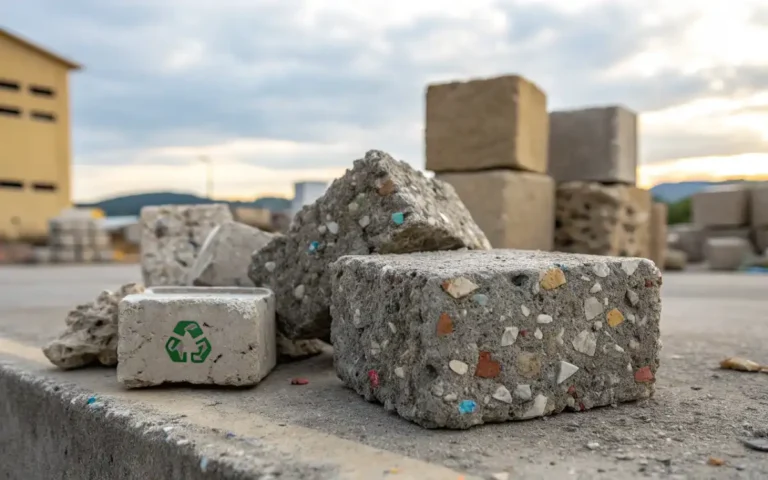
Today, the technology for recycling concrete is so advanced that the material is cleaned and sorted to be enhanced for use as substitute aggregates in precast block walls, property-line barriers and concrete forms.
recycled concrete
Recycled concrete use in these applications meets growing industry standards and is a key component in achieving worldwide sustainability goals.
The Push in 2025: Market and Regulatory Factors
Accelerating Policies
With each passing day, countries implement stricter mandates on construction and demolition waste recycling. The EU, for example, expects member countries to recycle 70% of construction waste by 2025.
The UK encourages recycling construction waste with the Aggregates Levy, and India’s Construction & Demolition Waste Management Rules advocate for urban recycling. These mandates result in an increased demand for recycled material.
Growing Markets
The global recycled concrete aggregates (RCA) market exceeded USD 10.5 billion in 2025 and is expected to grow more than 8% annually for the next decade. The market is expected to more than double by 2035.
Urbanization and infrastructure advancements combined with net zero construction standards adopted in countries are leading to increased market growth.
Metric
Value
Market Size (2025E)
USD 10.58 billion
Expected 2035 Market Value
USD 22.76 billion
Annual Growth Rate (CAGR)
8.0%
Top Application Segment
Gravel & crushed stone (45%+ share)
Environmental Advantages of Recycled Concrete
Significant CO2 Emission Decrease
Recycled content in concrete reduces the demand for cement and decreases the associated CO2 emissions. For Denmark’s recent construction projects where 25%.
Recycled concrete was used in new precast elements, these elements reduced CO2 emissions by 26% compared to standard elements and 37% compared to the national standard. This supports the decarbonization goals set in the 2025 Sustainability Series.
Conservation of Natural Resources
Using recycled concrete helps limit dependency on resources such as gravel and sand, as these become more and more hard to attain in different areas of the world.
Construction companies, when using demolition waste, can lessen the environmental impact caused by new resource extraction and habitat destruction.
Waste Diversion
By using recycled concrete, over million tons of waste gets redirected from landfills. This is important for construction pollution and for the overall development of the circular economy and landfill waste reduction.
Advancements in Recycling Technology
Similar Strength and Durability
Recent technologies in the cleaning, sorting, and processing of recycled aggregates have enabled comparable performance to that of new materials in precast applications.
Structural precast concrete components such as walls, block walls, and property barriers are routinely incorporating high percentages of recycled content. The structural integrity of these components is maintained.
Innovative Improvements
In 2025, new-technology aimed at improving thermal performance and increasing the energy efficiency of precast concrete throughout the year will include the use of phase change material-impregnated aggregates and other advanced treatments and additives.
Benefits for Precast Contractors
Cost Savings
Using recycled concrete aggregates reduces the cost of materials for construction because less raw materials need to transported. This is especially the case for large-scale projects such as precast property borders, modular installations, concrete walls, and more.
Predictable Results and Quality Control
Controlled environments guarantee consistency and output even when using recycled materials. This generates predictable results while also decreasing concerns around quality because the results on site are better and construction becomes faster.
Shorter Projects
With recycled concrete in place, construction measures in linear feet of walls and structures become faster, and on site disruptions are less prolonged. Therefore, workflows become more streamlined and construction time overall is reduced.
Case Study: Recycled Concrete in Precast Denmark’s Breakthrough
Denmark’s 2025 initiative set a new standard on resource usage in construction. Instead of just using crushed aggregates, the initiative reused whole precast concrete pieces from deconstructed buildings.
recycled concrete
By leveraging the size of the salvaged slabs, the approach eliminated extra processing and saved resources. This approach also provided new works with a unique rustic look.
The new cast pieces were around 25% recycled content and reduced emissions of CO2 close to 37% while also reducing the virgin cement needed, making the slabs even more resource efficient.
Industry Innovations 2025 and Beyond
Due to regulations and cost, mega infrastructure projects and large cities are recycling concrete for their block walls and highway barriers. This is increasing demand for these surfaces and in turn increasing recycling and material recovery plant investment.
Advanced Processing
By the year 2025, modern recycling facilities incorporate proprietary technologies for both crushing and sorting materials.
These recycling facilities will be able to meet the requirements for high quality precast applications.
Some facilities will be able to reclaim the concrete paste and reuse it as supplementary cementitious material, thus recycling concrete even more.
Expanded Applications
Recycled concrete can be used for road bases, sub-bases, new concrete, civil engineering works and it has become the norm. In precast concrete, it has been used for block walls, retaining walls, property lines, and modular construction, as seen in precast contractor portfolios around the world.
Potential Challenges and Solutions
Quality Variability and Standardisation
Advancing technology and increased industry standards help to rectify the quality and contamination concerns. Standardization, as discussed during the 2025 International Workshop on Durability, will be a key initiative to help with the reliable performance of recycled aggregates.
Supply Chain and Logistics
The large scale collection and processing of demolition waste can be complex, especially for regions with little to no recycling infrastructure. We expect the next few years to focus on expanding these systems and developing public-private partnerships.
The Future of Precast Contractors in 2025
The precast contractor is one of the first players in the shift about sustainable construction.
Using more advanced forms, specifying recycled concrete, and advocating circular construction all help contractors improve value for their clients and showcase their environmental sustainability leadership. This is of great value in projects that contain property-line concrete barriers or large-scale block walls.
recycled concrete
The eco-benefits of saving more than linear feet costs of concrete, enhance the returns for the clients and the community as a whole.
Key Benefits: Precast Applications of Recycled Concrete
Benefit
Description
2025 Insight
CO2 Reduction
Significantly lowers emissions vs. traditional concrete
Up to 37% reduction in leading projects
Cost Savings
Reduces reliance on expensive virgin materials, lowers transportation costs
Especially prominent in mega-projects and urban builds
Resource Conservation
Decreases depletion of natural sand, stone, and aggregates
Addressing global resource shortages
Waste Diversion
Diverts massive quantities of demolition debris from landfills
Core to circular economy policies
Comparable Strength/Durability
Modern processing delivers quality equal to traditional aggregates in precast products
Used in load-bearing and non-structural elements
Regulatory Compliance1
Fulfills growing government mandates for recycling and sustainability
EU, US, India, Australia, UK among leaders
Fast Project Completion
Precast using RCA streamlines workflow, reduces time onsite
Unique rustic finishes from reused whole precast elements
Denmark’s 2025 trial as major example
Conclusion
2025 will see recycled concrete continue to positively impact our precast projects. The culmination of strong regulations, significant technological advancement, and global sustainable development will all provide the construction industry for climate track achievement, cost savings, and the provision of excellent infrastructure.
Using recycled concrete will provide precast contractors, engineers, and property stakeholders a greener and cleaner built infrastructure as we progress one linear foot, property line, and block wall at a time.
The precast industry will continue to provide strong, economically priced, and environmentally friendly recycled concrete to their clients as we move into the future.
For Repair and Services
1924 W Edward Ln, Milwaukee, WI 53209, United States