



Introduction
Selecting suitable materials has implications for durability, maintenance, and aesthetics. From the options available, precast concrete rail fences are increasingly becoming the favored option for many builders, in place of the wooden fences that were the standard for years.
Builders’ preferences for precast over wood and considers the advantages that will continue to influence decision making over the next few years, 2025 and more.
Durability and Longevity With Rail Fence
Builders’ preferences in this context are, fundamentally, shaped by longevity and durability. Precast concrete will not rot, weather, or succumb to pests, and, therefore, provides a more permanent solution. Weathering, moisture, and pests, including termites, will not cause precast concrete to degrade.
The lack of repair or replacement over decades is a valuable feature for long fences. The concrete pier bases of the fences further adds to their durability. Unlike wooden fences, which often warp and bend, wooden fences are stable, and there is far greater durability in concrete pier bases.
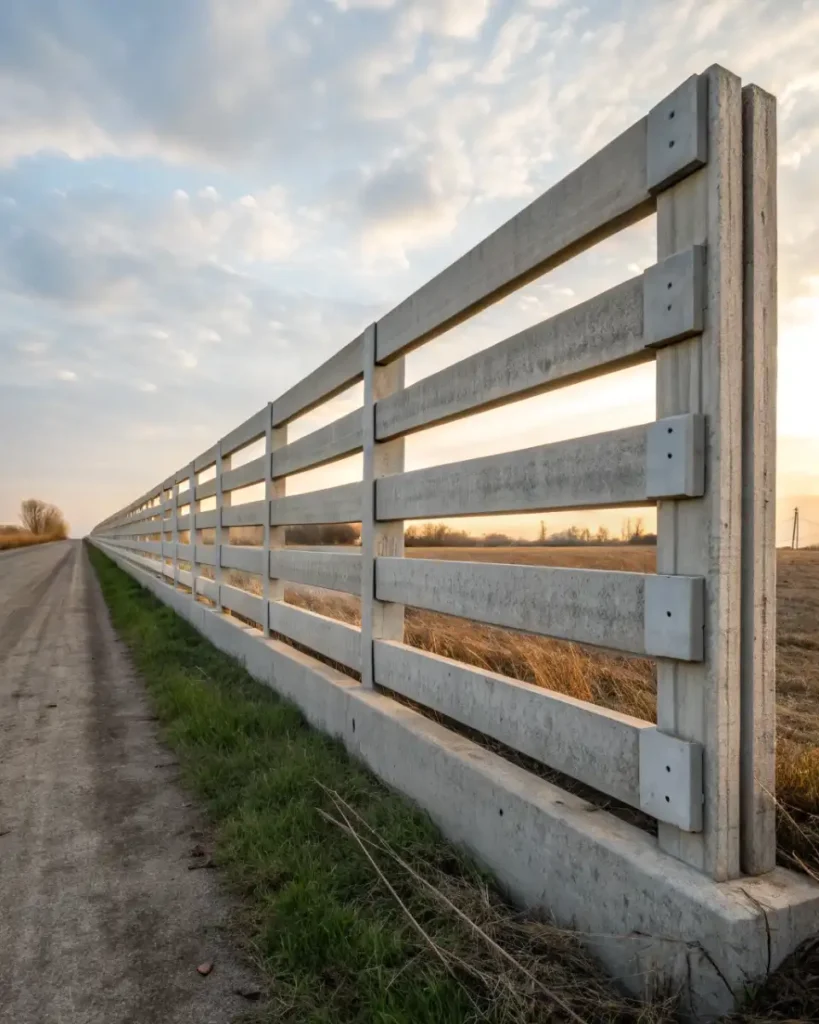
· Maintenance Efficiency
Maintenance for precast concrete rail fences is look after little to none. Unlike wooden fences, they do not require regular painting, staining, or preservatives. This characteristic greatly minimizes the effort and cost associated with upkeep over the years.
The low-maintenance characteristic is appreciated by builders because it increases the value of construction projects, lowers lifecycle costs, and ultimately increases the satisfaction of the end user.
· Strength and Stability
Concrete rail fences possess unparalleled strength and stability over wooden ones. Because of controlled manufactured reinforcement, concrete gains the capacity to withstand strong impact, wind, and soil movement.
Wooden fences suffer moisture and temperature change and thus, warp, crack, or split. In contrast, precast concrete panels remains stiff and firm. This quality of concrete fencing makes it strong to endure harsh weather and problem umped soil.
· Fire Resistance
Builders also strongly prefer fences made from precast concrete because of this quality. The material is fire resistant because concrete is non combustible thus does not support the spread of fire.
This characteristic provides additional safety for fences in range of wildfires or high fire risk areas. Wooden fences are combustible and increases risk of fire in those areas.
· Aesthetic Versatility
First impressions of precast concrete may be industrial, however, advancements in technology allow these fences to simulate the natural texture and color of wood and stone, and thus responds to the users’ needs in an aesthetic manner without compromising durability.
This versatility enables builders to provide clients with fencing options that are appealing and compatible with the surrounding architecture and landscape. This is especially important because wood fencing compromises durability due to rapid weathering and color fading.
· Environmental Considerations
Over the entire lifecycle of a fence, precast concrete rail fences produce less environmental harm than wood. This is due to the longevity of the fence, thus less frequent replacement and waste.
Also, the manufacturing processes of precast concrete are becoming more sustainable with reduced waste, and more incorporation of recycled materials, and thus, waste reduction in the lifecycle of the fence.
· Cost Effectiveness Over Time
The long-term cost-effectiveness of precast concrete rail fences is astounding. Although the installation cost is higher than that of wooden fences, an owner will incur fewer total costs due to reduced repairs, no repainting, and longevity.
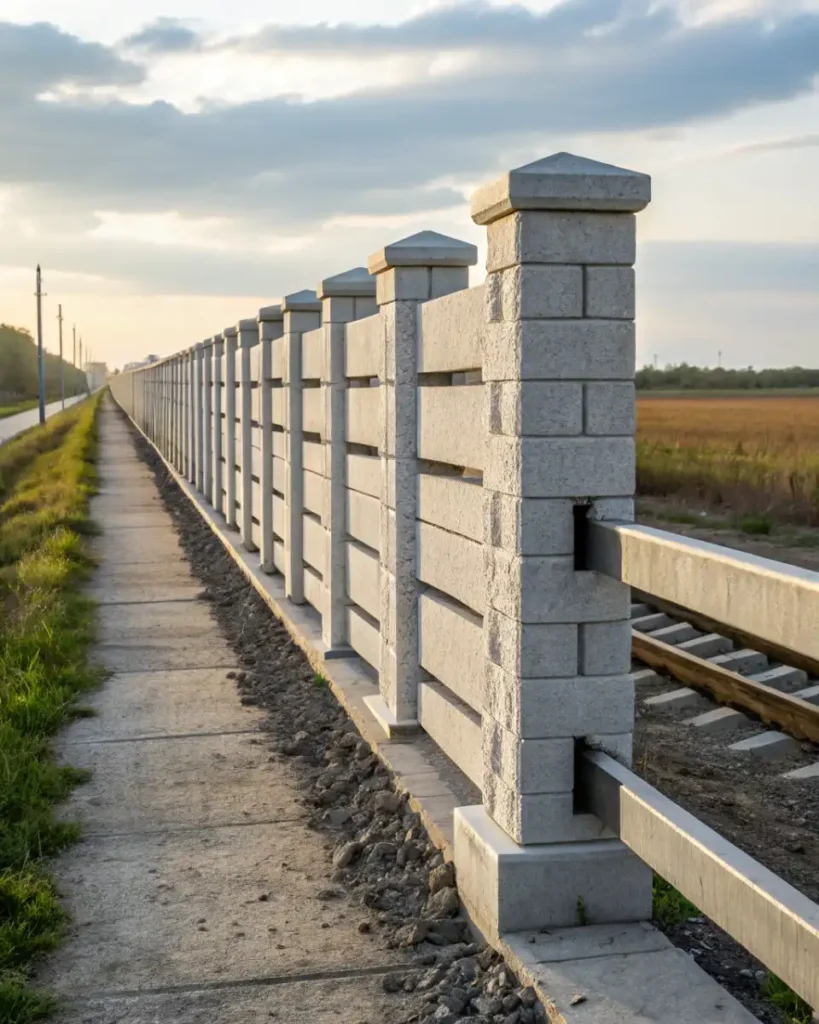
Due to these factors, builders indicate precast concrete fencing as a durable and cost-efficient option for projects. This is a highly recognized value in the industry.
Comparison Between Precast Concrete Rail Fence and Traditional Wooden Fence
| Feature | Precast Concrete Rail Fence | Traditional Wooden Fence |
| Durability | High—resistant to rot, insects, weather | Moderate—susceptible to rot and pests |
| Maintenance | Low—no painting or treatments needed | High—regular staining and repairs |
| Strength & Stability | Very strong and stable | Prone to warping, cracking |
| Fire Resistance | Non-combustible | Flammable |
| Aesthetic Options | Can mimic wood/stone finishes | Natural wood appearance but fades |
| Environmental Impact | Sustainable longer lifecycle | Frequent replacement leads to waste |
| Cost Over Time | More cost-effective | Lower initial cost but expensive to maintain |
Conclusion
It is understandable why builders choose precast concrete rail fences: they provide excellent durability, require very low maintenance, are safer, and offer greater long-term savings. These concrete fence have also gained flexibility in design and construction, and are now a robust, environmentally friendly option to wooden fences.
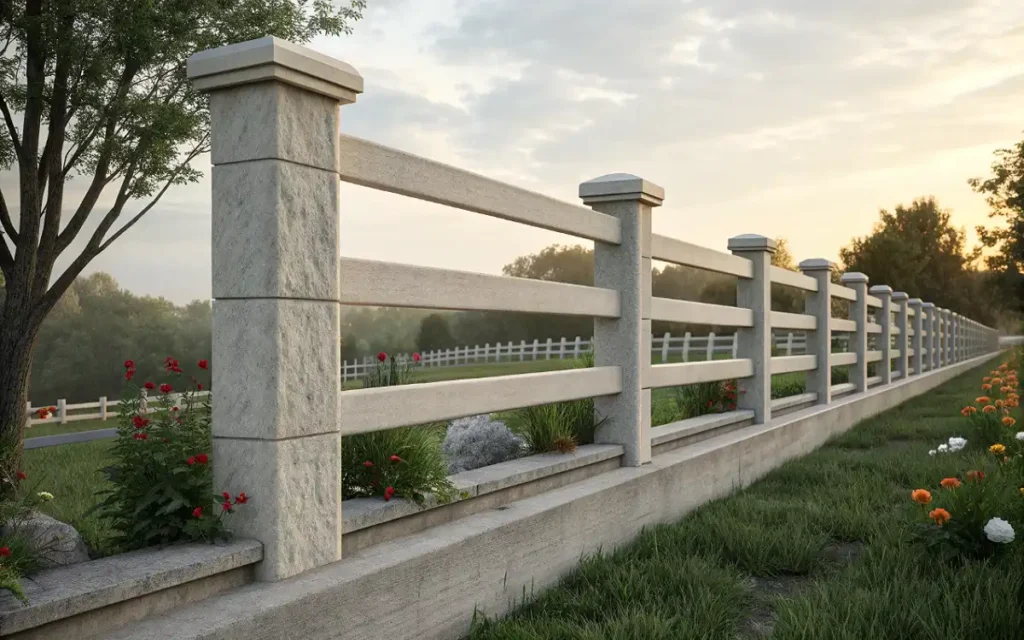
With the evolution of the construction industry, precast concrete rail fences will continue to be a preferred option. They embody the relevant modern qualities of strength and sustainability.
For Repair and Services
1924 W Edward Ln, Milwaukee, WI 53209, United States
Phone: +14142855933
Email: [email protected]
Leave a Reply