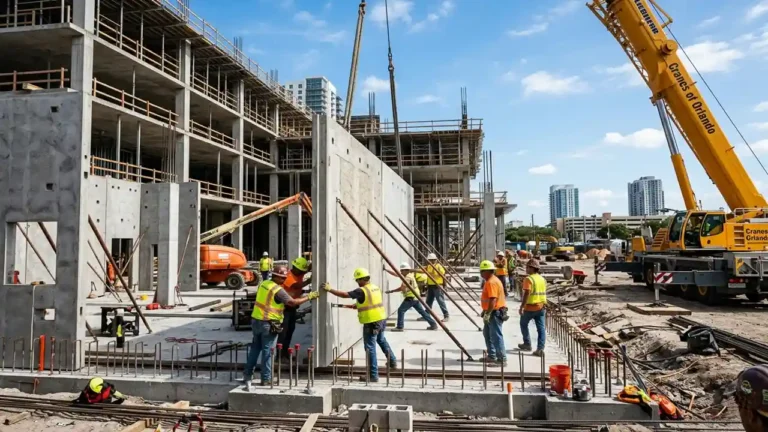
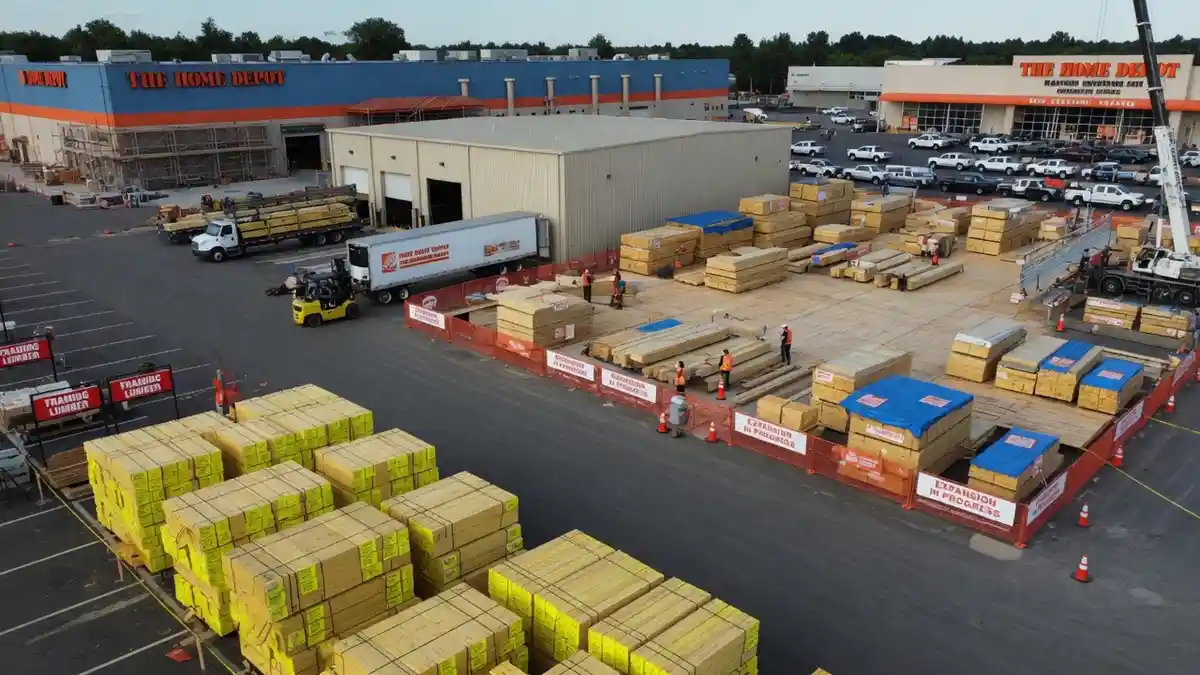
Framing crews across the Midwest are watching material lead times more closely than ever. A $4.3 billion move by the country’s largest home improvement retailer is one reason why.
The home depot acquisition expansion into professional building supply changes how drywall, insulation, and framing-adjacent materials reach your job site.
Here is what it means for your next structural framing project.
Southcoast Wind Permit Reconsideration Reshapes Structural Demand
Key Takeaways
- Home Depot is acquiring GMS (Gypsum Management and Supply) for $4.3 billion through its SRS Distribution unit, with total enterprise value near $5.5 billion once debt is included.
- GMS shares were acquired at $110 each, and the deal is expected to close in early 2026.
- This builds on Home Depot’s $18.25 billion purchase of SRS Distribution in 2024, deepening its reach into contractor supply chains.
What is actually happening with this deal?
GMS supplies drywall, ceilings, insulation, and related building products through a wide distribution network.
By folding GMS into SRS Distribution, Home Depot pulls another major materials channel under one roof.
According to reporting from Construction Today, the retailer wants to serve professionals who handle large, repeat projects rather than casual weekend shoppers.
Our analysis suggests the logic is straightforward. Repeat contractor orders generate steadier revenue than one-off do-it-yourself sales.
The home depot acquisition expansion is a direct response to that shift in customer value. The market noticed.
GMS shares rose more than 11 percent after the announcement.
The deal was not uncontested. Billionaire Brad Jacobs, through QXO, made a competing all-cash bid valued near $5 billion.
GMS’s board accepted the SRS Distribution offer instead, citing the fit with an established professional supply network.
New Construction Portland Shapes Precast
Home Depot Acquisition Expansion Reshapes Framing Supply
— US News (@Us_news_ways) August 6, 2026
The home depot acquisition expansion into professional building supply changes how drywall, insulation, and framing-adjacent…@builderonline @ThisOldHouse @HomeDepot https://t.co/zW3bTSf5OC
Why does this matter for structural framing?
Framing depends on predictable material flow. When your drywall, insulation, and finish materials arrive late, your framing schedule slips with them.
Consolidated supply networks can reduce that risk by coordinating inventory across categories.
That is the outcome Home Depot is chasing with this home depot acquisition expansion. Our contractors note one practical concern here.
Consolidation helps availability, but it may also reduce the number of independent suppliers you can negotiate with.
We found that fewer suppliers can mean simpler ordering and, at times, less pricing leverage. Both effects deserve attention before you commit your next framing package.
How does a consolidated supply network compare to the traditional model?
The table below outlines the practical differences for framing crews.
| Factor | Traditional Framing Supply Chain | Consolidated Pro-Supply Network |
|---|---|---|
| Vendors per project | Multiple independent suppliers | Fewer suppliers under one network |
| Order coordination | Manual, across separate accounts | Centralized ordering across categories |
| Delivery scheduling | Vendor-by-vendor, harder to align | Coordinated, aligned to job phases |
| Pricing leverage | Competitive bidding across vendors | Volume pricing, less head-to-head bidding |
| Inventory visibility | Fragmented, per-supplier | Broader visibility across product lines |
| Risk if one vendor fails | Isolated to that vendor | Concentrated in one network |
Neither model is automatically better.
The right choice depends on your project size, schedule tolerance, and how much you value pricing competition.
Buffalo Bills Stadium Graffiti Exposes Precast Risk
What should Midwest contractors do now?
If you have been following structural framing trends across the Midwest, tighter supplier consolidation will not surprise you.
Here are practical action steps to prepare.
- Review your current supplier mix. List which framing and finish materials come from vendors likely affected by this consolidation.
- Confirm lead times in writing. Ask suppliers how the deal, once closed in early 2026, may change delivery windows.
- Lock pricing where you can. For projects extending past the closing date, request pricing terms before terms shift.
- Keep a backup vendor. A second source helps reduce risk if one network experiences delays.
- Track your order data. Consolidated ordering only helps if your team works from the same accurate inventory records.
These steps can protect your framing schedule without overreacting to a deal that has not yet closed.
Pros and cons for your framing business
Potential benefits:
- More coordinated delivery across drywall, insulation, and framing materials
- Broader inventory visibility from a single network
- Possible volume pricing on repeat orders
Potential tradeoffs:
- Fewer independent suppliers to bid against each other
- Concentrated risk if the network experiences disruption
- Pricing leverage may require larger, committed order volumes
We recommend weighing these against your own project pipeline rather than assuming one outcome.
Kosciuszko Bridge New Construction Tech Lessons
Does the wider market support this strategy?
The demand picture backs Home Depot’s reasoning.
Residential construction ran at roughly a $889 billion annual rate in June 2026, according to FRED data.
The U.S. Census Bureau tracks similar residential spending strength through its monthly construction reports.
Remodeling is also expected to grow.
The NAHB projects residential remodeling activity rising 3 percent in 2026 and another 2 percent in 2027 in inflation-adjusted terms.
That steady professional demand is exactly what the home depot acquisition expansion is built to capture.
Home Depot itself forecasts total sales growth of 2.8 percent, with comparable sales rising about 1 percent. Those figures lean on professional orders to hold up.
Construction Truck Accident Lawyer Contractors Must Know
What this means for your next build
The home depot acquisition expansion signals a clear direction: fewer, larger supply networks serving contractors.
For structural framing, that can mean smoother scheduling and broader inventory access. It may also mean less pricing competition, so plan your bids accordingly.
The deal still needs to close in early 2026, which gives you time to prepare. Start by reviewing your supplier mix and confirming lead times before the changes take effect.
If you want help mapping how the home depot acquisition expansion could affect your framing material schedule, tell us where your next project stands and what your supply chain needs to deliver.